Downton and Out

Downton-Abbey-Season-2-downton-abbey-31759388-2106-1503

IMG_2193
The similarity is uncanny, isn’t it?

I’m not a trendy person; I tend to avoid anything that’s sweepingly popular. This is partly due to my contrarian temperament (I’ve loved the British alternative band Mumford & Sons for years, but when they won Album of the Year at this year’s Grammy Awards, I was actually upset. Now EVERYONE will like them, I thought). And it’s partly because I live in a small town with three young children (I saw NONE, exactly ZERO, of this year’s Oscar-nominated Best Picture films). I don’t usually read bestsellers until they’re off the lists because I’m cheap and have limited bookshelf space, so I get most of my books from the library. I don’t watch T.V. because we don’t have one.

Yet I’ve become addicted to “Downton Abbey.”

I held out until three seasons of this hit BBC/PBS television series had passed, but it grabbed me with its manicured fingers in the end.

I first became aware of “Downton Abbey” through friends’ Facebook posts. During the first two seasons, the internet was ablaze with exclamations of shock, joy, or outrage, depending on what had happened on PBS the night before. Clearly this show was arousing passionate feelings in people I respected.

Then there was the dinner party I attended where the hostess turned to the table and said, “Okay, now can we talk about ‘Downton Abbey?'” I was the ONLY person present who wasn’t following the show. A friend at that same party told me that she’d be happy to lend me her DVDs of the series so that I could once again be a functioning member of society.

I took her up on it only after the Season 3 finale (which I have yet to see, so NO SPOILERS!). The morning after that episode, Facebook was on fire with fury, but nobody gave away exactly what had happened. I had to know! So I told my friend I’d take those DVDs after all.  (I’m starting the Season 3 DVDs now, although I’m a little concerned that watching the finale will put me into early labor….)

So, what’s the big deal about “Downton Abbey?” Here’s why I’m hooked:

-It’s relatable. Although it has a massive cast and a web of plotlines, “Downton Abbey” centers around the family of Lord and Lady Grantham, who live with their three daughters (and a dog) on a vast Yorkshire estate with dozens of servants, around the time of the First World War. In other words, if you took away the servants, cut down the estate to 1/10 its size, and set it in present day Vermont, you’d have our family.

-“Housekeeping porn.” The servants and their daily tasks are a major component of “Downton Abbey,” and from the moment I started watching I found myself drooling longingly over the idea of having a full staff to prepare all my meals, servants to get the fire going before I woke up, and ladies’ maids to dress my daughters. In real life, I recognize that these class distinctions are outdated and unjust. But watching the show at the end of a day spent wrestling my girls into their clothes, singeing my eyebrows while stoking the wood stove, and preparing meals that nobody eats…that’s why I’ve started referring to “Downton Abbey” as “housekeeping porn.”

-It’s honest. The moment that sealed my affection for “Downton Abbey” came towards the end of Season 1. Sarah O’Brien, who is Lady Grantham’s maid and as close to a scheming villain as you can get, is in the middle of doing something wicked and malicious when she pauses before a mirror. “Sarah O’Brien,” she says to her reflection,”this is not who you were meant to be.” (Or something along those lines, if memory serves). The awful thing happens anyway, and she spends all of Season 2 trying to make up for it. But this moment embodied what I think makes “Downton Abbey” great: It’s honest about people. There are no one-dimensional characters, nobody who’s all bad or all good. The people of “Downton Abbey” are complex: the worst of them have redeeming moments, and the best of them have shameful pasts or make horrible mistakes.

-Good parenting. Lord and Lady Grantham and their three grown daughters are members of the aristocracy during a time when British society is starting to shake up, to enter the modern era. It’s kind of like “Fiddler on the Roof” set in turn-of-the-century England. But what’s surprised me is the extent to which Lord and Lady Grantham are actually great parents; I even consider them role models for how to parent grown children. Instead of angrily clinging to tradition and insisting that their daughters operate within the bounds of aristocratic society, they’re usually able to affirm who their daughters are and to support what’s best for each of them. Which is not to say that they never lose their tempers or make mistakes, just like real parents have forever.

-It hooked my husband, too. Erick doesn’t like getting addicted to anything. So, while “Downton Abbey” is my excuse to sit my tired, pregnant body on the couch after the girls go to bed, Erick was originally happy to use that time to get his work done. But then he’d come downstairs to get a snack, and end up watching the show over my shoulder. First it was 5 minutes, then 10, then 30. By the end of Season 2, Erick sat down with me to watch the last few episodes in their entirety. Then he said, “You know, I really can’t stand the idea of you watching Season 3 without me.” So it’s become OUR show. And the other day, I got a letter in the mail: a very nice, handwritten letter. It was from my husband, who said he’d been inspired by “Downton Abbey” to sit down and write a letter with pen and paper.

If that’s not a good reason to love “Downton Abbey,” I bloody well don’t know what is.

Puppy Love

It feels like this blog has been awfully DEEP lately, so here’s something a little lighter.

IMG_2027

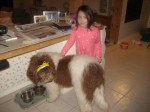
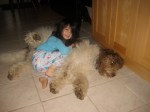
It’s been quite a while — about six months, to be exact — since I mentioned Gracie as anything other than an aside. Remember Gracie? Gracie is the labradoodle puppy who joined our family back in October. She was supposed to be our fourth child, because we were “done having children.” (Cue bitter laughter).

Well, Gracie is still with us, and next month she’ll be one year old. I usually distrust anything that comes across as too perfect, which is why I try very hard to be honest about how flawed I am and how imperfect our family is. But I have to say: Gracie is the perfect dog for our family. Her most marked imperfections are:

1. She’s very independent. I can’t say that we’ve had the typical dog owner experience, because I barely have to take care of Gracie. Our yard and our neighbors’ yard are both surrounded by one electric dog fence, which was installed for the neighbors’ golden retriever, Brinkley. Gracie and Brinkley are BEST FRIENDS– soul mates. Our girls say they’re “married,” and that’s probably true on a spiritual level. As soon as Gracie was old enough to train to the fence, she and Brinkley started spending their days as free-range dogs. Gracie asks to go outside every morning after breakfast, plays with Brinkley for much of the day (weather permitting), and re-enters our house to collapse into sleep every night. Aside from a minimal amount of feeding and grooming, my responsibilities involve opening and closing the door. I never need to walk Gracie unless I want a walk. Do we sometimes wish she hung out with our family a little more? Sure, but that’s more than balanced by the knowledge that she has a very happy life.

2. She has anxiety issues. As she’s grown older, Gracie has become increasingly aware that she’s responsible for a family, especially for three little girls. She takes this responsibility seriously — she’s a little hard on herself, if you ask me. So, despite her fluffy locks and her constantly wagging tail, she’s become a bit of a guard dog. She barks…and barks…and BARKS at anyone who dares to walk past our house (on the street, 20 yards from our front door). Good when it alerts me that someone’s nearby; bad when she scares the girls’ friends. When the girls play outside, Gracie and Brinkley will treat them like sheep, surrounding them in a v-formation to make sure that they stay within bounds. Good when Georgia takes off into the woods the minute my back is turned; bad when they topple Georgia over with their combined weight. And once, Gracie even latched onto the pants of a strange delivery man and attempted to tug him away from the house. That’s all bad, and has resulted in us enlisting the temporary services of a trainer/dog whisperer — which feels a little silly, but in the end is cheaper than a lawsuit.

3. She almost always throws up in the car. We’re working on this one, but for now it’s very hard to take her anywhere. The WORST was when she was sitting between the two oldest girls in the backseat and tossed her dog food all over Fiona.

So there you have it: an itemized list of Gracie’s imperfections. Now, here’s why she’s the perfect dog for our family (click on each thumbnail to enlarge the photo):

Unless you walk past our house or attempt to deliver our mail, you won’t meet a sweeter, more patient dog. We all adore our Gracie, and can’t imagine our family without her.

Neighbors

Neighbors-Over-the-Fence

In past columns, I’ve alluded to the stereotypical view of Vermonters as reserved, “frosty,” maybe even a little…unfriendly. I was prepared for a chilly reception to the state, having grown up hearing about the legendary New England reserve.

Click here to get the inside scoop on our neighbors in my latest “Faith in Vermont” column for The Addison Independent.

Retreat!

IMG_2159

Last month, I went on a 24-hour retreat with a group of women from our church.

That statement in no way conveys what a Big Deal this was. The last time I’d gone away all by myself was over five years ago. I was pregnant with our first child and working for a nonprofit; in that role, I spent one night at a camp we ran for high school students. Fun, but hardly a “retreat.”

Click here to continue reading about my first solo getaway in five years over at On the Willows.

I Shall Wear My Trousers Rolled….

A picture of me on my cellphone. (Before I've shaved, obviously).
A picture of me on my cellphone. (Before I’ve shaved, obviously).

Do you know why I quit photography?

I started studying photography while teaching elementary school in Manhattan. I’d long been interested in photography, and since I was single (Erick and I had just started dating) in the Art Capital of the World!, I began taking photography classes at night.

My first love was the darkroom. I got such a high from the magic of the photo-making process: putting that little negative into the enlarger, bringing the image into focus, experimenting with just the right brightness and exposure time to make the best possible photograph, and then seeing the results emerge through the chemical baths. I could — and did — spend hours in the darkroom.

And I was pretty good. My first photography professor at NYU gave my printing skills high praise. So, after I took the major step of getting married, I took another major step: I quit teaching and enrolled in NYU’s Studio Art master’s program.

About halfway through getting my master’s degree, it became clear that I was a dinosaur. Digital photography was all the rage, and you had to be proficient in Photoshop if you wanted to be a marketable photographer. I had no interest in digital photography or Photoshop, which seemed more like computer science than art, but it was clear that film and darkrooms were going the way of the daguerrotype.

I completed my degree and freelanced for a year, but without joy. It’s hard enough to make it as a photographer, even if you love what you’re doing. Handing me a digital camera and forcing me to edit my images on a computer was the equivalent of making me write with my left hand. When we moved to California for Erick’s PhD program, I let photography quietly slip away.

I’m telling you this because I recently had a morning that gave me the same feeling as my first Photoshop class.

For the past couple of years, the thing that’s given me the most pleasure — after my family, of course (she said dutifully) — has been writing: writing for this blog, for On the Willows, and for The Addison Independent. I’m starting to feel like I can call myself a “writer” without apology. So I finally went to our local bookstore and bought myself a copy of the 2013 Writer’s Market, a massive reference guide to literary agents, publishers, and various publication outlets. (Don’t worry, I’m not getting any fancy ideas. But Stephen King, among others, says that all writers should own a copy). Our local library’s copy is either stolen or lost, so I’d been eying this book for months. Finally, with a bookstore gift certificate in hand and a baby arriving soon, I decided to throw caution to the wind.

Flipping through the first pages of Writer’s Market while Georgia snoozed in her stroller, I found a little essay titled, “Blogging Basics: Get the Most Our of Your Blog” by Robert Lee Brewer. Seconds into reading, I was horrified. Brewer’s suggestions included tips like:

-Use your name in your URL and as the title of your blog. (OOPS!)

-Find like-minded bloggers, comment on their blogs regularly, and link your blog to theirs. (Writing this blog is about all I can handle. I really appreciate it when other bloggers find me, like me, and follow me, but I’m horrible at returning the favor!)

-Use lists, bold main points, and headings — especially if your posts are longer than 300 words. (Triple OOPS! I’m making a bold list now, but I don’t usually employ lists or headings. And this is now word #590 of this post).

In other words, I’ve been writing this blog for two years, and I’VE BEEN DOING IT ALL WRONG!

Okay, but what does Robert Lee Brewer know, anyway?

So I got in the car, and on the drive home I listened to one of my favorite programs on VPR (our NPR affiliate): “On Point” with Tom Ashbrook. The day’s topic was social media, specifically (notice how I’m making a bold list here):

-Email is dead, going the way of the handwritten letter. (I still love the handwritten letter! When the Postal Service considered stopping Saturday delivery, it made me so sad: What would I have to hope for on Saturday afternoons?)

-Facebook is getting “musty” — it’s becoming so uncool that people’s PARENTS and GRANDPARENTS are on it; most teenagers use it only for study groups.

-The NEW new thing is chatting, specifically something called “Snapchat,” which deletes the content you send after it’s been viewed. (Erick and I don’t have Smartphones, and have no plans to get them. Our cellphones are the ancient kind where you have to push each key multiple times to get the letter you want, making even texting virtually impossible).

I felt like that same old darkroom dinosaur again. Here I am, blogging badly, and promoting it through outdated means like email and Facebook. 

I’m always late to the party.

I’ve never been hip. Even — especially — during the decade when I might have reached my hip-ness apex, people who knew me will tell you that I was a NERD. So I don’t really care about keeping up with the latest gadgets and trends. What I do care about is being able to communicate; writing is a form of communication. I usually get frustrated with people who refuse to get email or cellphones because they fear new technology; I respect the many grandparents I know who embrace social media in all its forms. I always thought I’d be one of those grandparents.

But now, I don’t know. I’m starting to feel TIRED. Why can’t I just blog how I want, and send emails, and post to Facebook for the next decade, before I have to learn some new program?

I don’t have any answers; I just leave you with questions. Plus, this is word #988 of this post. What would Robert Lee Brewer say?

Sigh.

Dear Reader: I’m sorry; I’ve never before published two posts on this blog in one day. I know you’re busy and have a lot of things coming at you. Really, who has the time? But this was something I had to write, for ME more than anybody else, so I’m just going to take a deep breath and put it out there. Then I promise you won’t hear from me for a couple of days!

badnews

The Boston Marathon bombing happened yesterday. I learned the news, as I usually do, when I logged onto my computer after a day spent running the girls around to various activities and saw the headline on my Google news feed. Then I opened my email and found two VERY BAD NEWS emails waiting in my inbox. As usual, there seems to have been a lot of BAD NEWS all at once. Lately I’ve felt like I’m barraged daily by the reality of senseless badness. People place bombs where they’re sure to kill and injure other innocent people.  Cancer strikes beloved grandfathers and fathers of young children. People hurt babies. It feels like TOO MUCH.

Sigh.

That’s all I could come up with on Monday night: just a heavy, sad sigh.

I read everyone’s eloquent responses on Facebook: the prayers for Boston, the same old Fred Rogers quotes, the praise for those who ran towards the victims. All I could think was, Weren’t we JUST HERE? Yes, we were — back in December, after the Sandy Hook shootings. And I was living in Manhattan when 9/11 happened. And I was in school just down the street from the CIA — where my father worked — when, in 1993, two people were killed and three wounded when a man shot into their cars at a stoplight. Part of getting older, it seems, part of having lived three decades, is tragedy deja vu. First comes the stunning evidence of humanity’s capacity for darkness and destruction, followed by the stunning evidence of humanity’s capacity to cling to hope and sift through the rubble for meaning.

Sigh.

I’m SO TIRED of this cycle of tragedy and hope. Mind you, I don’t want my heart to stop breaking; I don’t want to get hard and bitter. But I’m worn out, fatigued. I don’t want to HAVE TO “look for the helpers” anymore. And when comedian Patton Oswalt writes in his viral Facebook post that “We would not be here if humanity were inherently evil,” I think, Gosh, I dunno about that.

I have a friend, a dear friend who loves children, who works with children, who is like MAGIC with children. And, the last time I discussed it with her, she had decided not to have kids because she didn’t want to subject any more children to this cruel world.

It’s a good point. It’s an honest point. I’ve written before that children are about HOPE — that word again — because we believe that our children just might get things right. But that’s a little selfish, isn’t it? My children give me hope, and I give them…senseless tragedy. We’re not telling our girls about the Boston bombings, but that same day they asked — begged — to check out the movie Bambi from the library. I was concerned about this; parts of Bambi are scary and sad — and not in a pretend-magic way, but in a real-life way. So I decided that the best thing I could do was to prepare them. “Okay,” I said, “But remember that Bambi’s mother gets killed by a hunter, and there’s a forest fire at the end.”

And that was just a movie; pretty soon, I’m going to have to do the same thing for them with LIFE. How can I prepare them for the cruel realities of life and still give them hope, when I’m so tired and the hits just keep on coming?

I don’t know if Patton Oswalt is right that humanity isn’t inherently evil; that’s a HUGE moral and spiritual claim to make. But here’s what I THINK I know: I think that humanity knows that we’re not supposed to be evil. I can’t say that my kids were all born evil, but they were certainly all born selfish — they’d cry and scream until they got what they wanted or needed, and as they grow they keep crying and screaming, with punches and kicks and pulled hair bestowed on their loved ones for emphasis. They do what they know is wrong, what they’ve been TOLD not to do — and that starts to look a lot like a capacity for evil.

But with each of my children, when they were still babies, there was a moment when I’d pick them up and they’d pat me on the back. I don’t think they really knew what they were doing, but they were mimicking what I’d been doing to comfort them; they were reaching out to connect with another person in a compassionate way. And just this week, for the very first time, my oldest child apologized to me after a nasty battle completely unprompted and on her own. Which is really the same as the back pat: recognition that we’re not meant to be evil, that we’re meant to TRY to do the hard work of reaching out in love. These moments may give me selfish hope, but they also give me unselfish hope — that my girls’ lives will be enriched and enrich the world as they struggle to NOT be evil, and as they see others doing the same.

Hope is hard work. Here’s what I know about hard work: two-thirds of my children were born without an epidural (this was not really for reasons of principle, unless by “principle” you mean “fear of having a needle stuck in my spine”). But in both of those labors, I reached a point where I was about to give up. This hurts TOO MUCH; I can’t do this anymore! Bring in the epidural! Make me numb! And BOTH TIMES (you’d think I’d learn), at the very moment when the anesthesiologist was walking through the door, the nurse would check me and say, “Oh, you’re ready to push!” Minutes later, my baby would be born.

So I think it’s usually when we reach the point of greatest fatigue, when we’re sure we can’t keep going, when it’s all TOO MUCH, when we just want to be numb — it’s then that hope can carry us forward one more breath, and beautiful things can be born. It’s okay if hope comes with a heavy, sad sigh — or when we’re crawling on bloodied knees — or even with a scream of rage. It’s okay to be tired, just so long as we don’t go numb.

Mission Statement

The-21st-Century-Billboard
Photo via

There are many ways of organizing family life. I know about these methods from the handful of parenting books I’ve read, the few parenting seminars I’ve attended, and the homes of organized friends I’ve visited.

As for me, my house is like an archaeological site for organization; everywhere you look are remnants of our past organizational attempts. I like to think of it as the Pompeii of Planning.

There’s the “Morning Routine” and “Evening Routine” checklists hanging in the girls’ bedroom, which no longer bear any resemblance to the reality of our mornings and evenings. (Our mornings sound a little something like this: “If I have to ask you one more time to get dressed, you’re going to school naked! Okay, everyone, to the bathroom!!”)

There’s the magnetic “Chore Chart” on the refrigerator. As of February 20, when I finally erased it from sheer embarrassment, the date written on this chart in dry-erase marker was December 24. It’s been months since I’ve remembered to give Fiona the allowance she’s supposed to receive for her weekly tasks, and I’m only fortunate that this allowance seems as unimportant to her as it is to me. As for household chores, it’s gotten to the point where I wait until things become totally unbearable, then I set the timer for 5 minutes and shout, “Okay, 5 minutes to pick up! Anything still on the floor gets donated!”

And then there are the various organizational computer programs and filing systems that Erick and I have abandoned, like the “His & Hers To-Do List” currently buried underneath my camera, DVDs of the first two seasons of “Downton Abbey,” and three passport applications. Also the “Family Goals” spreadsheet that we haven’t updated since Georgia was born — two years ago.

In other words, I’m too disorganized to maintain any organizational system. But there is ONE thing I wanted to try, suggested a couple of years ago by ultra-organized friends: drafting a mission statement.

As someone who worked five years in the nonprofit sector, mission statements don’t scare me as much as charts or lists. They’re usually brief, no longer than a couple sentences. It may be a stretch to consider a mission statement an organizational tool, but I do; mission statements serve as focal points for businesses, families, or individuals. Everything that organization, family, or person does refers back to the mission statement.

So last month I decided to draft a mission statement. I felt this was important because life comes flying at me so fast these days — there are so many tugs on my time — that it’s sometimes hard to remember who I am, what I’m supposed to be doing, and what I want to teach my kids.

Writing a mission statement proved to be more difficult than I’d expected, though. There’s a reason why the staff of every nonprofit spends hours agonizing over each word in their mission statement: trying to boil down your reason for existence to a couple of sentences ain’t easy.

Then, a matter of days after typing the preceding paragraphs, I had a epiphany while folding the girls’ laundry and listening to an episode of “This American Life.”

If you’re unfamiliar with the weekly NPR program “This American Life,” I strongly suggest familiarizing yourself with it here. The episode in question was titled, “Self-Improvement Kick” and aired on January 4, 2013. I was listening to it in late February because, owing to my aforementioned disorganization and lack of willpower, my “This American Life” listening follows the same pattern as my New Yorker reading: I’m usually months behind (Yet I have no problem checking Facebook multiple times a day. Go figure).

Act 1 of this episode was about Daryl Watson, a talented young New York City playwright who, in 2009, decided to quit his job, sell everything he owned, and walk across the country as “Peace Pilgrim,” trusting in God (and others) to provide for his physical needs.

Here’s Daryl, explaining why he did what he did: I wanted my mission statement. You know how every business has a mission statement? You know what I mean? That’s what I wanted. Like, you are Daryl Watson, you were born on this day, this is your purpose, this is how you’re going to do it.

That got my attention.

Daryl lasts three days as “Peace Pilgrim.” On a Maryland highway late one night, he sees a billboard that reads: “IT’S OKAY TO MAKE MISTAKES, AS LONG AS THEY’RE NEW ONES.”

Daryl realizes that he’s made a mistake, abandons his pilgrimage, and calls his mother (that’s when I started bawling). Here’s how Elna Baker, who narrates the segment, summarizes his epiphany: He’d been on this journey, most of it alone and suffering, and trying to figure out the meaning of life. He’d been obsessing over his dreams a year before that. And three days in the cold made him realize he was doing this to himself. He was making himself suffer.  And he could stop. Which landed him in the same messy place so many of us are in, not having any answers. So we just ignore the questions and get on with our lives.

My own epiphany had to do with those last two sentences, which made sense to me and bugged me at the same time. It occurred to me that, perhaps, drafting a mission statement was an attempt to impose an artificial sense of organization, an abrupt “answer,” on a life that’s irredeemably messy and confusing. After all, most of us already live according to some broad mission statement, whether or not we’re aware of it, like: “Do no harm,” or “Love God and your neighbors,” or “Make lots of money,” or “Stay young and beautiful.” But just as most organizational systems end up under a desktop pile, it’s usually impossible to live out these missions consistently. (And people who do claim to have found All The Answers, to have a consistent mission, often aren’t much fun to be around: they tend to be narrow, judgmental, condescending, and sometimes dangerous).

The solution of “ignore the questions and get on with our lives” bothers me, though. It sounds an awful lot like becoming the Kevin Spacey-type character who buys a big house in the suburbs, barbeques on weekends, has two nice kids and an attractive wife, works a meaningless job, and buys new “toys” to try and fend off a sense of creeping panic.

I’d like to think that a better solution may be: ACCEPT the questions and get on with life. Accepting that life is messy, disorganized, full of unanswered questions, and impossible to box into a mission statement seems healthier than denial. Getting on with life is key, too; in my experience it’s the best way to find partial answers. I can make pilgrimages and meditate and draft mission statements all I want, but the little rays of light that illuminate my unanswered questions usually flicker while I’m folding laundry, washing dishes, or changing diapers.

Daryl Watson isn’t sure if the billboard he saw on his pilgrimage was real. But its message, “IT’S OKAY TO MAKE MISTAKES, AS LONG AS THEY’RE NEW ONES,” is a pretty good rule for life. So if I had to, here is the best mission statement I could draft — for myself, my family, even this blog:

OUR MISSION IS TO MAKE NEW MISTAKES EVERY DAY.

Coffee: A Love Story

coffeelove
www.lisacongdon.com

My father always drank his coffee black, so when I started drinking coffee it never occurred to me that I should adulterate it with anything like milk or sugar.

I can’t remember exactly when I drank my first cup, but it was sometime during my freshman year in college. I poured my coffee for purely practical reasons: as a freshman, I’d made the remarkably naive choice to take an Italian class that met at 8 AM, five days a week. Although the smell of coffee evoked pleasant memories of childhood breakfasts, I had no particular affection for the taste — at least, not for the weak, generic stuff mass-produced by the college dining hall. My interest in coffee was utilitarian: I needed it to stay awake.

The affection came later, around junior or senior year. It happened the day I met my friend Dahna at the cafe in our little college town (yes, THE cafe — there was only one), and she said, “Why don’t you try a skim hazelnut latte?” When I tried a skim hazelnut latte, a love affair began: I discovered that if I added enough milk and flavoring to coffee then I loved it, I craved it.

This youthful love affair with skim hazelnut lattes lasted through much of my twenties. For the better part of a decade, I drank at least one skim hazelnut latte per day. Like most youthful love affairs, it was somewhat superficial — based on covering up coffee with a sweet exterior. It also wasn’t particularly healthy: there were the dark days when I discovered that a large enough skim hazelnut latte could serve as a meal replacement. And it was a costly habit; at this time, I was either single or newly married with a postcard-sized kitchen, and the idea of brewing my own coffee simply didn’t occur to me. I BOUGHT every single one of those skim hazelnut lattes, and I bought most of them at upwards of $3 each. When I think back to how many wells I could have built in Africa, how many third world families I could have supplied with livestock, or how many children I could have supported through school with that money, I’m a little ashamed.

The turning point came when Erick and I moved to Berkeley, California. The kitchens in the three rentals we lived in during our stay in the Bay Area were somewhat larger than postcard-sized. We were living off of the combined salaries of a graduate student and a part-time nonprofit employee. And we started having kids. The sensible thing to do was clearly to start brewing our own coffee.

Berkeley, California is a stressful place to drink coffee. To give you an idea of the Berkeley food and drink culture: the church we attended during our time there (and LOVE to this day) had a wine tasting in order to select the best wine for communion. You can only imagine how far people took their quest for the best cup of coffee; if you weren’t drinking a cup of individually-brewed, organic, fair trade, shade-grown, slow-roasted coffee, you might as well be drinking Maxwell House. (Believe me, in certain circles this was a major topic of discussion, and you would be judged).

But Erick and I were too distracted by babies and PhDs to keep up with the ever-changing Bay Area coffee trends. Each morning, we’d use our auto-drip coffeemaker to brew a pot of Peet’s Coffee, which we’d drink black with breakfast. I consider this the point at which I entered my coffee adulthood; when good, strong, black coffee stole my heart away from the expensive, frou-frou alternatives. Now, on the rare occasion that I find myself in a cafe, I’ll order a skim hazelnut latte as a dessert drink — I find them too cloyingly sweet to be anything else.

That would be my happy ending, except that, like most love stories, this one features a period of separation followed by renewed, increased love and appreciation.

You see, less than a year after I fell in love with home-brewed black coffee, I got pregnant. Like most first-time pregnant women, I wanted to do everything right, and all of the pregnancy books will tell you to take it easy on the coffee. Because caffeine is a stimulant, it increases the mother’s blood pressure and heart rate, and has also been found to increase the fetal heart rate. And I don’t do decaf — I can’t explain it, I just don’t. In my opinion, drinking decaf is about as pointless as eating white chocolate (apologies to any white chocolate lovers out there).

So I gave up coffee for nine months. And that was okay, since I’d only been drinking one or two cups a day prior to pregnancy. I had no withdrawal, no headaches or shakes. But did I miss it? You bet. Was I right back on it shortly after giving birth? OH, YES!

And it was during that first year of motherhood, when I was reunited with coffee, that I discovered another facet to love: not only did I enjoy the taste and appreciate the wakefulness provided by coffee, but COFFEE MADE ME A BETTER MOTHER. A better person, actually. Prior to my morning cup of coffee I wasn’t just sleepy — I was numb. The day stretched before me like one long, joyless, impossible task. But add one cup of coffee and I was Carol Brady. Coffee made everything okay — at least for thirty minutes following breakfast.

When I became pregnant for a second time, I decided: I’m not giving up coffee ever again. I care about blood pressure and heart rate — really I do — but the happiness of my little family was more important. Did they deserve nine months of Carol Brady, or nine months of Lurch? (Interesting, completely unscientific side note: Guess which pregnancy ended with an emergency delivery due to high blood pressure? My first, coffee-free one. Hmmmm….)

And so it goes. These days, I put a filter and six scoops of Green Mountain Coffee’s Vermont Country Blend into our coffeemaker before bed. First thing in the morning. when I come downstairs for some solitary reading/writing time, I add the water and let it drip. The smell alone is enough to start my day off right; drinking my morning cup is like lifting a veil between despair and hope. And SOMETIMES, as a guilty pleasure, I’ll reheat what’s left in the pot and have a second cup during the girls’ naptime.

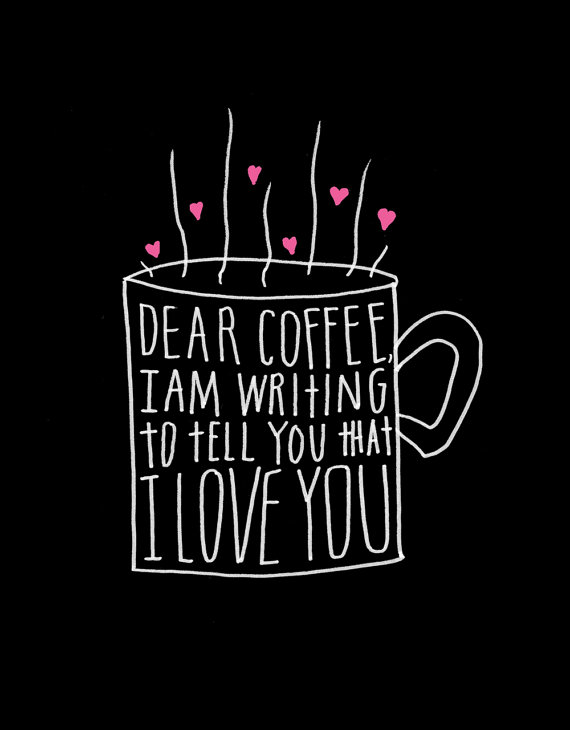
I love you, coffee. And if you’re reading this and you don’t drink coffee, or don’t like coffee, that’s okay. But I hope you have a little coffee-something in your life!

Yes, You’ve Come to the Right Blog

IMG_2121

It might be because it’s spring, and I’m feeling that spring cleaning urge.

Or it might be because I’m expecting a baby in two months, and I’m running around buying storage bins and organizing the craft supplies and reconfiguring the closets because I JUST CAN’T STAND THIS CLUTTER ANYMORE!

Whatever it is, I just did it to this blog. I’ve been feeling like the time was right for a major facelift, something that would better reflect what this blog is and where it’s going. So, two things:

1. A new web address. This blog can now be found, quite simply, at http://www.thepicklepatch.com. If you’ve originally been following it at the wordpress.com address, nothing should change — that address will automatically forward you to the new address. (Let me know, of course, if it doesn’t). I hope this will make it easier and more intuitive to find.

2. A new look. The bones are still the same, but I’ve dressed the blog up a bit. My hope is that its new outfit is a better fit for its personality. This will continue to be a work-in-progress over the next few weeks, so check in to see what’s new!

Finally: FEEDBACK WELCOME! Please let me know what you think: if you like the new blog features, or if you can’t stand it. Above all, I want these to be positive changes. I want you to keep reading, to enjoy coming here. So if my font choices or background colors are bugging you, say the word!

As always, thanks for reading. And happy spring! The sun is shining here in Vermont, and the ground is drying out, so everything feels brand new.