Kindergarten and Community

Back To School

My oldest daughter begins kindergarten at our town’s public elementary school next week, so last spring I attended the school’s “Parent Information Night.” More than anything else in the past five years, attending a kindergarten information night made me feel like a grown up, like a MOM, …old. It’s one thing to have children and be responsible for their upbringing; it’s another thing to sit on plastic chairs in a stuffy music room and realize that you’re about to become part of an entirely new community: a school community, with its teachers and administrators and volunteer commitments and dates-to-remember.

Click here to continue reading at The Addison Independent.

What I’m Reading in the Middle of the Night

IMG_2538
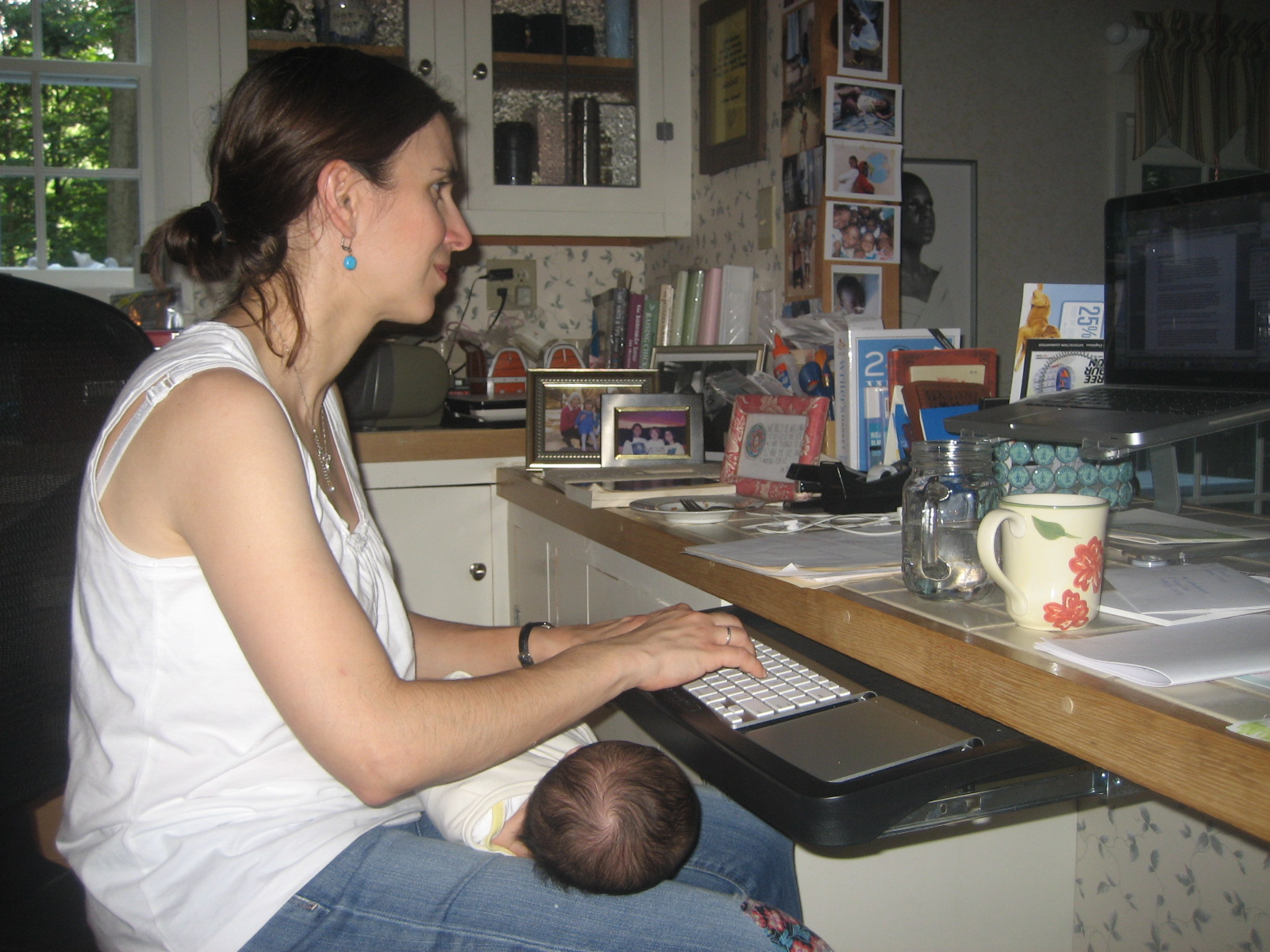
Photo by Fiona: Not exactly how I read at night, but it’ll give you an idea of how I’m writing this blog these days. Can you spot the baby in this picture?

My very favorite thing about nursing a newborn is that it gives me the chance to catch up on my reading.

That may seem counter-intuitive; you’d expect babies would put an end to maternal reading. But in my experience, the reading moratorium only happens once my children start sleeping through the night; when they’re up every two hours all night long, I tear through books faster than a bag of popcorn.

That’s right: I read in the middle of the night while I’m feeding the baby. While this might not be necessary for all mothers, it’s necessary for me. In fact, it’s necessary for me to get out of bed, sit up in a chair, and read while feeding the baby. Why? Because two babies ago, I fell asleep while nursing (and reading) in bed, and dropped the baby. Sitting in a chair with a text is my insurance policy against that ever happening again.

So, in preparation for Abigail’s birth, I went to the Vermont Book Shop and loaded up on books. Unfortunately, Abigail was 10 days late, so I read through most of those books during the agonizing wait before her birth. No matter: This time around, my nighttime reading has been revolutionized by a Kindle, a gift from my high-tech mother-in-law after she upgraded her own model. The Kindle is brilliant for reading-while-nursing because you don’t even need to hold it in order to read.

Books that will keep your attention at roughly 12:30, 2:30, 4:30, and 6:30 AM are worth sharing, so here’s a list of my favorites from the past couple of months:

The Language of Flowers by Vanessa Diffenbaugh

This book reads like silk — it’s so beautifully written and compelling that I found myself looking forward to frequent feeding times! The subject matter is a little rough, about a girl who’s come out on the wrong side of the foster care system and has difficulty forming relationships. But it’s ultimately a redemptive story about families — mothers and daughters, in particular — that taught me something new: the Victorian concept that every flower expresses a certain emotion or idea, which is the method the heroine uses to communicate.

Cloud Atlas by David Mitchell

NOT necessarily an easy read, but more of an, “Oh my gosh, how did he WRITE this?!?” kind of book. Mitchell weaves together stories spanning from the past into the future, and each story is written using a completely different style and dialect. Thematically, there’s so much going on that I’d need to take a 24-hour meditation retreat in order to get my brain around it all. But the over-arching themes of good vs. evil, interconnectedness, and reincarnation are breathtaking enough.

Lots of Candles, Plenty of Cake by Anna Quindlen

I picked this up because I’d never read a book by Anna Quindlen before and wanted to check her out. It’s a series of essays about womanhood, written from Quindlen’s point of view as a 60-something wife, mother, daughter, and writer. (Right up my alley, in other words). I thoroughly enjoyed her humor, optimism, and balanced perspective as someone who fought to have a career as a female journalist during the 1970s, but also wanted to have a quality family life.

The Dinner by Herman Koch

This was my book club’s July selection, and it was almost impossible to put down. I believe it’s also the first book I’ve read by a Dutch author, which was interesting; I’m suddenly much more aware of The Netherlands. Most of the “action” takes place in the form of one character’s interior monologue during a dinner with his brother. It starts off innocuous enough, then evolves into a psychological thriller. A great summer read if you’re prepared to suspend some disbelief.

Crazy Salad by Nora Ephron

I’d read somewhere that this collection of Ephron’s women’s columns for Esquire from the 1970s was a “must-read” for all women. So I read it. It’s sort of like a prequel to Anna Quindlen’s book: the book Quindlen might have written back when she was fighting for a career as a female journalist in the 1970s. It’s a little angry (verging on nasty, at times) for my taste, but it made me appreciate how ferociously the early feminists fought for things that we take for granted today.

The Burgess Boys by Elizabeth Strout

Elizabeth Strout is one of my very favorite authors. I’ve read all of her previous novels — Abide With Me, Amy and Isabelle, and Olive Kitteridge (which won the Pulitzer Prize). Each of these books is set in small-town Maine, and Strout has a gift for capturing life in a small-town community, the intricacies of family relationships, and moments of small but soul-stirring grace. The Burgess Boys is her latest novel, and it’s my least favorite. It centers on the shockwaves that shake the lives of three grown siblings when one of their sons commits a hate crime against the new community of Somali immigrants in a small Maine town. Strout’s trying to do a little too much in this book — it feels Tom Wolfe-ish in its collection of numerous, thinly-drawn character types. But it’s still a compelling read, with some important things to say about the changes happening in contemporary New England.

There you have it: books that will keep you awake no matter what the time! As summer winds down, I hope that you’re all enjoying the last days of summer reading. Feel free to share some of your favorites; I still have a few months to go before I’m sleeping through the night!

Weather or Not…

IMG_2237
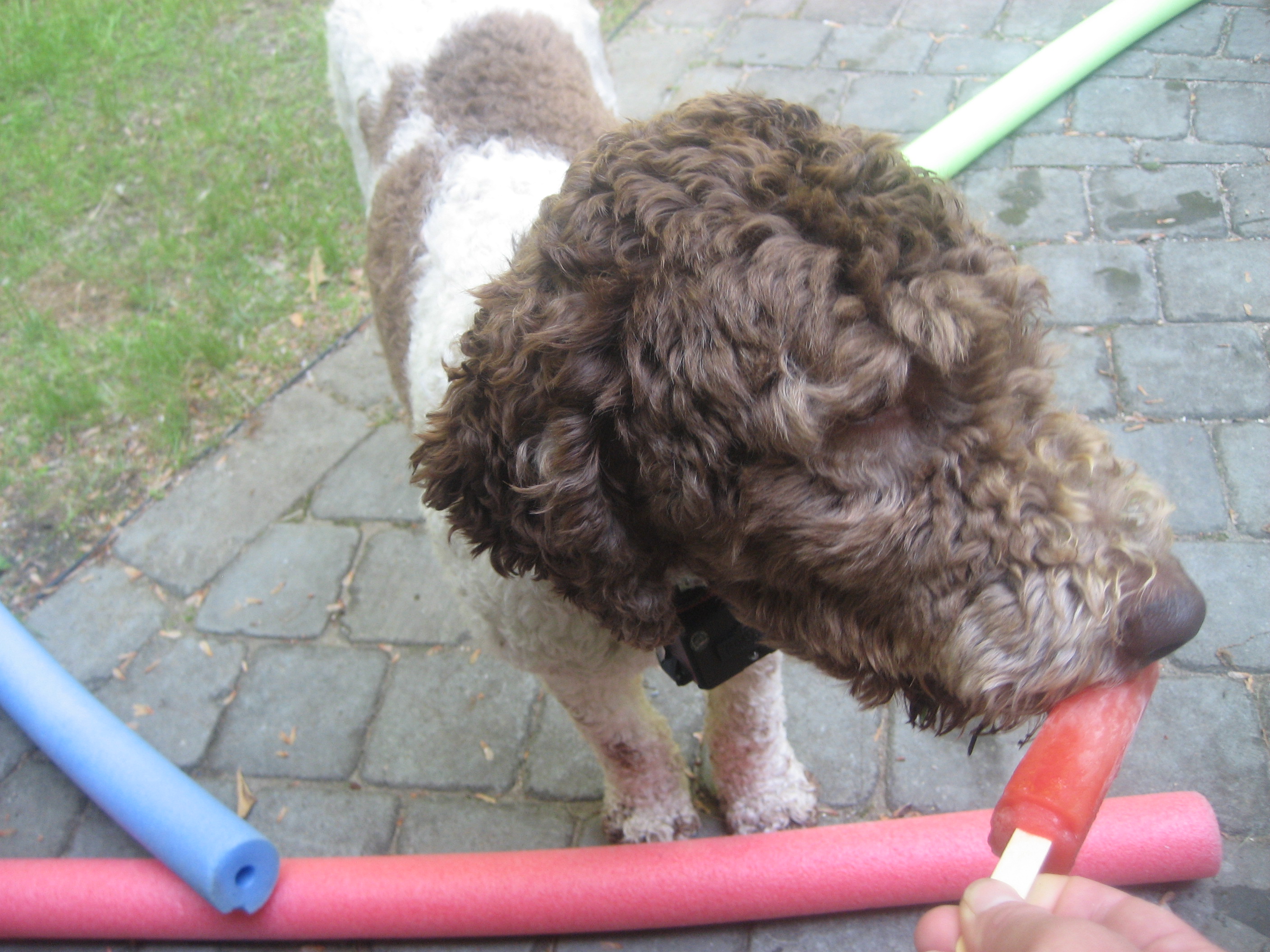
So hot, even the dog needed a popsicle.

I have tried to avoid writing about the weather this summer. Growing up, my mother watched the weather forecast the way other people watch the stock market or sports box scores: She hung on every detail, and if the actual weather failed to conform to the forecast, it was met with amazement bordering on disbelief. Despite this exciting first exposure to weather, the climate has always struck me as a dull topic. Most people talk about the weather when they’ve run out of anything else to discuss – with the possible exceptions of religion and politics.

But I’m sorry, I’ve held off long enough and I’m just going to have to do it, because what the HECK has been up with the weather this summer?!?

Click here to continue reading about what the heck has been up with the weather, over at The Addison Independent.

From Woodchucks to Silage, Your Questions Answered!

ma_03

I posted this message on Facebook last week:

HELP! Mom of month-old baby with a brain mushy from nighttime feedings seeks inspiration for her bi-weekly column on Vermont life. Sooooo: Anything you’d like to see written about Vermont? Any unanswered Vermont questions? Anything Vermont-related keeping you up at night? I’ll entertain any ideas!

My desperate plea generated more responses than I’d expected; unresolved Vermont issues are apparently keeping some people up at night.

Click here to continue reading in The Addison Independent.

College Town

Originally published in October 2012. This was one of the most difficult posts for me to write, and it felt like a pretty major revelation — that I’d spent my college years with no sense of self, screwed up royally, and suffered from depression and anorexia. Interestingly, it got very little response the first time around, which might indicate that perhaps my own experiences weren’t as rare or as shocking as I’d thought. I guess they never are, are they?

****

‘Does it hurt?’ asked the Rabbit.

‘Sometimes,’ said the Skin Horse, for he was always truthful. ‘When you are Real you don’t mind being hurt.’

-from The Velveteen Rabbit

What happens when you end up living in a college town that’s almost a carbon copy of the town where you spent your own undergraduate years?

I went to Williams College, a small liberal arts school of about 2,000 students in Massachusetts’ Berkshire Mountains. I now live near where my husband teaches: Middlebury College, a small liberals arts school of about 2,000 students in Vermont’s Green Mountains. When he was interviewing for his job, Erick knew that I had some concerns about the deja vu aspect of this move, so he specifically asked his future colleagues how Middlebury differed from Williams. “Oh,” they scoffed, “Williams is out in the middle of nowhere. It’s tiny. Middlebury is much more of a town.”

I found — and still find — this comparison hilarious. It’s like arguing the relative difference between a flea and a gnat. In fact, as of the 2000 census Middlebury’s population was 8,183; Williamstown’s was 8,424. (And please note that those numbers include the  2,000 undergrads who descend on each town for nine months of the year). Both towns are centered around a single main street. It may be true that Middlebury’s main street is slightly longer, with slightly more offerings that Williamstown’s. But I’m living in essentially the same town where I went to college.

So far, it’s been interesting how little I’m aware of living in a college town. Sure, my husband goes off to work at the college every morning. Sure, I’ll occasionally notice students walking around downtown. Roads and restaurants are busier during special weekends when the students’ families come to town. Many of our friends work for the college in some capacity — but by no means all of them. There’s an unofficial “college pew” at our church where all the students sit together. Our daughters take swim lessons taught by members of the college swim team at the college pool. We’ve even had students from Erick’s senior seminar over to our house.

That sounds like a lot of interaction with the college, but it’s such a vastly different experience from when I actually attended college that I seldom feel any deja vu. As a mother of three, more than a decade out of college myself, I’m in a different world. We’re a 15-minute drive away from campus, and — what with the three young kids — we don’t attend many campus events. Shockingly, the undergraduate population tends not to breakfast at 7 AM, hang out in the children’s room of the public library, frequent the local playgrounds, or eat dinner at 5:30 PM. So we don’t see much of them.

When I do see groups of undergrads going about their college lives, they seem very young, and very loud. Their confidence and energy make me a little nervous. They appear to float on their own potential; most of them haven’t yet felt life’s hard blows that cultivate humility and empathy.

I look and them and think, NOT FOR ANYTHING WOULD I WANT TO BE BACK WHERE YOU ARE.

College was not a particularly happy time for me. As I understand it, many people look back on college as the best years of their lives: years when they forged lasting friendships, joyfully experimented in both the academic and personal arenas, and emerged after four years having found themselves.

For me, college was when I lost myself.

This may come as a shock to some people who knew me during college — perhaps even to most people who knew me then. I put up a very good front, as I’ve done for most of my life, because that’s what good girls do.

When I arrived at Williams, many of my peers seemed to already know who they were and where they were headed. They’d survived the proving ground of high school, and now they were ready to soar off on their talent. Sure, some edges needed to be smoothed, but at a basic level they were who they would be. Maybe it only seemed that way, but over a decade later these college friends and acquaintances still appear to be fundamentally who they were back then.

I was not that undergrad. I came to college looking like I had it all together, having spent the first 18 years of my life being perfect: working hard, getting good grades, going to church, and trying to make everybody happy. High school wasn’t much of a proving ground for me; I more or less breezed through it with a group of like-minded peers.

Problem is, trying to be perfect and make everybody happy for 18 years doesn’t leave much room for becoming a real person. I was 18 years old and I didn’t have a single opinion of my own. Going to church didn’t help me with identity formation, frankly, because if you’re perfect then you completely miss the point of grace. How can you receive forgiveness and love despite your failings if you’ve never actually failed?

No, when I arrived at college, I was more like the description of a crab cake I once saw on a menu: “Just enough binding to hold it together.”

If this were a novel or a movie, what would happen to a protagonist like that? Clearly, they’d have to fail. Something would have to rip apart the binding of their fragile self so that the pieces could be put back together more securely. It’s an old story. It’s The Velveteen Rabbit: the toy bunny needs to be discarded on the trash heap with a broken heart in order to become Real.

And, thankfully, that did happen to me: I made mistakes. The specifics aren’t important. These weren’t major crimes against humanity; they were the kind of mistakes that happen when you wander through four years of college without knowing who you are. But they were major to me, because I wasn’t supposed to make mistakes. And it wasn’t pretty; the ripping apart of my binding that began in college resulted in a three-year post-college morass of depression and anorexia, during which time I distanced myself from friends and family. It wasn’t until I found grace and Erick — almost simultaneously — that my pieces started to come together again.

I missed my college reunion this year (because our California family was visiting) and I’m very sorry that I did. None of this was college’s fault; I still have fun memories, and I made some friends whom I hope to know forever (and whom I wish I saw more often!). I wanted to be at that reunion, because I think that most people who knew me in college didn’t really know me. I’d like to have a chance to get re-introduced.

So, these are the thoughts that enter my mind when I come into contact with undergrads these days. I’m glad for those moments, for living in a town that allows me periodic flashbacks to the lost-est time of my life. I wonder how many of these students — underneath their pulled-together, confident exteriors — are just as much of a mess as I was back then. (For that matter, I wonder how many of my own college peers were just as much of a mess as I was back then? Probably a fair amount).

NOT FOR ANYTHING WOULD I WANT TO BE BACK WHERE YOU ARE, I’d like to tell these undergrads, BUT NOT FOR ANYTHING WOULD I HAVE SKIPPED IT.

Here’s what I would have skipped: My panic and shame at having my perfect front deconstructed. It was that panic and shame that I took out on my body, my family, my friends. And for that, I’ll always be deeply sorry.

So if I were to give advice to any undergrad who, like me, arrives at college as a hollow shell of “perfection,” it would be this: DO NOT PANIC when you discover that you’re not perfect after all. Welcome it as the thing that will make you who you are, as radiation therapy for your soul. But don’t wallow. Show yourself some grace. Gently pick up your pieces and start looking for the tools to put yourself back together again.

In a recent segment on the NPR program This American Life called “The Ghost of Bobby Dunbar,” a woman from a family that had suffered tragedy, deceit, and mistaken identity concluded, “If you hate that it happened, then you hate that you are.”

If you hate that it happened, then you hate that YOU ARE.

You should never, EVER, hate that you are.

How I Learned to Stop Worrying and Be Patriotic

3623725380_8bf6186171

I’m part of Generation X. I don’t do patriotic, or nostalgic. I grew up in the era of MTV, “Greed is good,” and the Internet explosion. My generation had it easy, so we’re often (rightly) considered selfish, cynical, and apathetic. For most of my life, the U.S. government has done embarrassing things in public, which tends to discourage a sense of national pride. What was there to be proud of?

To find out, continue reading my latest “Faith in Vermont” column in The Addison Indpendent.

Uphill and Down

Looking down into Smuggler’s Notch from the Long Trail North.

Originally published in July 2012.

Erick and I have always loved hiking, and we used to hike fairly often…pre-kids. The last substantial hike we took was when we left 6-month-old Fiona with her grandparents and took off on a day hike in California’s Pt. Reyes State Park. If you do the math, that was FOUR YEARS AGO.

Unless you’re a masochist, hiking any further than 1/2 mile with children under the age of 5 is just not very fun. Somebody — usually the oldest, heaviest child, NOT the baby who’s already strapped to your back — is always whining to be carried, somebody always has to pee and then misses and gets soaked, somebody always needs a drink or a snack. Our two older girls are reaching ages at which we can see the glimmer of pleasant future hikes together, but for now we still have to catch them both on a good day.

So, when Erick’s parents were visiting this June, we jumped at the chance to leave the girls with them for a night, and headed off for a hike in Smugglers’ Notch State Park in Stowe, VT. Smugglers’ Notch got its name back in 1807, when President Jefferson banned trade with Great Britain and Canada. This was rough on northern Vermonters, who relied on trade with Montreal. So, during the trade embargo and later during Prohibition, goods were smuggled to and from Canada through this narrow pass in the Green Mountains.

And let me tell you: those smugglers had a tough job — I seriously doubt that much of the liquor made it through the Notch untouched. Erick and I opted for the Long Trail North to Sterling Pond, a 6.6-mile round trip hike with an 1,800-foot elevation change. The trail was rated “difficult,” which was no overstatement: it was steep, and rocky, and muddy in many places. But it afforded some stunning panoramic views of Mt. Mansfield (Vermont’s highest peak) to the west and Spruce Peak to the east. We ate our picnic lunch of bread, cheese, and salami overlooking pristine Sterling Pond. Best of all, the hike gave us FIVE HOURS of peace and quiet; Erick and I aren’t big talkers on our hikes, and on this hike we were so winded most of the time that talking wouldn’t have been an attractive option in any event.

A portion of the trail: believe me, this looks much easier than it was.

During those five hours of quiet,  I thought about a question that my sister-in-law had asked me a week earlier, a question that had been weighing on my mind because I wasn’t satisfied with my initial answer. And on that hike, I arrived at a much better response.

The question was this: “So, it gets easier, huh?”

By “it,” she meant parenthood.

My sister-in-law, who is an amazing mother to the most adorable two-year-old nephew on the planet, was not the first person to ask me this. I’ve been asked versions of this question for most of my parenting career by mothers who are just a step behind me, and I’ve asked the same question of mothers who are a step ahead of me. With three children under the age of five, I’d hardly seem like an expert. But when my sister-in-law posed her question, I got it: I no longer have a newborn, and I’m right on the cusp of having multiple children in school. With kids in my house who can feed themselves, dress themselves, forgo diapers, and verbalize their needs without screaming (often), I’ve reached the next level: the level that comes after the brain-fogged survival of the newborn years.

So when my sister-in-law asked if parenthood gets easier, my first response was: “Yes,” because you should always give people hope.

But you should also be honest, so I added: “Well, it gets different.” That’s what mothers of older children are always telling me, and from my limited experience I know that it’s true. Then I floundered around that statement for awhile without accurately conveying what I think it means. Our hike helped show me what it means, so here goes:

I think the first couple years of parenting, especially the first couple years of parenting your first child, are like the initial ascent on a mountain hike. They’re HARD: the terrain is unfamiliar, you’re using muscles that you probably haven’t used in a while, you’re weighed down by a ton of gear in your pack (say, for instance, three bottles of water, a two-pound bag of trail mix, and a rain parka), you have to keep your eyes down on the ground because if you look ahead you’ll get discouraged, and sometimes the only thing to do is just to crawl on all fours.

I’ve done a fair number of these mountain hikes, and each time I make the same mistake, even though I know better; while I’m scaling that trail, I think to myself, “This’ll be MUCH easier on the way back down.”

Of course, it’s NOT AT ALL easier on the way back down, it’s just…different. Your pack is probably a little lighter, because hopefully you’ve drunk some of your water and eaten some trail mix. And the going may be a bit faster, but descending that slope is hard on the knees and toes, the tree roots that supported your feet on the way up now want to trip you, and sometimes the only thing to do is to scootch down on your bottom.

It’s kind of like the parenting that follows those first years: you’re done with diapers and middle-of-the-night feedings, sure. But instead you get to see your children’s hearts broken by friends, you start to see all of the neuroses and flaws that you know will plague them for life, you have to deal with their various anxieties in areas that you never expected. You’re up in the middle of the night again, but this time you’re wondering whether your child will ever have friends, and whether those friends will be good friends or will introduce your kid to crack cocaine and reality TV, and whether your child is just going through normal development or whether you need to call in a child psychiatrist stat.

It gets different, not easier.

But the things that keep me going during a hike are pretty much the same things that keep me going in parenthood. Sometimes the trees open up on a vista — mountains, sky, valley — that truly takes your breath away, a view you wouldn’t have experienced without that climb. Sometimes there are simple, quiet, delicious lunches by the pond. And sometimes you meet people like the couple we passed on the trail: not a day under 70, coming back down as we were going up, and chipper as could be. After we saw them, there was no way we were complaining for the rest of the hike.

A view of Mt. Mansfield from the trail.

And on the way back down, I found it easier to drop my worries about whether it was going to rain or how much longer it would be to our destination, and instead I just felt thankful. Thankful for the smallest things: the breeze, that cloud that provided a minute of shade, my hardworking legs — especially my knees, my awesome moisture-wicking hiking socks, the evergreen branches that some kind hiker had laid across the muddiest patches.

After all, you don’t want to get back to the parking lot and realize that you spent the entire hike wondering when it was going to get easier.

Sterling Pond.

Born in Vermont

IMG_2314

This Father’s Day, the Gong family did our part to increase Vermont’s native population: at 3:30 AM, our fourth daughter, Abigail Esther, was born at Porter Hospital’s Birthing Center in Middlebury.

Click here to continue reading my latest “Faith in Vermont” column in The Addison Independent, about our experience giving birth in a small-town hospital.

Panic at the A & W

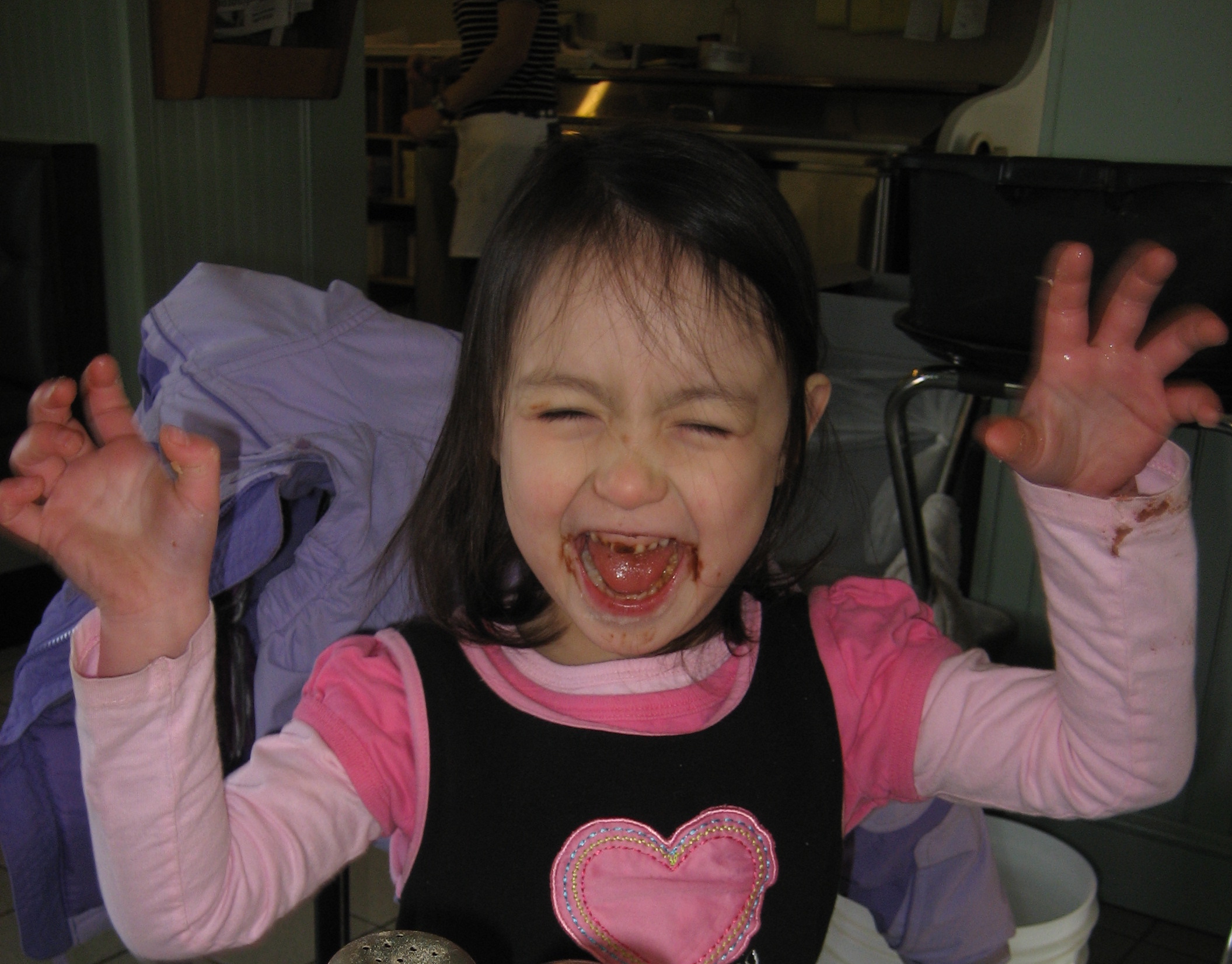
Fiona’s impression of “panic” — with a mouthful of chocolate doughnut.

This is one of my all-time favorite posts — and one of my all-time favorite memories from our first year in Vermont. (For the record, Fiona hasn’t done anything like this in a long, long time). Originally published April 2012.

Hello, my name is Faith, and I’m a perfectionist.

Actually, I’m a recovering perfectionist. I expect to be in recovery for the rest of my life.

This is not intended as a cute, “Boo hoo, I’m soooo perfect!” quasi-lament. On the contrary, I consider perfectionism to be equally as addictive as controlled substances, and potentially as damaging.

It sounds so positive, so socially acceptable: PERFECTIONISM. Like you’re packaging an admirable quality as an -ism so that it doesn’t come across as bragging. Saying “I’m such a perfectionist” is in the same league as, “Gosh, I wish I could put on weight!” or “Really, celebrity isn’t all it’s cracked up to be.”

But don’t be fooled: if you truly desire perfection, you have put yourself in an untenable position. NOTHING in life is perfect — or if it is, it doesn’t stay that way for long. So, by proclaiming yourself a perfectionist, you are placing yourself in opposition to the universe. And if that isn’t a recipe for bitterness, disappointment, and strained relationships, I don’t know what is.

Just as there are a variety of substances available for addiction, there are a variety of outlets for perfectionism. You may be a perfectionist when it comes to your work, your food and coffee (that was a big one when we lived in the Bay Area), your appearance. I am a (recovering) social perfectionist, which means that I care too much about what other people think of me in social situations.  I believe this is the perfectionism equivalent of crack cocaine: you can’t win.

One thing that my perfectionism sometimes leads me into is a little game I call “Script the Social Interaction.” In this game, before I head into a social situation, I script it out in my head beforehand. I think about how I want to come across, and I plan what I’ll say to the various people who will be there. Then, during the social interaction, I will actually give myself direction (“Nod less, smile more. NO, don’t talk about your kids!”). And of course, afterwards the critics weigh in (“Idiot! NEVER ask an economist about their research!!”). It’s like having the entire motion picture industry inside my head: crowded and exhausting.

(And please tell me that some of you do this, too. Even if you’re telling me very slowly and hoping that I don’t notice you dialing 911 behind your back).

ANYWAY, my point is that sometimes I do this, but I’m trying to stop as part of my perfectionism recovery. Because if you can’t be real and open with people, it’s impossible to have genuine relationships. If I’m only concerned with maintaining a perfect front during social interactions, what’s the fun in being my friend? I’ll bring nothing interesting to the relationship, and will only make you feel bad that you’re not as perfect as I appear to be. If, on the other hand, I’m able to relax and be myself and share imperfections like (theoretically): “Sometimes I yell at my kids and feel like a horrible mom,” or “Sometimes when my husband is talking about his day, I’m really wondering whether he’ll make us popcorn after dinner,” — well, you still may not want to be my friend, but at least you won’t feel inadequate by comparison.

And you know what’s really helping me get over this perfectionism? KIDS.

One of the greatest things about children is that they force you to be real. I can script out social interactions all I want, but it’s hard to maintain a slick front when a little person is pulling at my sleeve yelling, “Mommy, I need to pee! RIGHT NOW!”

I’ve found that the power of kids to cut through my social perfectionism is exponentially stronger in a small town. Since we moved to Vermont, we see the same people EVERYWHERE we go: the park, the library, the playgroup, the pizza place. So when Campbell pitches a massive tantrum at the library (not that this happened just last week or anything), we likely know every single witness. Not only that, but we’ll see them all again the next day, and the day after that, until forever. The lovely thing about this is that when this tantrum happened (okay, it was last week), I had several moms offering to help push our stroller out. The drawback is that I worry that I’ll always be known around here as “That poor gal from California who’s in over her head with those three crazy kids!”

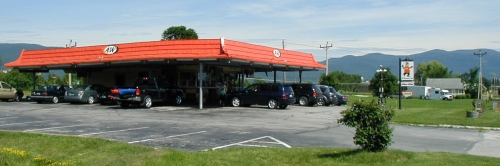
The Middlebury A&W                                     Photo credit

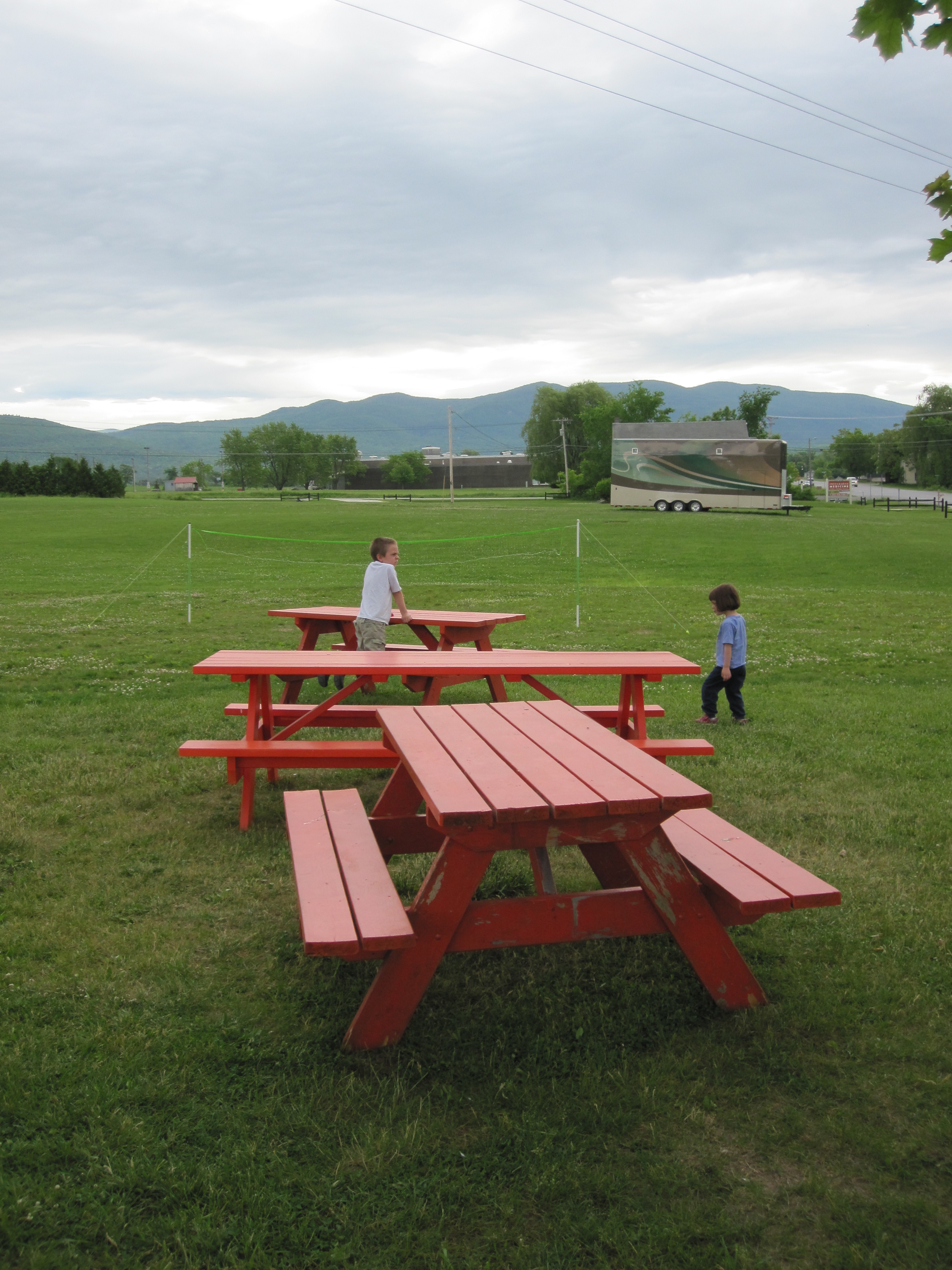
A perfect example of this happened last summer at the A & W.  This is a classic drive-in restaurant with simple, greasy food. It’s only open during the warm weather months. (The A & W is Campbell’s favorite place; she calls it “The ABC,” and all summer long, whenever we’d drive past it, she’d scream: “Look! The ABC!!”) You can either eat right in your car, or at picnic tables in a large grassy field next to the parking lot. The Gong Girls prefer the picnic tables, because there’s a big bucket of plastic outdoor toys (balls, bats, frisbees, etc) nearby. The Gong adults prefer the picnic tables, too, because WHY would we be having 3 kids eat in our car if we could have them running around in a grassy field instead?!?

The A & W picnic tables.             Photo credit

One evening in late summer, we met the girls’ friend Ruth and her parents for dinner there. It was a magical summer night: golden sunset, pleasant adult conversation, the girls running through the grass pretending they were being chased by aliens. It was when all three girls were happily dancing on top of an unused picnic table that we heard it: “Mommy, Mommy, I’m POOPING!” Turns out Fiona had been having so much fun that she’d neglected to tell us she had to use the bathroom. So there she was: holding up her dress, laying one right on top of the picnic table in full view of Rte. 7 and the other A & W diners. (This was one of those moments when my entire parenting life flashed before my eyes. I wasn’t sure whether to laugh or be horrified, so I sort of did both).

This being a small town, the A & W diners were: us, Ruth’s parents, and another family that we know from church. So the good news was that everybody there knew us…aaaand the bad news was that everybody there knew us.

So, if you’re ever in Middlebury and you’re not sure where to find us, just ask anybody for “That mom whose kid pooped on top of the picnic table at the A & W” and they’ll point you the right way.

And yes, we will be telling this story at Fiona’s wedding.

Over-sharing

IMG_1246
Photo by Fiona Gong

I was at Ilsley Library with my daughters, when we ran into a friend whose daughter attends preschool with our middle child, Campbell.  We greeted each other, and then she spoke directly to my two-year-old, Georgia. “Georgia, is it true what I hear?” she asked, “Did you really throw all your mommy’s makeup into the toilet?”

Apparently Campbell had been over-sharing at preschool again.

Click here to continue reading my latest “Faith in Vermont” column in The Addison Independent.