Why I Had Kids
On the Willows published my little reflection on why we’re keeping these three. Click here to read it.
Life. Motherhood. Vermont. (Not necessarily in that order.)
On the Willows published my little reflection on why we’re keeping these three. Click here to read it.

Tomorrow is Mother’s Day, so I’m thinking about motherhood.
I remember reading (sometime, somewhere) about the different mothering trends of the past few decades. There was the ultra-competitive power mothering of the 90s and early 2000s (Get your child the right stroller! Get them into the perfect school!). This was followed by a backlash that the author termed the “bad mother” trend (embodied by Ayelet Waldman’s memoir Bad Mother — which is, by the way, an honest and funny and touching read). “Bad mothers” proudly confessed to their failures, forgetfulness, selfishness, and use of vodka shots to get through the day. I’m not sure what you’d call the current mothering trend, but between last year’s hot mothering book, Battle Hymn of the Tiger Mother, and THIS year’s hot mothering book, Bringing Up Bebe: One American Mother Discovers the Wisdom of French Parenting, I’d call it “comparative multicultural mothering” (“Here’s how Asians do it!” “Oh yeah? Well here’s how the FRENCH do it!”).
I don’t really fit in to any of the above categories. I think I’m a mom who shows up every day and tries my imperfect best (with the help of God and coffee). A pretty good mom.
But I’m a pretty good mom who dropped my newborn.
I still remember vividly the first time Fiona got hurt. She was around 6 months old, and we were sitting on the floor of her room looking at books. As she was pulling out books from her bookshelf, a book from a higher shelf fell out and hit her right next to her eyebrow. It left a nasty red mark, and Fiona screamed for a few minutes, then recovered and forgot all about it.
I, however, did not forget. I cried harder than Fiona over her pain and my helplessness. How could I let such a thing happen to my child and not prevent it?!? That book COULD have landed in her eye! She’ll never forgive me for sitting there and letting her get hurt! I am clearly an unfit mother.
If you’re expecting me to tell you that things got better with time and additional children, you’re wrong.
Because when Campbell was about 4 days old, I was nursing her in bed late one night. I always read during late-night feedings in an attempt to stay awake, and I was reading that night. But despite my best efforts, worn out from the challenge of caring for a 20-month-old and a newborn, I nodded off with Campbell still in my arms. And woke up to a loud THUD and my baby wailing.
Campbell had fallen off the bed; more accurately, since I’d been holding her when I nodded off, I had dropped my newborn. I was completely beside myself. How COULD I, a second time mother, be so stupid?!? How would Campbell ever recover a sense of safety or trust after being dropped by her own mother at 4 days old?! Thankfully, our bed was only about 18 inches off of the floor, or it might have been a lot worse. We took her to the doctor the next day (where I was sure they’d call Child Protective Services on me), and she checked out fine. As far as I know, Campbell has no memory of the event and doesn’t hold it against me, although lately she has taken to saying, “Mommy, I wish I was back in your tummy.” I don’t know what that’s all about, but I’ve wondered whether she’s thinking, You know, things were a lot better back before she could get her hands on me.
And THEN, when Georgia was about 5 months old, I was trimming her fingernails one morning and nicked a little chunk of skin out of her tiny finger. She cried, and bled, and bled, and bled. She bled for the better part of an hour, through two washcloths and countless tissues. The only reason we didn’t take her to the doctor was because Erick was home, so he did his research (when there’s a family crisis, I handle the emotions and Erick handles the research) and determined Georgia was probably fine. Which she was.
Once again, I was the one who wasn’t fine. How many hundreds of fingernails had I trimmed with our previous two children, and I slice open our third daughter?!? How could I be so careless?!? Would Georgia ever trust me to cut her fingernails again?!? Happily, Georgia continues to submit to manicures, so I assume she’s let bygones be bygones. (I can’t say the same for her older sisters, who witnessed the event and remind me of it every time I go to trim their nails).
It goes without saying that this will NEVER be a parenting-advice blog. In fact, I no longer read parenting advice books or websites. (I know there are many excellent parenting resources out there that have helped countless people, but I started to notice that reading this advice made me anxious and confused). Not that I don’t need any input or advice, but these days I get it by talking to friends — friends who are in the trenches with me, or friends who are further along the parenting path and have great kids to show for it. Sharing stories, I’ve found, is the most helpful.
So that’s why I shared these stories with you: because I hope they might be helpful to other moms, especially moms who are struggling. (Is there any other kind?) I shared these stories precisely because they were stories I thought I’d never tell. They were too embarrassing, too traumatic. Back when they happened, I never would have predicted that I’d write them up and post them on the internet, let alone be able to chuckle over them a little.
Here is my Mother’s Day thought: I don’t think that time, experience, or more children necessarily make you a better, more competent mother. They just make you an older mother. Personally, I’m just as capable of dropping my third child as my first (maybe even more so, because I’m more tired and distracted). BUT, I DO think that time and experience can give mothers the gifts of perspective and humor. Things that seem so crucial — even shameful — at the time, later turn out to be things we tell virtual strangers with a chuckle. I’m only four years into this game, but if this is how I now see some of my darkest mommy moments, I’m guessing that in another four years we’ll all be chuckling about naps and potty training and kindergarten — the things that seem so important right now.
Bottom line: I think that it’s possible to be a pretty good mother and still drop your baby (metaphorically or actually). We are human, and imperfect, and all the love that we have within us will never be enough to make our children feel completely whole. All we can do is show up every day and try our imperfect best. Love — and laughter — and especially grace — really do cover a multitude of sins. And usually our children bounce back from our mistakes more quickly than we do.
So, Happy Mother’s Day. I wish my fellow mamas the gifts of perspective and humor. Remember that you’re still a pretty good mother, even if you drop the baby once in a while. And when it comes to motherhood, pretty good is good enough. Maybe it’s even great.
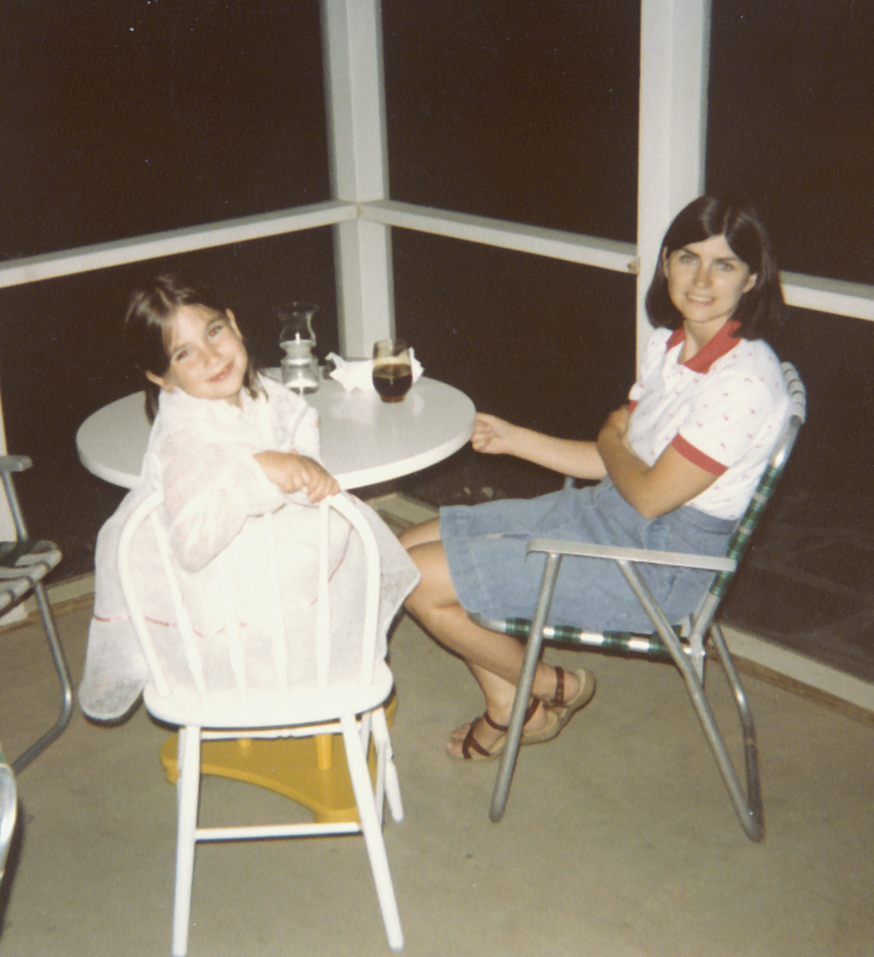
ADDENDUM: My mom just read this, and has informed me that I fell off the changing table when I was a baby. So there you go!

NOTE: I’m kind of terrified to publish this. It wasn’t written for public consumption; I wrote it for myself last week, as a way of processing a tragic fight that I’d been witnessing. It’s also, because of its frank discussion of faith, something I’d usually submit over at On The Willows. But it just feels right to publish it here. For some reason I’ve heard from numerous people over the past weeks who are also struggling with loss. Just about everybody who reads this blog knows me, and many probably know the family in question (whose names and identifying details I’ve removed in order to respect their privacy during this horrible time). I’m putting this out there and trusting that whoever needs to will read it, and that maybe it will help a little. (Lighter fare coming soon).

Some weeks, faith feels like the middle miles of a marathon, or the transition stage of childbirth, or 4:30 PM everyday in our house: when you say to yourself, “I just don’t think I’m going to make it.” This has been one of those weeks.
A beautiful baby’s fight ended this morning. We met her parents several years ago at our church in California. Around the same time we moved to Vermont, they moved overseas to work as missionaries — missionaries with a deep respect for their host culture, who wanted to know their community and be helpful in meaningful ways. Her mama started work as an English teacher at a local school, and her papa was researching various business ventures. Shortly after they moved, they sent out an email announcing the happy news that they were expecting their first child. And shortly after that, the trouble started: about halfway through the pregnancy, her mama started leaking amniotic fluid. She was put on bed rest and received various treatments, but things didn’t improve. Miraculously, despite low fluid levels, the baby continued to thrive. And then, about a week ago, their baby girl was delivered two months early. She was born with a systemic infection that affected her vital organs, and a lung condition that prevented oxygen from being absorbed into her bloodstream. This sweet newborn was put on a ventilator in intensive care, where she fought for her life. Hundreds of people all over the world were praying for her by this point. Her life ended today, at 9 days old.
Her parents’ faith, as expressed in their email updates, appears to be Teflon-strong. But then, they’ve been in the middle of a fight. I know from experience that, faith-wise, it’s often harder to watch a fight from the sidelines than to be one of the participants — at least while the fight’s going on. When you’re dodging blows and trying to land punches, you don’t have time to think about whether it’s fair.
Here’s what I think, though (not that anybody’s asking): What’s up with THIS, God?!? Here’s a faithful couple that’s just trying to do everything you told them to do — to love and serve others — and what did it get them? Stranded in a faraway country with a high risk pregnancy and a premature baby, THAT’S what it got them. This was your chance to pull out all the stops, move some mountains. Miracle Time! WHERE WERE YOU?!?
This type of situation is where my faith starts to fray. And I know I’m not alone. Of course, there’s lots of suffering in the world, and all of it is tragic. But when it’s a baby or young child who is sick, suffering, dying — someone who’s barely had the chance to live — what’s the point? I can’t think of anything more unjust. As a mother, I can barely process these stories, because they’re the worst of my worst-case scenarios. Then I look at my three healthy daughters, and it’s an embarrassment of riches. It’s. Just. Not. Fair.
Frankly, God doesn’t give me a whole lot of help here. One example of many, which we tend to gloss over in the joy of Christmas, is that a direct consequence of Jesus’s birth was the Slaughter of the Innocents: King Herod ordering that all babies under age two be killed. What’s up with THAT, God?!?
I have no good answers. I have nothing helpful to say to our friends, these mourning parents, other than: “I’m so sorry. We’re still praying for you.”
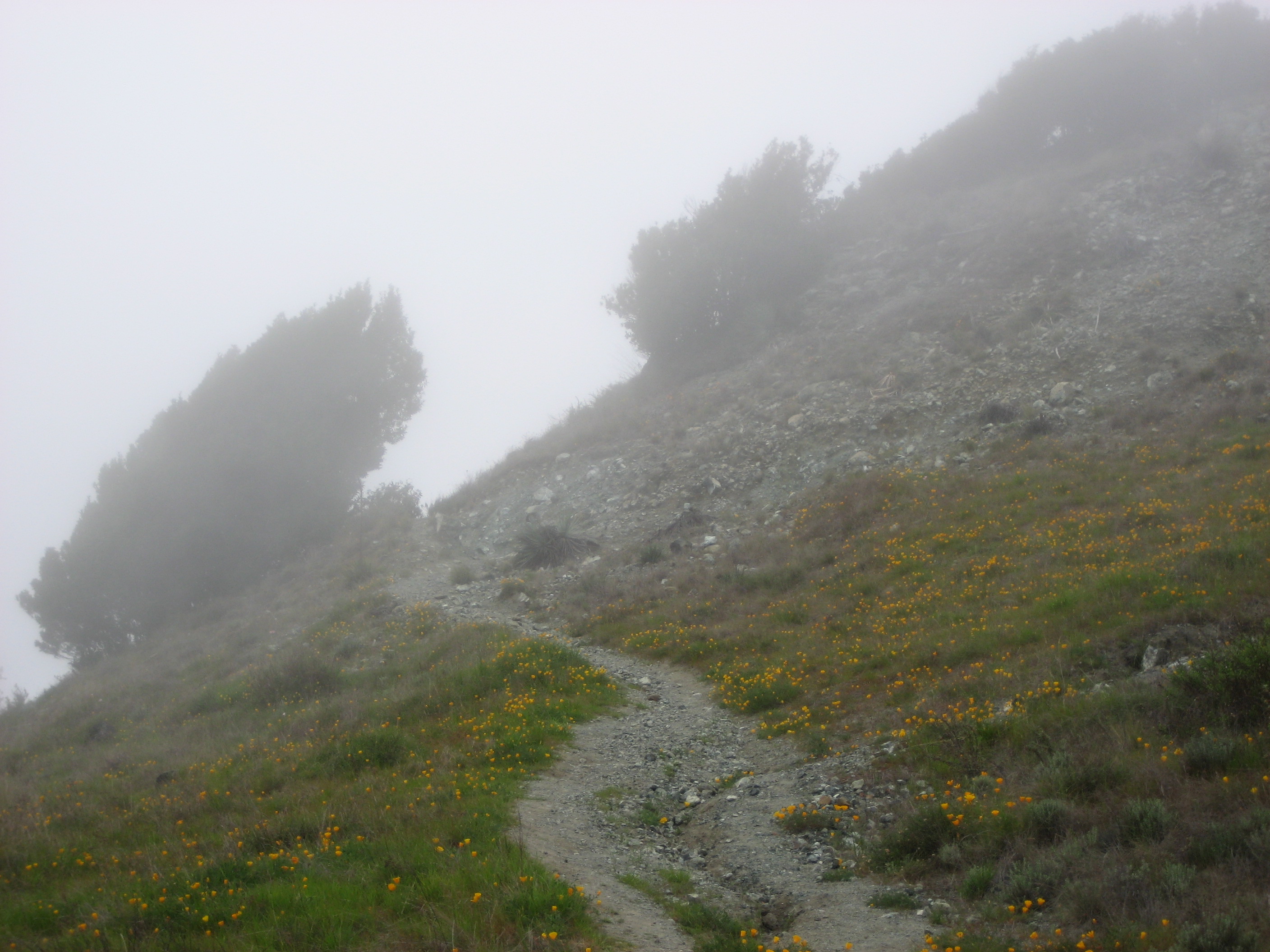
But it’s not all radio silence from God, either. Because, the same week that this baby girl was born, I happened to be reading Annie Dillard’s essay, “Teaching a Stone to Talk,” in which she writes:
It is difficult to undo our own damage, and to recall to our presence that which we have asked to leave….What have we been doing all these centuries but trying to call God back to the mountain, or, failing that, raise a peep out of anything that isn’t us?…At a certain point you say to the woods, to the sea, to the mountains, the world, Now I am ready. Now I will stop and be wholly attentive. You empty yourself and wait, listening. After a time you hear it: there is nothing there….There is a vibrancy to the silence, a suppression, as if someone were gagging the world.
Oddly, reading this passage started to reweave my fraying faith. Annie Dillard reminded me that when we wait for answers that don’t come, it’s not because that’s just how things are; it’s because things are wrong. People end up in trouble far from home, babies get sick and die, and nature itself is gagging.
Wait a minute, you may be thinking, that’s the GOOD news? Well, yes. That things are horribly wrong at this moment in history doesn’t disprove the existence of God, or his ultimate goodness. Because the wrong-ness of a baby having to fight for life, and of nature’s silence as recorded by Annie Dillard, IS answered, almost directly, by Isaiah 55:8-13 (This is for my mom: See, Mom, I’m listening!) I’m going to quote the entire passage, because it’s good stuff:
“For my thoughts are not your thoughts, neither are your ways my ways,” declares the Lord. “As the heavens are higher than the earth, so are my ways higher than your ways and my thoughts than your thoughts. As the rain and the snow come down from heaven and do not return to it without watering the earth and making it bud and flourish, so that it yields seed for the sower and bread for the eater, so is my word that goes out from my mouth: It will not return to me empty, but will accomplish what I desire and achieve the purpose for which I sent it. You will go out in joy and be led forth in peace; the mountains and hills will burst into song before you, and all the trees of the field will clap their hands. Instead of the thornbush will grow the pine tree, and instead of briers the myrtle will grow. This will be for the Lord’s renown, for an everlasting sign, which will not be destroyed.”
I’ve mentioned before that Erick and I help our daughters — and ourselves — grapple with the unanswerable questions of sadness and fear by paraphrasing from The Return of the King: One day everything sad will come untrue. Praying for this baby, and then reading Annie Dillard and Isaiah, I realized that I often dwell in the everything sad, but I have so little vision for the will come untrue. Isaiah 55 helped me color in that vision a bit. Mountains and hills bursting into song? Trees clapping their hands? I tend to read that as poetic hyperbole, but what if it’s literal? I can hardly imagine singing mountains or clapping trees that don’t look like some corny CGI effect, and every day I see mountains and trees when I look out my window. What if that’s what actually happens when nature regains its voice?
And if mountains are singing and trees are clapping, what might this baby girl be doing on that day? You will go out in joy and be led forth in peace.
I usually forget to remember that when we pray, we’re praying for eternity. Not just for what will happen tomorrow, or next week, or next year. Our prayers stretch out of time through forever. My thoughts are not your thoughts, neither are your ways my ways. God has all the time in the world to make wrong things right, sad things untrue. And when that’s what we’re praying for, I have to believe that the answer will always, eventually, be YES.



I do not want to imagine what our family’s life would be like without the library. The Library. The Library is the North Star of our weekly schedule. We — the three Gong Girls and myself — go there at least once a week, as we’ve done since Fiona was less than a year old. Other activities may come and go with the seasons or stages of life, but The Library is always there.
I have my own fond childhood memories of libraries. Growing up, the library in our town ran a film for children every Saturday morning, and my father always took me to see it. My mother took me to the library weekly while I was growing up, too, and later I went there with friends to work on research projects for school. I still remember the smell of old books and paste, trying not to giggle too loudly in the stacks, and using the card catalogue to look things up. (Remember the card catalogue?? The one with the actual cards???)
In college, the library took on less cozy connotations. I spent hours there, but it was now associated with late-night studying, caffeine headaches, undergraduates holed up in carrels for days on end. Post-college life coincided with the mega-bookstore boom (Barnes & Noble and Border’s) and the advent of Amazon. It was suddenly more convenient to just buy your books. So, it wasn’t until the end of my years in New York City that I finally stepped back into the public library. The New York Public Library, at that.
It was a revelation: all these books! Every book you could possibly want, and you could take them home with you for FREE! Not just books, either, but music and movies. Why didn’t more people KNOW about this?!?
I became re-addicted to the library. And then I had kids, which sealed the deal for good.
I love taking my girls to the library for so many reasons. The Children’s Room in most libraries these days is much more fun than when I was growing up: not only books, but TOYS! Which means that the library is one of the few places where all three of my children, aged 1 through 4.5 years, are happy. The library is (usually) indoors, which means that you can go there in all weather — particularly important in Vermont. Finally, there’s the social aspect; libraries tend to have many children’s programs, which create opportunities for 1) learning and entertainment, 2) children meeting other children, and 3) parents meeting other parents.
Am I forgetting anything? OH, the BOOKS! Obviously. We love going to the library every week because we can check out books: new books, old books, a tote-bag full of books. Our girls love to read. They also have relatively short attention spans and ever-shifting tastes and interests. We have a house full of books, but I often wonder why we bother to own any; the truth is that our girls mostly read the books they check out from the library each week. These are the books they’re excited about, because these are the books they’ve chosen for right now.

There are also (ahem) the videos. We’ve decided not to own a TV, but we are not above using our laptops to watch DVDs. (Back when Fiona was born, I was so good, SO GOOD, about not letting her watch anything on a screen until she was a full 2 years old, as mandated by the American Pediatric Association. And then I was pretty good about making Campbell wait…except that by then Fiona was already watching videos and I was pregnant with Georgia and just exhausted. And Georgia, frankly, doesn’t stand a chance — she’s already sneaking peeks at her sisters’ DVDs). I don’t love the idea of my kids spacing out in front of a video, but sometimes survival trumps ideals. For me, not using the occasional DVD to buy some peaceful time (we allow four 30-minute “video tickets” per week) would be like choosing to forgo indoor plumbing because trudging to the outhouse builds character. I could stick to my principles, and brag about them to the orderlies at the asylum when they slip my meals through a slot.
So, the girls also get to check out DVDs.

Middlebury has two libraries: there’s the Ilsley Library in town, and the Sarah Partridge Library in East Middlebury. The Ilsley is the main library. The entire lower level is dedicated to children and young adults: there’s a train table, a puppet theater, a craft table, a fish tank, and an old-fashioned claw-foot bathtub filled with stuffed animals. Sarah and Kathryn are the children’s librarians, and they do an amazing job putting together programs for almost every day of the week. There are two story times per week, a music hour, and a rotating selection of special events. Last summer we lived at this library because, in addition to story time, there was a weekly performance for children and an “Itsy-Bitsy Yoga” class for children and parents.
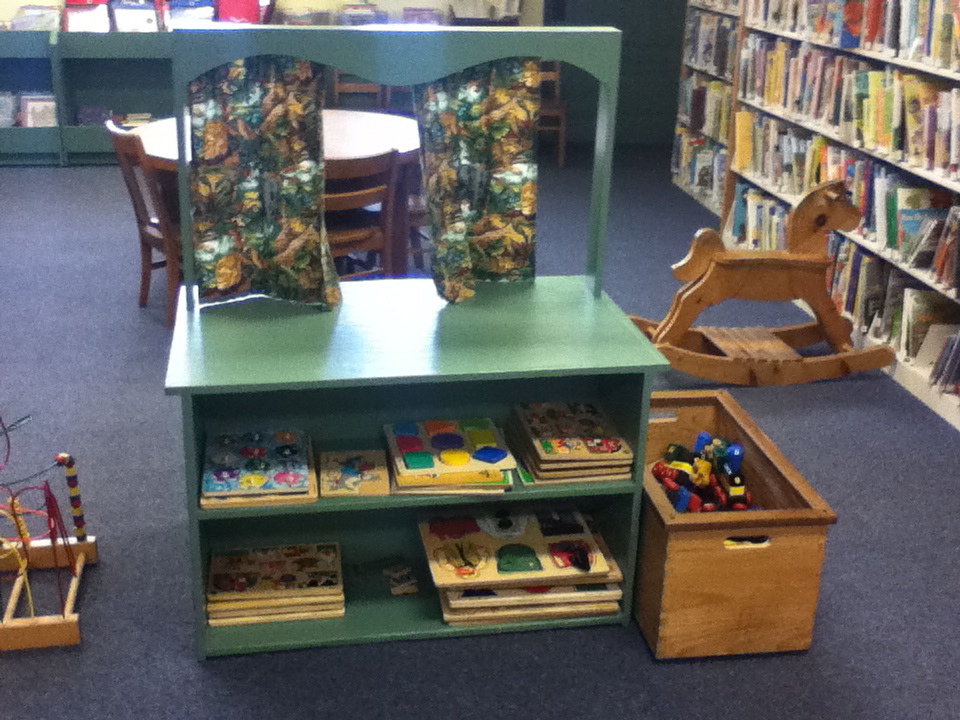
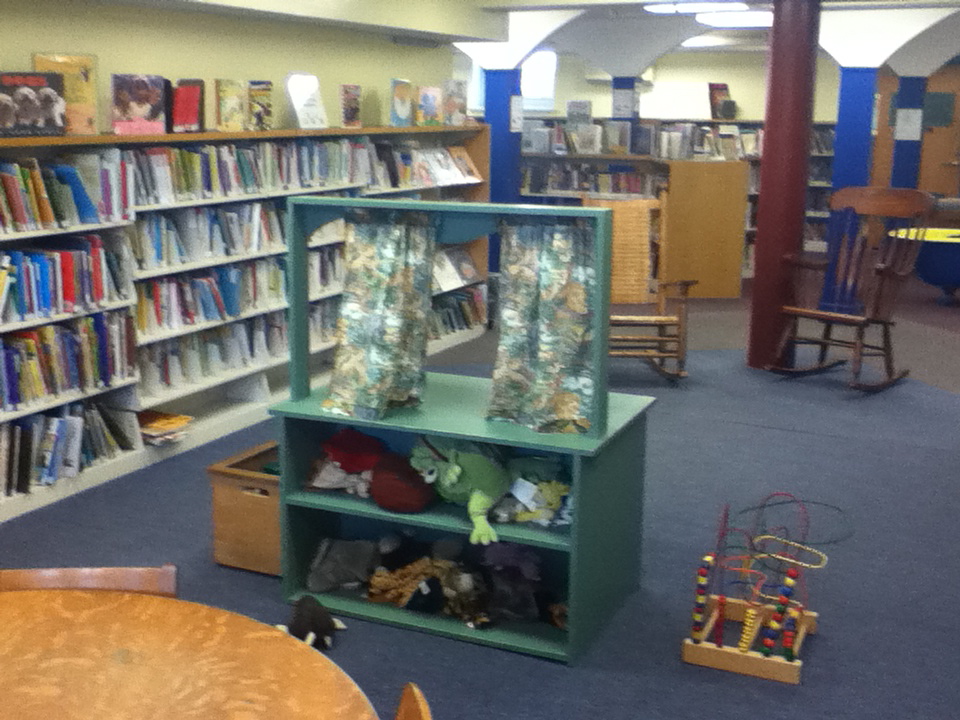
The Sarah Partridge Library is closer to us, but we don’t go there as often because it’s only open three half-days a week. Nonetheless, it’s the girls’ favorite. It was recently adopted as a second branch of the Ilsley Public Library, but it’s served East Middlebury as a library and community house since 1924. It has three small rooms: a community room, a children’s book room, and an adult book room. The book selection is much smaller than over at the Ilsley, but there are even more toys and stuffed animals packed into the children’s room, and usually our girls are the only children there, so they have the run of the place. Mona Rogers is the librarian at Sarah Partridge, but it’s more accurate to say that Mrs. Rogers IS the Sarah Partridge Library. I start sounding like Eloise whenever I talk about her: “Oooooooh, I just LOVE Mrs. Rogers!” Fiona’s preschool walks over to Mrs. Rogers’s weekly story time at the library, and Fiona adores her. Most Thursdays, Mrs. Rogers also brings along her Bassett Hound, Harry, who sits next to her desk.
We went to the library every week back in Berkeley, too. Berkeley has a much larger library system — 5 branches throughout the city — so there are always story times and special activities for children. Apart from size and number of programs, the main difference I notice between the Berkeley and Middlebury public libraries is that the Berkeley libraries all have self-check-out computers. The Middlebury libraries do not, but then again, we usually don’t even need our library card to check out here. Often, before I reach her desk, Mrs. Rogers has already pulled up our account on her computer. Life in a small town.

This will never be a political blog, but regardless of your politics (and, as I’ve spent my entire adult life in New York City, Berkeley, and Vermont, you might be tempted to draw some speedy conclusions about mine), there is much to be distressed about in our country these days. Whenever I start feeling depressed about where things are heading, though, I think of this: wherever you go in the United States, there are public libraries. As long as a country has public libraries, I’m pretty sure that there’s still hope for it.
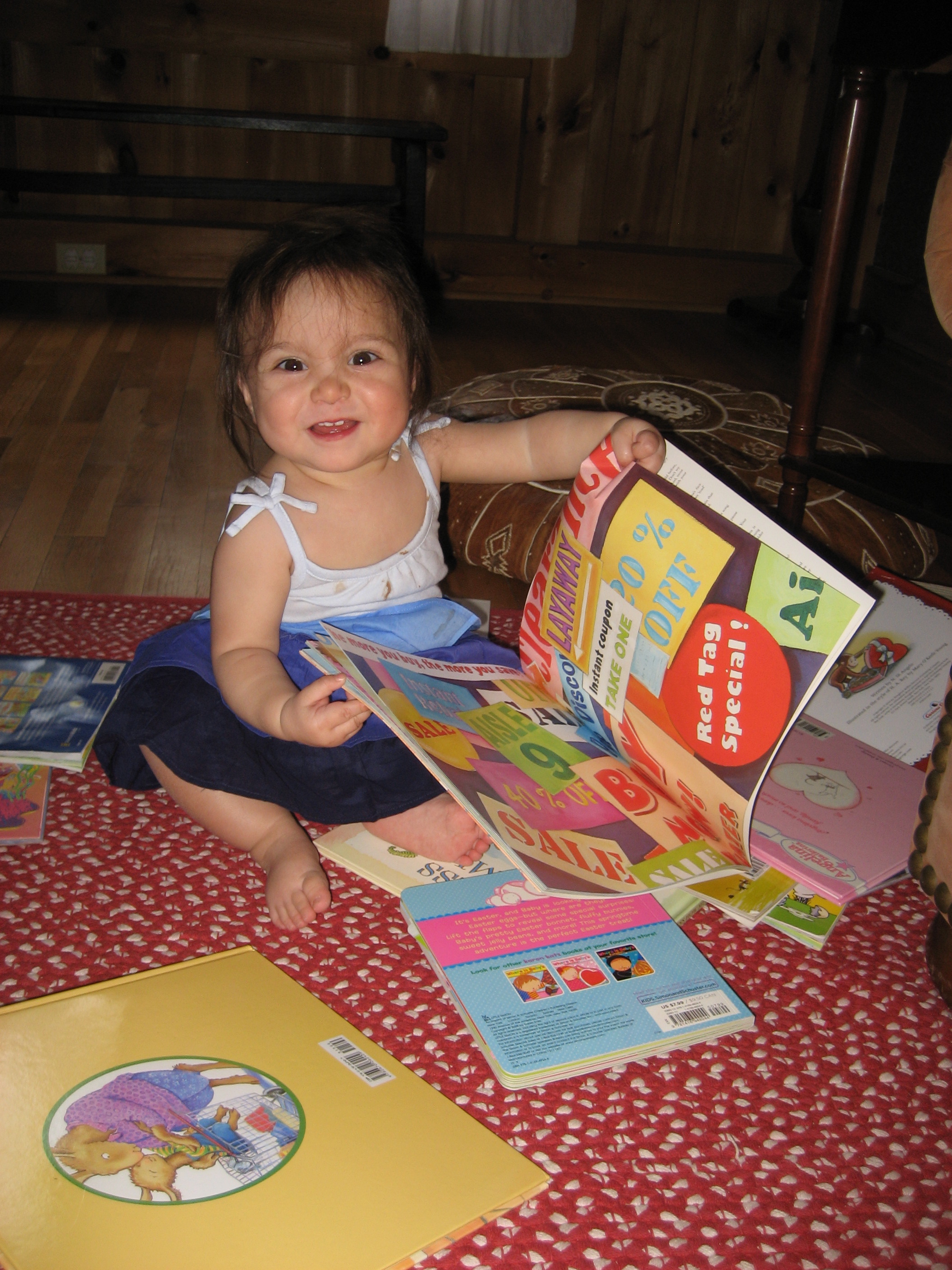

If you know Campbell, then you know the Sweeties.
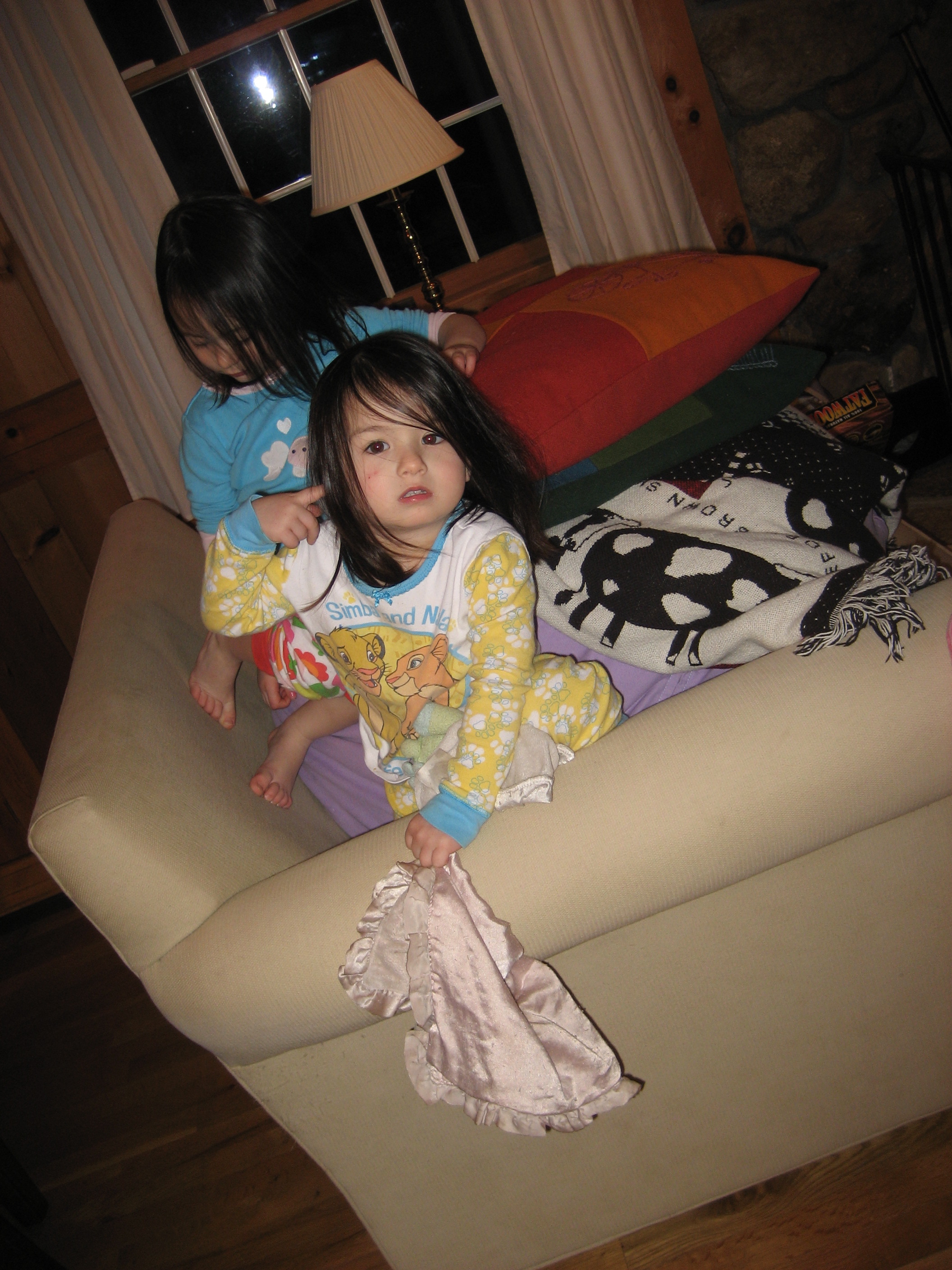
The Sweeties are two little blankie animals (I believe they’re often called “lovies”) that Campbell carries with her EVERYWHERE. Looking through our photos, I was actually shocked at how seldom the Sweeties appear — I must do a better job editing than I thought — because Campbell seldom allows them to be more than arms-reach away. The two Sweeties are differentiated as “Pink Sweetie” and “White Sweetie” based on their original colors, although by now they’re both just a dull grey.
Here is Campbell holding Pink Sweetie:
And here she is with White Sweetie:
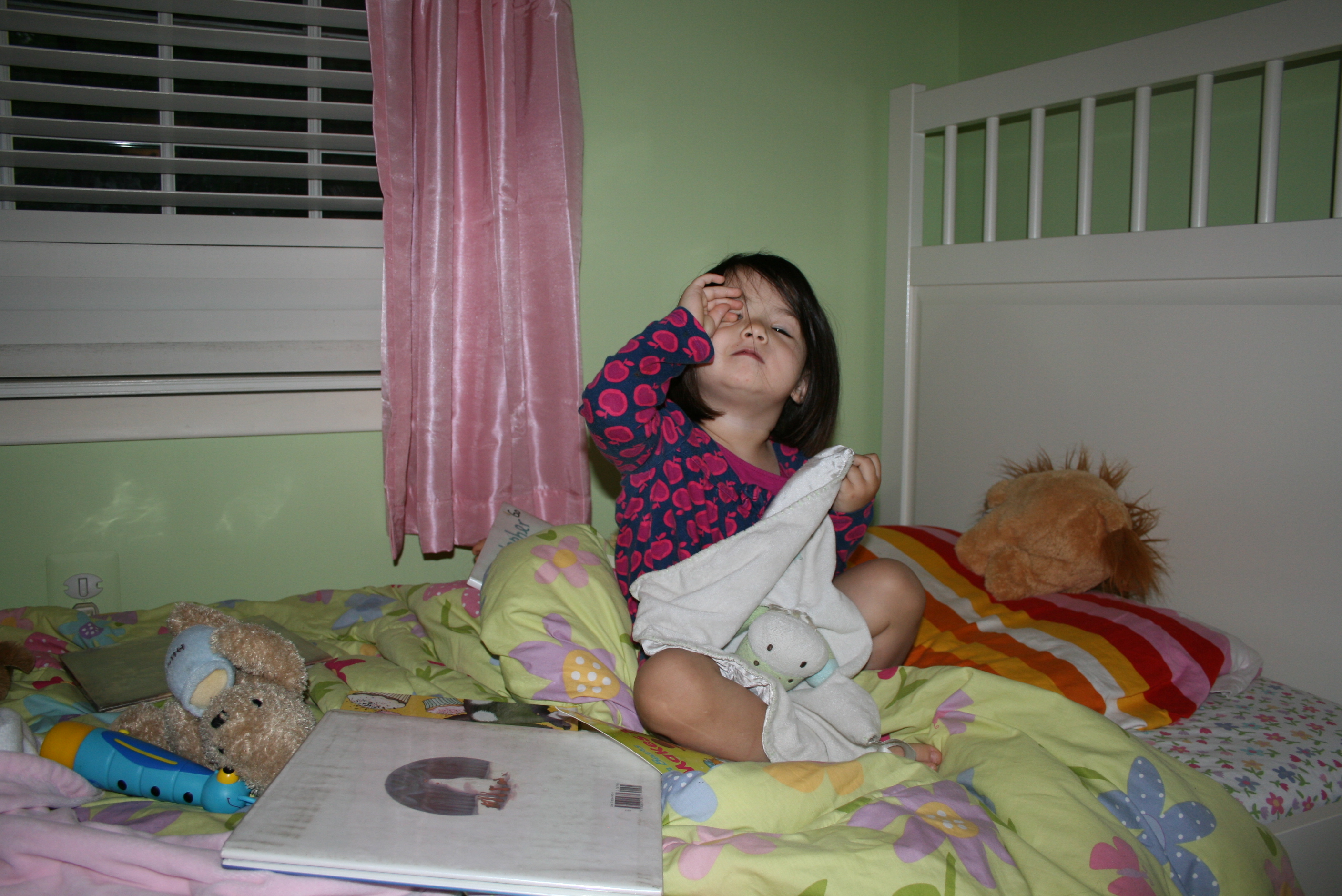
The Sweeties were originally given to Fiona when she was born. But her level of attachment never even approached Campbell’s; shortly after Campbell’s birth, Fiona decided it was time to pass along the Sweeties to her new baby sister, so she put them in Campbell’s crib. The rest, as they say, is history. (This is actually interesting, because if you asked the people who know our daughters which one would be most likely to form a strong attachment to a security object, they probably wouldn’t guess Campbell. Campbell is louder, more secure in who she is, and throws her body around a little more than Fiona, so people tend to assume she’s the tough one. In fact, it’s not that simple. Campbell is afraid of random things like automatic hand dryers, she’s the one who wakes up with nightmares… and the Sweeties are her equivalent of Samson’s hair. Which just goes to show that people are complicated).
What Campbell likes to do with the Sweeties is: bury her face in the silky material on their undersides. Or, more accurately, she inhales them. Because they come with us everywhere, I see the Sweeties as a convenient form of immunotherapy — and Campbell is the healthiest of our girls. (Check it out: science via NPR validates my dirty kids!) Erick, on the other hand, is always looking for opportunities to steal the Sweeties and throw them in the wash. So he’s not Campbell’s favorite parent.
Of course, there are some boundaries imposed on Campbell’s relationship with the Sweeties. She may bring them along in the car, but — assuming our destination is Sweetie-friendly — she’s only allowed to bring ONE Sweetie out of the car with her. The winner in this daily Sophie’s Choice is always: Pink Sweetie.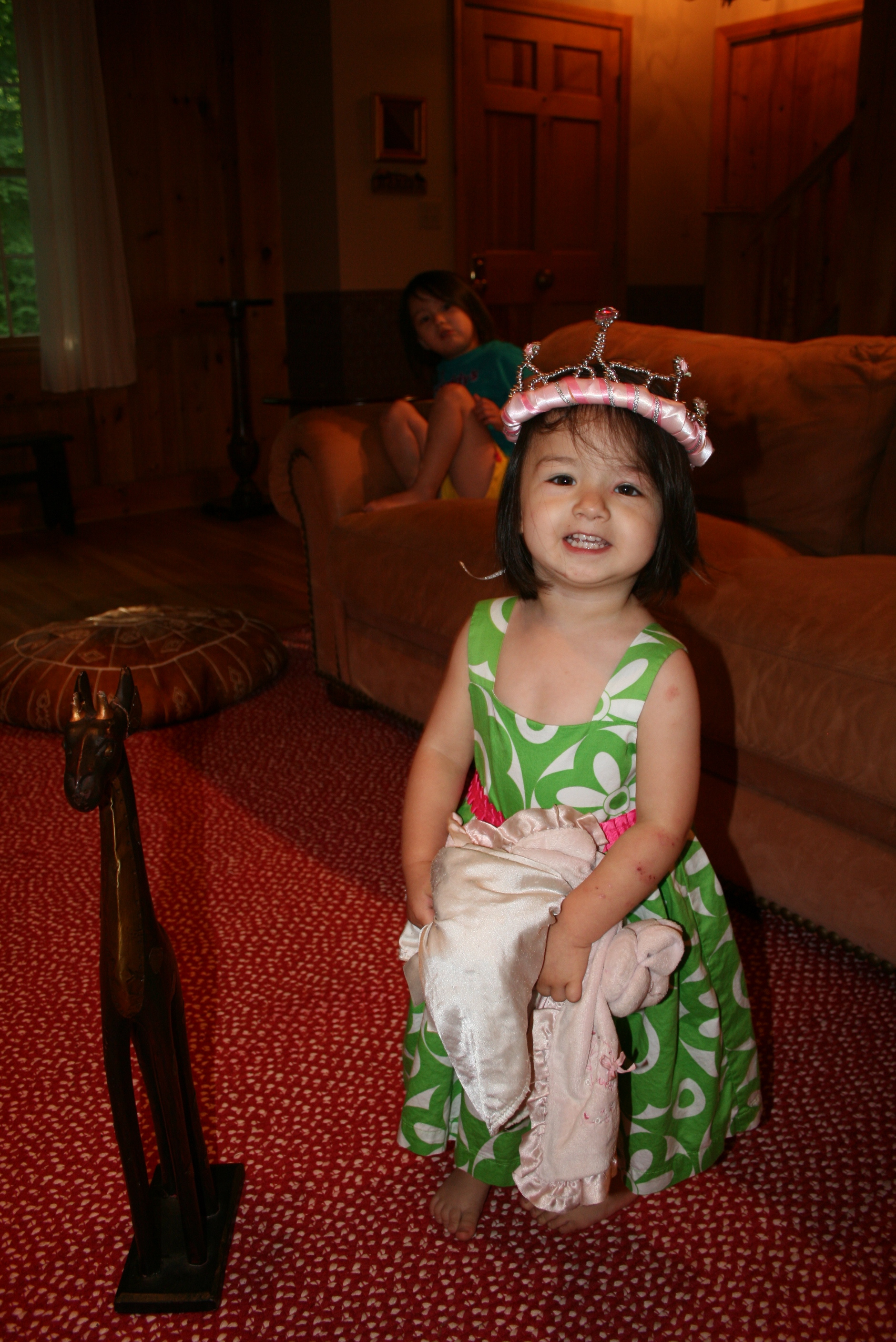
So it was a pretty big deal the day she left Pink Sweetie at home.
Here’s how it happened: I was taking Campbell and Georgia to the weekly playgroup that the Addison County Parent Child Center hosts at our church. In addition to the Sweeties, Campbell had collected a couple of stuffed animals that she also wanted to bring in the van. She had such an armful that, somehow, Pink Sweetie slipped through the cracks. We drove happily all the way into town, parked the van, and as I was unbuckling Campbell from her carseat we both realized that Pink Sweetie was missing!
I can’t think of any fitting metaphor to capture the magnitude of Campbell’s trauma at this realization. Imagine the most dramatic movie scene in which two lovers are being torn apart — something from Titanic, say — and that’ll just about do it. She was completely prostrate, screaming unintelligible words punctuated by “NOOOOO!” I tried reason: You still have White Sweetie, if we go all the way back home we’ll miss playgroup, I need to get Georgia out of the car. Nothing worked. I did one of those quick parental cost-benefit analyses in my head, and then said: “We’re going in. You don’t need Pink Sweetie to have fun. You’re going to be okay.”
And I repeated that over and over while I dragged my screaming child the longest 25 feet of both of our lives towards the door. Do you ever have a moment when you think: “Someone is going to assume I’m abducting my own child and call the police on me?” This was one of those moments.
In the end? She was fine. By the time we made it through the door, she’d settled down. When she saw all the children and toys at playgroup, she hesitated for a minute and then jumped right in as usual. When we returned home, Pink Sweetie was waiting on the Mud Room stairs.
At dinner that night, I told Erick how proud I was of Campbell. Campbell’s version: “I cried. I stopped crying. Happy!”
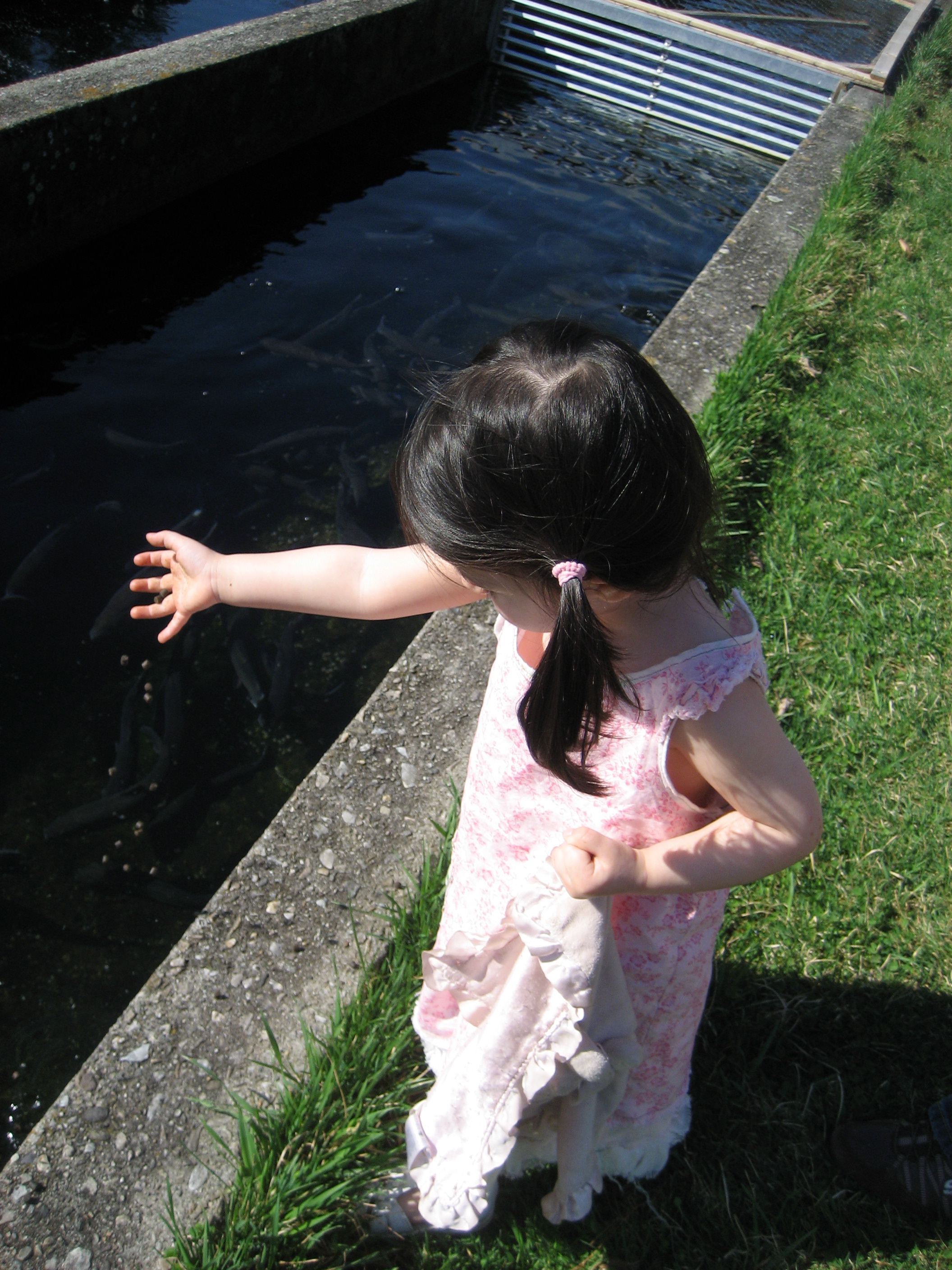
It was a good moment, and I was hoping she’d hold a little more loosely to Pink Sweetie afterward, figuratively speaking. And so far, she has — literally speaking. The next day we took some visiting friends (Manny, Zoe, and daughter Sofia from Maine — click here to read Zoe’s generous account on her own blog) to the Salisbury Fish Hatchery, which produces trout to stock Vermont water bodies. Pink Sweetie came along, and right at the very end, as Campbell leaned over one of the pools of trout — the one with a “No Hands in Water” sign right above it — she held Pink Sweetie so loosely that Pink Sweetie fell into the water. Guess who had to fish Pink Sweetie out? So between my hands and the germs on Pink Sweetie, if the Vermont trout population dips steeply this year, you’ll know why.
I was wondering whether I have a “Pink Sweetie” in my own life. I think it’s probably coffee.


Hello, my name is Faith, and I’m a perfectionist.
Actually, I’m a recovering perfectionist. I expect to be in recovery for the rest of my life.
This is not intended as a cute, “Boo hoo, I’m soooo perfect!” quasi-lament. On the contrary, I consider perfectionism to be equally as addictive as controlled substances, and potentially as damaging.
It sounds so positive, so socially acceptable: PERFECTIONISM. Like you’re packaging an admirable quality as an -ism so that it doesn’t come across as bragging. Saying “I’m such a perfectionist” is in the same league as, “Gosh, I wish I could put on weight!” or “Really, celebrity isn’t all it’s cracked up to be.”
But don’t be fooled: if you truly desire perfection, you have put yourself in an untenable position. NOTHING in life is perfect — or if it is, it doesn’t stay that way for long. So, by proclaiming yourself a perfectionist, you are placing yourself in opposition to the universe. And if that isn’t a recipe for bitterness, disappointment, and strained relationships, I don’t know what is.
Just as there are a variety of substances available for addiction, there are a variety of outlets for perfectionism. You may be a perfectionist when it comes to your work, your food and coffee (that was a big one when we lived in the Bay Area), your appearance. I am a (recovering) social perfectionist, which means that I care too much about what other people think of me in social situations. I believe this is the perfectionism equivalent of crack cocaine: you can’t win.
One thing that my perfectionism sometimes leads me into is a little game I call “Script the Social Interaction.” In this game, before I head into a social situation, I script it out in my head beforehand. I think about how I want to come across, and I plan what I’ll say to the various people who will be there. Then, during the social interaction, I will actually give myself direction (“Nod less, smile more. NO, don’t talk about your kids!”). And of course, afterwards the critics weigh in (“Idiot! NEVER ask an economist about their research!!”). It’s like having the entire motion picture industry inside my head: crowded and exhausting.
(And please tell me that some of you do this, too. Even if you’re telling me very slowly and hoping that I don’t notice you dialing 911 behind your back).
ANYWAY, my point is that sometimes I do this, but I’m trying to stop as part of my perfectionism recovery. Because if you can’t be real and open with people, it’s impossible to have genuine relationships. If I’m only concerned with maintaining a perfect front during social interactions, what’s the fun in being my friend? I’ll bring nothing interesting to the relationship, and will only make you feel bad that you’re not as perfect as I appear to be. If, on the other hand, I’m able to relax and be myself and share imperfections like (theoretically): “Sometimes I yell at my kids and feel like a horrible mom,” or “Sometimes when my husband is talking about his day, I’m really wondering whether he’ll make us popcorn after dinner,” — well, you still may not want to be my friend, but at least you won’t feel inadequate by comparison.
And you know what’s really helping me get over this perfectionism? KIDS.
One of the greatest things about children is that they force you to be real. I can script out social interactions all I want, but it’s hard to maintain a slick front when a little person is pulling at my sleeve yelling, “Mommy, I need to pee! RIGHT NOW!”
I’ve found that the power of kids to cut through my social perfectionism is exponentially stronger in a small town. Since we moved to Vermont, we see the same people EVERYWHERE we go: the park, the library, the playgroup, the pizza place. So when Campbell pitches a massive tantrum at the library (not that this happened just last week or anything), we likely know every single witness. Not only that, but we’ll see them all again the next day, and the day after that, until forever. The lovely thing about this is that when this tantrum happened (okay, it was last week), I had several moms offering to help push our stroller out. The drawback is that I worry that I’ll always be known around here as “That poor gal from California who’s in over her head with those three crazy kids!”

A perfect example of this happened last summer at the A & W. This is a classic drive-in restaurant with simple, greasy food. It’s only open during the warm weather months. (The A & W is Campbell’s favorite place; she calls it “The ABC,” and all summer long, whenever we’d drive past it, she’d scream: “Look! The ABC!!”) You can either eat right in your car, or at picnic tables in a large grassy field next to the parking lot. The Gong Girls prefer the picnic tables, because there’s a big bucket of plastic outdoor toys (balls, bats, frisbees, etc) nearby. The Gong adults prefer the picnic tables, too, because WHY would we be having 3 kids eat in our car if we could have them running around in a grassy field instead?!?
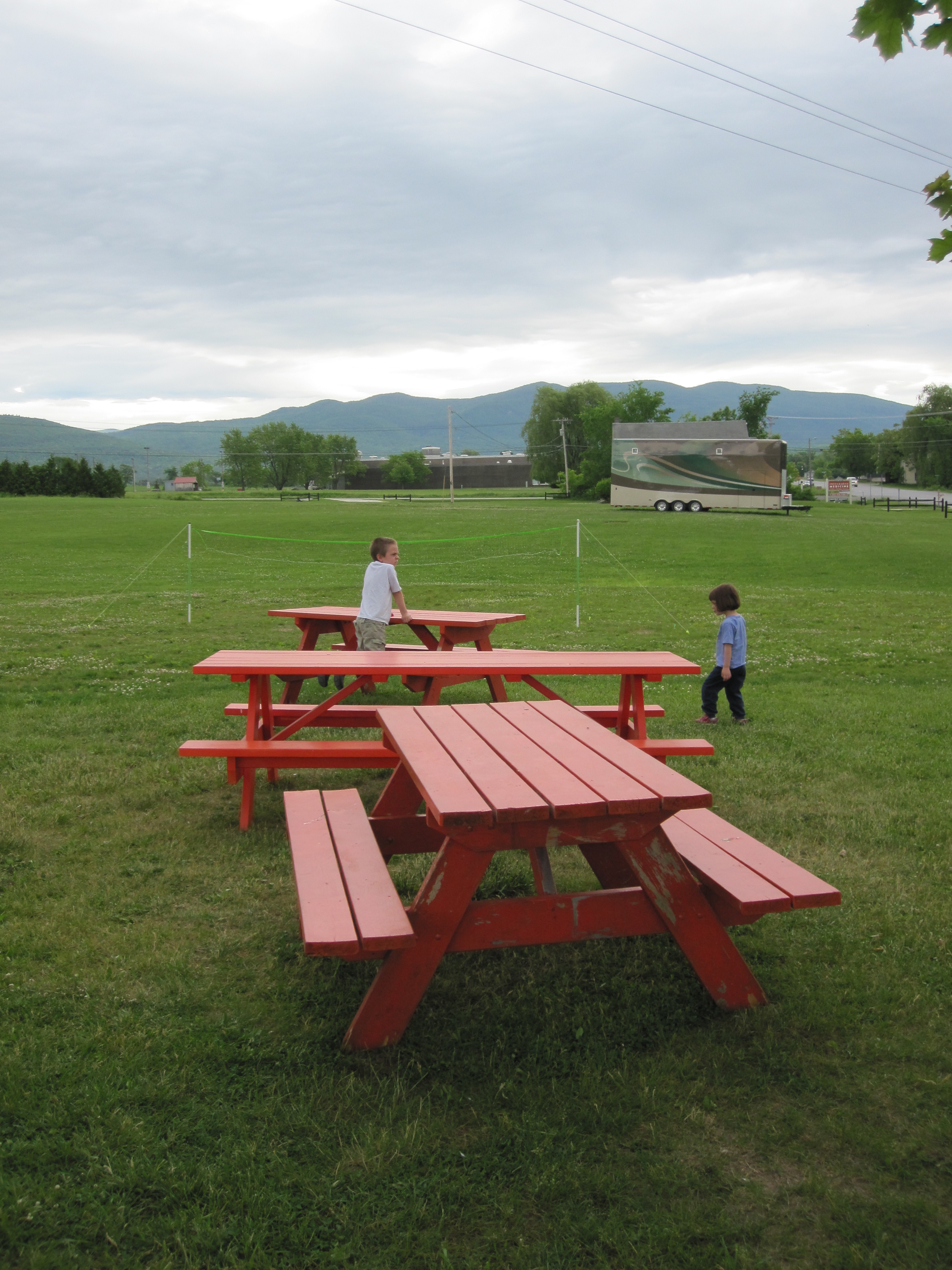
One evening in late summer, we met the girls’ friend Ruth and her parents for dinner there. It was a magical summer night: golden sunset, pleasant adult conversation, the girls running through the grass pretending they were being chased by aliens. It was when all three girls were happily dancing on top of an unused picnic table that we heard it: “Mommy, Mommy, I’m POOPING!” Turns out Fiona had been having so much fun that she’d neglected to tell us she had to use the bathroom. So there she was: holding up her dress, laying one right on top of the picnic table in full view of Rte. 7 and the other A & W diners. (This was one of those moments when my entire parenting life flashed before my eyes. I wasn’t sure whether to laugh or be horrified, so I sort of did both).
This being a small town, the A & W diners were: us, Ruth’s parents, and another family that we know from church. So the good news was that everybody there knew us…aaaand the bad news was that everybody there knew us.
So, if you’re ever in Middlebury and you’re not sure where to find us, just ask anybody for “That mom whose kid pooped on top of the picnic table at the A & W” and they’ll point you the right way.
And yes, we will be telling this story at Fiona’s wedding.

Bonus post! I have a piece published over at On The Willows today — a little reflection on Fiona’s birth in particular and maternal health in general. Click here to read it.


It might be just me, but sometimes my children behave irrationally.

When this happens, my first instinct — usually indulged — is to return the child in question to whatever passes for “normal” behavior, as quickly as possible.
My second instinct, increasingly, is to reflect upon whether this irrational behavior might — just possibly — be something that I myself display, albeit in a more “mature” form.
It’s not really news that if you stand back and compare the behavior of children and adults, you’ll probably find more similarities than differences. For all the living and learning that we do, I think we mostly just add protective layers on top of our childlike instincts. We’re kind of like those Russian nesting dolls; we may look all grown up on the outside, but at our deepest core is a tiny little person. A tiny little person full of basic wonder, love, anger, fear, and who often screams, “It’s not fair!”
For instance:
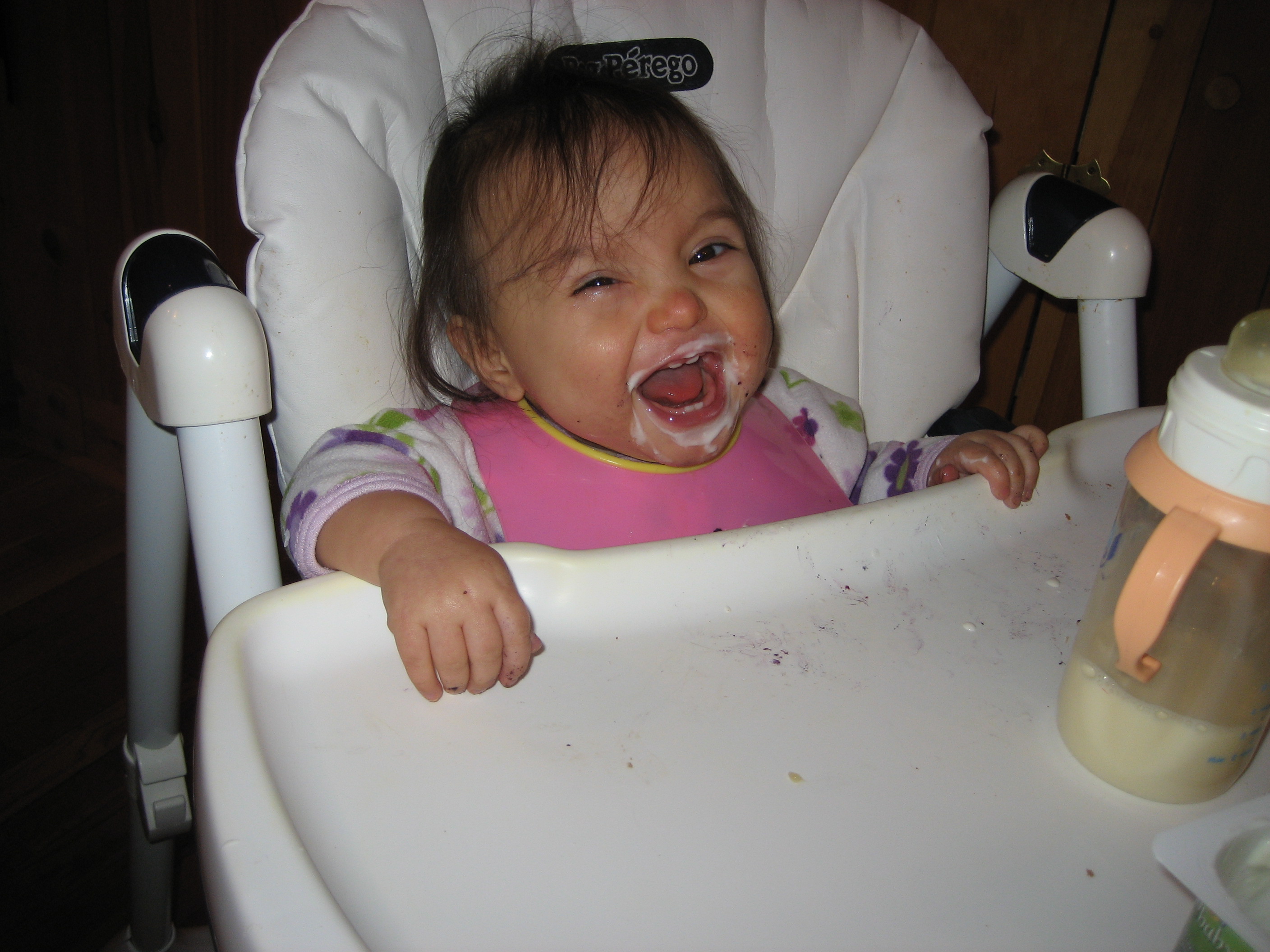
-When each of our daughters started sitting in a high chair and eating solid foods, they did so quite messily. So, at the end of each meal, we would wipe their hands and faces with a wet washcloth to prevent them from looking like human sculptures of mashed sweet potatoes. Remember, now, we did this following every single meal, three meals a day, for at least a year. We applied gentle pressure as we wiped, and the washcloth was pleasingly warm. In a spa setting, you’d pay good money for this kind of service. But every single one of our daughters would SCREAM like we were taking a Brillo pad to them, every single time we wiped them down. Now that it’s Georgia’s turn for the thrice-daily screamfest, I again find myself wondering, “WHY is this such a traumatic surprise to you? Isn’t this the exact same thing I did after your LAST meal? Not to mention EVERY meal?!?”
And yet, don’t we all miss the patterns and react with shock and outrage when we find ourselves repeating the same scenario over and over?
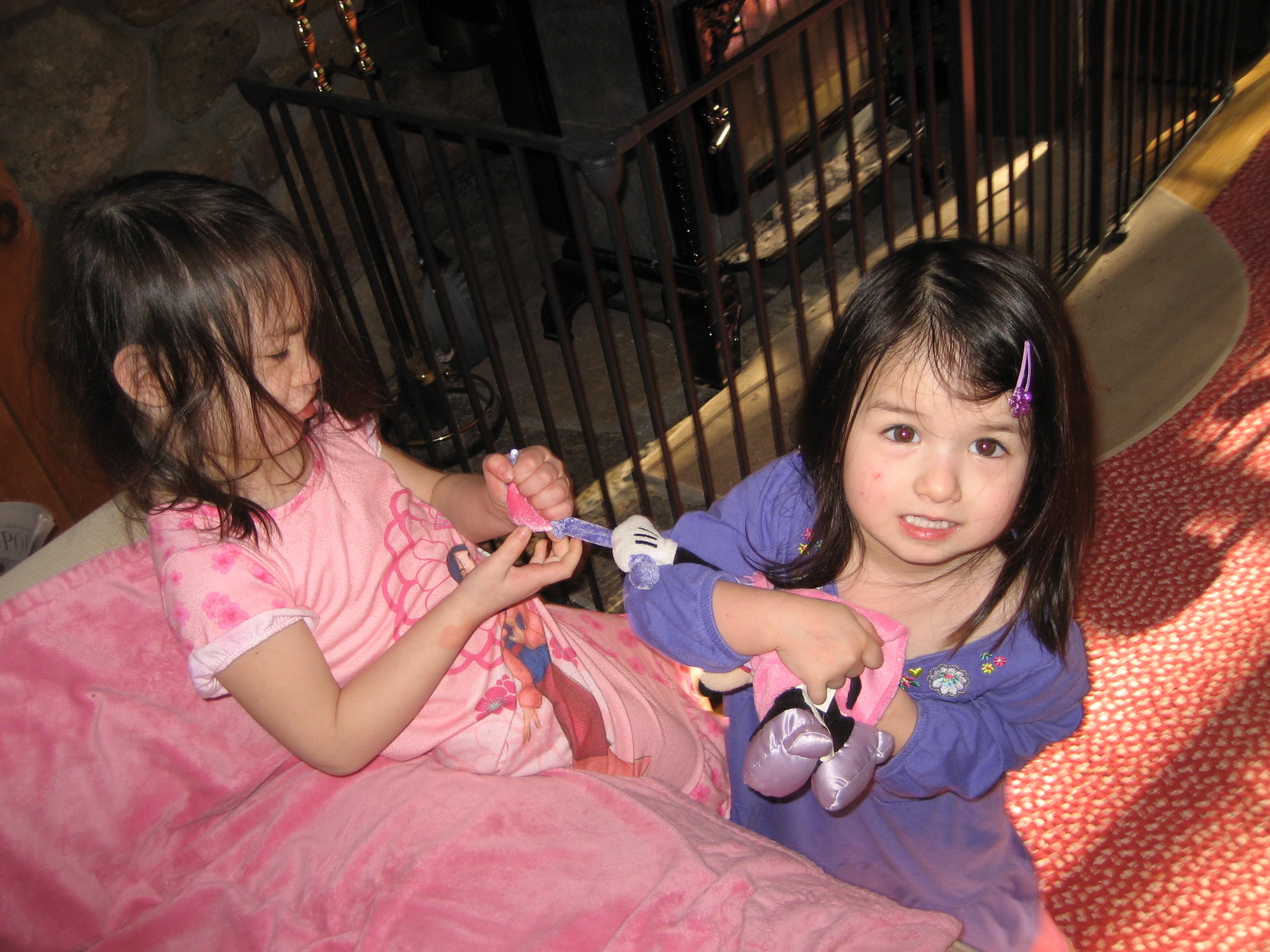
-At least 37 times a day, Campbell comes to me complaining (loudly): “Mommy, Sister won’t give me the doll/toy/marker/book.” I’ve learned that my first question should be, “Well, Campbell, did you ASK her for it?” Because over half the time, the answer is “No.” And once Campbell goes back to Fiona and simply asks for whatever it is she wants, chances are good that she’ll get it. (Or at least, she’ll get it after Fiona’s “done with it,” which often requires persistent requests every few seconds).
And yet, don’t we all angrily assume that something’s being withheld from us, when maybe all we had to do was ask?
-Our two oldest daughters sometimes lose control of themselves, in which case the best solution is for them to have a little “time out” alone in a quiet room where they can cool down. Recently, Fiona has started shouting, “FINE! I’m NEVER coming out!” from behind the door that we’ve just closed on her. As if, all along, this has been her idea; she’s the one in control, AND she’s punishing us. Because, you see, she’s NEVER coming out.
And yet, oh my gosh, don’t we all do this? We get so tangled up in our need to appear in control that we turn things around and punish other people without even realizing that we’re really the ones being punished.
-Finally, FAIRNESS. Ah, fairness! Four-year-old Fiona has just latched on to the concept of fair/unfair, so we’re all living with the refrain of “It’s NOT FAIR!” these days.
She says the words, because she’s four, but don’t adults — all of us — still feel it so painfully in our hearts? It’s NOT fair that other people live in Manhattan townhouses, that some people’s children sleep until 9 AM, that Erick gets to leave the house all day. WAAAAAH!
Of course, the appropriate response, to both Fiona and myself, is: “Life’s not fair.” That’s certainly true, but it’s trite and hopeless and a bit too Archie Bunker-ish for me.
So I’ve come up with my own little saying for our whole family: Never expect fairness for yourself; never accept unfairness for others. This is how I express my desire to quit whining about my own circumstances, and to start thinking instead about how I could help people who REALLY live in unfairness.
Here’s an example of this in action:
Two weeks ago, Fiona raised the “It’s NOT FAIR!” cry in the car, because (I’m not kidding) Campbell had frost on her window, while there were only “boring” water droplets on Fiona’s window. Armed with my nifty new slogan, I said: “At some point, Fiona, you will have frost on your window, so this is not really a question of fairness. But you know what’s not fair? Some children don’t have parents. Some children don’t have three meals a day. Some children don’t have nice soft beds to sleep in and roomfuls of toys to play with. Life ISN’T fair, but in the scheme of things, kiddo, you’re on the blessed side of the fairness seesaw. So, what are you going to do about it? Never expect fairness for yourself, but never accept unfairness for others!”
She hasn’t claimed unfairness again this week.
And that, my friends, is why my children will run away from home to become investment bankers.


A woman from our church who lives on a small farm told me this story the other day:
She recently purchased two tiny new lambs, whom she’s been keeping in the house until they grow big enough to transfer to the barn. (Aside: the lambs are named “Goodness” and “Mercy.” Plans are to add a “Shirley” soon. As in: “Shirley, Goodness, and Mercy will follow me all the days of my life.” Get it?!? – nudge, nudge – Psalm 23?)
SO, the thing about these lambs is that they trained themselves to use pee pads to go to the bathroom. (Pee pads are those absorbent pads that you lay on the floor, usually for dogs who are left in the house during the day). Here’s how: the pee pads were already laying around the house, because this family happens to have a cat who won’t use the litter box. (Sub-theme to this story: animals are strange). Shortly after the lambs moved in, one of them walked over to a pee pad, sniffed at it, and deduced that this was the place where he should pee. Somehow, the lamb communicated this to his brother, and the two of them have been doing their business on the pee pads ever since.
In my opinion, the funny part of this story isn’t the fact that these lambs are housebroken. The hilarious part is imagining the conversation between the two lambs that resulted in their mutual decision to use the pee pads:
LAMB #1: “Psst! Hey, get a whiff of this! Kinda strange, but I guess in this house you’re supposed to pee on these funny pad thingies.”
LAMB #2: “Weird! Well, okay, if that’s how they do it here….” (shrugs)
This story is my way of telling you that Fiona is potty-training Campbell, and it’s pretty darn cute. I’ve heard about this older sibling-training-younger sibling dynamic, but it’s something else to see it happening under our own roof.
Despite the fact that I write about them in this blog, I am pretty serious about our girls’ privacy. So you will not be seeing any potty pictures, or reading any potty details. Suffice it to say that Fiona is embracing her BIG SISTER status. She gets Campbell set up, grabs a book to read to her little sister, kicks me out (“Mommy, GO! I can do this!”), and they spend inordinate amounts of time in the bathroom (which I thought wouldn’t start for another 10 years or so).
After one such successful bathroom foray, I congratulated Campbell: “Great job, Campbell!”
To which she raised her arms in victory and shouted: “Now I can go to preschool with Sister!”


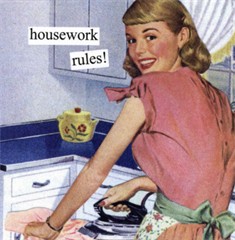
So, the very next time you happen to be
Just sitting there quietly watching TV,
And you see some nice lady who smiles
As she scours or scrubs or rubs or washes or wipes or mops or dusts or cleans,
Remember, nobody smiles doing housework but those ladies you see on TV.
Your mommy hates housework,
Your daddy hates housework,
I hate housework too.
And when you grow up, so will you.
Because even if the soap or cleanser or cleaner or powder or paste or wax or bleach
That you use is the very best one,
Housework is just no fun.
-Lyrics to “Housework” by Marlo Thomas, from “Free to Be You and Me”
People often say to me: “Faith, your house is so clean and tidy. How DO you do it?”
HA HA! No, not really. In fact, nobody has ever said anything remotely like that to me. (The closest I’ve ever come to this kind of praise was a friend who complimented me on having it “all zipped up,” but I assume she was talking about my pants).
I’ve never been a huge fan of housework. This probably springs from growing up in the cleanest house ever. You may think that your moms kept their houses clean, you many even think that YOU grew up in the cleanest house ever, and that’s very sweet…but you’re wrong. Of course, the natural outcome of growing up in the cleanest house ever was that I vowed never to spend as much time cleaning as my mom. And the PROBLEM with this is that I have high standards of cleanliness — I can see the mess, it bothers me — but I don’t want to be the one dealing with the mess. It gets ugly, I tell you: it’s like Fight Club up there in my brain, with Tyler Durden played by my cleanliness standards.
My war with myself over housework had the potential to become a huge problem when we moved to Vermont. Back in Berkeley, our family rented a 900-square-foot, 2-bedroom, 1-bath bungalow; upon moving to Vermont, we tripled our living space. I’m still embarrassed about this, because I’ve never considered myself a Big House Person. Big houses tend to get filled up with more stuff (I fear accumulating too much stuff), and they tend to require more time spent cleaning (enough said). But we chose the house we are in because: (1) we had 3 days with a month-old baby to find a place, and this was the obvious best choice, (2) we are now a family of 5 and also want space to host people (especially grandparents), (3) we moved to Vermont, where real estate is waaaaay cheaper than anywhere else we’ve lived. So, here we are, and I have to say: the housework hasn’t been so bad.
How have I managed the increased housework load? Well, I had this little revelation shortly after we moved here: Did you know that big tasks become more manageable if you break them into smaller pieces? (That’s how it is with my revelations: takes me a decade to achieve an “Aha!” moment, to which everyone else says, “Duh!”). For instance, it doesn’t take long to clean one bathroom (at least not the way I clean a bathroom). We have 2.5 bathrooms, so I clean one a day on Monday, Tuesday, and Wednesday. And so on with the other chores. (This all, of course, until I can get the girls to take over for me — and trust me, that’s already beginning). Eat your heart out, Good Housekeeping!
Aside from basic housework, however, we have another issue: creeping kids’ stuff. Back when we had only one child, I was determined that kids’ toys, books, and other kid-related paraphernalia would not take over our house. When I was growing up (in the cleanest house ever) there were certain rooms that were set aside for adults, like the Living Room and the Dining Room. It seemed right and proper that adults — who, after all, OWN THE HOUSE — should have spaces where they can walk freely, unafraid of stepping on Legos or tripping over Exersaucers. We handled the problem of kids’ stuff in our Berkeley bungalow by stacking everything in a towering pile in one corner of the living room.
But that pile grew and grew, and we kept having more kids. Then the older kids needed new toys, because an Exersaucer isn’t much fun when you’re 3, but the new baby still needed the old toys, so we couldn’t get rid of them. The kids’ stuff took over our house like kudzu.
Moving to a bigger house should have solved the problem of creeping kids’ stuff. But it didn’t.
Here was the plan: in our new house, we have a room we call the Rec Room. It’s a funny room built over the garage, up a small flight of stairs from the Mud Room. As such, it’s separated from the rest of the house in a way that makes it unusable for much, but PERFECT as a dumping ground for kids’ toys. The idea was that all of the girls’ toys would live in the Rec Room, keeping the rest of the house clutter-free.

It hasn’t worked. Oh, the girls were initially excited about having a toy room, but they quickly saw through the plan. The first problem is that the Rec Room is far away from wherever I tend to be. Of course, this is precisely the point, but it turns out that our girls prefer to play directly underfoot so that I’m immediately at hand to help them change clothes 53 times, mediate disputes every 3 minutes, and wrestle Barbies into complicated outfits.
Then winter came, and the problem became one of climate. Our Rec Room is so cut off from the main house that it has its own heating zone. It’s also cut off by a door that we close in the winter to keep cold air from the garage/mud room from entering the main house — which means that the heat from our wood stove doesn’t reach the Rec Room. In other words: the Rec Room is completely impractical to heat, so during the winter it’s freezing. Unless I go up there an hour in advance of any playtime to crank up the heat, the girls have to wear full winter gear just to play with their toys.
Result? Our sun room, which I’d envisioned as a space for quiet reading and art projects, now looks like this:
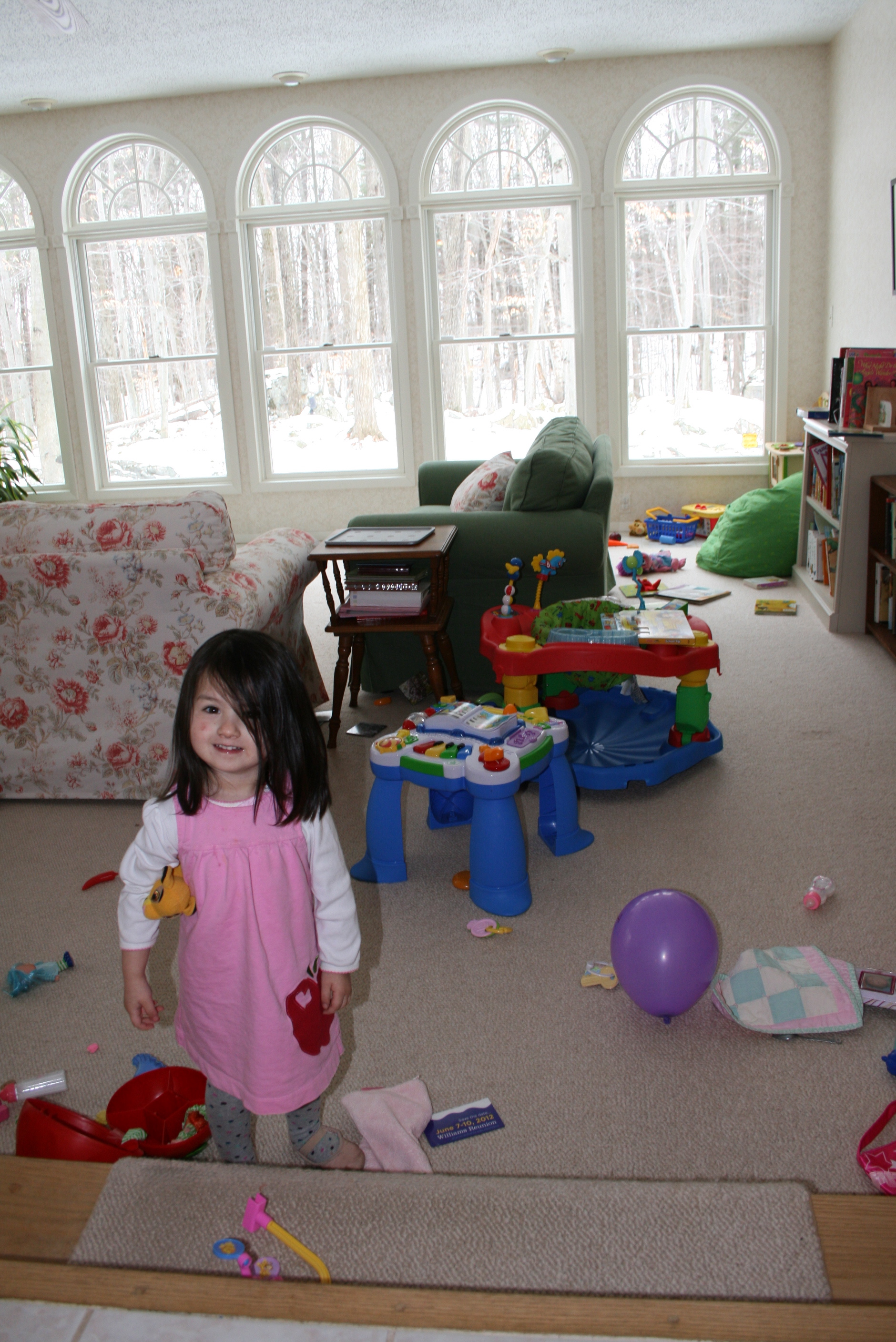
And our living room, which I’d imagined would remain a completely “adults only” zone, looks like this:
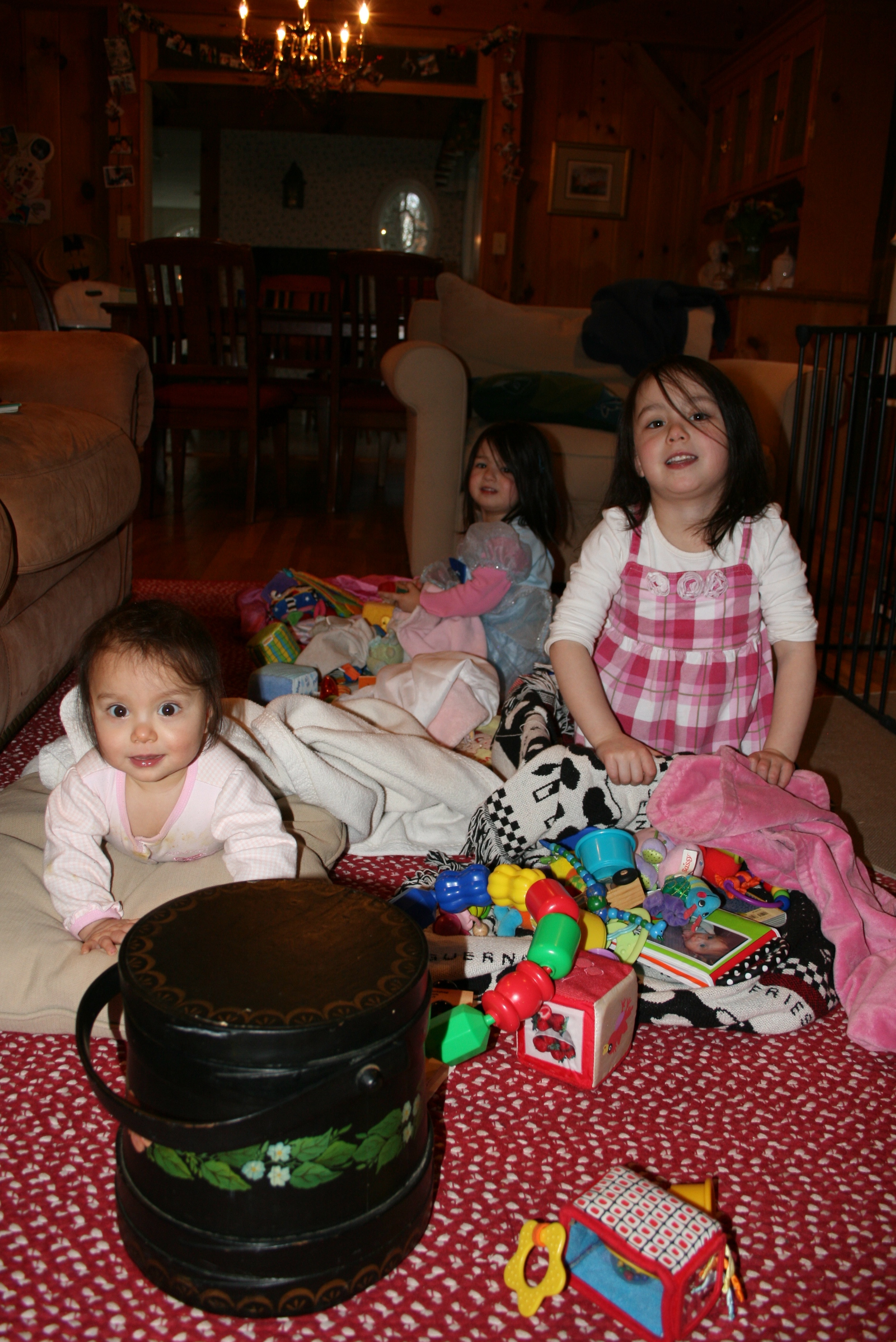
The girls and I tidy it up, but the creeping kids’ stuff inevitably re-explodes. So I’ve decided to relax. I’m not going to waste too much time or energy fighting it. These kids outnumber us now; it’s natural that their stuff is taking over our house. Instead, I’ve decided to file this situation under the “I have three young children” excuse.
This is another nifty revelation of mine: if you have three young children (say, between the ages of 1 and 4), most people tend to cut you a lot of slack. My theory is that they’re just so relieved that you’re not lying on the floor sobbing with exhaustion and desperation, that people are willing to excuse all manner of bizarre behavior from mothers of young children. Behavior that in any other situation would earn me a label as a substandard person suddenly becomes perfectly acceptable, even understandable. Twenty minutes late? “I have three young children.” Wearing sweats for the fourth day in a row? “I have three young children.” Chugging a third cup of coffee and wolfing down old birthday cake for lunch? (That’s just a theoretical situation, mind you). You guessed it. Certainly Playmobile figures strewn across the carpet, applesauce on the walls, and marker on the couch fall into this category as well.
Obviously there will come a time when the girls will be older and more mature, and the “I have three young children” excuse will no longer work for me. At this point, I will have to begin behaving like an upright citizen with a tidy house. OR, it’s just struck me that there may be another solution:
Keep having more children, for as long as possible!
That’s clearly the answer! I can get away with a messy house for years! What a revelation!
I can’t wait to tell Erick when he gets home from work.

 The Pickle Patch