Oh, Gear!

Snow pants and mittens and boots, oh my! My latest column in the Addison Independent is a lament about all the gear required for winter fun. Click here to read.
Life. Motherhood. Vermont. (Not necessarily in that order.)
Snow pants and mittens and boots, oh my! My latest column in the Addison Independent is a lament about all the gear required for winter fun. Click here to read.


FACT: I am an only child.
FACT: I am about to be the mother of four children.
The other day, a friend asked me, “How did you, an only child, end up with FOUR children?” And the answer is: I have no idea. When Erick and I were having all those premarital, heart-to-heart discussions about our future, the subject of kids did come up. As I recall, we both sort of shrugged and said, “Yeah, we probably want kids someday — not right now. Probably more than one.”
Once we started having children, the only thing that was important to me was the “more than one.” I had a happy childhood, but I spent a lot of time with adults. I always wanted a sibling. So we gave Fiona a sibling (with a vengeance). Then, after Campbell was born, I felt like we weren’t quite done. Our days in California were numbered, and we wanted the same doctors we’d had for our first two children, so we went for a third without giving it too much thought.
And our fourth, as regular readers know, was a total surprise.
As an only child attempting to raise three (going on four) children, I often feel like I’m missing the playbook.
But the more I talk with other mothers, the more I realize: THERE IS NO PLAYBOOK. It doesn’t matter whether you had no siblings or 44; we’re all running around out on the field with no idea what we’re doing. Do we catch, throw, or pass? What game are we even playing?
That said, there are daily occurrences in our house that I never experienced as an only child: sibling fights, simultaneous calls for attention, vastly divergent food preferences, and — above all — three distinct personalities.
The other day, out of nowhere, Fiona said, “Mommy, me and my sisters are really aliens from another planet. We knew each other before we were born, and then we decided to become babies in your tummy.” (She assured me that they’re planning to stick around for the long haul, though they might go back to their home planet when they’re grown up, “just to visit.”)
This was one of the most helpful things anyone’s ever said to me. It made perfect sense, and it explained a lot; until Fiona laid it all out for me, I had NO IDEA where my children came from.
Oh sure, our children have certain traits that Erick and I recognize as coming from us, or from our parents. (Anxiety and drama, for example, and a peculiar inclination to listen to the same song over and over and OVER). But for the most part, each one of my children is — and always has been — stubbornly, beautifully HERSELF. Where did she get that idea? Who taught her to say that?
Unfortunately, each child’s self is also completely unique from that of her siblings (aside from the shared desire to play with the exact same toys at the exact same moment). And therein lies the rub of parenting multiple children: these three unique individuals are stuck with two parents who are also stubbornly themselves. Erick and I came to parenthood with our own styles, ways of giving love that are natural to us. But having a child is not like buying a pair of shoes; you don’t get to choose what fits you. One child only feels loved through constant affirmation and attention, and another child wants to be left alone, and the third child needs to be prevented from climbing into the medicine cabinet — all at the same time. Needless to say, it doesn’t always work; I can’t simultaneously give undivided attention, grant freedom, and vigilantly tail a determined toddler, though God knows I try! Each of our children needs a personalized parent.
And that’s just what you get as an only child: two parents who can focus entirely on YOU. It’s a blessing and a curse, of course. But I will say this: it’s simpler, and it’s definitely quieter. (Sometimes, when all three girls are clamoring to be heard at the top of their lungs, Erick and I helplessly stare at each other across the dinner table and shake our heads).
Where am I going with this? Well, I’m NOT going to make a judgement about whether it’s better to be an only child or have siblings, or whether it’s better to parent one child or more than one. As an only child, I learned to be happy spending lots of time alone, and I had enriching experiences that wouldn’t have been possible had my parents had multiple children. On the other hand, my daughters have best friends right in their own house, and they’re learning interpersonal skills much earlier than I did. Parenting multiple children often feels like trying to play a video game that’s been sped up, but parenting only one child seems like it might be a lot of pressure.
In the end, you get the childhood you get, and you handle it accordingly. Then you grow up and get the children you get, and you handle that accordingly, too. We all seem to be slightly mismatched, but I’m holding out hope that we’re mismatched for a purpose. To some degree you can plan and “choose” what your family will look like, but to an even larger degree things happen the way they will. One morning you wake up and have four children, and planning had very little to do with it.
Unless you’re an alien from another planet; then you get to choose your host family, or so I’m told.

This is my current Fix-It Pile:

It sits on the kitchen counter next to my “desk” (and yes, that’s leftover Halloween candy in the background, and also a pile of cookbooks opened to recipes I intend to make…someday).
You may have something similar.
The Fix-It Pile, as its name suggests, is a collection of broken things that need fixing. When our girls break something and want it repaired, they add it to the Fix-It pile. Once the Fix-It Pile reaches a size that I can no longer ignore, I plug in my magic hot glue gun (what did I EVER do without a hot glue gun?) and get to work.
The Fix-It Pile in the photo above is obviously seasonal, since it features a beard-less Nutcracker and an angel ornament with broken wings. Usually, the Fix-It Pile includes a rotating selection of the same items: animal figurines with missing limbs, wingless fairies, and headless Barbies. (My girls went through a “Barbie Hospital” phase; Barbie Hospital apparently specialized in head transplants).
I was staring at my Fix-It Pile the other day (in lieu of actually fixing anything), and thinking how it’s an example of something I didn’t expect when I became a parent: I never expected that parenting would require me to spend so much time fixing broken things. In truth, like most parents, I didn’t give much advance thought to what parenting would require of me — but if you’d asked me five years ago, I probably would’ve mentioned quality time with my children: going on outings, doing crafts together, reading to them, and generally shaping them into independent adults.
I do all of those things as a parent — but much less than I expected. I have to squeeze in the quality time between fixing things. Once I set down the hot-glue gun, I pick up the packing tape and become “Book Doctor.” As Book Doctor, I repair the torn pages and broken spines of countless books that have either been well-loved by three children over time, or ill-loved by our youngest daughter. And when THAT’S done, I pick up a rag and a bottle of Kids & Pets (what did I EVER do without a bottle of Kids & Pets?) to clean up bodily fluids. Not to be gross, but as Erick told an acquaintance recently: with three young children and a dog in the house, “there’s always a bodily fluid SOMEWHERE that it shouldn’t be.”
And those are just the physical things that I have to fix. Because here’s the thing: I love my children very much, but they weren’t born knowing how to share, or knowing how to speak politely, or with any desire to think about others. They were born broken. We all were.
So every day, I also get out my spiritual hot glue gun, my psychological packing tape, and I try my best to repair broken relationships and mend fragile egos. I’d like to say that my invisible work lasts longer than my Fix-It Pile efforts — but it doesn’t. Just as the same toys and books keep coming back for fixing, the same hurts and injuries keep opening up in our family. I’ve already said numerous times to Fiona — who’s only five: “WHY do we keep having the same conversation over and over again?!” It’s the same question I ask Erick. And my own parents. And myself. Also, God.
Parenting is a relationship, and it occurs to me that all relationships — at least the real, meaningful ones — ARE essentially about having the same conversation over and over again. And that conversation boils down to the soul-cry: Why can’t you love me the way I want to be loved? We’re all waiting on the Fix-It Pile with our broken hearts, and sometimes a parent or friend or spouse will paste us together for a time. Sometimes we gather the tools and strength to repair our own cracks. But in my experience there’s never a permanent fix — not in this life, at least. We keep breaking, and having the same conversations over and over again. I’m unaware of a single person who’s made it to the end of their life, and who couldn’t have used another dab of glue or piece of tape.
I don’t mean this to sound completely hopeless, because I think it’s the opposite. I think it’s liberating. There are fairy figurines in this house whose wings I will NEVER permanently affix to their bodies; there are cracks in my children that I can NEVER mend. But in parenting, as with the rest of life, I think we get points for trying. And trying again.

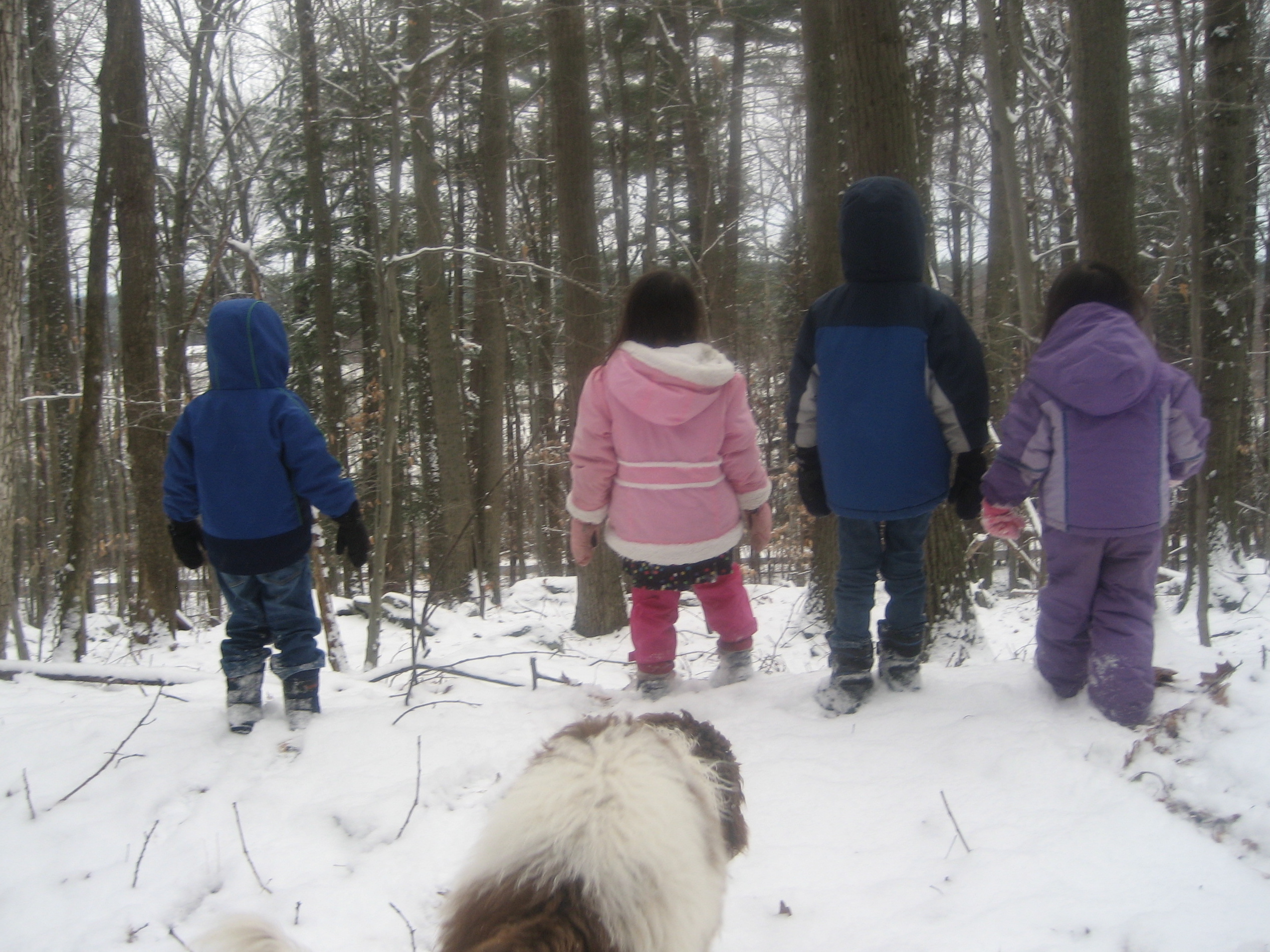
My first Addison Independent column of 2013: my top five reasons why it’s great to raise kids in Vermont. Click here to read.


When we found out that we were expecting a fourth child, we had to cancel our planned trip to California. Yes, we’d booked airline tickets to California almost a year in advance. This has NOTHING to do with our own organizational skills, and everything to do with the generosity of Erick’s father, who had given us his airline miles for the trip. We had to book tickets with those miles by a certain time, so we went ahead and scheduled a 2-week visit to California in June 2013.
Then we found out I was pregnant, due in early June. Obviously, California wasn’t happening this summer.
Traveling anywhere from Vermont isn’t easy. Since we moved here in summer 2011, we’ve taken two out-of-state trips as a family: a two-hour jaunt to Lake George in upstate New York, and a four-hour drive to the Maine coast. Traveling to California requires a one-hour drive to the airport, at which point we’d pack onto a teeny-tiny plane bound for Chicago or D.C. or Detroit, where we’d transfer to a San Francisco-bound flight. (And that’s the best-case, single transfer scenario; there are no direct flights between Vermont and California).
To be honest, I don’t relish the idea of traveling with three (never mind FOUR) young children, so most days I’m grateful that the logistical challenge of leaving Vermont forces those less burdened by dependents — like our parents — to come to US.
But I’m sad that we’ll have to postpone our trip to California. Here’s my dirty little secret why:
I really, really miss our friends and family in California.
There! I said it!
The thing is, I’ve moved so much in my adult life: from Virginia to Massachusetts to Connecticut to New York to California to Vermont. Like most Americans, I have leaving in my genes; I’m descended from leave-rs. My ancestors left England and Scotland and Italy, bound for the farms and factories of Massachusetts and New Hampshire. So, I’m a pretty good leave-r; I say goodbye to places and people I love, and I don’t look back. I’ve prided myself on this adaptive skill. Somehow, I got the idea that missing people was wimpy, and would get in the way of embracing the life of whichever new place I’d settled. I’ve loved every place I’ve lived, but when it comes time to say goodbye I take an “out of sight, out of mind” approach. I just move on. I’m horrible at keeping in touch.
But Fiona taught me a little something about missing this year. One night when Erick was out and I was putting the girls to bed, she said, in her understated way, “Mommy, I really, really, really, really, really, really, REALLY miss Daddy!”
And I said, “I know, honey, but you’ll see him tomorrow. And there’s me; I’m here now!”
To which she replied, “Mommy, I love you, too. But the thing is: you’re not gone.”
Just like that, I saw that I’d gotten missing completely wrong. Here I was, trying to convince my daughter not to miss her father because she’d see him soon, dangling the carrot of my own presence to distract her from his absence. Teaching her how to adopt my own “out of sight, out of mind” coping strategy. And Fiona showed me that NO, it’s okay to just MISS someone. Missing doesn’t have to get in the way of loving where you are or who you’re with; sometimes you miss someone just because they’re not there.
So (deep breath): I MISS the people we left behind in California. This includes Erick’s extended family: aunts and uncles and cousins whom we haven’t seen in almost 2 years. And it includes our friends in the East Bay, a community the likes of which we’ll never experience again. These were the people with whom we had our first children, all of us struggling through the exhaustion and confusion and elation of first-time parenting: celebrating new births, bringing meals, watching each others’ babies so we could have date nights, mourning challenges and losses, organizing a home-based co-op preschool so that we could afford to give our kids an early education. It saddens me that I won’t see these people who shaped me as a mother, who played such a significant role in our daughters’ early years.
The other night, I had a vivid dream which is going to sound cheesy but which I promise was very real. Erick and I were standing outside a pub with our pastor from California (those of you who know our pastors from California realize that it’s not at all incongruous to find a pastor in a pub — or maybe this was just my subconscious mid-pregnancy desire for a stiff drink). All of a sudden, various friends whom we hadn’t seen in years started gathering with us. They didn’t all look great; as I recall, almost everyone needed a haircut, and a few had clearly had a bit to drink already. But it was a reunion of pure joy. In my dream, I was sobbing with happiness. When I woke up, there was still a lump in my throat.
There is no doubt in my mind that my dream was about Heaven: a place where you don’t have to miss anybody anymore.
I love Vermont, and our life here, and our friends here. But the thing is: they’re not gone.

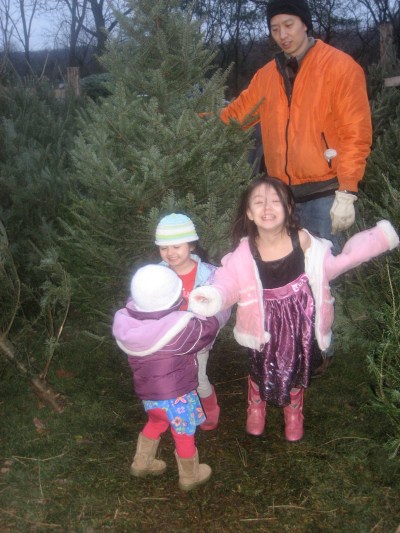
Chestnuts roasting on an open fire? Dashing through the snow? All is calm? Peace on Earth, goodwill to men?
Is that how your Christmas is looking this year?
Mine, either.
I have a little piece over at On the Willows today about our expectations for Christmas, and how they’re never quite realized. A version of something I published here last year, but I like the new one better. Click here to read.

Yesterday afternoon, during nap time at our house, I decided to log in to my computer and check on the world before heading upstairs to wrap Christmas presents. Like so many of you, that’s when I was first confronted by news of the unimaginable tragedy at Sandy Hook Elementary School in Newtown, CT. For the next two hours, I sat glued to my computer screen, refreshing my Google news feed every few minutes. As if more FACTS could somehow help me make sense of this thing.
On the one hand, it feels like there’s nothing to say, especially when others are saying so much, so eloquently. On the other hand, it feels wrong to NOT say anything. So I’m going to re-post something I wrote back in April, in response to other unimaginable tragedies. I think it still stands; you can add Sandy Hook to the list of bad news, Adam Lanza to the list of bullies, and replace Easter with Christmas.
I find it hard to apply my own logic here to the Sandy Hook situation, but love IS hard. I post this to remind myself that, although it’s important to discuss things like gun laws and the mental health system, the root cause of senseless violence is US: broken people. And also to remind myself that love always, ALWAYS wins out over fear and hate in the very end.
I feel like there’s been a lot of bad news this year, and we’re only four months in. I suppose most years are like this, but we have such short-term memories that the world seems to be crashing down…again. (I think I have to stop blaming pregnancy hormones for my poor memory, since I’ve now been un-pregnant for over a year. SO I’m going to assume that everybody has no long-term memory, just like me).
Here’s a little run-down of some bad news that comes to mind: daily news of Syria’s violence against its own people; US Army Staff Sgt. Robert Bales is accused of massacring 17 innocent civilians in Afghanistan; unarmed 17-year-old Trayvon Martin is shot and killed amid unclear but disturbing circumstances in Florida; Mohamed Merah kills 7 people in France, including students at a Jewish school; Dharun Ravi is convicted of bias intimidation and invasion of privacy for using a webcam to spy on Tyler Clementi, his college roommate, who committed suicide after learning that Ravi had watched his romantic encounter with another man; the “Kony 2012” video goes viral with the story of LRA atrocities in Uganda; and in Oakland, CA (birthplace of all 3 Gong Girls) One Goh shoots and kills 7 students at Oikos University. And that’s just in the past month.
Even here in Vermont, where a typical police blotter item runs something like: “Woman called police to report hearing footsteps downstairs. Police arrived on the scene to find that her husband had returned home earlier than usual.” (I’m not kidding — that was an actual item), there’s been violent news. Melissa Jenkins, a popular science teacher in St. Johnsbury, answered a call for car help from a couple who used to plow her driveway; when she arrived on the scene, the couple attacked her in front of her 2-year-old son, killed her, and dumped her body in a shallow pond.
I hear these things, and my soul screams. Because EVERY DAY I tell my kids some version of: “You have to be kind to people. Especially people who are smaller or weaker than you — you have to look out for them, help them.” I’m pretty sure that most people tell their kids something like this; isn’t it the best way to function as a family? Isn’t it the best way to function as part of the HUMAN FAMILY? So, when do we start forgetting this?
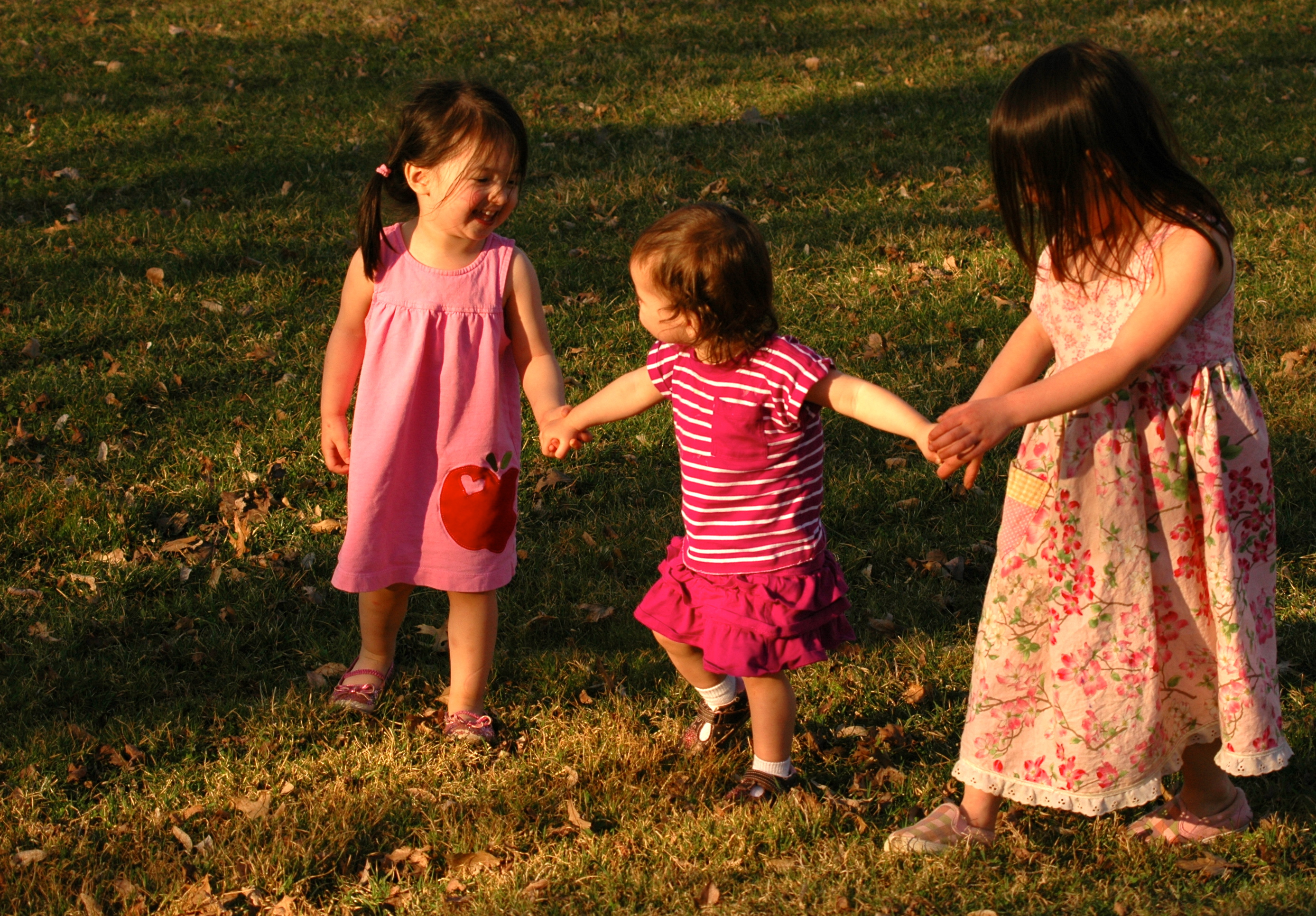
The answer, of course, is that we forget as soon as we hear it. The reason I keep reminding my kids to be kind to those smaller and weaker than themselves is because their default setting is to grab toys from their baby sister, or hit their other sister, or fight with their friends. Violent emotions begin at birth and are universal. Being kind is so easy to say, and so hard to do.
So how do we process the bad, soul-screaming news? The news that keeps us awake at night with questions of “What if?” and “How could they?”
I’m working out some answers after a little thing that happened to Fiona at preschool this month. One day, when I went to pick her up, Nick, one of her teachers, pulled me aside and said that a new boy at school — let’s call him Billy — who’d been having some “behavioral issues,” had gone up to Fiona during naptime and, completely unprovoked, hit her across the face. Fiona had apparently been “great about it” — she hadn’t cried or retaliated — but Nick wanted to let me know in case she mentioned it.
I don’t care if you’re Gandhi, if somebody hurts your kid your immediate gut instinct is to go after them with a tire iron. But I decided to put on my “grown-up face,” and on the drive home I casually said to Fiona, “Gee, honey, I’m sorry to hear that Billy hit you today.”
She said, “It’s okay, Mommy. It’s okay if he hits me.”
Now there’s a response to make your blood run cold; “It’s okay if he hits me,” is something that you NEVER want to hear coming out of your daughter’s mouth.
But, holding my grown-up face verrrry tightly in place, here’s what I said: “Actually, Fiona, it’s NOT okay if he hits you. NOBODY’S saying that’s okay. You shouldn’t EVER hit another person, and if you do then there has to be a consequence, just like there was for Billy today. So if he ever does that again, you need to tell a grown-up. But if he hit you like that for no reason, then he must be really mad or afraid about something, so I think the best thing for us to do is to be really kind to him, and to pray for him.”
Before you roll your eyes and click over to Facebook, let me remind you that I’m not some glassy-eyed, preternaturally wise and loving sitcom mom spouting cheesy cliches. I’m a real person, and if I occasionally fail to mention here all the times I lose patience with my kids or get angry with my husband or ignore my friends, it’s because I’m still vain enough to want you to like me. So I assure you that my little speech to Fiona came from somewhere outside of me (you can call it what you want; I call it God) and took every ounce of my emotional energy.
But after I said it, I realized that it was true. We did pray for Billy that night — just that whatever was making him afraid or mad enough to hit could get better. And all of this helped me to remember that Billy is four years old, and if you’re running around with “behavioral issues,” hitting other children at four years old, then something really is going on that is bigger than you. Something is making you so afraid or mad that you’re out of control. And it’s scary to be out of control; I see this with my own girls who, whenever they throw a massive screaming fit, just want to curl up in my lap and tell me they love me for the rest of the day, because they’re terrified of themselves.
And this made me think about Joseph Kony, and Dahrun Ravi, and Robert Bales, and George Zimmerman, and Mohamed Merah, and One Goh, and all the other bullies and criminals and dictators throughout history. Because once, they were four years old. Heck, once they were somebody’s tiny baby. And if, as they saying goes, we’re all the ages we’ve ever been, then inside each of them is a mad or scared little kid — and even deeper is the baby who blinked against the first light and held every possibility in its tiny fist. Inside every single person is a spark of humanity; sometimes it’s just buried underneath years of anger and fear. And those layers make it harder to access your humanity — to remember what your mother may have told you about being kind to those weaker than you — when, to quote St. Bono, you end up “stuck in a moment you can’t get out of.”

So, where does the prayer come in? I’m really, really hesitant to write about my faith, because it’s so easy to offend people, or be misinterpreted. And I’m not a religious scholar or expert. I’m just me, and I have some things that I believe are the truth, but I’ll also defend to the death your right to believe what you think is the truth. That said, here’s what I think is true:
I think, as I try to process somebody senselessly hitting my child, and all of the world news that’s essentially telling that same story, that I can and should get angry and demand justice, but I can’t stop there. Because if you stop and sit down in your anger and fear, then you just start to fester inside. Erick’s first reaction, when he heard about Billy hitting Fiona, was to teach her how to block hits and defend herself. That’s fine and useful, but it doesn’t begin to address healing her heart. The same applies to us when we demand arrests and reparations, and install alarm systems in our homes…and then stop.
I took a yoga class last week (!! the first actual, non-video yoga class I’ve taken in two years !!), and the instructor talked about “cultivating the opposite.” This means that, when something negative happens out in the world, we should cultivate the opposite response inside ourselves. That’s a little bit like what I’m advocating here. To respond with anger or fear to an act committed out of anger or fear solves nothing; it just makes us more angry and fearful. I think that, in order for true healing to occur, we need to acknowledge that every unkind act has two victims: the person being bullied, and the person doing the bullying. This requires that we recognize the spark of humanity — no matter how tiny — flickering in the perpetrator.
But that’s nearly impossible to do. The worst thing that’s happened to any of my kids so far is a smack at preschool; I can’t imagine if my child was one of the victims mentioned in this month’s news. I get angry enough just reading about these things; how do you recognize humanity in someone who kills your child? My yoga teacher seems like she’s probably a nicer person than I am, so maybe she can just will herself into “cultivating the opposite” — but I can’t. I need a yoga teacher to show me how to bend my body, and I need another kind of teacher to show me how to bend my soul in order to process life’s horrors. The kind of teacher who gets wrongly accused and sentenced to death, and while he’s slowly dying from torture looks down on the people mocking him and killing him and says, “Forgive them. They don’t know what they’re doing.”
So that’s why the prayer. And why I’m celebrating Easter this weekend.


WARNING: If you have not yet seen the first Star Wars trilogy and don’t like spoilers, DO NOT READ THIS!!
I saw my husband destroy the future of a 5-year-old boy.
Here’s how it happened:
Last month, Erick and I went on what passes as a “date” for us these days: we left the girls with their visiting grandparents, and took our cars to get snow tires put on. Because it would take over an hour to get the snow tires on both cars, we decided to go for a walk in the neighborhood behind the tire dealership.
Since we live in a small town, it was inevitable that we’d run into somebody we know. In this case, we ran into some good friends from church: a mother and her two sons, playing outside. The oldest son, age 5, had recently discovered Star Wars thanks to some “easy reader” books in his kindergarten library. Let’s call him Lucas. As we approached, Lucas and his younger brother were racing around a grassy field, using sticks as light sabers.
Since Erick has three daughters, he doesn’t get to engage in much light saber play these days. So while I talked to the mom, Erick happily jumped into the action, declaring himself Boba Fett and submitting to 30 minutes of poking by little boys with sticks.
As it began to get dark and we walked our friends back to their house, Erick and Lucas discussed whether the Jedi or the Sith win at the end of Star Wars. “Of course the Jedi win,” said Erick, “The good guys always win in the end.”
Lucas’s mom, who wasn’t entirely thrilled by her son’s exposure to the violence in Star Wars, seized on this as a teachable moment. “Right, Lucas,” she said. “and it’s like we talked about: if somebody’s being mean, instead of fighting back, you can show them how to be kind.”
“Yeah,” Erick added, “Like when Luke Skywalker finds out Darth Vader is his father, Luke gives him a chance to do good at the end.”
Lucas stopped short, and looked up at Erick with huge eyes. “Wait,” he demanded, “Darth Vader is Luke Skywalker’s FATHER?!?”
Erick and I slowly turned to look at each other, our faces twin masks of horror: eyebrows raised, mouths in silent O’s.
Because, of course, the discovery that Darth Vader is actually Luke Skywalker’s father is a pivotal plot point in Star Wars, and it isn’t revealed until the end of the second film. Lucas has yet to watch any of the Star Wars films, but now it’s too late; Erick has ruined the experience for him. While his friends watch innocently, set up to be shocked along with Luke at this horrible revelation, Lucas will now know what’s coming. With one sentence, Erick stole his innocence. It’s the equivalent of announcing that (WARNING: More spoilers!) Santa Claus, the Easter Bunny, and the Tooth Fairy don’t exist, or that Rosebud is a sled.
I shared this story because I think it’s funny, but there may also be a point to it. Sometimes, as parents, we’re perhaps a bit too quick to jump on those “teachable moments,” to become didactic and rush to impart deep life lessons to our children. Our intentions are completely honorable. But could it be that, in doing this, we rob our children of the magic that comes from direct experience? Simply put, we talk too much. We didn’t need to tell Lucas that the good guys win in the end; eventually, when he watched Star Wars, he would’ve figured that out for himself.
This parenting gig, it’s like flying your X-Wing Fighter into the Death Star without a radar. May the force be with you.

In my last post, I announced that we’re expecting our fourth child in early June. This may have surprised some of you, but not as much as it surprised us! That’s right; if it wasn’t already obvious, this child was a WHOOPS!
Let me be clear right away that I’m totally aware of what an unfair blessing it is to conceive a child without trying. So, when I say that this child was a WHOOPS!, I don’t mean that we aren’t happy to be expecting, or that we don’t already love this baby.
It’s just taking me a while to process.
I had convinced myself that we were through having children. I’d laid out all sorts of rational arguments against having a fourth child. I’d even written down my logical progression from wanting a fourth child to wanting a dog, and that story made up the bulk of my last post. If the ending of that post seems abruptly tacked on, that’s because IT WAS. I wasn’t expecting to be expecting. The big news was supposed to be the dog.
But, here we are.
When you’re pregnant with your first, second, or even third child, people are so happy for you. “Congratulations!” they squeal.
When you’re pregnant with your fourth child, most people aren’t quite sure whether to congratulate you. “Wow,” they whisper, and their eyes get really big and scared, like you’ve just told them that you’re starting a cult — which, in some ways, I guess you are.
And when you’re pregnant with your first, second, or even third child, it can be such a fun and creative thing to figure out how to break the news to your husband. When I found out I was expecting Campbell, Fiona handed Erick a little jar with two pickles in it — get it? Because we were going to have TWO pickles in our family.
Here’s how it went with #4. Scene: Dawn. Erick sitting on our bedroom floor, checking his email.
ME (emerging from bathroom): Um, so, I think I might be pregnant.
ERICK: You’re SERIOUS?!?
Four children seem a little…excessive. We will now have no extra room in our minivan, no empty seats at the dining room table. And I can’t even imagine how much MILK we’ll go through in a week. (Note to self: Need larger refrigerator, stat). Erick has pointed out that, if we ever want to get those little personalized stick-figure family decals for the rear windshield of our van, we’re close to running out of space.
I feel guilty: Guilty about our family’s combined carbon footprint. Guilty because we’re contributing to overpopulation. Erick tells me not to worry, that in his professional opinion as a PhD-holding economist, our family won’t make a significant difference in these problems. But I know that if everybody thought that way, we’d be in trouble. And most people DO think that way.
Also, I feel anxious: Anxious about having to go through the whole pregnancy/childbirth/newborn thing AGAIN. Anxious about where we’re going to put one more child. Anxious that this baby will be a BOY (we aren’t finding out) — what will we do with a BOY?!? Anxious that Erick and I will never have another date night for the next decade, because frankly, I think four children (and a dog) is even a little too much for the grandparents to babysit.
I’ve written before about my tendency to add things like children, chickens, and dogs to our lives, motivated by the adage that “You can never have too many things to love.” Although this fourth baby wasn’t an intentional addition, it’s reminded me that another good (but hard) reason to add things is this: It keeps me from any illusion that I’m in control.
I grew up in a pretty controlled environment. I was an only child, and the only pet I had (aside from some fish that cooked when the aquarium heater malfunctioned) was an outdoor cat who didn’t like us very much. So, for the first half of my life, I honestly believed that it was possible to be in control of your life; it was possible to have a spotless house, clean clothes, neat hair, and perfect grades. This kind of thinking caused me endless trouble and anxiety, because the implication is that if you’re not in total control of your life, you’re failing.
When you have three (almost four) children and a puppy, it is impossible to be in total control. Erick likes to say that we’re “Beta Parents:” parents who admire some of the IDEAS of alpha parenting (like teaching your child a foreign language, practicing flashcards, serving only organic foods, and using cloth diapers), but are just too exhausted and burnt to actually follow through. Kiddo Four will cement our status as Beta Parents. Family creed: “Sometimes, a B is just good enough.”
You can either see that as a freak-out-worthy situation, or you can see it as freeing. I’m trying to choose the latter. (Some days I choose it better than others).
So, bring it on Kiddo Four. We are waiting to love you in our own imperfect, not-in-control way. I hope you like dogs, and sisters.


When Georgia was born, we were positive that she was our last child. Three seemed like a good place to stop: large without being TOO crazy. There was a certain logic to three:
-The logic of space: We still had an extra seat in the minivan, and an extra place at our table — you know, for Elijah or whomever else happened to drop in.
-The logic of stuff: We had girls’ clothing and toys that had now been used three times — a pretty good run for the money, which also called to mind the horrible alternative: what if we risked another child, and it was a BOY?!? We’d have to start all over again.
-Erick’s logic: Erick noted that many of the families we most admire have three children, and “they must have a good reason for that.” (Of course, we later learned that for some of these families, child #3 was an accident, and others sorely regretted not adding another child before it was too late, but that’s another story).
Also, the cinnamon buns that we sometimes like to eat for breakfast are sold in packages of five.
Then, around Georgia’s first birthday, I started having feelings of longing. I knew these feelings well; in the past, they’d resulted in two things: Campbell, and Georgia.
I wanted a fourth child.
I promised Erick that I wouldn’t raise the subject until he was done with his first year of teaching. So, on the last day of classes I was waiting outside his office door, with my sales pitch carefully prepared. It went a little something like this:
-If we don’t give Georgia a buddy of her own, how will she function within the sisterly relationship of Fiona and Campbell, who’ve proclaimed themselves, “MORE than best friends!”????
-We have three wonderful daughters, whom we adore. Why not add one more????
-Another child would add more love to our family. Isn’t more love ALWAYS a good thing????
Erick kindly refrained from pointing out the loophole in what I thought was a logical “more is always better” argument. Because more ISN’T always better. If that were really true, we’d live in an overpopulated world of obese, promiscuous, hoarding venture capitalists. (Hmmmm….)
ANYWAY, the point is that Erick didn’t share my longing for a fourth child. For the very first time in our 10-year marriage, this put us on opposite sides of a Major Life Decision. (That statement is less a testament to the strength of our marriage than a tribute to Erick’s amazing agreeableness).
You can see where this is going, can’t you?
Yep: WE GOT A DOG!
Here’s how it happened:
Also around Georgia’s first birthday, I started experiencing headaches, body aches, and exhaustion. These symptoms lasted throughout the summer. Whatever it was remains a mystery, but while the doctors ran me through a series of tests to determine the root cause, there was no question of pregnancy. First I was on antibiotics, then I had to have an MRI, then I had to have another MRI, and until we knew what was going on, we weren’t sure a pregnancy would be safe.
All of which made me frustrated and sad. But it also gave me time to think. I looked at our life and realized that three kids is a LOT of kids! In fact, most doctors would probably assume that the cause of my symptoms was: my children. I looked around for proof that we should add another child to the mix, and the proof just wasn’t there. Instead, I was snapping at my kids, counting the days until preschool started, and bribing my four-year-old to have “quiet rest time” by handing her my iPod. Don’t get me wrong: I love our three kids, I can handle three kids. I just couldn’t see how having a fourth child would do our family any favors.
Then I noticed something else: Brinkley, our neighbor’s dog who’d adopted us as his second-string family. I when I was doing yardwork, Brinkley would often come over to keep me company; he’d romp around, then sit at my feet and stare lovingly at me. I really liked that. I also noticed how our girls loved Brinkley: he was a prominent figure in their conversations, and every time they spotted him outside they would RUN to play with him, which kept them entertained for hours.
But he wasn’t our dog.
So, one day I said to Erick, “How about, instead of a fourth kid, we get a dog?”
I didn’t realize it at the time, but here’s a tip for anyone who wants a dog, but whose partner isn’t into the idea: First, say that you’d like to have a baby. (For added drama, moon around for a few days, sighing over baby pictures and tiny baby clothes). Then, say, “How about, instead of a baby, we get a dog?” And watch the relief fill their eyes. It’s a great bargaining strategy.
So, we got a dog, which made much more sense than having another baby. Yes, I KNOW that dogs are a lot of work, but when it’s a choice between a dog and a baby, the dog is a tropical vacation; an adorable, adoring creature whom we won’t have to send to college, and who does add more love to our family — without ever screaming, “Mommy, you’re being MEAN!”
You can read more about our dog, the amazing Gracie, here.
On the very day that we put down the deposit on Gracie, we found out that I was pregnant. Further proof that, whatever else you might say about God, he’s got a spot-on sense of comic timing.
That’s right, folks: Kiddo FOUR, due in early June.


 The Pickle Patch