Little Women

Little-Women-book-cover-2

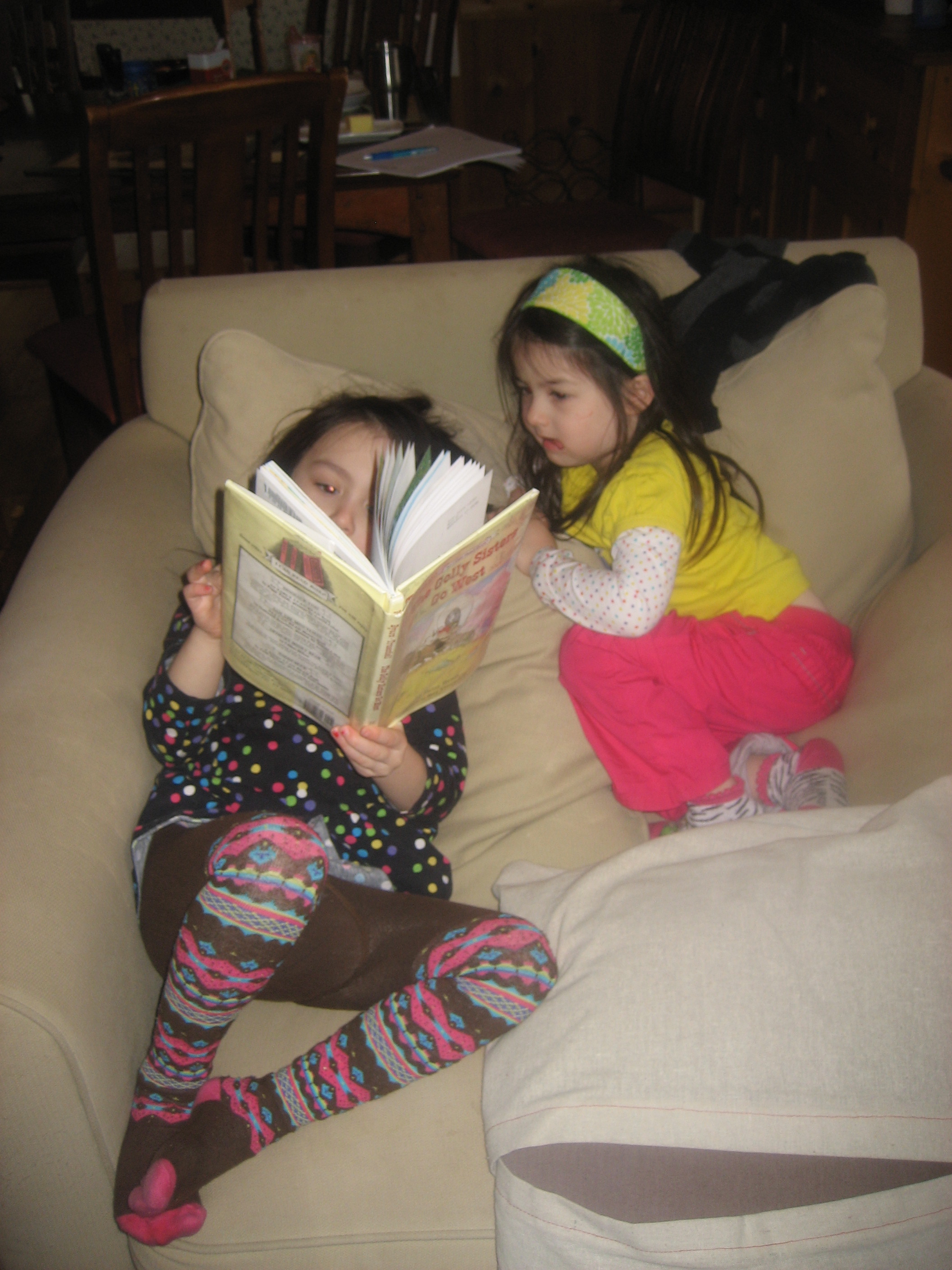
Since the birth of our fourth daughter, several people have made the comparison between the four Gong Girls and the four March sisters — protagonists of Louisa May Alcott’s classic novel, Little Women. It happens that our daughters are familiar with Little Women (in the form of an abridged version by Usborne Books), and the comparison is not lost on them. “Which one is Georgia?” they’ll ask whenever I read it to them, “Which one am I?”

Louisa May Alcott divided the March sisters into easily identifiable types; the types you might expect based on the conventional wisdom of birth order. Meg, the oldest, is responsible and steady, with a weakness for fashion. Second-born Jo is the tomboy, a temperamental writer. Beth is sweet, sickly, self-sacrificing, and prefers quietly playing her piano. The youngest, Amy, is a spoiled, petulant, artistic type.

In families with multiple children, each sibling tends to carve out a distinct role. But when we read Little Women and they ask, “Which one am I?” the most honest response would be: “Not the one you think!”

Our girls don’t conform to the sisterly types created by Louisa May Alcott. Sure, the Gong girls are still in the process of becoming, and Abigail’s still an unknown quantity, but I’m fairly confident that our family has no sweet, quiet, sickly Beth. Most days it feels like we have four Jo-Amy hybrids: independent, temperamental, outspoken bundles of energy.

The thing is: None of my girls is turning out to be whom I thought she’d be.

Like most parents, I brought certain expectations to the table based on my own upbringing, the birth order archetypes I’d learned in college psychology classes, and sibling characters like those in Little Women. But I’m finding that one of the most fun and rewarding parts of parenting is setting those expectations aside and watching as my children are gradually revealed to me. I know that some parents never let go of their expectations and force their children into molds of their own making. To me, parenting feels more like archaeology: My children came to me already themselves, like fossils embedded in rock, and it’s my delight to gently chip and brush away the extraneous dirt to uncover who they really are. (And hopefully instill some manners along the way).

Take my first- and second-borns, for instance. Fiona: a sweet people-pleaser with a strong dramatic streak and a love of all things pink and princess-y; I’d pegged her for the shy, girly girl who’d gravitate towards dance and theater. And Campbell, who’s always been a little bit of a rebel, who loves yellow and lions and seemed tougher than her older sister; I assumed she’d be the outgoing, sporty one.

It looks like, in both of these cases, my first assumptions were totally wrong. Fiona is definitely the classic firstborn responsible people-pleaser, but she’s not particularly shy. And she’s not interested in dance or theater; her love is sports, something I never saw coming. She’s already a solid swimmer, she’s proud of her fast running and will race anything that moves, and she’s looking forward to playing soccer next year (although apparently, despite never having picked up a racket, she’s “mostly interested in tennis.”)

IMG_2633

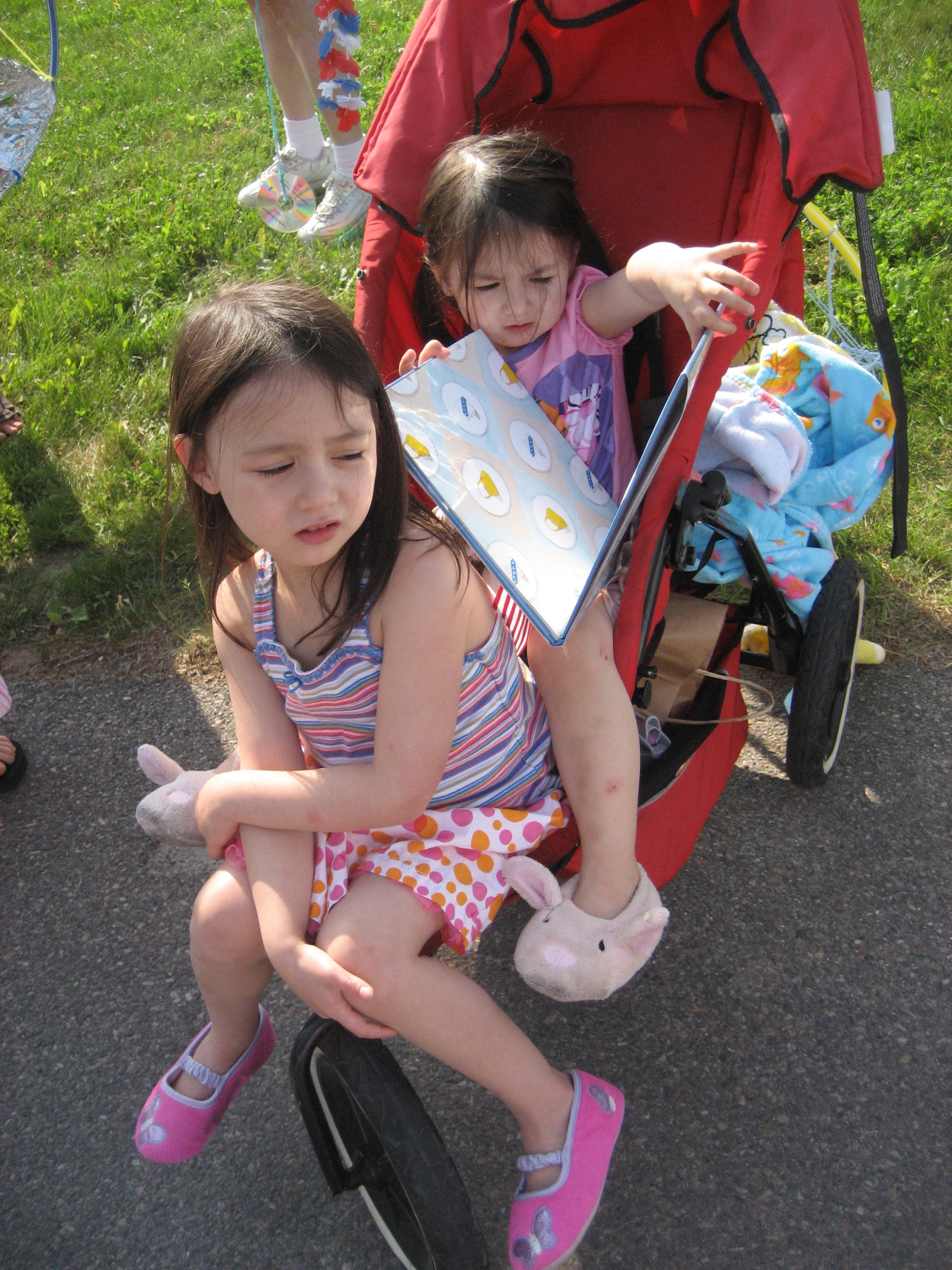
Campbell has little interest in sports. She’s certainly independent and “tough,” in the sense that she doesn’t care what others think of her. But she’s also the most introverted of all my daughters.  She loves animals and nature: She’s happiest playing ponies by herself, or picking a bouquet of flowers. and her career plans at the moment vary between veterinarian, florist, artist, and mountaineer.

IMG_2727

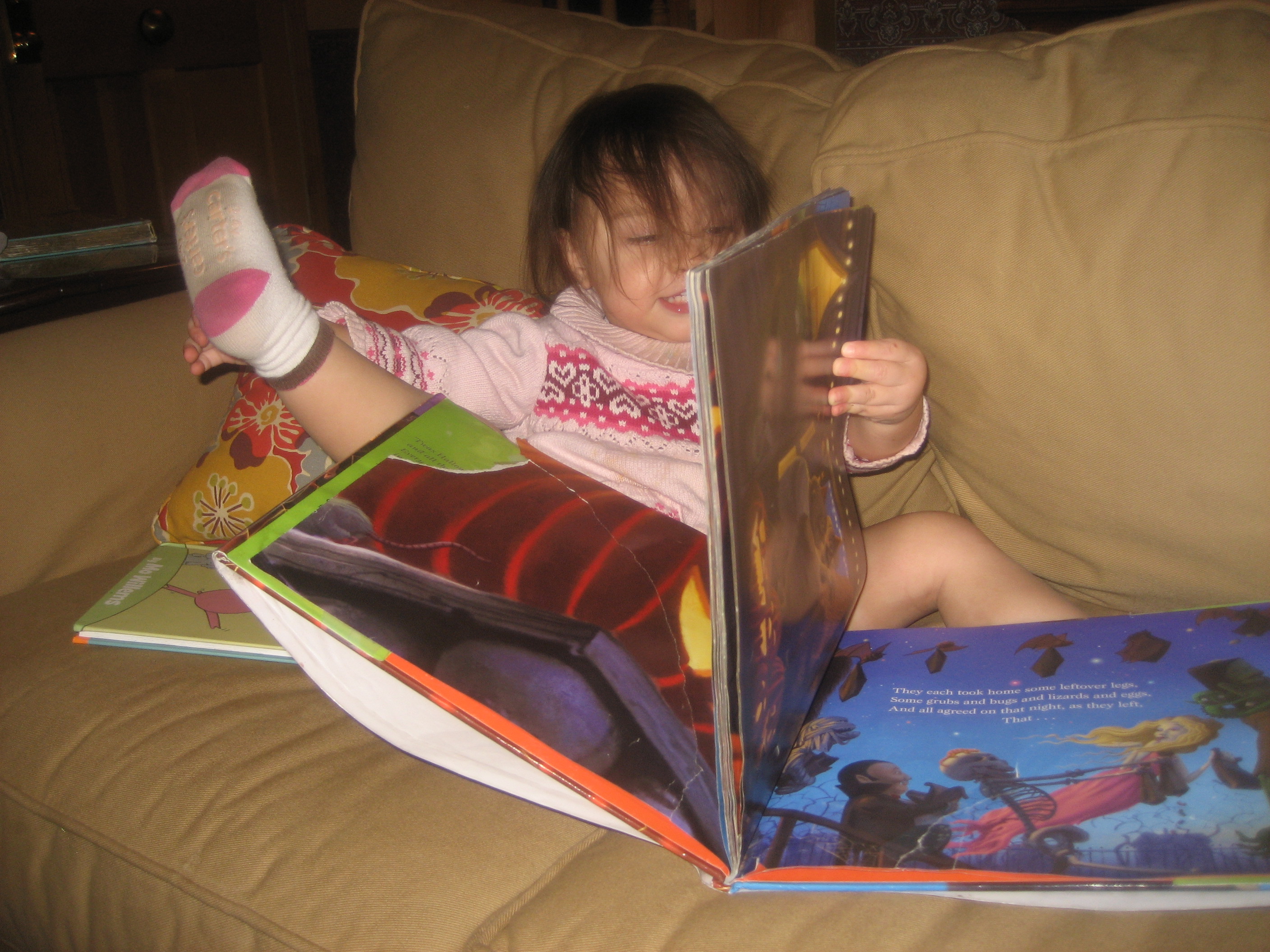
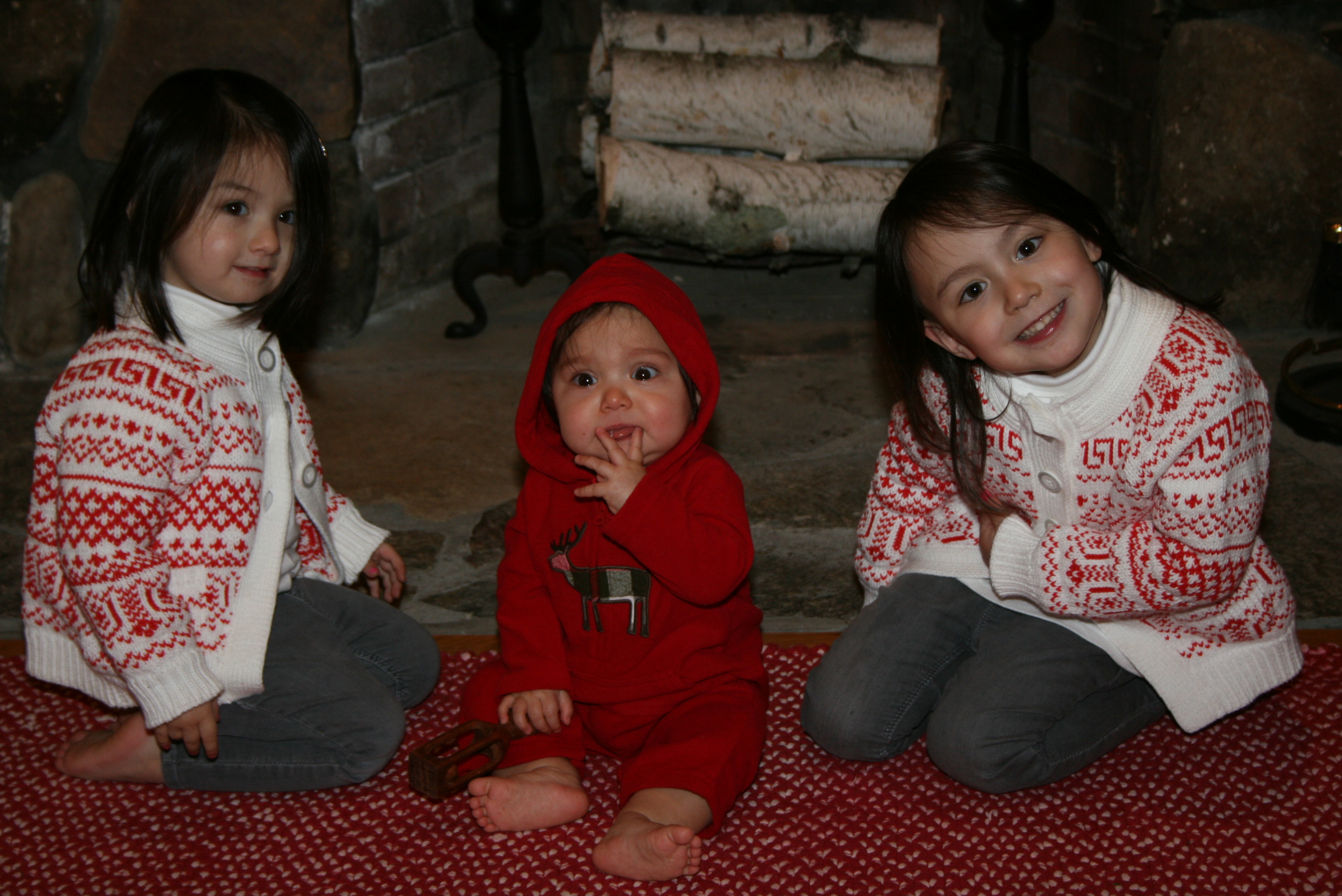
And then there’s Georgia. It’s hilarious that Georgia is the one in the “sweet third daughter” position, because she bears absolutely zero resemblance to Louisa May Alcott’s Beth. Georgia is a fireball: She’s outgoing, never stops talking, fiercely independent, afraid of nothing, and she loves to eat. She’s only two, so it’s still hard to separate the essential Georgia from the terrible two-ness, but she seems inclined to grab life by the neck and throttle it. (Or maybe the frequency with which she bites her sisters is really an indication that she wants to take a big bite out of life).

IMG_2762

The poet Sylvia Plath wrote in “Morning Song:” “I’m no more your mother than the cloud that distils a mirror to reflect its own slow effacement at the wind’s hand.” I used to think Plath had a detached view of motherhood because she was depressed, but now I understand that line differently. I don’t know where these kids came from. Sure, there are certain aspects of their personalities that I recognize as coming from me or Erick, but there are other, HUGE parts of who they are that I can’t even relate to. One of Fiona’s favorite parts of kindergarten is P.E., which was exactly what I dreaded for my entire school career. Where did THAT come from???

Of course, my girls are still very young, and all of the things I’ve just written about them are subject to change in the coming years. The essential point remains, and here’s an illustration: Now that Campbell and Fiona are attending separate schools, Campbell is emerging from her big sister’s shadow and into her own. This mostly means horrible fights, but the other day when Fiona was getting a little too bossy, Campbell looked at her and said: “I am NOT you! I am A DIFFERENT PERSON!”

And that’s just the thing about parenting: Our children are, and always have been, different people. That’s either scary or exciting. At the moment, I’m choosing to focus on the exciting.

IMG_2689
Too early to tell who this one’ll be….

Sleeper Hits of 2012: Five Books That Unexpectedly Delighted Our Family

IMG_1895

Apparently I’m starting off the new year by making “Top 5” lists, since this is the second such list I’ve posted this week. But this is EXCITING, a FIRST! Here’s the story:

Annie is a friend from college: inspiring high school English teacher, gifted writer, hip Brooklynite, long-suffering wife (of another college friend), and mother to two bright and creative daughters (with a son due very soon). Somehow, in her “spare time,” she and her aunt created a wonderful blog about children’s and young adult literature, Annie and Aunt. Her blog has given me many great book tips over the years, and this month she asked me to be a guest blogger!

So, here it is: Click here to read my post about our family’s favorite “sleeper books,” and then keep following Annie’s blog!

IMG_1897

On the Willows: Great Expectations

Because Christmas is really more about the outtakes....
Because Christmas is really more about the outtakes….

Chestnuts roasting on an open fire? Dashing through the snow? All is calm? Peace on Earth, goodwill to men?

Is that how your Christmas is looking this year?

Mine, either.

I have a little piece over at On the Willows today about our expectations for Christmas, and how they’re never quite realized. A version of something I published here last year, but I like the new one better. Click here to read.

The Problem With Ping

Sometimes, when reading stories to my children that were read to me as a child, I discover how truly dark and twisted children’s literature can be. Or perhaps it’s really how innocent I was as a child, and how my memory has failed me. Two sides of the same coin, in any case.

That’s how I stumbled upon the problem with Ping.

Ping, of course, is the title character in the classic 1933 children’s book The Story About Ping, by Marjorie Flack and Kurt Wiese. I remembered this book fondly as a story about a naughty little yellow duck who doesn’t want to get spanked. The other week, Fiona was, as she put it, “really into Ping,” so I had occasion to read her The Story About Ping five times in one sitting. When you read a book repeatedly like that, you start to notice things.

Ping is a young Chinese duck who lives with his large duck family on “a boat with two wise eyes on the Yangtze river.” The tension in the story is that, at the end of every day, the boatmaster calls the ducks back to the boat from the riverbank, and the last duck to cross over the gangplank always gets a spank on the back with a stick. Ping really, really does NOT want to get a spank on his back. But one day, when he’s upside down in the river catching a fish, Ping doesn’t hear the boatmaster call. When he resurfaces, it’s clear that he’ll be the last duck across the plank. Rather than suffer a spanking, Ping hides along the riverbank.

It was Fiona who pointed out a major issue with the book’s exposition: “Why does the last duck always get a spanking?” she asked. I explained that this was the boatmaster’s way of getting all the ducks to hurry up. NObody wants to stand around waiting for a bunch of ducks to straggle up a gangplank, right?

But I couldn’t deny the fundamental injustice of the boatmaster’s system. Because, of course, when you have a group of ducks waddling up a narrow gangplank, somebody’s always going to be the last duck. That’s just common sense. And it doesn’t necessarily mean that the last duck is a slacker. Take Ping, for instance: he wasn’t doing anything wrong, he was just unlucky enough to miss the boatmaster’s first call. I’m sure he would’ve busted his tail once he realized that it was time to go home, if he wasn’t so afraid of that spanking.

I started to wonder if maybe Ping was really a fable about capitalism, or unions — something like that. I don’t know; there’s only one economist in this family, and it ain’t me, babe.

In any event, once Ping runs away, the story unfolds in a familiar “journey-and-return” sequence. Ping spends a lonely night on the riverbank, and then travels down the river to find his family. Along the way, he has some sobering experiences: Ping sees a fisherman who uses captive birds to fish by fastening metal rings around their necks so that they’re dependent on the small pieces of fish he rewards them with, and then Ping is captured by a boat family who would’ve cooked him for dinner, if not for the mercy of their young son. At the end of this adventurous day, Ping hears the boatmaster’s call and sees the boat with two wise eyes — his home! Although he’s clearly going to be the last across the plank again, this time Ping presses on and submits to the spanking, before snuggling up with his family.

The moral of the story, as I always understood it: there are rules to being part of a family, and sometimes you have to accept discipline in order to live in love and safety.

Except that by about the third reading, I started to wonder: Just how safe WAS Ping’s life with his family? What was REALLY going on in that boat with two wise eyes? I can’t be sure, of course, but somehow I doubt that the boatmaster was raising all those ducks as pets, or simply for their eggs. I married into a Chinese-American family, and I know what happens to ducks. My guess is that Ping and his whole family were going to be Peking-ed before too long.

I sat for a while, letting this bother me. What gives, Kurt and Marjorie? You put Ping through a brush with death and force him to submit to unjust punishment, only to have him end up hanging, roasted, in the window of some restaurant?!?

But then, I realized that it was possible to consider another moral for this story, one that made a lot more sense to me.

We all know that life is unjust: there will always be a last duck over the gangplank who gets unfairly spanked. We also know that we’re all headed for death, eventually. In the meantime? You might as well snuggle up with the ones you love. Go home.

UNLESS

First, some sad news from the woods:

R.I.P. Pink Sweetie, 2007-2012

You may remember that, just a few months ago, I wrote about the Sweeties — White and Pink —  on this blog. I’m deeply saddened to tell you that Pink Sweetie, described by Campbell as “the one I love most of all,” is no longer with us.

It happened this past Saturday, a hot and humid day, when we decided to take the ferry across Lake Champlain to get ice cream in the quaint town of Essex, New York. The ferry ride was refreshingly breezy. Very, very breezy. Pink Sweetie was along for the ride. And then, right in the middle of Lake Champlain, Campbell held on to Pink Sweetie a little too loosely, and Pink was ripped from her hands and blown overboard.

The last photo of Pink Sweetie.

All things considered, Campbell has made us proud with her stoicism. After initial cries of “I want to STOP THIS BOAT!” and “How will I sleep without Pink?”, she moved on, embracing her one remaining Sweetie (although the plan apparently is to dye White Sweetie pink as soon as possible), and consoling herself with the idea that Champ, the lake monster who trolls the bottom of Lake Champlain, has now acquired a new blankie.

You were a good Sweetie, Pink, and a very important member of this family. As Campbell once put it, you “smelled like love.” And a water burial seems appropriate; Erick can rest easy that you will never be dirty again. You will be missed.

AND NOW:

Something a little different from me over at On the Willows, in which I respectfully disagree with my resident development economist over whether NGOs, short-term missions trips, humanitarian tourism, and Bono really can make a difference. Click here to read it.

Writing in Public

Hello! Just wanted to let you all know that On The Willows published my piece on gifts vs. fame, as interpreted through Mike Mulligan and His Steam Shovel. (Yes, I know: another post in which I draw heavily on children’s literature for my philosophy. Sorry, but that’s about as highbrow as my references get these days!) Click here to read it.

It’s been crazy busy here in the woods lately: last week we had 5 family members from California staying with us — Erick’s parents, his brother, sister-in-law, and our almost-two-year-old nephew. We dragged them all over central Vermont and had a blast. Now we’re down to grandparents-only for the next week, but the weather’s beautiful which means we’re usually outdoors in the wading pool, with three girls, three chicks, a dog or two, maybe a couple of friends…and a partridge in a pear tree.

Here’s a picture of the Gong Girls leading their beloved cousin Aiden into Green Mountain National Forest:

Hope you’re all enjoying the outdoors in your neck of the woods!

Some Spider!

Over at On the Willows today: my little reflection on Charlotte’s Web, or: how to change the world, one web at a time. Click here to read.

As a bonus, here are a couple Memorial Day weekend photos of Fiona and Campbell. (Georgia is covered in mosquito bites and looks kind of leprous right now, so we’re hiding her).

Dipping their toes in Iver’s Pond.
Preparing to march in the Middlebury Memorial Day Parade with the Public Library group. (It was WAY more fun than it looks).

Trapped!

Although they’re obsessed with the Disney princesses, our daughters have not yet watched any Disney movies — nor will they until I’m totally convinced that their active imaginations are tough enough so that watching these movies won’t result in weeks of sleepless nights. So far, the girls have acknowledged that they’re not ready for Disney movies; they “get the shivers” just from reading the companion books. Because the Disney stories are scary. There’s the vain queen in Snow White who transforms herself into a poisoned apple-hawking crone; the vengeful fairy Maleficent in Sleeping Beauty who goes down fighting as a fire-breathing dragon; the tentacled and power grubbing Ursula who ends up impaled on a ship in The Little Mermaid; the sinister lion Scar in The Lion King who speaks with the voice of Jeremy Irons.

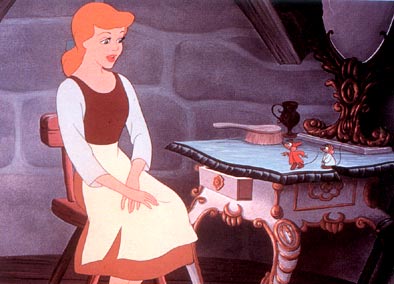
But in my opinion, the sickest minds at Disney were the ones that dreamed up Cinderella. Here we have a heroine who sleeps with mice. Not only that, she makes them little clothes, sings to them, and lets them help her get dressed in the morning. And we’re supposed to find this CHARMING?!?

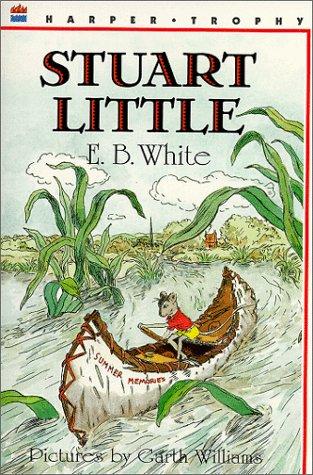
It’s not just Disney; have you ever noticed how many children’s book protagonists are mice? There’s Stuart Little and various Beatrix Potter characters and Angelina Ballerina. Don’t even get me started on Kevin Henkes; he writes brilliantly sensitive children’s books like Sheila Rae, The Brave and Wemberly Worried and Lily’s Purple Plastic Purse, but every single one of his characters is a mouse. And then there’s If You Give a Mouse a Cookie, which I admit I did write about fondly in this blog. But let’s stand back a minute and consider what really happens if you give a mouse a cookie. He doesn’t ask for a glass of milk to go with it, that’s for sure; ooooh no, he’ll build a nest in your roof, have tons of babies, and poop all over your house.

I OBJECT to this cultural brainwashing that tries to convince my children that mice are cute, cuddly, friendly little helpers. And yes, I do want my children to lead lives of love free from fear. Just NOT when it comes to mice!

So, I have this little problem with mice. I’ve tiptoed around it here for a while, because I’m basically a happy person, and we’re basically a happy family, and we’re basically thrilled to be living in Vermont, and I want this blog to reflect that. But I’m feeling like today is a down & dirty honest day, so I’ll just say it: hands-down, the WORST thing about our move to Vermont is that there are mice here. Lots and lots of mice.

“But Faith,” you might say, “you live in the WOODS. Surely you expected mice.” Actually, I didn’t. Up until this year I had shockingly little experience with mice. I grew up deep in suburbia, and the first time I saw an actual mouse I was about 8 years old. That experience is burned deep into my memory, and has influenced all of my subsequent dealings with mice.

I was visiting my three cousins in New Hampshire. We were riding bikes up and down their street when I looked down and saw it: a dead mouse, right there on the asphalt. Since this was the first actual mouse I’d ever seen, I mentioned it to my two older cousins. Sensing I was shaken, they decided to have a little fun with me, not knowing that it would scar me for life.

“Hey, guys, did you see that dead mouse back there?” I asked, trying to be casual.

“Yeah,” answered Michael, “I saw you run right over it.”

“WHAT?!? No I didn’t!”

“I don’t know,” teased Martha, “I saw a tire track running right down its stomach.

When you’re 8 years old, that’s all it takes. I lay awake all night, picturing the flattened mouse with a tire track running down its stomach. By morning, I was not only terrified of mice, but I was convinced that the only thing worse than a live mouse is a DEAD mouse.

Flash forward a couple of decades: we moved into our Vermont “dream house” to find that the previous occupants, the elderly couple who built the house, either didn’t realize or didn’t care that they had a massive mouse situation. We found droppings everywhere; I spent the first couple of months here in a permanent stoop, scanning the floorboards for fresh mouse doo. Worse than that was the nightly tap dance over our heads. Our house is constructed in what’s known as “post-and-beam” style, which means that there’s lots of exposed wood. There’s also no attic over the main part of the house, so in our master bedroom we have a steeply-pitched exposed wood ceiling that is the underside of the roof. Basically, it acts like an amplifier for whatever is running around on the roof; our first night in this house, it sounded like mice the size of elephants were about to burst through the ceiling right over our heads.

As in any marriage, ours functions based on a system of roles and duties. In our case, I will raise the children, cook the meals, clean the house, tend the yard, and fix leaky faucets, but I will NOT do mice. Thankfully, Erick has embraced his role as household exterminator. He began by doing what he usually does when faced with a challenge: research. This led him to what he swears are the most amazing mousetraps in history: T-rex Snap Traps. We have about 50 of these traps strategically placed around our house. Erick does both the setting and the disposing, since the only thing worse than a live mouse is a dead mouse. The first time he prepared to empty some traps, he wore: rubber gloves, a face mask, goggles, and — I’m not kidding — a hard hat. I’m not quite sure what he was expecting from the dead mice, but since I would’ve required a full hazmat suit, I really couldn’t laugh at him. (Too hard).

Between these traps and some bait stations outside our house, the mice are mostly under control. But about a month ago, I looked out our front window to see a dead mouse. A dead mouse right on our front lawn, just a couple of feet from the house. I mentioned it to Erick, but such is the life of a first-year professor that he promptly forgot all about it, and I didn’t have the heart to nag him. I decided the time had come to face my fear and take responsibility for the dead mouse myself, like a big girl.

And then it rained, and then it snowed. The mouse was covered up for a couple of days, but when the snow melted it was still there, looking a little bit squishier and worse for wear. Scooping it up with a shovel no longer seemed like a good idea. At this point, I figured it was best to take the natural route, and let the mouse become one with our lawn. Free fertilizer, so to speak.

The problem was that the mouse refused to become topsoil as quickly as I’d hoped. Whether some freeze-drying had occurred due to the snowfall, I don’t know, but every morning I’d look out the window and it was still there. I cursed the high standards of the dozens of owls that live in our yard: What’s wrong with a slightly aged mouse corpse, owls?

One thing was for sure: as the weather turned warmer and our girls started playing outside again, I didn’t want them to be scarred for life by the sight of a dead mouse, the way I had been. (Or, worse, to step on it and track dead mouse germs into our house). So, one naptime, I got the shovel, took a large scoop of mulch from our mulch pile, and, standing a mere 3 feet from that mouse, threw the mulch on top of it. For good measure, I tossed on a few dry leaves. A burial, of sorts. I felt very brave, and very innovative.

Until the other weekend, when the girls were tearing around our yard with a couple of friends. They knocked on the front door to request more snacks, and when I opened the door: THERE WAS THAT DANG MOUSE. AGAIN. Somebody must’ve kicked over my burial mound, and the scraggly mouse corpse was lying exposed in the sunlight, like my fear staring me in the face.

I did the only thing I could do, the thing I should’ve done weeks before: I called for Erick. He took a plastic bag and went outside (minus his mouse-fighting gear — so brave), and within minutes the whole ordeal was behind me.

I guess no matter how grown up you are, there will always be some things that you never grow up from.

Let go, Breathe, Repeat

I’ve written on this topic here before, but if there’s one thing that being the mother of 3 young children is constantly teaching and REteaching me, it’s to let go of my expectations. And if there’s one time of year that’s particularly loaded  with expectations, it’s Christmastime. So I’ve been learning this lesson a lot lately.

Like when I sit the girls down to sponge paint gift cards, and instead of neatly dipping the sponge pieces in the paint, Campbell digs in with both hands and SMEARS, until she and the cards are completely covered and then of course Fiona joins in, too. And I’m so frustrated and disappointed because I wanted these to look NICE! Then Fiona looks up at me and says, “But Mommy, they DO look nice!” And you know what? She’s right.

Or like how our whole family has spent the past 3 weeks spreading around 1) a stomach bug and 2) an upper respiratory yucky thing. But you know what? It’s forced us to slow down and hang around the house more, and I’m just going to have to relax about catching up with the cleaning.

Or like when we go to Middlebury College’s “Lessons and Carols” service, and the two girls next to us who are the SAME AGES as our oldest girls sit there quietly while our girls squirm so much that we have to leave 10 minutes in, and then on the way back to the car Fiona picks up a large frozen chunk of snow, throws it on my foot, and gives me a toe contusion. And you know what? I’m not so sure what I learned from this other than that our girls aren’t yet ready for serious musical performances, and that it’s no good comparing your kids to others (how many times will I need to relearn THAT?). And Fiona has learned that snowballs you pick up are substantially different from those you make.

Then there was this book, Pippin the Christmas Pig, which one of our girls (I can’t remember who) threw into the library bag at the last minute. I’d never heard of it before, and didn’t have high expectations. “Great, another overly sentimental animal story,” was what crossed my mind. But then I read it to Campbell at naptime, and unexpectedly found myself fighting back tears. It has been one of the things I’ve clung to this season when everything else is like static drowning out the joy and wonder that I’m fighting for.

The premise: all the animals in the barn are boasting about the roles that their ancestors played in the first Christmas, but they completely brush off Pippin the pig. Hurt, Pippin runs out into the snow, where he finds a single mother and her infant daughter walking along the road. He nudges them back to the barn for shelter. And here’s the kicker of the whole story:

…[A]ll the animals turned to Pippin.

“Who is this woman?” snapped Curly.

“Pippin, we can’t take in some homeless nobody,” Noddy added.

“My very-great –” Bess began.

“We’ll need milk,” said Pippin. “We’ll need some warm, soft wool. We’ll need your old blanket, Noddy. We’ll need lots of lullabies. Your VERY-GREAT-grandparents aren’t here. You must help this baby yourselves.”

“But that’s not a special baby,” Noddy protested.

“Of course she is,” said Pippin. “All babies are special.”

Noddy gazed into the small sleeping face.

“You are right,” he said. “I’d forgotten.”

And if I had to choose a soundtrack for this lovely book, it would be this beautiful song that I’ve just discovered, “Sweet Night” by Katie Rice. You can listen/download it for free here: http://www.noisetrade.com/katierice  Consider that my Christmas gift to you!

So those are my ramblings this naptime, when I should be vacuuming. I hope that this Christmas season surprises you, too, by NOT living up to your expectations in the best possible way.