Brinkley and Us

Brinkley (and my rain boot — oops!).

I’m amazed that it took this long, but our two oldest girls have finally made the connection between parents and stuff. Expressed as an equation, it would look a little something like this:

Erick + me = can buy them stuff

Thankfully, we don’t go shopping with the girls very often. That’s not because we’re virtuous anti-materialists, it’s because we live in small town Vermont: there just aren’t that many stores to shop in. If you’ve been reading this blog for a while, you already know that we have to drive at least an hour to reach the nearest big box stores. (And even dollar stores are causing a brouhaha lately; check out this article, flagged by astute reader Melissa, which includes excellent use of the word “Vermontiness.”) From a kid’s perspective, the offerings in our town are pretty sparse: there’s a great local bookstore, and a fantastic children’s resale clothing store, but that’s about it. The remaining stores are geared more towards the visiting parents of the college students: lots of women’s clothes and charming home furnishings. There isn’t even a toy store; a few stores sell children’s toys along with their other offerings, but diffusing the wares also diffuses our girls’ interest.

Nevertheless, we are being lobbied heavily for stuff. And perhaps because our girls’ imaginations aren’t limited by what they see in the stores, we’re mostly being lobbied for Big Ticket Stuff. Like a hot tub. A trampoline. Bunk beds. An aquarium of fish. A cat. Chickens. I’m sure it’s only a matter of time until horses enter the conversation.

For a while, there were repeated requests for a dog, but that’s stopped almost completely. And for that, we can thank Brinkley.

We have wonderful neighbors, and among the best are our next-door neighbors. (He’s the doctor who walked through the woods to our house after dark when my dad fell in our yard and broke multiple bones, and who correctly diagnosed my dad’s condition without the aid of any medical technology). This past December, they got a golden retriever puppy named Brinkley. Mrs. Doctor brought Brinkley over when he was a few weeks old to introduce him to the girls. He was absolutely adorable, still tiny enough to be carried like a baby. The girls cooed and petted him, and that was that. It was winter; everyone takes to their homes. We didn’t see our neighbors, or Brinkley, for several months after that.

Flash forward to April. One sunny spring Saturday, we were all out in the yard when suddenly an enormous golden dog came tearing through the woods into our yard. He bounded right up to the girls, ready to play. They got it right away; Fiona picked up a stick and threw it, and because he’s a retriever, he retrieved. “Is that Brinkley?” I asked. I’d almost completely forgotten about the tiny puppy next door. This 100-pound bundle of energy bore little resemblance to the Brinkley we’d first met, but it was him all right. And, for our girls, it was love at second sight.

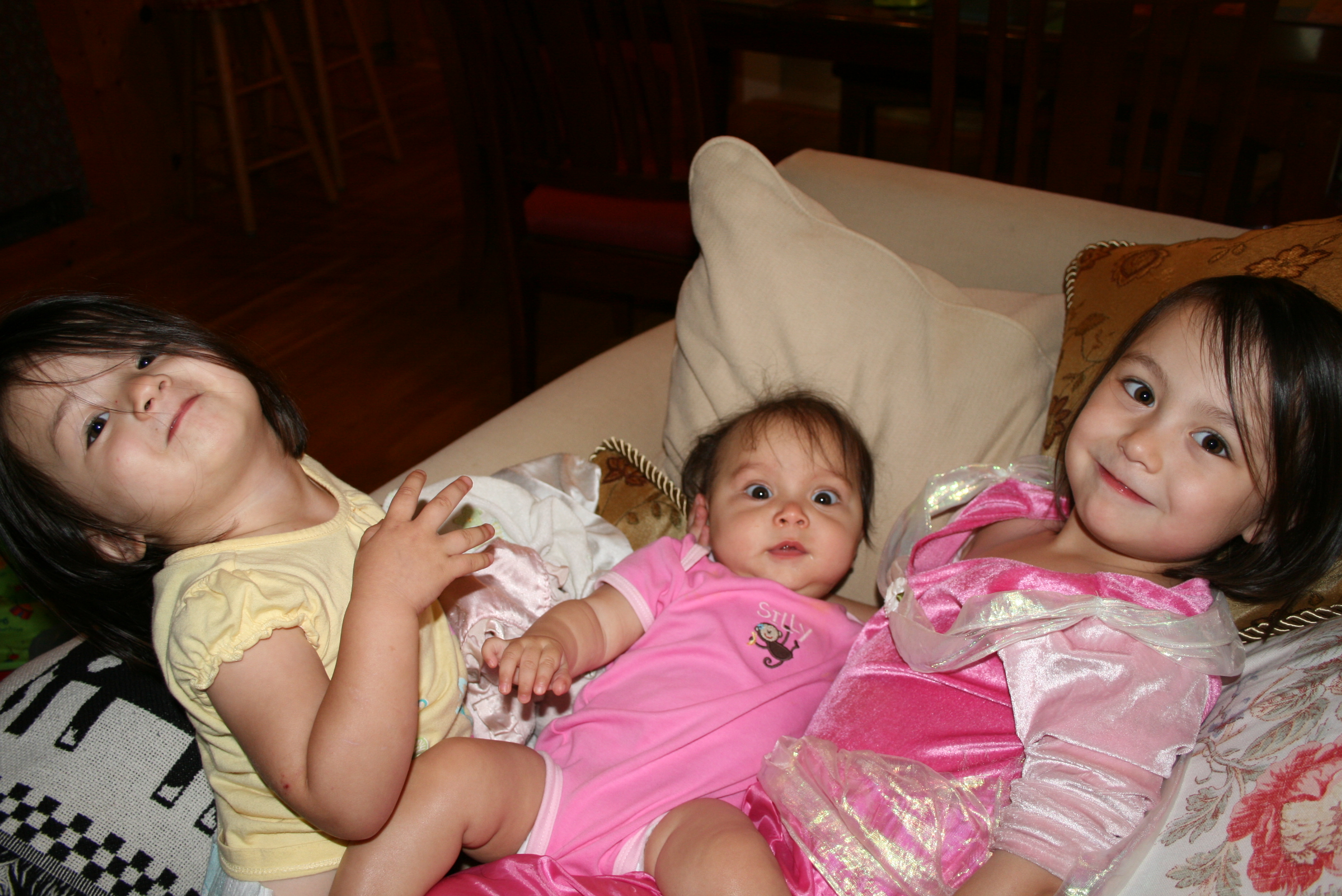
All afternoon, Fiona and Campbell romped around the yard with Brinkley. They kept each other completely amused playing chase, catch, and boss-the-dog-around. Even Georgia, who is about five times smaller than Brinkley, was charmed. Brinkley would run up to her and lick her all over, and she’d scream with delight and wobble after him.

And so it came to pass that we adopted our neighbor’s dog. Mrs. Doctor even brought us over our own Mason jar full of dog treats, so that the girls can reward Brinkley for following commands. This week, they’re installing an electric fence to keep Brinkley contained, but they’re extending it to include our yard. (This is partly just nice, and partly practical, since Mrs. Doctor has told me that whenever Brinkley hears our girls shrieking in the yard, he barks his “protective bark” and rushes over).

It’s an ideal situation, really. An early taste of grandparent-hood: all of the fun, none of the responsibility. These days, whenever we go outside to play, the first thing the girls do is to climb up the rocks that border our neighbor’s yard and holler, “BRINKLEY! BRIIIIIINKLEEEEEY!” Chances are that Brinkley will come bounding over, and everyone will have a good frolic. In fact, the only problems occur when playing isn’t possible: sometimes Brinkley will come up to the screen door in our kitchen during meals, and sit there staring forlornly at the girls, wanting only to play. And the biggest temper-tantrum Georgia’s ever had happened because Brinkley was running around our yard looking for a playmate, and I wouldn’t let her run outside alone to join him. “BINK-EEEE!” she screamed, pounding the window, “BINK-EEEEE!!!!!” (This child still doesn’t say “Mama” or “Daddy,” but she says “Brinkley”).

So, just a suggestion to anyone else whose children are petitioning for a canine companion: try convincing your neighbor to get a dog. It’s working for us; whenever the girls start mentioning pets, I just say, “But what about Brinkley?” and the whining ceases. So far.

And Down Will Come Baby

Tomorrow is Mother’s Day, so I’m thinking about motherhood.

I remember reading (sometime, somewhere) about the different mothering trends of the past few decades. There was the ultra-competitive power mothering of the 90s and early 2000s (Get your child the right stroller! Get them into the perfect school!). This was followed by a backlash that the author termed the “bad mother” trend (embodied by Ayelet Waldman’s memoir Bad Mother — which is, by the way, an honest and funny and touching read). “Bad mothers” proudly confessed to their failures, forgetfulness, selfishness, and use of vodka shots to get through the day. I’m not sure what you’d call the current mothering trend, but between last year’s hot mothering book, Battle Hymn of the Tiger Mother, and THIS year’s hot mothering book, Bringing Up Bebe: One American Mother Discovers the Wisdom of French Parenting, I’d call it “comparative multicultural mothering” (“Here’s how Asians do it!” “Oh yeah? Well here’s how the FRENCH do it!”).

I don’t really fit in to any of the above categories. I think I’m a mom who shows up every day and tries my imperfect best (with the help of God and coffee). A pretty good mom.

But I’m a pretty good mom who dropped my newborn.

I still remember vividly the first time Fiona got hurt. She was around 6 months old, and we were sitting on the floor of her room looking at books. As she was pulling out books from her bookshelf, a book from a higher shelf fell out and hit her right next to her eyebrow. It left a nasty red mark, and Fiona screamed for a few minutes, then recovered and forgot all about it.

I, however, did not forget. I cried harder than Fiona over her pain and my helplessness. How could I let such a thing happen to my child and not prevent it?!? That book COULD have landed in her eye! She’ll never forgive me for sitting there and letting her get hurt! I am clearly an unfit mother.

If you’re expecting me to tell you that things got better with time and additional children, you’re wrong.

Because when Campbell was about 4 days old, I was nursing her in bed late one night. I always read during late-night feedings in an attempt to stay awake, and I was reading that night. But despite my best efforts, worn out from the challenge of caring for a 20-month-old and a newborn, I nodded off with Campbell still in my arms. And woke up to a loud THUD and my baby wailing.

Campbell had fallen off the bed; more accurately, since I’d been holding her when I nodded off, I had dropped my newborn. I was completely beside myself. How COULD I, a second time mother, be so stupid?!? How would Campbell ever recover a sense of safety or trust after being dropped by her own mother at 4 days old?! Thankfully, our bed was only about 18 inches off of the floor, or it might have been a lot worse. We took her to the doctor the next day (where I was sure they’d call Child Protective Services on me), and she checked out fine. As far as I know, Campbell has no memory of the event and doesn’t hold it against me, although lately she has taken to saying, “Mommy, I wish I was back in your tummy.” I don’t know what that’s all about, but I’ve wondered whether she’s thinking, You know, things were a lot better back before she could get her hands on me.

And THEN, when Georgia was about 5 months old, I was trimming her fingernails one morning and nicked a little chunk of skin out of her tiny finger. She cried, and bled, and bled, and bled. She bled for the better part of an hour, through two washcloths and countless tissues. The only reason we didn’t take her to the doctor was because Erick was home, so he did his research (when there’s a family crisis, I handle the emotions and Erick handles the research) and determined Georgia was probably fine. Which she was.

Once again, I was the one who wasn’t fine. How many hundreds of fingernails had I trimmed with our previous two children, and I slice open our third daughter?!? How could I be so careless?!? Would Georgia ever trust me to cut her fingernails again?!? Happily, Georgia continues to submit to manicures, so I assume she’s let bygones be bygones. (I can’t say the same for her older sisters, who witnessed the event and remind me of it every time I go to trim their nails).

It goes without saying that this will NEVER be a parenting-advice blog. In fact, I no longer read parenting advice books or websites. (I know there are many excellent parenting resources out there that have helped countless people, but I started to notice that reading this advice made me anxious and confused). Not that I don’t need any input or advice, but these days I get it by talking to friends — friends who are in the trenches with me, or friends who are further along the parenting path and have great kids to show for it. Sharing stories, I’ve found, is the most helpful.

So that’s why I shared these stories with you: because I hope they might be helpful to other moms, especially moms who are struggling. (Is there any other kind?) I shared these stories precisely because they were stories I thought I’d never tell. They were too embarrassing, too traumatic. Back when they happened, I never would have predicted that I’d write them up and post them on the internet, let alone be able to chuckle over them a little.

Still happy, despite the blood loss. (Photo by Zoe Reyes).

Here is my Mother’s Day thought: I don’t think that time, experience, or more children necessarily make you a better, more competent mother. They just make you an older mother. Personally, I’m just as capable of dropping my third child as my first (maybe even more so, because I’m more tired and distracted). BUT, I DO think that time and experience can give mothers the gifts of perspective and humor. Things that seem so crucial — even shameful — at the time, later turn out to be things we tell virtual strangers with a chuckle. I’m only four years into this game, but if this is how I now see some of my darkest mommy moments, I’m guessing that in another four years we’ll all be chuckling about naps and potty training and kindergarten — the things that seem so important right now.

Bottom line: I think that it’s possible to be a pretty good mother and still drop your baby (metaphorically or actually). We are human, and imperfect, and all the love that we have within us will never be enough to make our children feel completely whole. All we can do is show up every day and try our imperfect best. Love — and laughter — and especially grace — really do cover a multitude of sins. And usually our children bounce back from our mistakes more quickly than we do.

So, Happy Mother’s Day. I wish my fellow mamas the gifts of perspective and humor. Remember that you’re still a pretty good mother, even if you drop the baby once in a while. And when it comes to motherhood, pretty good is good enough. Maybe it’s even great.

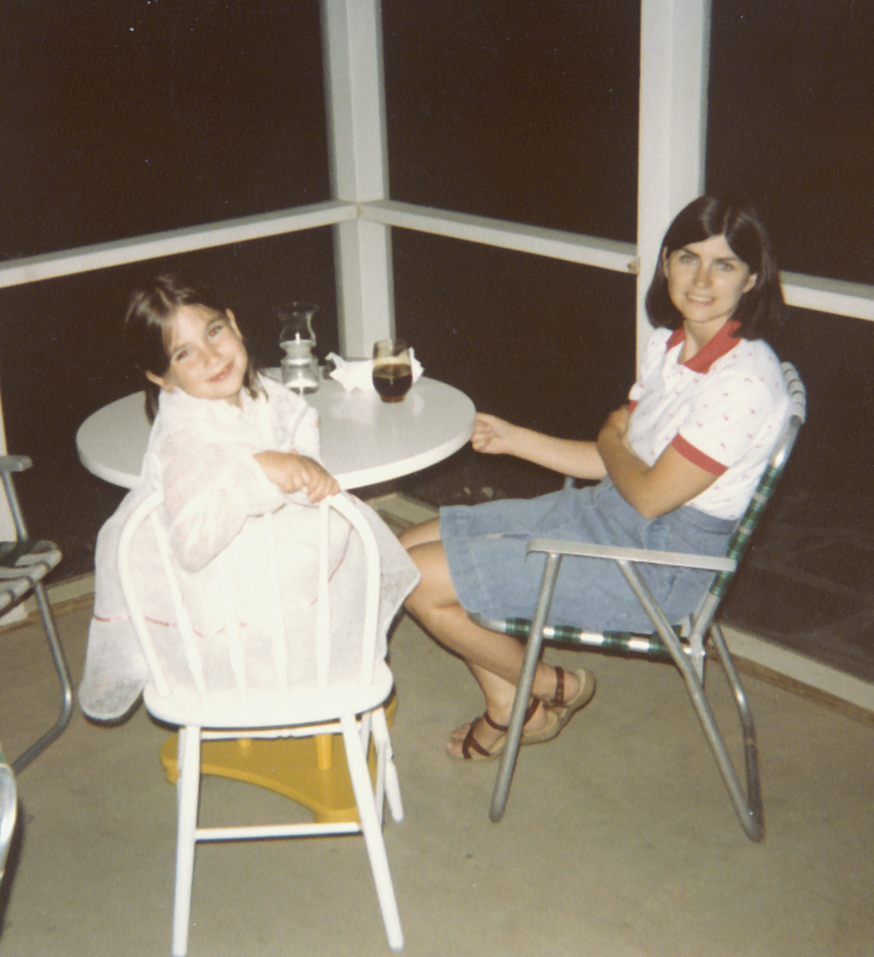
Check out my beautiful Mom (she’s the one on the right, of course). She’s one of the greats, and I’m pretty sure she never dropped me. Happy Mother’s Day, Mom! I love you!

ADDENDUM: My mom just read this, and has informed me that I fell off the changing table when I was a baby. So there you go!

Thoughts After A Fight

NOTE: I’m kind of terrified to publish this. It wasn’t written for public consumption; I wrote it for myself last week, as a way of processing a tragic fight that I’d been witnessing. It’s also, because of its frank discussion of faith, something I’d usually submit over at On The Willows. But it just feels right to publish it here. For some reason I’ve heard from numerous people over the past weeks who are also struggling with loss. Just about everybody who reads this blog knows me, and many probably know the family in question (whose names and identifying details I’ve removed in order to respect their privacy during this horrible time). I’m putting this out there and trusting that whoever needs to will read it, and that maybe it will help a little. (Lighter fare coming soon).

Some weeks, faith feels like the middle miles of a marathon, or the transition stage of childbirth, or 4:30 PM everyday in our house: when you say to yourself, “I just don’t think I’m going to make it.” This has been one of those weeks.

A beautiful baby’s fight ended this morning. We met her parents several years ago at our church in California. Around the same time we moved to Vermont, they moved overseas to work as missionaries — missionaries with a deep respect for their host culture, who wanted to know their community and be helpful in meaningful ways. Her mama started work as an English teacher at a local school, and her papa was researching various business ventures. Shortly after they moved, they sent out an email announcing the happy news that they were expecting their first child. And shortly after that, the trouble started: about halfway through the pregnancy, her mama started leaking amniotic fluid. She was put on bed rest and received various treatments, but things didn’t improve. Miraculously, despite low fluid levels, the baby continued to thrive. And then, about a week ago, their baby girl was delivered two months early. She was born with a systemic infection that affected her vital organs, and a lung condition that prevented oxygen from being absorbed into her bloodstream. This sweet newborn was put on a ventilator in intensive care, where she fought for her life. Hundreds of people all over the world were praying for her by this point. Her life ended today, at 9 days old.

Her parents’ faith, as expressed in their email updates, appears to be Teflon-strong. But then, they’ve been in the middle of a fight. I know from experience that, faith-wise, it’s often harder to watch a fight from the sidelines than to be one of the participants — at least while the fight’s going on. When you’re dodging blows and trying to land punches, you don’t have time to think about whether it’s fair.

Here’s what I think, though (not that anybody’s asking): What’s up with THIS, God?!? Here’s a faithful couple that’s just trying to do everything you told them to do — to love and serve others — and what did it get them? Stranded in a faraway country with a high risk pregnancy and a premature baby, THAT’S what it got them. This was your chance to pull out all the stops, move some mountains. Miracle Time! WHERE WERE YOU?!?

This type of situation is where my faith starts to fray. And I know I’m not alone. Of course, there’s lots of suffering in the world, and all of it is tragic. But when it’s a baby or young child who is sick, suffering, dying — someone who’s barely had the chance to live — what’s the point? I can’t think of anything more unjust. As a mother, I can barely process these stories, because they’re the worst of my worst-case scenarios. Then I look at my three healthy daughters, and it’s an embarrassment of riches. It’s. Just. Not. Fair.

Frankly, God doesn’t give me a whole lot of help here. One example of many, which we tend to gloss over in the joy of Christmas, is that a direct consequence of Jesus’s birth was the Slaughter of the Innocents: King Herod ordering that all babies under age two be killed. What’s up with THAT, God?!?

I have no good answers. I have nothing helpful to say to our friends, these mourning parents, other than: “I’m so sorry. We’re still praying for you.”

But it’s not all radio silence from God, either. Because, the same week that this baby girl was born, I happened to be reading Annie Dillard’s essay, “Teaching a Stone to Talk,” in which she writes:

It is difficult to undo our own damage, and to recall to our presence that which we have asked to leave….What have we been doing all these centuries but trying to call God back to the mountain, or, failing that, raise a peep out of anything that isn’t us?…At a certain point you say to the woods, to the sea, to the mountains, the world, Now I am ready. Now I will stop and be wholly attentive. You empty yourself and wait, listening. After a time you hear it: there is nothing there….There is a vibrancy to the silence, a suppression, as if someone were gagging the world.

Oddly, reading this passage started to reweave my fraying faith. Annie Dillard reminded me that when we wait for answers that don’t come, it’s not because that’s just how things are; it’s because things are wrong. People end up in trouble far from home, babies get sick and die, and nature itself is gagging.

Wait a minute, you may be thinking, that’s the GOOD news? Well, yes. That things are horribly wrong at this moment in history doesn’t disprove the existence of God, or his ultimate goodness. Because the wrong-ness of a baby having to fight for life, and of nature’s silence as recorded by Annie Dillard, IS answered, almost directly, by Isaiah 55:8-13 (This is for my mom: See, Mom, I’m listening!) I’m going to quote the entire passage, because it’s good stuff:

“For my thoughts are not your thoughts, neither are your ways my ways,” declares the Lord. “As the heavens are higher than the earth, so are my ways higher than your ways and my thoughts than your thoughts. As the rain and the snow come down from heaven and do not return to it without watering the earth and making it bud and flourish, so that it yields seed for the sower and bread for the eater, so is my word that goes out from my mouth: It will not return to me empty, but will accomplish what I desire and achieve the purpose for which I sent it. You will go out in joy and be led forth in peace; the mountains and hills will burst into song before you, and all the trees of the field will clap their hands. Instead of the thornbush will grow the pine tree, and instead of briers the myrtle will grow. This will be for the Lord’s renown, for an everlasting sign, which will not be destroyed.”

I’ve mentioned before that Erick and I help our daughters — and ourselves — grapple with the unanswerable questions of sadness and fear by paraphrasing from The Return of the King: One day everything sad will come untrue. Praying for this baby, and then reading Annie Dillard and Isaiah, I realized that I often dwell in the everything sad, but I have so little vision for the will come untrue. Isaiah 55 helped me color in that vision a bit. Mountains and hills bursting into song? Trees clapping their hands? I tend to read that as poetic hyperbole, but what if it’s literal? I can hardly imagine singing mountains or clapping trees that don’t look like some corny CGI effect, and every day I see mountains and trees when I look out my window. What if that’s what actually happens when nature regains its voice?

And if mountains are singing and trees are clapping, what might this baby girl be doing on that day? You will go out in joy and be led forth in peace.

I usually forget to remember that when we pray, we’re praying for eternity. Not just for what will happen tomorrow, or next week, or next year. Our prayers stretch out of time through forever. My thoughts are not your thoughts, neither are your ways my ways. God has all the time in the world to make wrong things right, sad things untrue. And when that’s what we’re praying for, I have to believe that the answer will always, eventually, be YES.

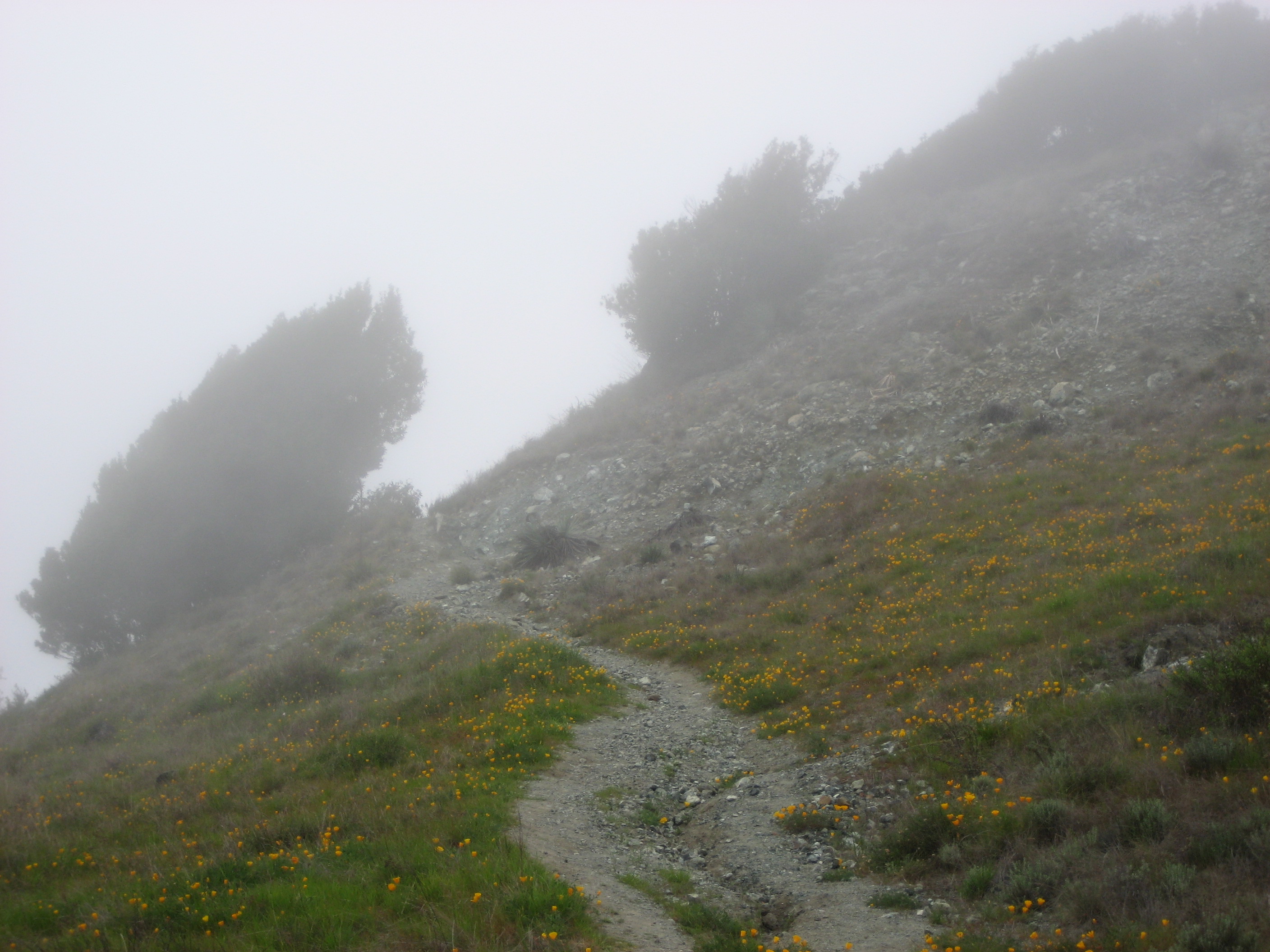
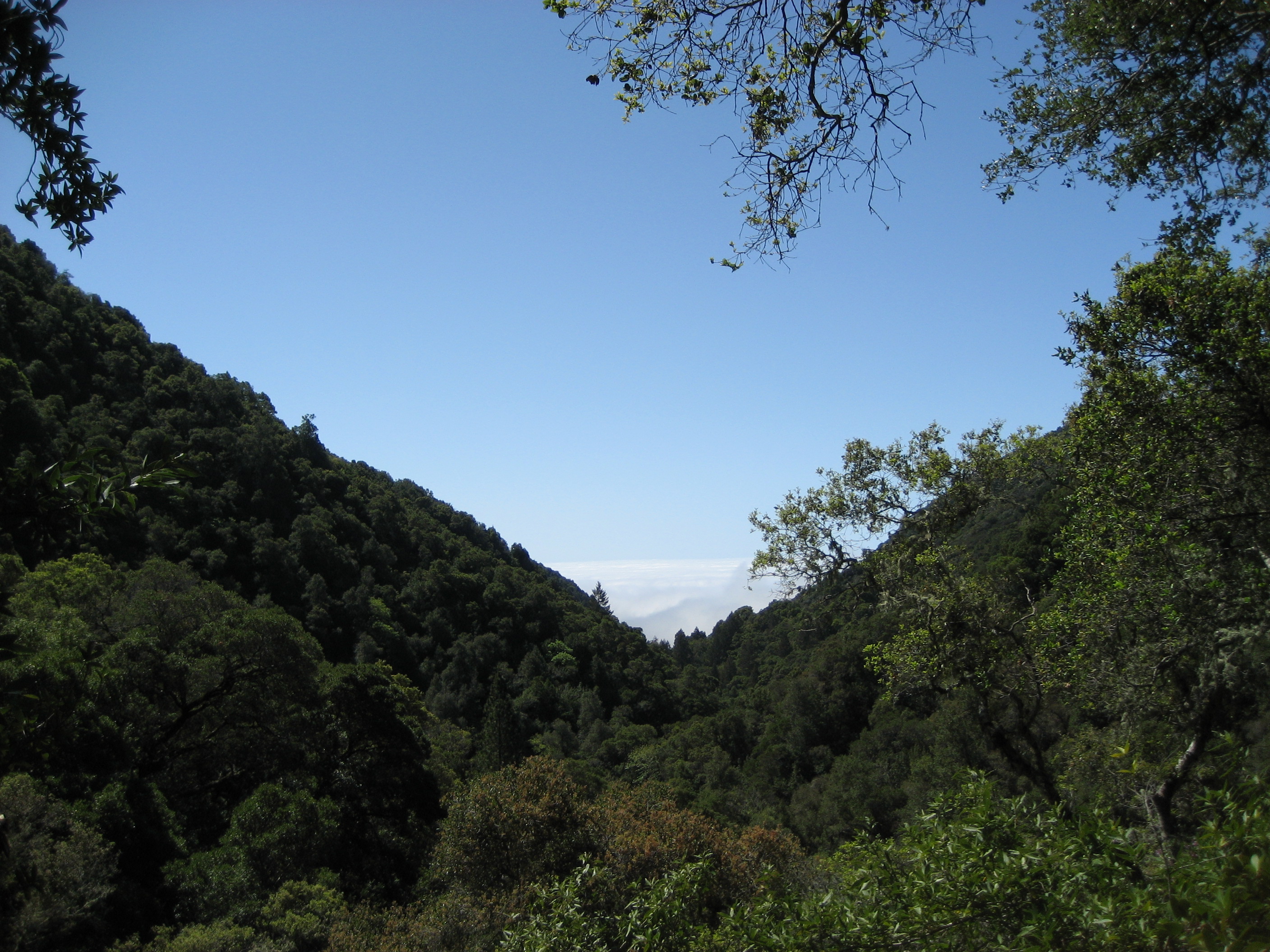
I took all the photos in this post during a 2007 trip down the California coast (I was pregnant with Fiona but didn’t know it yet). They seemed strangely to fit.

Tick, Tick, Tick….

If you set foot in Vermont these days, within 5 minutes somebody’s going to warn you about the ticks.

According to everyone — my friends and neighbors, the local papers, the town website — 2012 is going to be the Year of the Tick. Tickageddon. Tickpocalypse.

But don’t panic or anything.

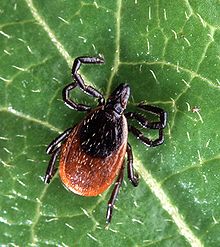
Here’s the story: Deer ticks, which notoriously can carry Lyme disease, have been steadily spreading northward in recent years. These ticks used to be rare in Vermont; one of my neighbors, who grew up here 50 years ago, says she never saw a tick as a child. (This weekend, she picked three off herself after working in her yard). But now the deer tick population is exploding — and with it, the incidence of Lyme disease in Vermont. In 2000, the Vermont Department of Health recorded just 40 cases of Lyme in the state; by 2011, that number was topping 500.

There are several possible explanations for the tick-festation. It seems that a bumper crop of acorns in 2010 caused an increase in the population of white-footed mice, which carry deer ticks. But this year the acorn crop didn’t do very well, the white-footed mice population declined, and a lot of hungry ticks are looking for somebody else to munch. Another theory is that the unseasonably warm winter of 2011-12 allowed the ticks more time to breed and find hosts. OR it could be due to an increase in the deer population as a result of the reforestation of Vermont’s agricultural land.

Whatever the reason, the Big News in Vermont is that the ticks are on the march, they’re hungry, and an estimated 20% of them carry Lyme disease.

All of which has certainly gotten my husband’s attention. You don’t read much about Erick here, mostly because he’s the most normal of the five of us, which makes for less entertaining stories. BUT, when it comes to the health and safety of his family, Erick becomes what some might call…”obsessive.” (Which is probably a good way to be). So, he’s been emailing me links to informational websites and videos, we’ve stocked up on Deep Woods OFF and Skin So Soft, we’ve purchased “The #1 Tick Remover in the World,” and every single night he does a thorough tick check on each of our girls. (They’ve taken to calling it “a tickle check.”)

By the way, these ticks that we’re checking for are about the size of a sesame seed, and can latch on to any part of the body.

We felt like the clock was…ticking. We live in the woods. I do yardwork in the same area where my neighbor was jumped by three ticks. The girls are outside much of the time now that the weather is warmer. We’ve even received a late night phone call after returning from a cookout, informing us that two other attendees found ticks on themselves.

And then, just last week, we pulled our first tick of the season off of the back of Fiona’s head.

In some ways, it was a relief: we could finally lose that fearful expectation of the inevitable. It’s like in horror films, where the scare itself is less frightening than the anticipation of the scare. At least when we finally found a tick, we knew that we could spot the things. Now, we just have to watch Fiona for flu-like symptoms over the next month. In the meantime, I keep telling myself what I told our girls when I sat them down for a “tick talk:” “We shouldn’t be scared, we just have to be smart.”

It’s a rough world out there, I tell you. I mean, just last month our governor was charged by a bearLife in these woods is teaching us that nature is beautiful, and difficult. But then, to quote my ever-vigilant husband, “Feeling safe all the time probably isn’t good for your soul.”

By the way, we hope you’ll still come visit. 🙂

Shine On


I have a little piece over at On The Willows today, about some of the amazing women I’ve met this year in Vermont. Click here to read it.

And yes, we do still have three daughters. I know you haven’t seen them in a while. Here’s confirmation that they still exist, as feisty as ever. Especially Georgia.

The Mountains

Current reality: we live at the foot of Vermont’s Green Mountains. Whenever we look out our front windows, walk out our front door, or drive home, we see the mountains.

The Green Mountains, seen from our front yard.

True confession: I’ve never been much of a mountain person.

It’s not that I actively dislike mountains, it’s just that for most of my life they haven’t been the scenery that most fills me with awe, inspiration, or deep thoughts about life. I’ve never said, “Boy, I’m feeling pretty wrung out. I think I’ll head to the mountains for some restoration!”

No, that would be the ocean for me. Maybe I’m lazy when it comes to awe, inspiration, and deep thoughts, but I’ll take the ocean every time. The ocean is powerful; it’s in constant motion, crashing onto land and grinding everything in its path to sand, just as it’s done without pause for millenia. Talk about awe: try standing on a beach watching the waves break, hearing the roar of the water, and thinking about how vast all that ocean is, and how deep! Then, for inspiration and restoration, nothing beats a walk along the beach. It’s so flat, so easily traversed, you could walk forever (as long as you don’t hit a gated condominium complex) — free foot exfoliation included. Added bonus: because of the breeze off the ocean, there are usually no bugs.

Now, let’s take the mountains. They may be strong and solid, but they just sit there and stare. They’ve sat for millenia, like sleeping bullfrogs in the sun. The Green Mountains, which have been weathered down so that their highest peak (Mt. Mansfield) is only 4,380 feet, especially look like squat, lumpy bullfrogs. Not exactly awe inspiring; the first time he saw them, Erick said, “I see the foothills, but where are the mountains?” That’s because he’s from Northern California, which does boast some pretty impressive mountains: the Sierra Nevada. But even those mountains never inspired awe in me so much as fear; they’re so harsh and steep and forbidding, all I can think about driving through the Sierras is the Donner Party and whether I’d eat somebody else for survival.

The other thing about mountains is that, to really experience them, you have to climb them, which is a lot of hard work. Not much time for reflection or inspiration when you’re huffing and puffing and trying not to roll down. All that work so you can reach the summit and look around — but I’ve never been a big fan of heights. And mountains usually host lots of bugs: ticks, mosquitoes, and any number of other annoying, buzzing, stinging insects.

To sum it up, my impression was always that you go to the ocean to feel small. How else could you feel next to that immense pounding, crashing, noisy motion? On the other hand, it always seemed to me that you go to the mountains to feel big. You climb a mountain, it doesn’t fight back or even move, but you earn a sense of victory; when you look down from the summit, you get to feel like God.

I’d generally rather feel small than big, so I’ve never been much of a mountain person.

Which is funny, because when I left my childhood home (in a flat, flat suburb), it was to attend college in Massachusetts’s Berkshire Mountains. A college that had as its alma mater song a little ditty called “The Mountains” (“The mountains! the mountains! we greet them with a song….”) My maternal grandmother’s favorite Psalm, read at her funeral, was Psalm 121, which begins: “I lift my eyes up to the hills — where does my help come from?” and which has been set to music as a song called “I Lift My Eyes Up To The Mountains” — a song that I’ve sung at every church I’ve attended. In New York City, we lived in a 28th floor apartment. We then moved to Berkeley, which has a landscape dominated by the Pacific Coast hill range (the “Berkeley Hills”) along its eastern border. And now we live at the foot of the Green Mountains. Rather than the ocean, it’s mountains, hills, and heights that have chased me throughout my adult life. And mostly I’ve shrugged and thought, “Meh.”

But since I’ve been staring at the mountains for almost a year now, I thought I should probably write about them. And you know, it’s pretty daunting to write anything in this age of the internet, because I could probably Google any topic and find 1,895,947 people who’ve written down my exact thoughts, only better. Clearly, I had to take a walk. So I walked around our house, and looked up at the mountains, and said, “Okay, mountains, gimme something. Anything.”

They just sat there and stared.

Our drive home, towards the Green Mountains.

It took me a minute, but then I realized that that was the answer. I saw the mountains like I’d never seen them before. These Green Mountains, they extend 280 miles through Vermont, but they’re part of the Appalachian Mountain range, which was formed about 480 million years ago. They were once among the tallest mountains in the world, until time wore them down to their current rounded form. The Green Mountains support a dense boreal forest that withstands harsh winters, which is why they can honestly be called “green” year-round. In other words, these mountains are survivors. They don’t need to show off, or move, or make noise (although I have found that on nights when the wind races down them, the roar rivals any ocean). They’re so humble, they let you climb all over them. All they need to do is sit there, and we can turn our eyes to them for help because in their massive silence they say: “Whatever it is that you’re going through, we’ve seen it. We’ve survived four hundred million years of wind, rain, snow, and sun, and we’re still here. We’re weathered, but we’re still here.”

When I saw the mountains this way, I finally felt small — small in the best, most comforting sense, like a little child who crawls into a parent’s arms and knows it’ll be okay. The ocean, I realized, is like life: it beats and batters without stopping. But the mountains, they’re US.

What I see walking around our neighborhood.

Trapped!

Although they’re obsessed with the Disney princesses, our daughters have not yet watched any Disney movies — nor will they until I’m totally convinced that their active imaginations are tough enough so that watching these movies won’t result in weeks of sleepless nights. So far, the girls have acknowledged that they’re not ready for Disney movies; they “get the shivers” just from reading the companion books. Because the Disney stories are scary. There’s the vain queen in Snow White who transforms herself into a poisoned apple-hawking crone; the vengeful fairy Maleficent in Sleeping Beauty who goes down fighting as a fire-breathing dragon; the tentacled and power grubbing Ursula who ends up impaled on a ship in The Little Mermaid; the sinister lion Scar in The Lion King who speaks with the voice of Jeremy Irons.

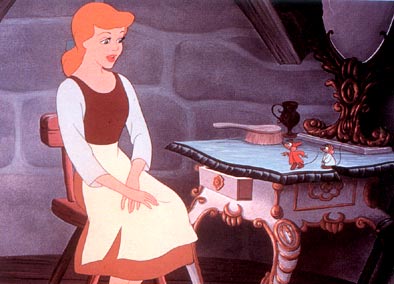
But in my opinion, the sickest minds at Disney were the ones that dreamed up Cinderella. Here we have a heroine who sleeps with mice. Not only that, she makes them little clothes, sings to them, and lets them help her get dressed in the morning. And we’re supposed to find this CHARMING?!?

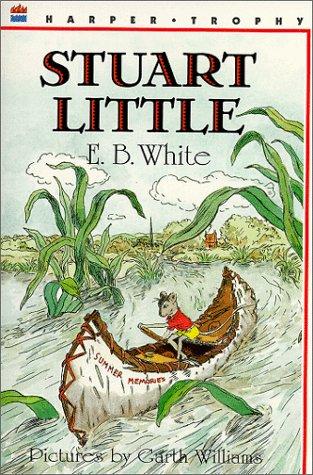
It’s not just Disney; have you ever noticed how many children’s book protagonists are mice? There’s Stuart Little and various Beatrix Potter characters and Angelina Ballerina. Don’t even get me started on Kevin Henkes; he writes brilliantly sensitive children’s books like Sheila Rae, The Brave and Wemberly Worried and Lily’s Purple Plastic Purse, but every single one of his characters is a mouse. And then there’s If You Give a Mouse a Cookie, which I admit I did write about fondly in this blog. But let’s stand back a minute and consider what really happens if you give a mouse a cookie. He doesn’t ask for a glass of milk to go with it, that’s for sure; ooooh no, he’ll build a nest in your roof, have tons of babies, and poop all over your house.

I OBJECT to this cultural brainwashing that tries to convince my children that mice are cute, cuddly, friendly little helpers. And yes, I do want my children to lead lives of love free from fear. Just NOT when it comes to mice!

So, I have this little problem with mice. I’ve tiptoed around it here for a while, because I’m basically a happy person, and we’re basically a happy family, and we’re basically thrilled to be living in Vermont, and I want this blog to reflect that. But I’m feeling like today is a down & dirty honest day, so I’ll just say it: hands-down, the WORST thing about our move to Vermont is that there are mice here. Lots and lots of mice.

“But Faith,” you might say, “you live in the WOODS. Surely you expected mice.” Actually, I didn’t. Up until this year I had shockingly little experience with mice. I grew up deep in suburbia, and the first time I saw an actual mouse I was about 8 years old. That experience is burned deep into my memory, and has influenced all of my subsequent dealings with mice.

I was visiting my three cousins in New Hampshire. We were riding bikes up and down their street when I looked down and saw it: a dead mouse, right there on the asphalt. Since this was the first actual mouse I’d ever seen, I mentioned it to my two older cousins. Sensing I was shaken, they decided to have a little fun with me, not knowing that it would scar me for life.

“Hey, guys, did you see that dead mouse back there?” I asked, trying to be casual.

“Yeah,” answered Michael, “I saw you run right over it.”

“WHAT?!? No I didn’t!”

“I don’t know,” teased Martha, “I saw a tire track running right down its stomach.

When you’re 8 years old, that’s all it takes. I lay awake all night, picturing the flattened mouse with a tire track running down its stomach. By morning, I was not only terrified of mice, but I was convinced that the only thing worse than a live mouse is a DEAD mouse.

Flash forward a couple of decades: we moved into our Vermont “dream house” to find that the previous occupants, the elderly couple who built the house, either didn’t realize or didn’t care that they had a massive mouse situation. We found droppings everywhere; I spent the first couple of months here in a permanent stoop, scanning the floorboards for fresh mouse doo. Worse than that was the nightly tap dance over our heads. Our house is constructed in what’s known as “post-and-beam” style, which means that there’s lots of exposed wood. There’s also no attic over the main part of the house, so in our master bedroom we have a steeply-pitched exposed wood ceiling that is the underside of the roof. Basically, it acts like an amplifier for whatever is running around on the roof; our first night in this house, it sounded like mice the size of elephants were about to burst through the ceiling right over our heads.

As in any marriage, ours functions based on a system of roles and duties. In our case, I will raise the children, cook the meals, clean the house, tend the yard, and fix leaky faucets, but I will NOT do mice. Thankfully, Erick has embraced his role as household exterminator. He began by doing what he usually does when faced with a challenge: research. This led him to what he swears are the most amazing mousetraps in history: T-rex Snap Traps. We have about 50 of these traps strategically placed around our house. Erick does both the setting and the disposing, since the only thing worse than a live mouse is a dead mouse. The first time he prepared to empty some traps, he wore: rubber gloves, a face mask, goggles, and — I’m not kidding — a hard hat. I’m not quite sure what he was expecting from the dead mice, but since I would’ve required a full hazmat suit, I really couldn’t laugh at him. (Too hard).

Between these traps and some bait stations outside our house, the mice are mostly under control. But about a month ago, I looked out our front window to see a dead mouse. A dead mouse right on our front lawn, just a couple of feet from the house. I mentioned it to Erick, but such is the life of a first-year professor that he promptly forgot all about it, and I didn’t have the heart to nag him. I decided the time had come to face my fear and take responsibility for the dead mouse myself, like a big girl.

And then it rained, and then it snowed. The mouse was covered up for a couple of days, but when the snow melted it was still there, looking a little bit squishier and worse for wear. Scooping it up with a shovel no longer seemed like a good idea. At this point, I figured it was best to take the natural route, and let the mouse become one with our lawn. Free fertilizer, so to speak.

The problem was that the mouse refused to become topsoil as quickly as I’d hoped. Whether some freeze-drying had occurred due to the snowfall, I don’t know, but every morning I’d look out the window and it was still there. I cursed the high standards of the dozens of owls that live in our yard: What’s wrong with a slightly aged mouse corpse, owls?

One thing was for sure: as the weather turned warmer and our girls started playing outside again, I didn’t want them to be scarred for life by the sight of a dead mouse, the way I had been. (Or, worse, to step on it and track dead mouse germs into our house). So, one naptime, I got the shovel, took a large scoop of mulch from our mulch pile, and, standing a mere 3 feet from that mouse, threw the mulch on top of it. For good measure, I tossed on a few dry leaves. A burial, of sorts. I felt very brave, and very innovative.

Until the other weekend, when the girls were tearing around our yard with a couple of friends. They knocked on the front door to request more snacks, and when I opened the door: THERE WAS THAT DANG MOUSE. AGAIN. Somebody must’ve kicked over my burial mound, and the scraggly mouse corpse was lying exposed in the sunlight, like my fear staring me in the face.

I did the only thing I could do, the thing I should’ve done weeks before: I called for Erick. He took a plastic bag and went outside (minus his mouse-fighting gear — so brave), and within minutes the whole ordeal was behind me.

I guess no matter how grown up you are, there will always be some things that you never grow up from.

Inevitable Spring in Vermont Post

Just as I struggled with whether to post the expected-and-cliched-yet-still-gorgeous fall foliage photos this past autumn, I had a REALLY HARD TIME deciding whether to write the inevitable post about spring in Vermont. I’m not sure why this is such a hurdle for me; it’s not like anybody who visits this site is expecting edgy, heavy-hitting reportage. But I love to write, I try to write what I hope will be new and fresh things,  and it’s SO difficult to come up with anything about spring that doesn’t sound like a Hallmark card.

You know: spring at the end of a long winter, new life, rebirth, trees budding, flowers blooming, the spirit awakening. Blah blah blah.

But…

IT’S ALL TRUE! AND SPRING IS HERE! IT’S FINALLY HERE! AND IT’S WONDERFUL!!!!! YEEEE-HAAAAAW!

All done. Thank you.

So, clearly, since I’ve already typed 130 words, I’m going to go ahead and tackle spring. Because life is so much about the weather, and this blog is about life, ergo: spring.

The interesting thing I’ve noticed about spring this year is that it seems to be more sensory than meteorological. It’s surprised me just how happy we’ve ALL been to see spring come, because we never really had a winter. But even though the weather itself may not be as dramatically different as it will be in future years, you still feel the difference in all of your senses. Spring is there in the quality of the light, the smells in the air, the feeling of the earth under your feet. And for the first time — bear with me here — I really can feel the season change flowing through my veins, like my own sap is finally thawed. No kidding. I guess that’s why they call it “spring fever.”

On one of the first days that felt like Spring — an unseasonably warm Wednesday in early March — Fiona’s preschool class took a long walk across the Middlebury River and into the woods, searching for “signs of spring.” (I love that the “signs of spring” she told us about later included “maple syrup buckets.” It’s true: here in Vermont, early spring is sugaring season, and the syrup collecting buckets are latched on to maple trees everywhere). Here are a few other “signs of spring” in our Vermont life:

We’re back at the park! Unlike in the Bay Area, where we could go to the playground year-round, in Vermont the playground is a seasonal thing. Although the best playground in town is just down the street from us, the last time we were able to go there was in October. This past month, we’ve been back! And, let me tell you, it’s GREAT to have another activity to rotate in with our tired winter options.

At the park. (Yes, someone created a little "bonfire pit" under the play structure. I want to say "Only in Vermont," but I'm not sure).

-Facial hair is disappearing! Another seasonal thing in these parts: facial hair. Aside from my husband, who is physically unable to grow a beard due to a follicular condition called, I believe, “Asian-ness,” many Vermont men sport full beards starting in November. But there must have been some sort of grooming memo sent out over the past few weeks, because all of a sudden, the beards are gone.

Some of the first "Creemees" of the season. Note that Fiona has graduated to a cone -- that's a Big Deal.

Some days, we don’t wear coats! I still keep our coats piled in the back seat, because you never know when the temperature is going to suddenly drop below 50. And I’ve not yet made the drastic move of switching over our mudroom gear to spring/summer attire. Vermont spring is a season with an identity crisis — it’s kind of like the brunch of seasons, as I have to explain to the girls when they want to wear flip flops on chilly, drizzly days “because it was HOT yesterday!” BUT there have been days when the girls went outside with no coats AND bare legs!

Look Mom, no coats!

The gulls are migrating! I’m not much of a birder, so a bird has to be pretty large and loud for me to notice their migration. I noticed the geese in the fall. Now, it’s the seagulls. I first noticed the gulls one weekend when I took a solo grocery shopping trip. I heard them before I saw them; as I stepped out of the car, I actually wondered, “WHY are my daughters running around in the parking lot?” I peered around the other cars, and that’s when I saw them: not my daughters, but an entire empty corner of the parking lot was absolutely covered in gulls. (Which tells you a lot about the general noise level in our house). Since then, I’ve seen fields full of gulls all around town. Which is odd, because Vermont is pretty far from the coast. I did a little research, and it turns out that they’re migrating through here up to their summer breeding grounds in Canada.

Once a California girl....

-Tractors and joggers have replaced snowplows on the roads! While we never saw many official snowplows in action this winter, people were still prepared with snowplows attached to the fronts of their trucks. Well, now those plows have disappeared, and I’m back to sharing the roads with farm equipment, tractors, and joggers. I still can’t quite get over living in a place where it’s not unusual to see a combine harvester driving down the street. As a suburban kid, I want to gawk and point and yell, “Look at that! An ACTUAL FARMER!” The joggers, of course, aren’t quite as novel. I think they’re mostly college students, because they tend to be young, beautiful, and jogging near the college.

Riding bikes around campus.

-Woody is being phased out! Our beloved wood stove is winding down his work for the year. Lately, we’ve only had to run Woody occasionally at night. While in some ways it’s sad to lose this warm and cozy fixture in our living room, it makes my life a lot easier to not have to stoke the fire every hour and haul in wood daily. (During my less gracious moments, I have been known to call Woody “my fourth child”).

Woody, cold and alone.

We’re preparing for the next round of home improvements! Oh yes! We’ve come full circle through the Vermont seasons: summer, foliage season, ski season, mud season, and now back to: contractor season! Once again, we’ll be stimulating the local economy this summer with projects like painting the entire exterior of our house. We learned through experience last year that if we want these projects completed by the time ski season rolls around again, we need to get the ball rolling NOW.

Also there are buds on the trees, green shoots poking up from the ground, robins in our front yard. It’s glorious, and we’re trying to soak it all in…because any second now, the ticks and mosquitoes are going to descend.

No Sudden Moves

One of the lifeboats from the Titanic. National Archives photo.

I just read a fascinating article about the sinking of the Titanic, which addresses the question: Why didn’t the passengers panic while the Titanic was going down? Apparently, this is of great interest to economists (economists are strange), because they believe that people usually act out of their own self-interest. Three years after the Titanic sunk, the Lusitania, another luxury ship with a similar number of passengers, also sank. But the passengers on the Lusitania panicked, whereas while the Titanic went down, the band famously began playing music, doomed men strolled around smoking cigars, and order prevailed. What made the difference?

The answer to this question is proposed by an economist (so you can take it with a shaker full of salt); he theorizes that the Titanic passengers didn’t panic because the boat took longer to sink. The Titanic took about 2.5 hours to go down, whereas the Lusitania sank in under 20 minutes. David Savage, the economist who proposed this theory, says, “If you’ve got an event that lasts two and a half hours, social order will take over and everybody will behave in a social manner. If you’re going down in under 17 minutes, basically it’s instinctual.”

In other words, it takes time for our best instincts to win out.

This article fascinated me because it seems to support something I’ve been telling myself repeatedly over the past couple of months: “No sudden moves.”

I track time by the photos that show up in the “Last 12 Months” category in my iPhoto program, so I can tell you that exactly one year ago, we had just bought our house in Vermont, Erick was graduating from his PhD program at Berkeley, Georgia was getting baptized, and our California house was slowly filling with moving boxes. Around the same time, Erick and I decided that since he finally had a full-time job, and since our family was going through so many major transitions, I should take a year to focus solely on the home front. A year without thinking about any work outside the home. A year in which my job was to help a husband and three young children adjust to our new life. It turned out to be a great decision, I’m thankful that I had the luxury to even consider it, and it’s been a special year for our family.

But that year is almost up.

Which means that I’m thinking about thinking about what my next move, if any, should be. And that’s why I keep telling myself, “No sudden moves.”

This doesn’t come naturally to me. In fact, the reason I’m telling myself to slow down is because I’ve done the opposite for most of my life. I’ve never been someone with what you might call a “life plan.” I went to college with no firm idea of what I wanted to major in or what I wanted to be. Post-college, if I liked something, I decided that’s what I should do. If I got accepted for a job or graduate school, I jumped. When we reached a stage at which it seemed like we should be thinking about kids, we tried to have kids (and, fortunately for us, everything happened pretty quickly). I bopped through about a decade of post-college life in this completely unintentional, take-whatever-comes-my-way fashion. Even moving to Vermont, though practical and wonderful, followed this pattern: Erick was offered a job in February, we had a baby in March, bought a house in April, and by June we were here.

I can’t say that I entirely regret my lack of a coherent path; all of that strikes me as what you should be able to do in your 20s, and each experience was important in its way. But now I want to do things differently. Thoughtfully. Slowly. No knee-jerk reactions, no taking a job just because it’s there. No sudden moves.


In other words, I’m trying to behave more like a passenger on the Titanic. Because I think that David Savage is probably right; given more time, it’s our better instincts that tend to prevail.

I’m actually trying to behave this way throughout my life, because I don’t think this rule applies only to sinking ships or career decisions. Give anything a little more time — be it parenting, relationships, or major purchases — and I’m less likely to act out of instinctual panic, more likely to make wise choices. Sometimes this means closing my eyes, biting my tongue, and taking several deep breaths before dealing with a kicking, screaming child, but it usually leads to a better outcome.

Of course, taking too much time can also be counter-productive, the equivalent of “rearranging the deck chairs on the Titanic.” Whether or not there’s an open spot on the lifeboat, at some point you have to get off of the sinking ship. So, I’m aware of the need for balance; no sudden moves, but no spinning my wheels for years waiting for some unattainable “perfect thing.” (And, by the way, I’m also aware that EVERYTHING I’m writing about here is a luxury: being able to find jobs after college, being able to take a year at home, being able to take time making decisions. If I were a single mother or if Erick lost his job or if I’d graduated college a decade later, I might suddenly find myself on the Lusitania, even if I wanted to have a Titanic mindset.)

Here’s one more fascinating fact I learned from the article: regardless of the passengers’ behavior, the Titanic and the Lusitania each had roughly the same number of survivors. Which means that whether they behaved calmly or panicked, the same percentage of people made it off each boat.

That could be a discouraging fact: whether you calmly light up a cigar while allowing women and children to board the lifeboats first, or whether you crawl over fellow passengers in order to make it to safety, your chances of survival are the same. If you’ll allow me to extend the ship metaphor a little further, I suppose what it comes down to is this: we all know that the ship sinks in the end, but none of us really know how long that’s going to take. So, how to behave in the time we’ve got?

I say: take a stroll, light up a cigar, listen to the music, let other people go first.

No Sudden Moves.