Hang in There, Baby

On the Willows has been on hiatus for a few months, but now it’s back! And I have a new post up over there, about the strategy of “hanging in there” when you find yourself in one of life’s pits. Click here to read.
Life. Motherhood. Vermont. (Not necessarily in that order.)
On the Willows has been on hiatus for a few months, but now it’s back! And I have a new post up over there, about the strategy of “hanging in there” when you find yourself in one of life’s pits. Click here to read.


As I sit at my computer to write this, there is exactly one more week of school in Addison County; when this column appears, my daughters will have been on summer vacation for approximately 15 hours. Between now and then there are picnics and potlucks and packing up. My oldest daughter’s Kindergarten will have “Move Up Day,” when she will meet her new First Grade teacher. My second daughter will participate in a preschool graduation ceremony, during which we will celebrate her ability to play, do crafts, and sit in a circle for 15 minutes. (Really, I see no need to continue her education.)
This year — our first in the Addison County public school system — has been a wonderful school year for our family. In August, we’ll send two daughters to public school, while their younger sister begins preschool; we’ve gotten our toes wet, and soon we’ll be wading in deep. So now seems like a good time to reflect on the valuable lessons our family has learned this school year.
Click here to continue reading my latest “Faith in Vermont” column in The Addison Independent.


Our dog, Gracie, recently turned two years old. Age is not mellowing her. I often think of her as our fifth daughter, because, like the other Gong girls, she’s full of energy and a little tightly wound. Parenting Gracie is a lot like parenting our other daughters, as well; it’s trial and error, making appropriate adjustments for whatever irritating habit she’s developed in a given week.
Also, we love her a lot.
One of the ways that we allow Gracie to be herself and burn off her energy, while also maintaining boundaries to keep her safe, is by using an electric dog fence around our property. Because we live in the woods, this isn’t a fancy-schmancy suburban dog fence underneath our manicured lawn. We have no manicured lawn, so the dog fence is a wire that sits aboveground and runs around the perimeter of our yard (and our neighbor’s yard, since Gracie is best friends with their golden retriever).
When we let Gracie outside, we put a special collar on her. If she gets too close to the fence boundary, the collar beeps a warning. She’s learned that, if she goes through the fence, the collar will give her a brief but strong electric shock. (It’s uncomfortable but not cruel; I can tell you as someone who’s accidentally shocked myself with her collar).
Here’s the thing: Sometimes Gracie breaks through the fence. This is when she’s feeling particularly strong-willed about something, for instance; her dog friend next door breaks through the fence, or our family goes out for a walk without her, or she sees a squirrel, or just wants an adventure. So, she screws up her courage, gets a running start, yelps when she gets the shock, and then she’s free and clear!
Or so she thinks.
Because when Gracie jumps the fence, she may be free, but she’s not safe. There are cars and trucks out there that drive too quickly. There are (really and truly) bears and coyotes around these woods. There are hunters with guns. She has no experience taking care of herself, finding her own food. It’s not good for her to be outside the fence; that’s why we installed the fence to begin with.
But, here’s the funny thing: Often, when I’m actually trying to take Gracie out of our yard — on a walk, or to meet our daughter’s school bus — she refuses to come. She’s afraid she’ll get shocked. Even though she’s not wearing her collar, even though I’m leading her on a leash. She’ll dig in her heels, and I have to tug on the leash while attempting to reason with her: “It’s okay, Gracie. See, your collar isn’t on? No shock, okay?” Sometimes I have to pick her up — all 54 pounds of her — and carry her down the driveway.
We went through this just the other day, and it occurred to me: Oh my gosh, Gracie is JUST LIKE ME!
I, like Gracie, have a screwed-up idea of what freedom is. I think we all do; my daughters certainly do. We assume that if something’s safe, then it isn’t really free. So we’ll gather up our courage, get a running start, and risk pain and punishment — an electric shock, a time out, a broken relationship — for the “freedom” to go play in traffic.
For the “freedom” to mingle with bears and coyotes and hunters.
For the “freedom” to be the boss of me!
On the other hand, whenever I’m being prompted to do something that I really should do, something that would be fun or soul-expanding — I tend to dig in my heels and fight against it. I’m afraid. Afraid of imagined harm that could befall me, the shock that might zap me.
I have the freedom to do these things, but I don’t trust that freedom. I don’t think I’ll be safe.
Examples of this kind of misguided inertia include: Picking up the phone to invite my child’s friend over to play (I know, I know — it’s completely irrational to be afraid that another parent will refuse to allow their child to play with mine…but it’s true). Writing a book, or even just submitting my writing to new outlets. Leaving my children in order to do something “selfish” like spend an afternoon alone or a night with friends.
The trick is knowing the difference between the safe and the stupid kinds of freedom. For Gracie, it seems simple: When somebody is leading you on a leash, do it; if nobody’s walking you down the driveway, stay in the yard. But when you’re the one wearing the collar, it’s a lot harder to discern whether you’re leading yourself or being led.
I don’t think there’s an easy solution to this conundrum. But I do suspect — and I might catch some flack for this — that we are smarter than dogs. Most of us, if we take a minute to reflect, can distinguish between playing in traffic and going for a stroll. And most of us, if we’re still and patient, can hear the warning beeps as we approach the safety fence — or feel a gentle tug at the end of the leash.
When we feel that tug, we should go. Because, unlike Gracie, it’s unlikely that someone else will pick us up and carry us over that fence.


A little less than a month ago, in early May, it finally felt safe to declare Addison County in a state of full-blown spring. All the signs were there: we’d stopped burning wood in the stove at night, we’d cut our getting-out-the-door time in half by omitting hats and gloves and boots (and sometimes even coats!), we’d hung the hammock and put the potted plants back outside, and we’d replaced the screens on the doors and windows. Whenever we returned home from errands or school, our daughters raced from the minivan right into the yard to blow bubbles, climb rocks, chalk the walkway, ride bikes — and even, one glorious afternoon, frolic on the Slip-n-Slide.
For a full week, our family reveled in the renewal of our outdoor paradise. Then, one afternoon, I noticed that small, black things were flying around my head. As I waved them away with my hands, I saw that my daughters were also flailing their arms in front of their faces. And then, I felt that old, familiar pinch; heard that old, familiar buzzzzz — along with my daughters’ shrieks as they raced for the house.
Oh yeah, THAT.


My parents recently moved 15 minutes away from us (cue angelic chorus). Part of this process involved packing up the house in Virginia where they’d lived for 27 years.
In no way are my parents hoarders — they’re far too neat for that — but they’re not quick to throw things out. When something breaks in my house, for instance (and things break here every day), we usually toss it and think, Yay! Less stuff! My parents would fix it. This is because they’re frugal, but also because they have an emotional attachment to certain things. They remember who gave them the gravy boat, and exactly where and when they bought the bookcase. They save papers for historical and nostalgic purposes. They keep careful records of their granddaughters’ vital statistics at every check-up.
But their new house in Vermont is smaller than their former house in Virginia.
So, when it came time for my parents to load the truck, they offloaded several large boxes on me. The contents of these boxes included school papers, report cards and test scores, artwork, compositions, awards, and photos — stretching back as far as preschool.
I’m an only child, so you can just imagine.
And that’s how I found myself sitting on the kitchen floor several naptimes in a row, sorting through records of my past.
Most of this was dull (programs of all the science fairs in which I’d participated, academic award certificates), or embarrassingly awful. My seventh grade English teacher was either a saint or a masochist, because she had her students keep a running poetry journal throughout the year. Nobody should have to go back and read the poems they wrote in middle school. I bet even Shakespeare turned out maudlin, self-centered treacle when he was twelve. My own efforts were just as dreadful as you’d expect — but even worse were my personal journals, especially those I kept while I was reading the collected works of L.M. Montgomery (you can tell because I refer to my parents as “Mother” and “Father”).
But some of what I found in those boxes was fascinating — and surprising. And I think it applies to more than just myself.
1. My strengths have always been my strengths. It’s difficult for me to discuss what I’m good at, because — along with topics like money and icky feelings — I grew up believing that talking about one’s successes was rude. BUT, in those boxes was clear evidence that I’ve always loved writing. Not only that, but (middle school poetry aside), I’ve always been pretty good at writing. My teachers said so, year after year. I won awards (like First Place for Humor in the Scholastic Art and Writing Awards). Re-reading my creative writing projects, many of them painstakingly illustrated (I wasn’t bad at art, either), I almost wept at the amount of time I’d invested when I could have been playing Donkey Kong. A career test, taken in my teens, revealed that my two top career fields would be the “Communication or Caring Professions.” I was a college writing tutor, and developed and taught a nonfiction writing course with a friend our senior year.
2. My weaknesses have always been my weaknesses. “Anxiety” is a word that comes up repeatedly: in personality assessments throughout school, in notes from my parents’ discussions with counselors, and even in my autobiographical writing. A psychologist whom I saw a couple of times in fourth grade even gave me a diagnosis: “Overanxious Disorder of Childhood with minor depressive features.” Holy Cow! Doesn’t that just about sum us all up?!? Also, I cared a little too much about what other people thought. I concluded a six-page autobiography from sixth grade with: “If you got bored during the last part of this, I don’t blame you.” My mother, in notes from a discussion with a counselor, wrote, “To help define what Faith would like to be. She has no image of that girl. Just what Mom & Dad want her to be.” Holy Cow!
3. I had absolutely no clue about either my strengths or my weaknesses. I’ve always considered myself to be relatively self-aware, yet all evidence points to the contrary. I had all the information, I just didn’t apply it.
Despite everything that should have encouraged me to focus on writing and the arts, I consistently said, year after year, that I wanted to be a lawyer. My father is a lawyer, and I suppose it’s common to begin with the desire to follow a parent’s career path. My career aspirations did change in high school, when I started doing well at science fairs; then I decided that I’d be a biologist, which is what I told prospective colleges. Not surprisingly, I dropped that idea after one year of college biology.
More seriously: that anxiety. Despite having been diagnosed as overanxious, despite writing my college admissions essay on how I’d overcome crippling anxiety in the past, I continued to struggle with crippling anxiety, perfectionism, people-pleasing, and overall lack of identity for the next decade. (And those things still rear their ugly heads when I get off-kilter to this day).
All of which leads me to this: I think we always are who we are. Certainly our experiences shape us in crucial ways, but we’re all born predisposed to a set of strengths and weaknesses that stick with us for life. This doesn’t mean that we can’t change; obviously the point is to dial up the strengths and dial back the weaknesses. But change requires self-awareness.
Which leads to one more thing: I think, somewhere between toddlerhood and adulthood, most of us tend to forget who we are. We suffer setbacks and traumas, we try to conform to who we think our parents, friends, or the culture want us to be, we read too much L.M. Montgomery and start adopting her voice. We ignore all the signs, and take a wide detour around our true selves.
It’s nice to believe, decades after those papers were filed away, that maybe I’m finally starting to zero in on who I am — which is who I was all along. It’s confirmation that, as a parent, a big part of my job is to help my daughters accurately identify their own strengths and weaknesses; to help them know who they are and be the Best Them they can be. So that they don’t find themselves sitting among the file boxes decades hence, wondering, Why didn’t I pay attention?

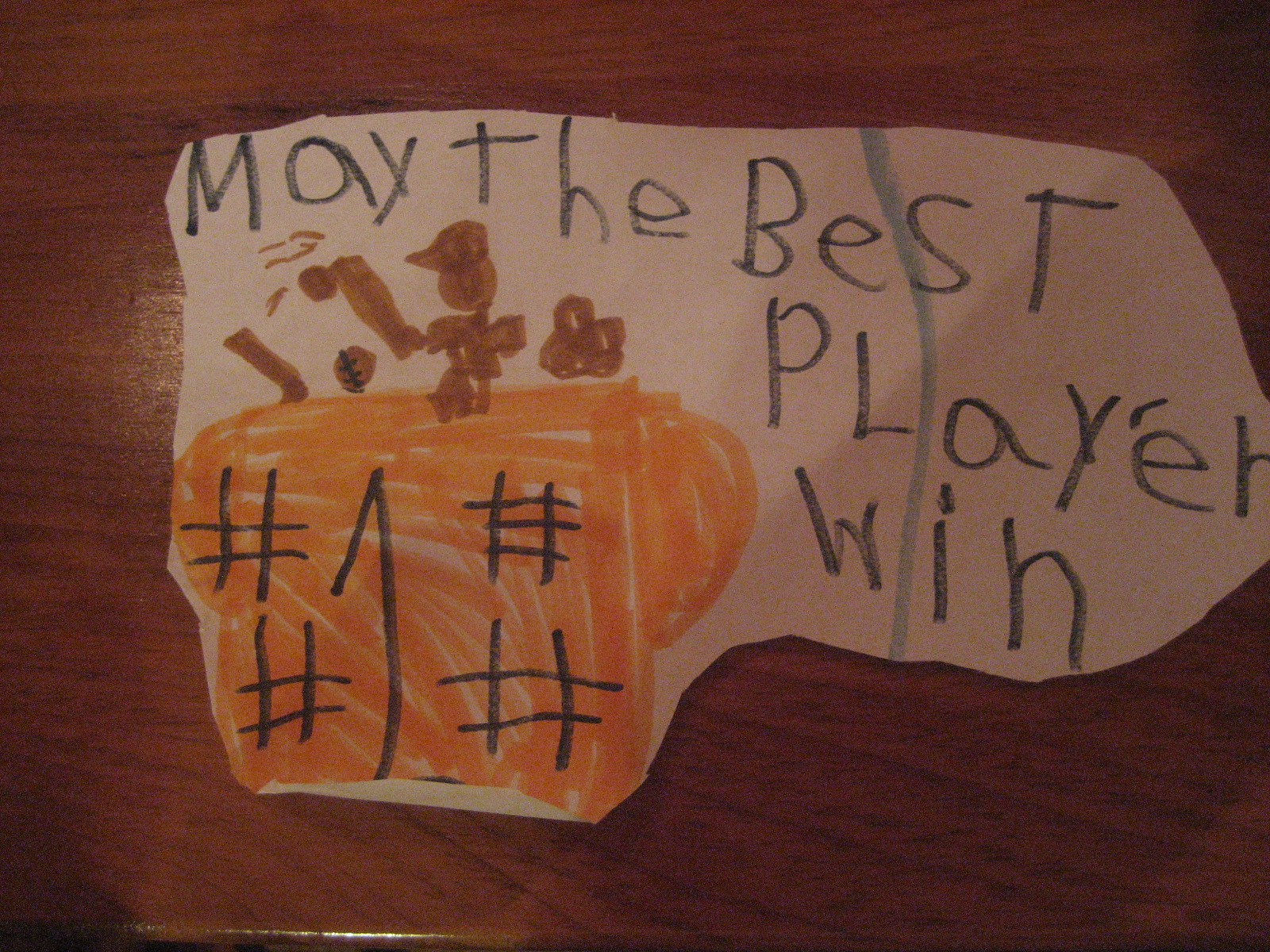
A couple of weeks ago, our phone rang right after dinner. On the other end was a voice belonging to a 7-year-old boy we know.
“I was wondering if you could come to my baseball game this Friday?” he asked.
He’d recently started practicing with our town’s Little League baseball team, the Middlebury Meteors. That Friday they’d be playing their first game, against the Cornwall Cougars.
When a 7-year-old asks you to attend his first baseball game, you go to the game.
Click here to continue reading my latest “Faith in Vermont” column for The Addison Independent.

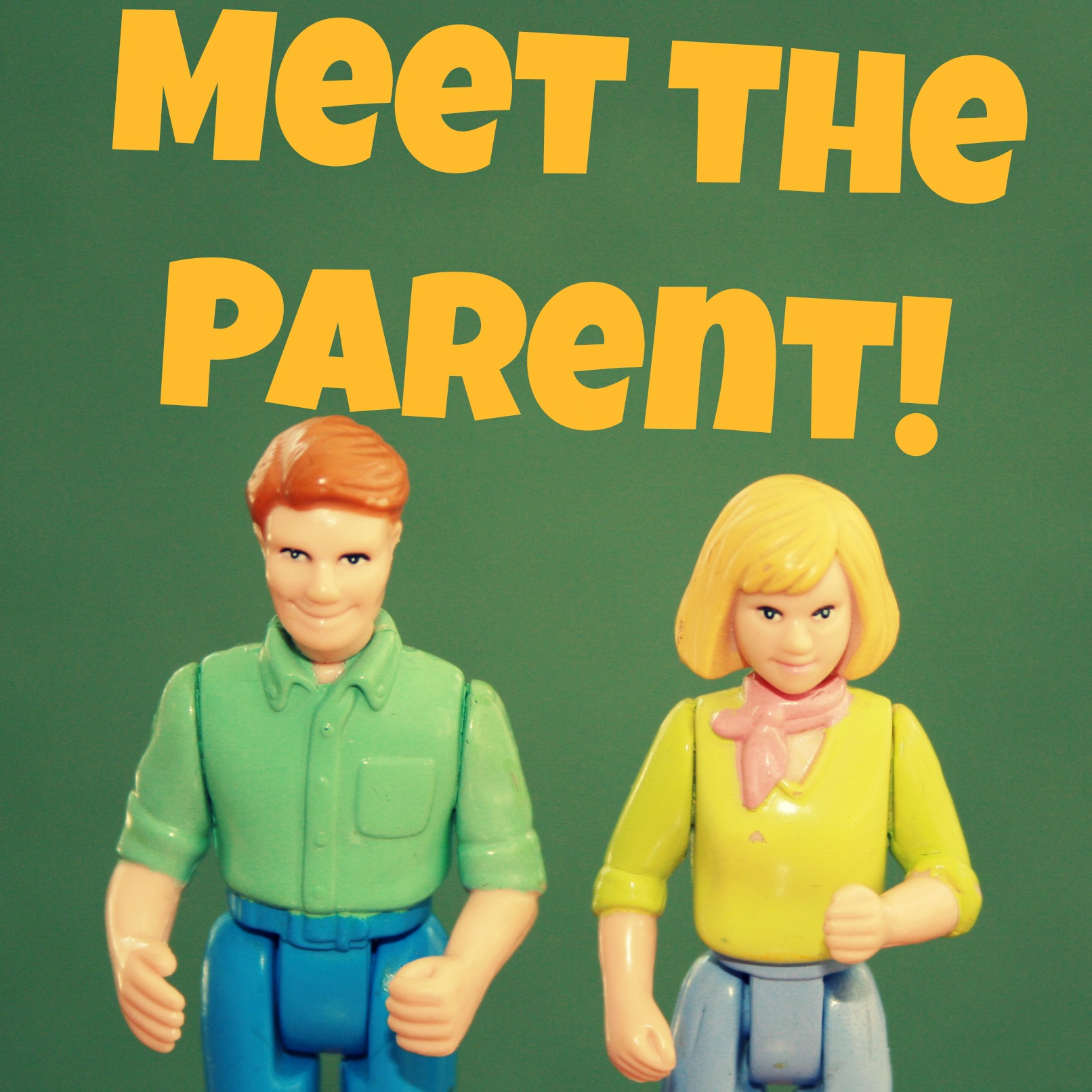
Jennifer McCarty is one of those moms I see often, but with whom I rarely get to talk. So, I was thrilled when somebody nominated her for a “Meet the Parent” profile. I feel like I’ve found a kindred spirit: a fellow buyer of ginger moose cookies, mediator of Anna/Elsa disputes, and lover of chocolate creemees. In the fourth installment of my guest series for Minibury, meet Jennifer McCarty!


My husband and I have an ongoing joke this year; whenever we have one of those conversations that focuses on a problem — something sad, or stressful, or disturbing — Erick will end it with, “And also, we’re going to die!”
That’s what I get for confiding in my husband that this year I’ve become acutely aware of how fragile our bodies are, how at a certain point everything in the physical realm starts sliding downhill, how death seems to be breathing down our necks more than ever before.
He tells me I’m having what’s commonly known as a “mid-life crisis.” I can’t believe that I’m old enough to be having a mid-life crisis, but when I note my age relative to the average life expectancy, I admit that he’s probably right. (The average life expectancy for American females of all races in 2010 was 81.1. I’m 38 years old — almost halfway there).
If you’ve been following this blog over the past year, you had some warning that this was coming when I turned 38. The realization that I was entering middle age, the fact that I’d just given birth to what we expect will be our final child, and the humbling analysis from my (20-something) dental hygienist that the onset of my first cavities was probably due to “age,” threw me into a bit of a tailspin. Although I ended that 38th birthday post on a positive note, my tail has continued spinning.
So, lucky you! You get a front-row seat to my mid-life crisis. Unfortunately, it seems that my mid-life crisis will not involve fun things like buying a sports car, getting a tattoo, taking up with the gardener (if only we had one!), or running away to Acapulco. No; for my own mid-life crisis, I will apparently sit right here in my Vermont kitchen and think the following thoughts:
–My body will never be any healthier than it is right at this very moment.
–We’re all dying. What have I done with my life so far? And what will I do with the time I have left?
That last question is a big philosophical issue. It’s important, but, to be honest, I have less trouble with the philosophical struggles of middle age than with the physical. My religious faith helps immensely in this. Also, even if I never get a book deal or win an award in the future, I figure four kids is a pretty decent legacy.
In other words: I don’t fear death as much as I fear decades of chronic back pain.
Fortunately for me, I do not (yet) suffer from chronic back pain; unfortunately for him, my husband does. He’s always been prone to throwing out his back — usually on the eve of our next baby’s birth. But this year, due to a combination of age and a job that requires long hours at a computer, his back pain has become chronic. He takes ibuprofen, he sees a chiropractor, he’s tried acupuncture, he does back exercises and stretches every single night, we bought a Sleep Number Bed, and he sleeps cocooned in a complex arrangement of pillows. Sometimes the pain is better, sometimes it’s worse, but we’re coming around to accepting that it’s probably going to be around for the long haul.
My own aches and pains are more varied. It turns out that when you hit your late 30s after having given birth to four children in six years, that body you’ve taken for granted — ignored — for so long, suddenly makes its presence known. Hello! it says. Remember me? I’ve been working hard for you, and now I’m gonna make you FEEL it!
Too many people live with far more discomfort than I, for a much greater part of their lives. But for almost four decades, I’ve been blissfully unaware of my good health. Sure, there have been uncomfortable moments, but I’ve always assumed that if something hurts now, it probably won’t hurt later. After a certain age, one can no longer make that assumption. If something hurts now, it may well hurt for the next four decades.
Assuming I have four decades left. Not a safe assumption when our parents’ friends are starting to die, and people our own age are diagnosed with serious illnesses at an increasing rate.
It’s all enough to make a person feel a little…down.
I found some solace, oddly enough, at a memorial service.
The man who had died was a member of our church. I didn’t know him well, but our church is small and he was someone who’d quietly touched everybody within arm’s reach during his 88 years. (He read my articles in the Addison Independent, and he often sent me thoughtful email responses). He made a quiet but deep impact upon his world despite struggling with severe depression through the years. It might be more accurate to say: He made his impact upon the world because he struggled with severe depression through the years. He was very open about his struggles, even with me in the brief time I knew him.
He’d chosen the “Hallelujah Chorus” from Handel’s Messiah as the closing music for his memorial service. Before it was played, the pastor told the story of how Handel came to write Messiah. When Handel found the libretto which inspired his famous oratorio, he was at one of the lowest points in his life. He’d recently had a stroke, which had paralyzed his right arm and made it impossible for him to perform or conduct music. He complained of blurred vision. He was out of favor with the royal court, and in debt due to a failed venture into the opera business. Despite these struggles — it might be more accurate to say because of these struggles — he went on to write a world-shaking piece of music.
I sat there thinking about my friend changing lives while fighting depression, and about Handel composing Messiah with a bum arm and blurred vision. And then I thought about the veritable galaxy of people who’ve made huge impacts while struggling with physical and mental pain: John F. Kennedy had severe back pain, Franklin D. Roosevelt was paralyzed by polio, Georgia O’Keeffe and Isaac Newton suffered nervous breakdowns, Beethoven was bipolar. The notable people who’ve struggled with depression are too numerous to list. More recent celebrities with chronic back pain include George Clooney, Bono, Bo Derek, and Elizabeth Taylor. And that’s only the tip of the iceberg.
Is it necessary to suffer in order to make an impact? Probably not. But one could make a compelling argument that struggling with chronic physical or mental pain sharpens empathy, tenacity, and focus. My husband says that his chronic back pain has made him more acutely aware of — and grateful for — those times when he isn’t hurting.
In any case, reflecting upon the numerous people who’ve had full and meaningful lives that included acute discomfort made me realize that life is not over just because one’s physical condition has begun the downward slide. As I move into middle age and experience increasing physical discomfort, I can choose to fixate on and complain about my aging body — eventually becoming, in the words of C. S. Lewis, “a grumble.” Or I can take inspiration from those who’ve persevered despite — or because of — pain. I’ve been spoiled by three decades of comfort, but it well may be that the decades to come are richer — spiritually, mentally, emotionally, creatively — despite (or because of?) the presence of some physical pain.
And also, we’re going to die.

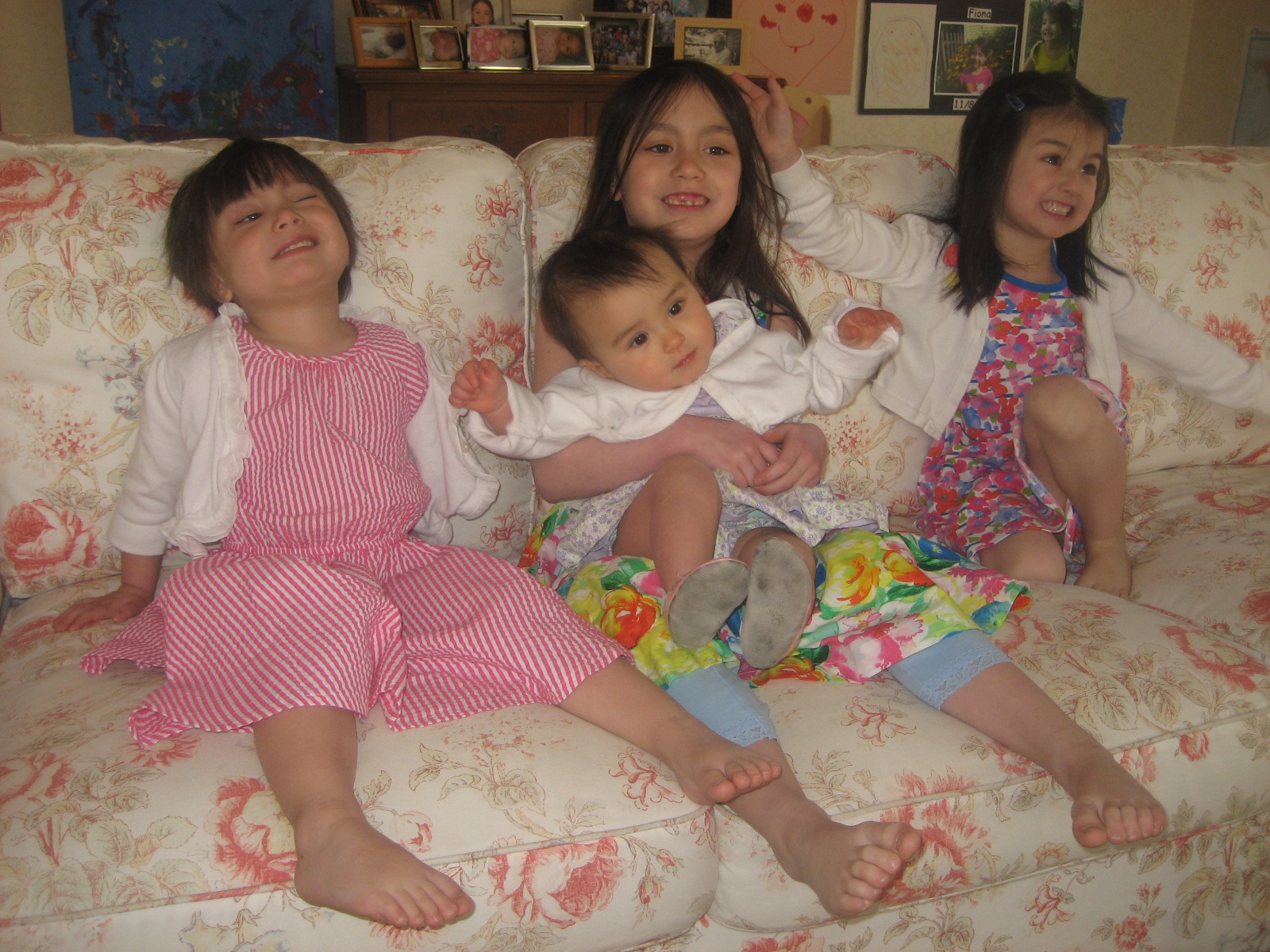
The question started following me around early this spring: What will my daughters think if they read this blog some day?
Oddly enough, this isn’t something I’d spent much time considering. When I began this blog, our girls were so young that the idea of them ever reading independently seemed impossibly distant. In any event, I’m not ashamed of anything I’ve written here. (When I was growing up, my mother advised, “Never say something that you wouldn’t want to see splashed across the front page of The New York Times.” That’s a pretty high standard, but I try to apply it to what I write and publish online.)
Now that my kindergartener sits down and reads entire books to her sisters, it’s clear that it won’t be long before my daughters can read my own writing.
In a way, I see my writing as a gift I can give them; a chance to know me in ways that I can’t verbalize, a chance to see what I thought and felt at various points when they were young. But I also worry that this blog may present them with an overly negative view of my experience of motherhood. Much of what I share here about my life as a mother is the hard stuff, the embarrassing stuff, the “bad mommy” stuff, the snarky stuff.
There are good reasons for that. This would be a profoundly boring blog (to everybody but the grandparents) if each post began, “The girls did the cutest thing today!” It would also make people feel bad; in my opinion, nobody’s helped much by hearing about how wonderful your life is. The real opportunities to connect come around the things that are hard, embarrassing, and even a little ugly. (Although the popularity of Pinterest may prove me wrong on this, but I don’t do Pinterest because I suspect it would make me feel bad).
Another reason for the view of motherhood presented here is that this blog is, in many ways, my therapy: my chance to sit down for an hour of peace after a morning with my girls and hash out my thoughts. I try to tell the truth, and during that hour of peace my thoughts are not usually full of glowing maternal bliss.
And I hope that knowing the truth — that I struggled, felt insecure and guilty, doubted myself, got depressed — will one day help my girls when they feel the same way. Just as it’s hard to relate to a perfect blog, it’s hard to relate to a perfect mother. Should they feel any doubt on that score, it’s all here in black and white.
But, reading this blog, you may have the impression that without naptime, bedtime, and coffee, my life would be intolerable. While that may be true most days, that’s not the whole picture. I left out chocolate.
Okay, seriously: This Mother’s Day, I’ve decided to NOT make it all about me, to NOT focus on accepting the gratitude and pampering of my family, and instead to celebrate by feeling deeply grateful for my children, these four girls who are the reason I’m a mother.
DISCLAIMER: I don’t love Mother’s Day. I’m aware that it can be an uncomfortable and even painful day for women who don’t or can’t have children. I do not intend what I’m about to say to feel alienating to anybody. I do not think that being a mother is the Ultimate Thing. Mothers are not superior to other people; they’re just regular women who’ve reproduced, as women have been doing forever.
But here is what I want my daughters to know, without condition or sarcasm:
I love being a mother.
Motherhood was never one of my life ambitions. It never figured prominently in my future plans. When I first became pregnant, it was mostly because it seemed like the right time to try it; “everyone else” was having kids, why not us?
Someone once told me that the moment her child was born she felt a “massive love explosion.”
I did not feel a massive love explosion. I felt terrified and confused, because I’d just had a 3-pound baby by emergency c-section two weeks early, and I was strung out on magnesium sulfate and needed a blood transfusion and it was slowly dawning on me that I had almost died and that my baby was going to need a lot of special care.
The massive love explosion built up slowly. Now, I feel a massive love explosion for my daughters at some point every day. I also feel terrified and confused. Daily.
But I have loved motherhood, with all its terror and confusion, more than I could ever have imagined. Next to marrying Erick, it’s the best thing I’ve ever done. And being a mother has been, hands-down, my favorite job.
Some of what I love about being a mother are the things you hear often: That it’s made me less selfish, and therefore more exhausted, dirtier, achier, and happier. That it’s taught me more about love than any other relationship, because as a mother you spend a lifetime caring for people who are often completely dependent on you and also completely ungrateful. That I love the noise and chaos; even though it often feels like too much, on the rare occasion when two or more girls are gone for several hours, I miss them.
But beyond those things, I love being my daughters’ mother.
You are each so unique. I know where you came from, but I have no idea where you came from. Parts of you are like us, but you have always been your very own people. Being your mother gives me a front-row seat to your lives, and that’s the most fun of all.
But having a front-row seat to your lives means admitting that I’m not always going to be up on stage with you. Motherhood is a slow process of separation, from the very beginning. Every year we say goodbye for longer times, longer distances. My job is to prepare you to leave.
And that’s another reason why I’m sometimes snarky, sarcastic, quick to dwell on what’s hard or embarrassing. We do that to protect our hearts when we know that the people we love so deeply are also people we’re going to have to let go.
Happy Mother’s Day to Fiona, Campbell, Georgia, and Abigail. I am grateful every day that the four of you were entrusted to me for the time we have.


You don’t need me to tell you that it’s been a particularly long, cold, hard winter. Everyone’s saying it, and when they do I nod and roll my eyes in agreement – but the truth is, this winter didn’t bother me very much. I was just grateful for some decent snow to play in (and grateful to not be pregnant this year so that I could play in the snow without worrying about falling). Also, when you have four young children, you’re not going anywhere anyway; being housebound by cold and snow is just like the rest of the year, only with a different view.
All the same, when our oldest daughter’s spring vacation arrived in late April, I was really starting to feel the effects of not going anywhere. So I made plans to go somewhere: Boston.
Click here to continue reading my latest “Faith in Vermont” column for The Addison Independent.

 The Pickle Patch