Imagine No Religion

I wasn’t sure whether I should publish this piece. I wrote it because the thoughts in it were kicking around relentlessly in my head, and the only way to free my brain was to get them down in writing. But then I felt nervous about making it public, because it’s not characteristic of my writing: it tackles a controversial topic, it deals more directly with religion than I’m comfortable with, and I felt that old familiar fear that maybe people wouldn’t agree with me. And if they didn’t agree with me, maybe they wouldn’t like me.

Then I took some deep breaths, prayed (for real) and reminded myself that it isn’t my job to make people like me. So here goes. 

IMG_5408

“I am not praying for Paris,” began the Facebook post, which had been written by somebody I don’t know and re-posted by a friend.

“I am not praying for Paris, nor am I praying for any other region of the world that has felt the wrath of the worst kind of religious zealotry.”

Well, at least this is something different, I thought.

In the wake of attacks by Islamic State terrorists that killed 129 people in Paris, it was intriguing to see how social media can dictate our responses: The day after the attacks, my Facebook feed was a stream of images of the French flag and the Eiffel Tower. Many people — including some who ordinarily eschew religious practice — posted that they were “praying for Paris.” Social media confirmed these as socially acceptable responses to the tragedy.

One could argue that these were gestures of solidarity, outpourings of support in the face of crippling grief and horror; one could also argue that these were meaningless gestures, enabling us to feel socially conscious without ever having to leave the comfort of our chairs. I wonder how many of those who posted that they were praying for Paris on Facebook and Twitter actually meant what they said: How many typed that phrase, and then got onto their knees to converse with a deity whom they truly believed could hear and intercede?

So I appreciated this Facebook post’s honest refusal to parrot the social-media-approved response to the Paris attacks. Let’s not dilute the power of supernatural communication; if you’re not really praying, it’s perfectly acceptable to say that you’re “thinking of” or “mourning with” Paris.

But the post continued:

… I’m of the opinion (I won’t say “belief”) that religion itself is at BEST willfully naive. Until we as a species can move beyond the fairy tales of our infancy, and cease to yearn for the annihilation of the self, the spirit, and the rebellious spark that makes all lives unique and interesting, we’re going to have psychopathic idiots who think propagating violence in the name of some deity is a good idea. [I]t’s religion that so often creates this violence, we don’t need more of it (even of the “best” kind).

This opinion — that religion is naïve at best and dangerous at worst because much of the world’s violence stems from religious zealotry — is nothing new; it’s the same tune that John Lennon sang in his 1971 hit “Imagine,” in which he nixed religion from his vision of utopia.

Let’s set aside the fact that likening all religious faith to “the fairy tales of our infancy” is a stunningly arrogant statement, dismissing the beliefs of billions of people across space and time, including some of history’s brightest minds; perhaps the author of this post really does have an edge up on all of these silly believers.

Of course, an awful lot of beautiful music, art, writing, social justice, and science have been inspired by religious beliefs, but that’s not a strong argument in support of religion; plenty of innovations originate from secular sources, as well. It’s undeniable that numerous atrocities have been committed throughout history in the name of religion. So, is religion really the problem? And if so, is getting rid of religion really the solution?

If history revealed that all — or even most — large-scale acts of violence were caused by religious zealotry, this argument might hold. But countless lives have also been lost to terrorism, genocide, mass violence, and war caused by racial and ethnic differences, geopolitical disputes, and mental illness.

If we should dispense with religion because atrocities are sometimes carried out in its name, should we also get rid of racial or ethnic identity, all forms of government, and perhaps our very brains? Those things have led to atrocities, too. (While we’re at it, let’s wipe out dogs, because they sometimes contract rabies.)

I doubt that a world lacking any governance, racial diversity, or belief is what the Facebook post’s author had in mind; that sort of world would seem to promote, rather than solve, “the annihilation of the self, the spirit, and the rebellious spark that makes all lives unique and interesting,” for which she blames religion.

Religion, politics, and race aren’t the deepest root causes of terrorism; people are the root cause of terrorism. Take away any of these concepts, and we’ll just find something else to fight and kill over, in the same way that when I ban toy weapons, my children hit each other with sticks.

The real problem, it seems to me, is something called evil, which causes us to pervert good things into grounds for violence. If you kill people because they subscribe to different beliefs, have different genes, or disagree with your politics, then religion, race, and government are not at fault, evil is at fault; specifically, the form of evil known as intolerance. Intolerance convinces us that those who are different from us are less than – and that their very lives are disposable.

Intolerance is not a natural ingredient in religion, but it can be an additive.

Intolerance can also simmer beneath the surface of Facebook posts posing as enlightened calls for peace. If you sit in your comfortable Western seat and click out a social media opinion using words like “infancy” and “psychopathic idiots” to refer to people of faith, are you really much more tolerant than a religious terrorist? As my own religion says, “Why do you look at the speck of sawdust in your brother’s eye and pay no attention to the plank in your own eye?”

Disclosure: I am a Christian. My husband and I belong to a church. We believe in God and Jesus and the Bible.

And the thought of a world without religion scares the stuffing out of me, because, personally, I can’t think of an answer to evil and intolerance except through religion. In fact, I don’t know how we can accurately define what’s evil without a measuring stick of faith.

My religion explains that people choose evil over closeness with God, and that in order to beat back the darkness and win us back, God sacrificed Himself for our wrongdoing. It assures me that, although evil sometimes seems to triumph, God is in charge of the universe and will undo every injustice; in the meantime we’re here to do His work.

My religion stands in direct opposition to “the annihilation of the self, the spirit, and the rebellious spark that makes all lives unique and interesting,” because it teaches that people are God’s image bearers, each created for a unique purpose, and so we should love and bless even those who hate us.

(On the other hand, if we’re all just random bunches of cells competing hungrily for survival, then why doesn’t mass violence make sense? Why is it evil? Why not kill off all those who threaten you?)

There are no quick and easy solutions to evil. The hate of intolerance can’t be intellectualized or legislated away. In my opinion, the only answer to terrorism is a painfully slow process of counterbalancing acts of hate with acts of love, truth, and justice. We should also ask hard questions about the life factors that attract people to believing that any god would want them to become agents of death.

What I saw displayed on my Facebook feed after Paris were two age-old reactions to tragedy: those who respond by turning to religion, and those who respond by turning on religion. Both are understandable responses, and worthy of our contemplation. I only ask that we attempt to be careful and honest, on social media and elsewhere:

Let’s not say we’re praying if we’re not. Let’s not shift focus from our own evil by placing the blame on religion. And please, let’s not wrap up our Western intellectual versions of religious intolerance in packages of liberal enlightened superiority and claim we’re tolerant.


Trading Up


IMG_6129

A few weeks ago, a friend invited me to go to the Trader Joe’s grocery store in South Burlington.

Although this Trader Joe’s – the only one in Vermont – opened in May 2014, I had never visited it. I had, in fact, resisted opportunities to visit it, just as I generally resist chances to go to Costco, or Home Depot, or WalMart.

For one thing, a visit to any of these chain stores requires me to drive to the Burlington area. Listen: If I’m loading multiple young children into our minivan and driving an hour or more, it’s certainly not going to be in order to buy things. I’d rather save my money and stay home.

For another thing: I’ve been to Trader Joe’s, and Costco, and Home Depot, and WalMart. I’ve even been to Target and Ikea, neither of which exists in the state of Vermont at present. I went to all these places and more when I lived in the San Francisco Bay Area. So I know that, although people like to shop at these stores because they’re full of “good deals,” what they’re really full of is stuff that you don’t know you needed until you were surrounded by thousands of square feet of “good deals” crooning your name. These stores are not your friends; these stores, like all others, just want your money.

I didn’t move to Vermont to shop at Trader Joe’s; if anything, a major selling point of Vermont was its dearth of chain stores. Shopping shouldn’t be that easy; I’d far rather navigate the miniscule aisles of the Middlebury Natural Foods Co-op, with people judging me for allowing my toddler to stand up in the basket of our shopping cart, in order to pay four times what I’d pay at a big box grocery store.

I’m serious.

Click here to continue reading my latest “Faith in Vermont” column in The Addison Independent.

How Long?

News of the terrorist attacks in Paris hit our house yesterday — a house already weary after weeks of processing the racial tensions flaring up on campuses across the country (including our own, Middlebury.) It felt like we’d been hooked up to a steady drip of pain.

Too often, life feels like being hooked up to a steady drip of pain.

The thing about having lived four decades is that, when news breaks, it takes me back in time; I remember.

I remember being in New York City when the planes hit the towers: hearing the news from the headmistress of the school where I was teaching, who pulled me out of class to deliver the still-hazy details and instruct me to keep my students calm. I remember the terrifying days that followed, when we all walked around with broken hearts, smelling the burning towers, seeing posters of the missing, looking for someplace — anyplace — where we could donate blood. So maybe I understand a little about how helpless it feels to be in Paris today.

I remember being at college — a liberal arts college much like Middlebury. I had, and still have, friends of color. I don’t remember anybody talking about racial tension on campus. I thought it was wonderful that so many people from so many backgrounds could live together in peace, exchanging ideas, on one campus. I thought we were all privileged to be there. But when I hear about the discomfort experienced by students of color on campuses today from our “honorary-Gong-Girl-for-a-year,” who is working on the front lines at Middlebury, I wonder if maybe I’m remembering wrong; maybe I thought wrong.

I feel powerless in the face of things like terrorism and racism.

But when I consider how to respond, I keep returning to this advice, given to the Israelite exiles in Babylon thousands of years ago:

“Build houses and make yourselves at home.

“Put in gardens and eat what grows in that country.

“Marry and have children. Encourage your children to marry and have children so that you’ll thrive in that country and not waste away.

“Make yourselves at home there and work for the country’s welfare.

“Pray for Babylon’s well-being. If things go well for Babylon, things will go well for you.”

(Jeremiah 29:5-7)

If you wish, substitute “the world” for “Babylon.”

Because aren’t we all exiles here, really? Who among us feels comfortably at home in this broken world?

We are all strangers here.

But I can’t think of a more subversive act, a better way to beat back the darkness, than to make ourselves at home. To plant gardens. To form loving relationships and to nurture children. And, above all, to work and pray for the good of this place in which we find ourselves.

Scanning the Skies and Picking Up Messes

IMG_6112

Life has been busy here.

Life is always busy, of course, but the past few months of our family’s existence have felt like a three-ring circus: preparing for our semester-long sabbatical in California, planning the renovations that will happen in our new house while we’re away, and readying our current house for sale (also while we’re away.)

Then, this week, our 4-year-old daughter caught pneumonia when the cough-and-congestion bug making its way through our entire family decided to park in her lungs.

She’s fine now — the worst part of the whole ordeal has been convincing her to take 9 mL of amoxicillin three times a day — but there were two days during which I was mostly housebound, save for a couple of trips to shuttle other daughters to their activities.

On the afternoon of the day her fever broke, my girl and I walked down to the end of the driveway to meet her sisters’ school bus.

“Look!” I said to her as we stood there, blinking in the strange sunlight, “Almost all of the leaves are off of the trees now. The branches are all bare. Winter’s really coming.”

This should not have surprised me. For one thing, we’ve enjoyed an autumn that an octogenarian friend informs me has encompassed one of the loveliest and longest foliage seasons in her memory; we are overdue for those leaves to hit the ground. And for another thing, earlier in the week I had spent upwards of an hour sweeping piles of dried leaves off of our deck.

But my nose had been so buried in my earthbound tasks that I hadn’t taken the time to scan the skies; I hadn’t noticed that the season was really and truly changing.

Something similar has been happening with my children.

This past weekend I arrived home from a full morning out (shuttling a daughter to activities, meeting with a Middlebury College student) in order to prepare for company that afternoon, only to find that our house, by no means perfectly tidy when I’d left it, looked as if it had been torn apart by hooligans. Because it had, and the hooligans were three of my daughters.

My first response was to get angry with my husband, who’d gone outside to blow leaves off of the lawn (those leaves again!), leaving three young children — including our terrible 2-year-old — unattended in the house, and then neglected to have them pick up the resulting, inevitable mess.

Then I realized that, as valid as that anger may be, my husband was not solely responsible for the situation. The terrible 2-year-old has almost no impulse control, but my other children are old enough to know that they need to clean up after themselves.  Next week, my oldest daughter will celebrate her eighth birthday; that is more than old enough to take responsibility for household tasks.

My children were growing up, and I’d been missing it. The season was changing and I hadn’t noticed; I hadn’t scanned the skies.

So part of the fault for the situation in which I found myself, having to spend 45 minutes cleaning the house for our guests (not making it perfect, mind you, just making it somewhat welcoming) — part of that fault lay with me.

Children rarely take responsibility for themselves, for their possessions, for household tasks, unless they are given that responsibility. And I had clearly been lax in equipping my children with responsibility.

I had been lax because I had been dealing only with what was right under my nose: the logistics of a year involving three houses and three moves, shuttling daughters around to activities, trying to keep the 2-year-old from playing in raw sewage. Those are important things, but I’d neglected the big picture: I didn’t have a plan for my children growing up.

And more important than a plan — Because who really has a plan for parenting that doesn’t get chewed up and spit out by our offspring? — I hadn’t made time for my children growing up.

It takes time and effort to confer responsibility. It is so, so much easier to just keep buying velcro sneakers rather than to teach my children to tie their own laces. It’s much easier to pack their lunches myself rather than endure the mess of a 4-year-old attempting to make her own peanut-butter-and-jelly sandwich. And, I confess, it’s easier to pick up their messes myself rather than nagging them to pick up after themselves. It’s also quieter, because you skip all the screaming.

But the season is changing. If I sent my daughters outside in tank tops and flip flops in December, people would consider me an irresponsible parent. How much more so if I unleashed children upon the world who wouldn’t clean up after themselves?

So we sat the girls down, and we had a talk that went something like this:

“You know how we always try to be on time, because if we’re late we’re showing that we’re inconsiderate of other people’s time? Well, cleaning up is like that, too: If you don’t clean up after yourself, if you just leave your mess laying around, then you’re showing that you’re inconsiderate of other people’s time. Because if you don’t clean up your own mess, then somebody else has to — somebody who didn’t make it in the first place. Back when you were much younger, Daddy and I would clean up your messes because that was our job. But just like it’s not our job to change your diapers anymore, it’s not our job to clean up your messes anymore. 

“So from now on, when you take something out to play with, you need to put it away when you’re finished playing with it, and we shouldn’t have to remind you of that. If you want to come back to it later, put a little note on it that says ‘Save.’ Otherwise we’re going to assume it’s trash, and that’s where it will end up.”

These course corrections in parenting can feel like turning a cruise ship around, but they’re well worth the effort. When I take the time to scan the skies, I find so many areas in which I can start training my girls in responsibilities commensurate with their growing maturity: they can cook, they can clean, they can help their younger sisters — they can even, with adult supervision, use knives and light fires in the wood stove.

And you know what? For the most part they relish taking on these responsibilities. They feel proud of themselves. So do I.

Oh! The Places We Didn’t Go!

IMG_6104

It was early August, and our family’s minivan was midway across the Connecticut River bridge between New Hampshire and Vermont, headed home from a visit to Rhode Island, when it hit me: Road trips with our children no longer felt like extended torture sessions! In fact, road trips with our children had become…enjoyable!

I’d like to think that this is because our children are gaining maturity and patience as they grow up, but I suspect it has more to do with the fact that all of our children are now big enough to see the portable DVD player.

After that trip, I made a list of day trips for our family to take on weekends throughout the fall. There are so many wonderful spots within a few hours’ drive of Addison County, and we’ve explored so few of them because, until now, the drawbacks of a car trip with four young children far outweighed any possible enjoyment.

Click here to read more about our [exciting fall travels?/failure to motivate?] in this week’s “Faith in Vermont” column in The Addison Independent. 

Before the Freeze

Our new house – the house where we will move next summer – needs work. It gives the impression of having been left in mid-renovation: wires and bare bulbs dangle from the ceilings, the upstairs bedrooms lack window trim (and closets), many walls are primed but not painted, and where there is paint the job is often half finished. Also: It needs a new boiler, there’s water in the basement, and – as we discovered during a recent rainstorm – the roof leaks.

We’ve brought many friends through the new house, and they invariably react in one of two ways: either they spend the entire tour shaking their head in disbelief, or they exclaim, “This is great!” It’s a revealing litmus test of personality. There are, it seems, two types of people: those who find a blank canvas terrifying, and those who find it exhilarating.

Click here to continue reading my latest “Faith in Vermont” column in The Addison Independent. 

And Now For Something Completely Different….

“Suzanna” by Michael Teel


An essay of mine, titled “Within an Inch of My Life,” has just been published in the Fall 2015 edition of Longridge Review, a journal of creative nonfiction that focuses on the mysteries of childhood experience, the wonder of adult reflection, and how the two connect over a lifespan.

That sounds pretty lofty; the more important thing is that this journal was founded by a gifted local author (and friend), Elizabeth Gaucher. I am honored to have my work appear in anything that she has a hand in!

So, I hope you’ll go over and check out my essay, as well as the essays by other writers and the stunning artwork by Michael Teel. Heads-up: This piece is a little different from what you’re used to reading from me — a little more raw and experimental. But I had a heck of a great time working on it!

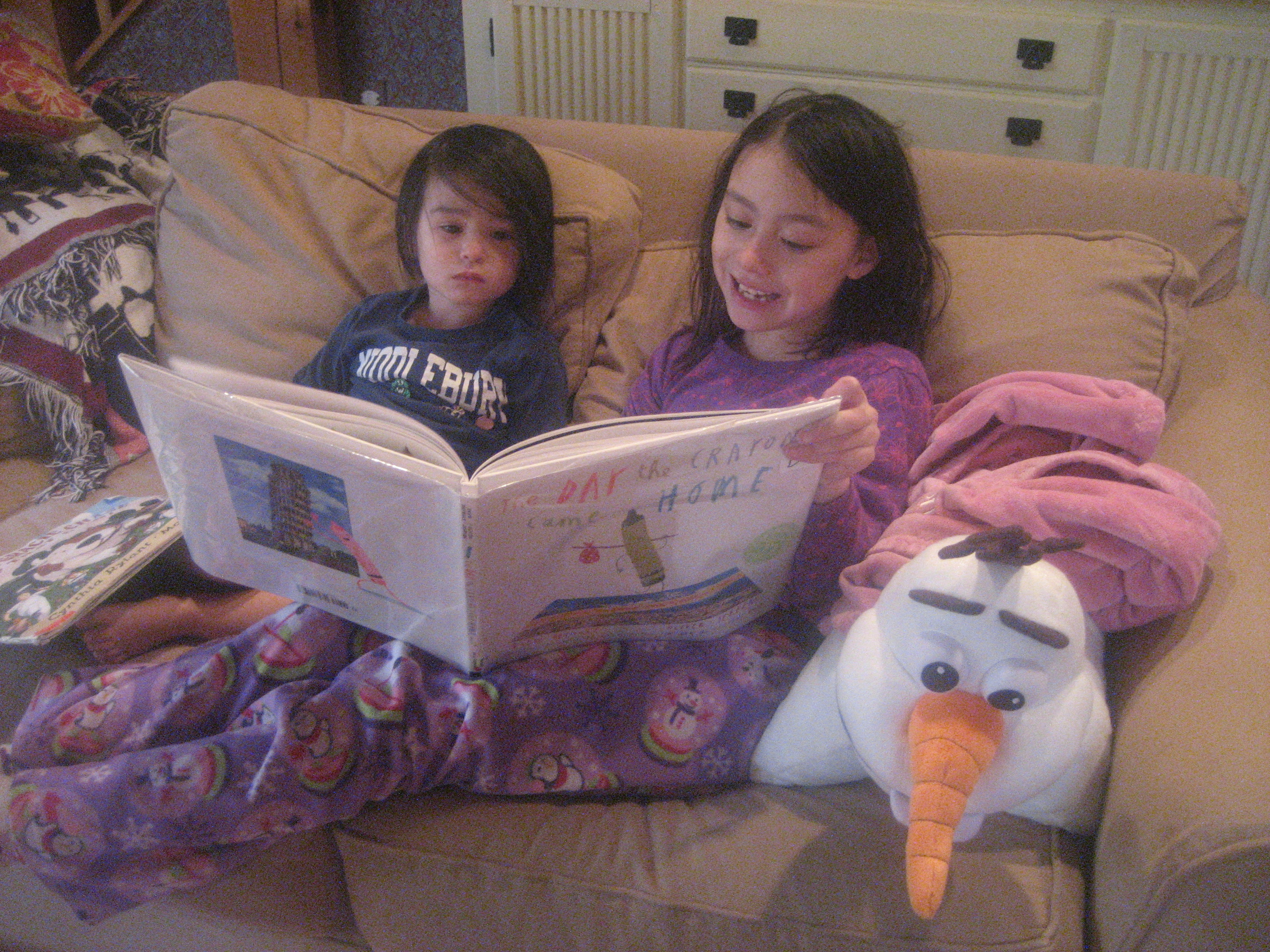
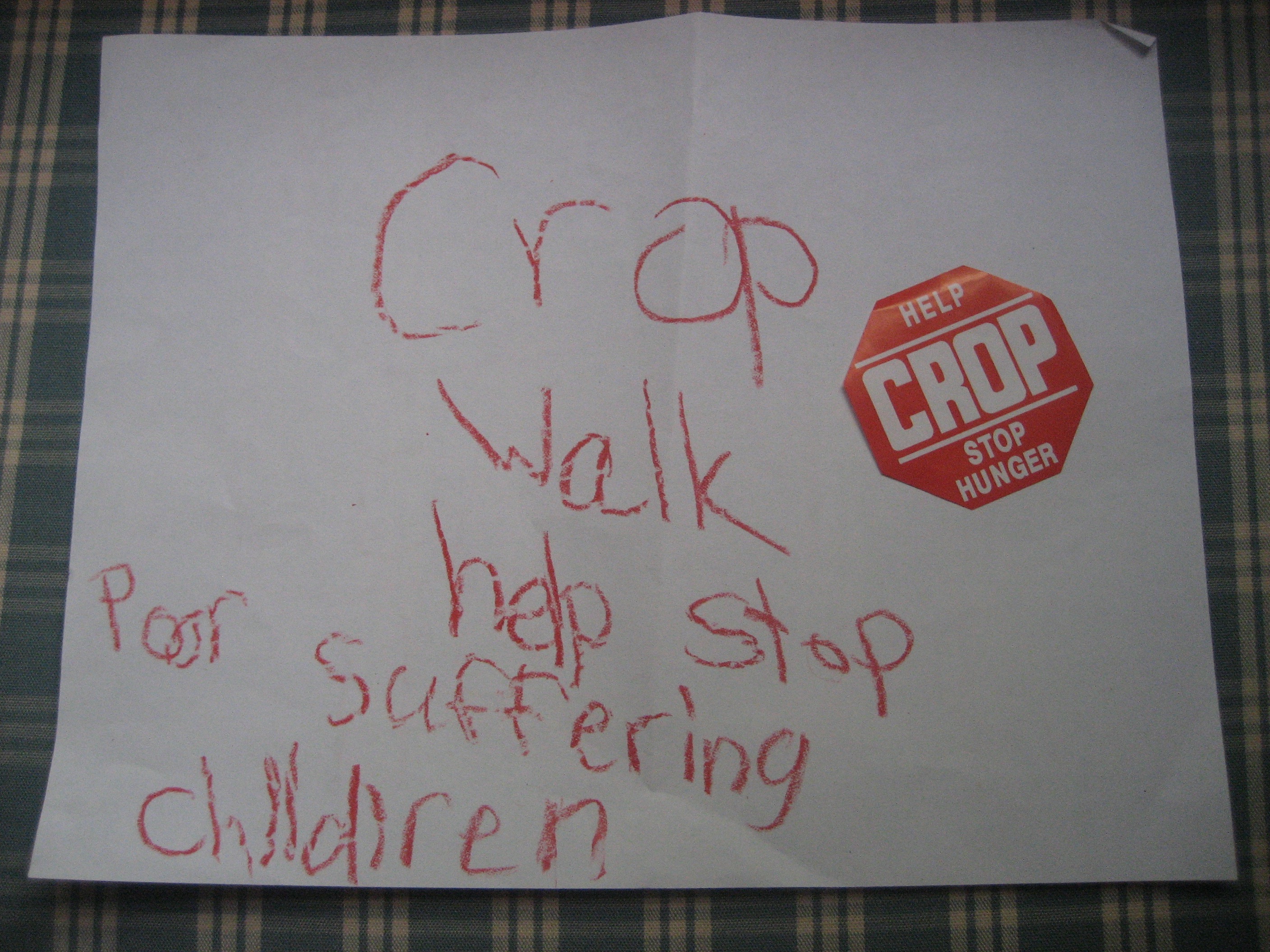
Cutting Corners at the CROP Walk

IMG_6052

“I don’t think we’re going to come in last this year!” my daughter marveled as we turned onto Main Street after taking our “shortcut.”

We were participating the 38th Annual Addison County CROP Hunger Walk. The CROP Walk, which is always held on the first Sunday in October, involves a 2.5 mile stroll around Middlebury: Walkers from various local congregations raise funds for their participation, of which 25% goes to support Addison County food shelves, and the remaining 75% goes to Church World Service to combat hunger and provide disaster assistance around the world. (The 2014 Addison County CROP Walk raised over $26,800, placing it near the top of all New England CROP Walks.)

It’s a good cause, and a nice community event. My husband and I were initially drawn to the CROP Walk – in which our own congregation participates – because it seemed accessible for young families. We want to involve our children in activities that support the less fortunate in our community and throughout the world, but many service opportunities seem impossible with multiple young children; we’d end up spending more time trying to control our offspring than doing anything helpful.

But a 2.5-mile walk through the glorious gold, orange and red of a Middlebury October? That we could do!

At least, that’s what we thought when we embarked upon our first CROP Walk, five years ago.

Click here to continue reading this week’s “Faith in Vermont” column in The Addison Independent. 

Take My Stuff, Please!

Stuff expands to fill the space available.

I’m not a physicist, but I’m pretty sure that’s a proven fact. It may even fall under Newton’s first law of motion: an object in motion will not change its velocity unless an external force acts upon it. Except in this case, the objects in motion are our family’s possessions, and the external force is me.

I am on a mission to get rid of our stuff.

Click here to continue reading this week’s “Faith in Vermont” column in The Addison Independent.

On Joyful Discomfort and Turning 40

IMG_5842

A few months ago I announced that I was taking a break from blogging. The purpose of this break was to heal from a difficult physical, emotional, and spiritual spring; to work on some non-blog writing; and to survive summer with all four children home from school.

I survived summer. I’d expected summer to feel like an endless mountain ascent lined with detours for sibling fights and requests for snacks and rinsing out the bathing suits again; summer turned out to be not that bad. It was even fun. For the most part, I actually enjoyed spending all day, every day with my four daughters. We read a lot and played a lot and took some memorable trips.

What I didn’t get done were any of the projects that I’d planned to accomplish over the summer. These included: teaching my four-year-old to write her name, helping my seven-year-old sew a dress for her doll, and editing a book. I didn’t get much of anything written all summer long, aside from my bi-weekly column for The Addison Independent — and that was usually composed in a panic two days before deadline.

What I did get done was some much-needed work on my heart and mind. I’m going to share a little of that now, because I’m turning 40 today.

According to most measures of success, I haven’t accomplished much in my first four decades of life. Since graduating from college, I have not found my way into any definite career. I have made hardly any money. I have not started a company or written a sonata or published a book. In fact, the most tangible things I’ve produced this decade are my four daughters — and whether that counts as a “success” is highly subjective, depending on whether you like my kids. (And sometimes even don’t like my kids!)

But despite my lack of conventional success, I’ve learned something in my 40 years. I think that I’ve come some distance in the right direction. Maybe — hopefully — I’m gradually becoming more and more the person God created me to be.

Yes: I’m going to mention God a few times in what follows. I recognize that not everyone who reads this shares my beliefs, and I’m sorry if this makes you uncomfortable. But I honestly don’t know how to describe what happened to us this summer without bringing God into it. It’s my birthday and I’ll write what I want to. 

When I left you back in May, I was deep in a morass of depression and self-pity: a norovirus had attacked our family for six weeks, I was exhausted, I was attempting to arrange housing and homeschooling materials for a sabbatical in California that I didn’t really want to take, we’d lost three local houses that I’d been interested in based on my desire to move somewhere with more land, and Erick and I seemed out of step on our visions for the future.

In short: I had expectations about how life should be, and life wasn’t keeping up its end of the deal.

My expectations seemed entirely reasonable to me, so I couldn’t understand why God kept shutting them down: I just want our family to be healthy! I just want to grow vegetables and raise animals! I just want to stay where I’m comfortable! I just want what I want! 

You may be thinking that my blind spot was a mile wide, and it was. But I wonder whether most of us don’t have similar blind spots, especially those of us who are living privileged upper-middle-class existences in the West.

We expect to be comfortable. We expect to be able to do what we want. And we think that those are reasonable expectations. 

ARE they? At what other time in history, and in how many other places in the world today, do people EXPECT to avoid sickness and physical discomfort? To live where they want, and get a job that they like? That they shouldn’t age? To be able to take vacations and have two-day delivery and buy citrus in February?

In most other times and places, most people were grateful simply to live past the age of five.

Where do we get these expectations, this sense that we’re entitled to comfort?

(I’ll tell you one major source: The folks who want to sell us things.“Because you’re worth it.” “You deserve a break today.” “Have it your way.” “No more tears!” We’ve been programmed to expect comfort and immediate wish-fulfillment so that we’ll buy more stuff.)  

This summer I had to deprogram myself in order to heal the rage, self-pity, and depression that consumed me when life didn’t hand me what I felt I was due.

Because the truth is that nobody — least of all God — ever promised me that life should be comfortable. The only people who ever told me that were trying to sell me something.

Erick and I had gotten too comfortable. After a decade of graduate schools and switching houses and adding babies every couple of years, we’d found the place where we wanted to settle, and we settled. So this summer we set out on a long and challenging journey of unsettling ourselves.

This journey mostly involved changing the way that we prayed. A wise friend said to me, when I told her that we’d been praying fruitlessly for a place to live during sabbatical, “Maybe you’re praying the wrong prayer.” As Anne Lamott wrote: “God is not a short-order cook.” As my own daughter — who apparently learned in 7 years what took me 40 — said: “Don’t pray for something to happen or not to happen; that’s cheating. Just pray to do what God wants you to do.”

If there’s an all-powerful, all-loving God who’s worth worshipping, doesn’t it stand to reason that sometimes we don’t understand what God’s doing? Instead of me asking: God, why are you shutting down my plans?, doesn’t God have just as much right to ask: Faith, why aren’t you living according to my plans?

So that became our prayer: That God would make us do what God wanted.

And we’re getting what we prayed for. Not in an “And they lived happily ever after” way, not in a way that will make us comfortable, and not in a way that will make sense to many outside observers.

It became very clear to me that, no matter how uncomfortable I felt about it, spending Erick’s sabbatical in California was the right thing. But for several months following that revelation, it looked like we might not find housing: we pursued multiple leads, none of which panned out. Finally, a place opened up: A small two-bedroom house. It’s going to be “cozy,” it may not be totally comfortable, but it will certainly be an adventure.

I figured that cementing our sabbatical plans meant setting aside any thoughts of a local move for at least a year; after all, three potential homes had already been whisked out from under our noses.

I thought wrong: On the very day that our house-sitter (and fifth Gong girl!) moved in with us, a house came on the market. Erick thought we should look at it. I’ll write more on this later; suffice it to say that we put in an offer with fear and trembling, and every single door opened. We close at the end of this month. It is both the house we wanted, and not at all the house we wanted: It’s 40% smaller than our current house, it needs a lot of work to be safe and finished (which will have to be done during our sabbatical), and it sits on 12.5 acres of beautiful open land in a great location close to town.

It’s going to be crazy, it may not be totally comfortable, but as Erick said — to my disbelief — when we first saw the house, “This could be a neat adventure.”

This may not sound like a big deal: a sabbatical journey and a downsized home with upsized land. But it feels like we’ve tossed up all the pieces of our life and are waiting to see where they land; it feels like trust. We don’t know what’s next, but we feel like we’re finally on the right path.

So I’ve learned to distrust comfort. When I’m comfortable I usually buy into the illusion of control, which eventually leads to entitlement and self-pity. There’s a joy and a peace in being uncomfortable again, in having to rely on what I can’t see instead of on my own expectations. I hope to be uncomfortable for a long time to come.