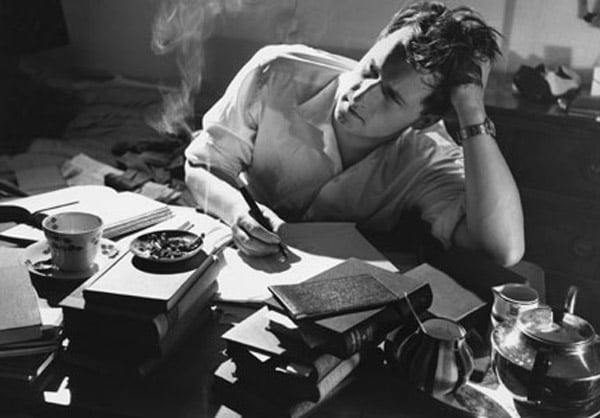
Last month, I went on a 24-hour retreat with a group of women from our church.
That statement in no way conveys what a Big Deal this was. The last time I’d gone away all by myself was over five years ago. I was pregnant with our first child and working for a nonprofit; in that role, I spent one night at a camp we ran for high school students. Fun, but hardly a “retreat.”
My father always drank his coffee black, so when I started drinking coffee it never occurred to me that I should adulterate it with anything like milk or sugar.
I can’t remember exactly when I drank my first cup, but it was sometime during my freshman year in college. I poured my coffee for purely practical reasons: as a freshman, I’d made the remarkably naive choice to take an Italian class that met at 8 AM, five days a week. Although the smell of coffee evoked pleasant memories of childhood breakfasts, I had no particular affection for the taste — at least, not for the weak, generic stuff mass-produced by the college dining hall. My interest in coffee was utilitarian: I needed it to stay awake.
The affection came later, around junior or senior year. It happened the day I met my friend Dahna at the cafe in our little college town (yes, THE cafe — there was only one), and she said, “Why don’t you try a skim hazelnut latte?” When I tried a skim hazelnut latte, a love affair began: I discovered that if I added enough milk and flavoring to coffee then I loved it, I craved it.
This youthful love affair with skim hazelnut lattes lasted through much of my twenties. For the better part of a decade, I drank at least one skim hazelnut latte per day. Like most youthful love affairs, it was somewhat superficial — based on covering up coffee with a sweet exterior. It also wasn’t particularly healthy: there were the dark days when I discovered that a large enough skim hazelnut latte could serve as a meal replacement. And it was a costly habit; at this time, I was either single or newly married with a postcard-sized kitchen, and the idea of brewing my own coffee simply didn’t occur to me. I BOUGHT every single one of those skim hazelnut lattes, and I bought most of them at upwards of $3 each. When I think back to how many wells I could have built in Africa, how many third world families I could have supplied with livestock, or how many children I could have supported through school with that money, I’m a little ashamed.
The turning point came when Erick and I moved to Berkeley, California. The kitchens in the three rentals we lived in during our stay in the Bay Area were somewhat larger than postcard-sized. We were living off of the combined salaries of a graduate student and a part-time nonprofit employee. And we started having kids. The sensible thing to do was clearly to start brewing our own coffee.
Berkeley, California is a stressful place to drink coffee. To give you an idea of the Berkeley food and drink culture: the church we attended during our time there (and LOVE to this day) had a wine tasting in order to select the best wine for communion. You can only imagine how far people took their quest for the best cup of coffee; if you weren’t drinking a cup of individually-brewed, organic, fair trade, shade-grown, slow-roasted coffee, you might as well be drinking Maxwell House. (Believe me, in certain circles this was a major topic of discussion, and you would be judged).
But Erick and I were too distracted by babies and PhDs to keep up with the ever-changing Bay Area coffee trends. Each morning, we’d use our auto-drip coffeemaker to brew a pot of Peet’s Coffee, which we’d drink black with breakfast. I consider this the point at which I entered my coffee adulthood; when good, strong, black coffee stole my heart away from the expensive, frou-frou alternatives. Now, on the rare occasion that I find myself in a cafe, I’ll order a skim hazelnut latte as a dessert drink — I find them too cloyingly sweet to be anything else.
That would be my happy ending, except that, like most love stories, this one features a period of separation followed by renewed, increased love and appreciation.
You see, less than a year after I fell in love with home-brewed black coffee, I got pregnant. Like most first-time pregnant women, I wanted to do everything right, and all of the pregnancy books will tell you to take it easy on the coffee. Because caffeine is a stimulant, it increases the mother’s blood pressure and heart rate, and has also been found to increase the fetal heart rate. And I don’t do decaf — I can’t explain it, I just don’t. In my opinion, drinking decaf is about as pointless as eating white chocolate (apologies to any white chocolate lovers out there).
So I gave up coffee for nine months. And that was okay, since I’d only been drinking one or two cups a day prior to pregnancy. I had no withdrawal, no headaches or shakes. But did I miss it? You bet. Was I right back on it shortly after giving birth? OH, YES!
And it was during that first year of motherhood, when I was reunited with coffee, that I discovered another facet to love: not only did I enjoy the taste and appreciate the wakefulness provided by coffee, but COFFEE MADE ME A BETTER MOTHER. A better person, actually. Prior to my morning cup of coffee I wasn’t just sleepy — I was numb. The day stretched before me like one long, joyless, impossible task. But add one cup of coffee and I was Carol Brady. Coffee made everything okay — at least for thirty minutes following breakfast.
When I became pregnant for a second time, I decided: I’m not giving up coffee ever again. I care about blood pressure and heart rate — really I do — but the happiness of my little family was more important. Did they deserve nine months of Carol Brady, or nine months of Lurch? (Interesting, completely unscientific side note: Guess which pregnancy ended with an emergency delivery due to high blood pressure? My first, coffee-free one. Hmmmm….)
And so it goes. These days, I put a filter and six scoops of Green Mountain Coffee’s Vermont Country Blend into our coffeemaker before bed. First thing in the morning. when I come downstairs for some solitary reading/writing time, I add the water and let it drip. The smell alone is enough to start my day off right; drinking my morning cup is like lifting a veil between despair and hope. And SOMETIMES, as a guilty pleasure, I’ll reheat what’s left in the pot and have a second cup during the girls’ naptime.
I love you, coffee. And if you’re reading this and you don’t drink coffee, or don’t like coffee, that’s okay. But I hope you have a little coffee-something in your life!
“Once upon a time there was a man who asked himself, ‘Where have all the days and nights of my life gone?'”
-from “All the days and nights” by William Maxwell
The past month was rough on our family’s immune systems. In early March, Fiona, Georgia, and (to a lesser degree) Erick were knocked out by a fever/upper respiratory virus. The next week, Georgia developed her first ear infection. And THEN, days later, Fiona, Campbell, and (to a lesser degree) Erick were taken down by one of the nastiest stomach bugs I’ve ever witnessed.
Throughout most of this (until the stomach bug knocked me out for a couple of days), I was the only Gong left standing. This was a REALLY mixed blessing. I’m happy to care for my sick loved ones, but it’s a lot of work: running around with food trays, bringing books and markers and DVDs, changing pajamas and bed linens (I did about 25 loads of laundry the day the stomach bug hit), forcing antibiotics into a screaming toddler. Plus, there was always ONE healthy girl to be entertained separately from her sisters.
For several weeks, I barely left the house. Playdates were cancelled. School was missed (which makes me verrrry grumpy). The days seemed endless, but at the close of each day I felt a nagging frustration that I’d accomplished nothing.
I started thinking about time. Time is a strange thing, because it seems to work in two ways at once. And my experience of parenthood has only served to highlight time’s dual nature.
It’s like this: The days ARE endless. My first thought each morning is usually, “How am I going to get through this one?” I do get through it, like we all do, by putting activities on the calendar, running errands, preparing meals, washing dishes, doing laundry, reading to the girls, and keeping them supplied with coloring books and stickers and craft materials. But every day there’s a chunk of time — sometimes it’s the entire day, sometimes it’s just the hour before dinner — when the clock seems to slow, when I’m counting the minutes until Erick gets home, when I wonder how I can possibly usher us all through the next hour (or two, or three) without losing my mind.
And yet, time flies. The phrase is overused because it’s true. It’s as if, somehow, all those endless days get smushed into a space capsule at the end of each year and blasted forward at light speed. The last thing I remember, I was holding a brand new hairdryer in a Macy’s bag and meeting a guy I barely knew at Grand Central Station so he could come to an Indigo Girls concert with some friends of mine…and now we’ve been married ten years, we own a home in Vermont, he’s a college professor, and we have three kids and a dog.
I’ve only had children for five years, but I already know that older parents speak the truth when they say, “It goes so fast!” The last thing I remember, you were no bigger than a doll and your eyes were closed but your tongue was sticking out when they handed you to me in the delivery room…and now you have the longest legs I’ve ever seen and you’re a big sister to two and when you grow up you say you’re going to be a swim teacher/singer/mommy.
Life is a series of endless days that fly. So how do we get through the endless days, those eternal minutes until dinner? Are we each destined to become someone who asks longingly, Where have all the days and nights of my life gone? Does every parent inevitably become the empty-nester who says wistfully, Enjoy every minute; it goes so fast!
Maybe. And maybe that’s not a bad thing; the idea of looking back over time and feeling that it’s flown doesn’t particularly bother me. What does irk me are all the days, here and now, when I think, This day seemed endless, yet I’ve accomplished NOTHING.
Because, as we’ve all heard, time flies…when? WHEN YOU’RE HAVING FUN! But these days — these endless days that will someday be the sum of my time that’s flown — let me tell you: most of them aren’t “fun.” They are lunches to pack and dishes to wash and children to dress and relationships to maintain and bills to pay and errands to run. Even when I purposefully create “fun” moments — painting, baking, craft-making — they’re honestly not much fun for ME; there’s a lot of preparation and clean-up for a few minutes of messy joy. There are transcendent moments, sure, but the majority of the day is dragging drudgery.
To look back and realize that time flew and you didn’t have fun seems to me a recipe for regret.
Unless…we’ve forgotten that what we do today IS fun. Perhaps it takes the distance of years to realize: All those endless days and nights, those times when I thought I accomplished nothing — those really were FUN.
How to capture that future perspective, and transport it into the present? Can we live each endless day while holding the hope that this may someday look like flying fun?
I’m not big on Pollyanna-ish denial of reality. Let’s face it: some days will just not EVER be fun. We lose loved ones, we struggle with depression, we clean up bodily fluids from every member of our family.
So I’m trying to think of my days like ice cream. In particular, Fiona’s favorite flavor of ice cream: Playdough (sold at a deli in town). Playdough is a horrifyingly sweet concoction; the ice cream base is something like “vanilla cake,” but Fiona doesn’t get it for the ice cream. In fact, I don’t think I’ve ever seen her touch the ice cream portion of this flavor. She gets it for the colored “candy gems” mixed into the ice cream, and she’ll spend enormous amounts of energy digging through the ice cream with her spoon, tracking down every last candy gem.
Our days are like Playdough ice cream because every day, no matter how terrible, has at least one candy gem in it. You may have to go digging for it, you may not find it until the day is past, but I promise it’s there. Maybe it’s something as basic as: I’ve never been more thankful for a working washer/dryer, because I just did 25 loads of vomit-stained laundry today. Candy gem!
I’m going to take my plastic spoon and go digging at the end of each day, so that I won’t have to wait until the time has flown to appreciate all my days and nights.
Today is International Women’s Day. This is not a day I’ve noted before, because until recently I didn’t think much about being a woman.
Growing up, in the time and place that I did, I had the strange “luxury” of feeling ambivalent about my female-ness. It was something that I took for granted; Hair: Brown, Race: Caucasian, Sex: F. I never disliked being a woman, but neither did I take any particular pride in it. I emerged from adolescence with some vaguely negative stereotypes about what it meant to be a woman: women were overly emotional, too sensitive, too talkative, bad drivers, and subject to the ultimate Sophie’s Choice of career vs. motherhood: no matter how you chose, your life was doomed to be less than satisfying. Back then, I would’ve been afraid to say I was proud to be a woman; such a statement might align me with the angry voices of second-wave feminism. Granted, those angry voices were necessary in order to get the culture’s attention, but anger doesn’t usually speak to me. I was brought up to be polite; I still don’t do angry very well.
It’s gradually dawned on me that I am a woman. Not only that: I am the mother of three little girls who will one day be women. As such, I am my daughters’ first example of what it is to be female.
That’s a charge I shouldn’t take lightly.
My role as a mother, I repeatedly tell my girls, is to help each one of them become “the best YOU that you can be.” How do I help my girls become their best selves, and instill pride that their SELF includes being a WOMAN?
I think pride in being a woman begins with recognizing that there’s something unique about womanhood. Men and boys are special, of course, but women are special because they’re not men — we bring something different to the table. My daughters, despite being raised in the relative cultural isolation of small-town Vermont — few chain stores, no billboards, no T.V., and the only magazine we get is The New Yorker — STILL gravitate towards fairies and princesses and ponies and pastels. They choose to dress and play differently than the boys we know. I can either fight this apparently inborn female-ness, or I can encourage them to find the strengths in who they already seem to know they are.
Those female stereotypes I grew up with, many of them are in some way true. But they also encompass some of the qualities I love best in my girls, qualities that I think make them uniquely female. In trying to get at what’s special about women, I’ll take each stereotype I grew up with and highlight its strengths:
–Women are too emotional: Emotion results from feeling things deeply. Being able to feel deeply is a gift; like any gift, it has a dark underbelly, but its bright side is an ability to be passionate about ideas, causes, people. Passion is what gets things done. If nobody was emotional, we’d end up with a world of economists, and TRUST ME, that would be tragic.
-Women are too sensitive: Like emotion, sensitivity can be problematic if overindulged, but it’s a necessary ingredient for successful relationships. Being sensitive may mean that you’re easily hurt, but it also makes you more aware of the feelings of others.
-Women are too talkative: Sorry, but as a writer I don’t have a problem with this. Aren’t words the essence of life? Isn’t the moral of the story of the Tower of Babel that, without the ability to communicate, our cities end in ruins?
–Women are bad drivers: I don’t really know where this one came from, but I DO know that when I’m a bad driver, it’s usually because there are three little people screaming at me from the backseat. Which gets at something that I think is a female strength: the ability to multitask. Just about every woman I know thinks nothing of talking on the phone while preparing dinner with one hand and bouncing a baby on her hip. Or writing her PhD dissertation with one side of her brain while simultaneously solving her best friend’s relationship troubles with the other side. So pardon us if we’re distracted! (In contrast, when my husband watches the girls, he’ll get dinner cooked…while the girls run around naked setting small fires in every corner).
-Work vs. motherhood: This is a whole can of worms, but the WONDERFUL thing about being a woman is that you GET a choice. You can become a MOTHER, for crying out loud! That’s an amazing thing that only women can do. But, thankfully, in this day and age, you can also choose a CAREER! The world needs women represented in all fields — and with fewer and fewer restrictions, you can do what you love. Nowadays, there are creative ways to cobble motherhood and career into something that works. But it’s NOT easy: it’ll never be easy to be a mother, it’ll never be easy to carve out a career, it’ll NEVER be easy to balance both. But women do it, and have done it forever — since back when “career” meant “keeping a farm running.” And that’s why the toughest people I know are all women.
Those are a few strengths that I’d claim for women. But what makes me PROUDEST about being a woman is the company in which it puts me. Powerful women have surrounded me my entire life, it’s just taken me a while to notice. There are the women in my own family. There are the six years’ worth of students I taught at two girls’ schools (two of them recently re-introduced herself to me here; they’re students at Middlebury — talk about feeling old!). There’s the Pakistani woman I tutored for six years in Manhattan, who’s currently pursuing her bachelor’s degree. And there are my friends across the world: women who have amazing careers, women who are mamas, women who have careers and are mamas, single women, partnered women. Women who stay in hard marriages; women who leave impossible marriages. Women who show up with a meal at the perfect time (because it’s always the perfect time!). Women who create things of beauty. Women who tell the truths you need to hear. Women who raise the children — and not just their own. Women who care for the sick and comfort the grieving and fight for justice.
These women are beautiful. They make the world more beautiful. They keep life going. I’m so grateful that my own little girls can grow into women, surrounded by women like these. As my oldest daughter said the other day, “Every girl’s a princess, even if she doesn’t live in a castle.” Amen, and Happy International Women’s Day!
Something’s been bothering me lately. Looking back over the past month’s posts on this blog, here’s what I see: an essay about how I stay sane because all my children still nap; a Valentine’s day guest post in which my husband reveals his secret for recapturing married bliss; and a smattering of more spiritual, serious, almost advice-y pieces.
It all comes across as a little too good to be true.
Someone reading this blog over the past month might get the impression that I Have It All Together. That I Have It All Figured Out. That I sit here in my perfect little life in Vermont, enjoying my perfect marriage, dispensing advice while my perfect children nap.
This bothers me, because of course it’s NOT true. It bothers me because, once we get other people believing that we have it all together, 1) we damage our relationships with those people (Who’s going to be honest about the muck in their own lives with someone who’s perfect? Too embarrassing.), and 2) we run the risk of believing our own hype. I’ve lived long enough to know that once WE — by which I mean the average person — start believing that we have it all together, that we’re pretty dang okay, then we’re in BIIIIIG trouble. Life has a way of keeping us in check, keeping our egos in balance, smacking us down to size just when we think we’re at the top of our game.
And it bothers me because it’s completely NOT the point of this blog. Inasmuch as this blog has a point, it’s that somewhere around December 2011, I decided that I was bored with posting happy pictures about superficial events in our family’s life. So I slowly started experimenting with what would happen if I told the truth, if I wrote honestly about what I was thinking and feeling and experiencing at any given moment.
Therefore, in an effort to avoid coming across as Together and thus risking the wrath of the universe, I’m going to lay out some total honesty right now.
1. My Marriage is NOT Perfect. I deeply love and respect Erick, and I’m thankful every day that he’s my partner in this crazy life. We get along pretty well. But we’re real people with real, annoying quirks. As Erick was working on his Valentine’s Day blog post, he talked through some of his ideas with me. One night, he pulled out this line: “One of the biggest ways I show you ‘costly love’ is by listening to you at the end of the day.”
I almost fell off the couch laughing. Because, at that point, I had just spent at least 20 minutes listening to Erick talk about HIS day. He’d been home for three hours; had he asked once about my day? No, he had not.
Erick hit it out of the park this Valentine’s Day, which is usually a pretty minor holiday in our household. In addition to the blog post, he came home with flowers and candy, and surprised me by getting a sitter and taking me out to a nice dinner. All of which, he said, was “to build up credit for the next time I screw up your birthday.”
I’m hardly at my most romantic these days, either. I’m six months pregnant, and I feel about twelve months pregnant. I’m trying to get through this pregnancy without buying any maternity clothes (I gave away all my old ones back in California, because, remember, we were done having children?), which means that I cycle through the same four outfits each week. So, when Erick gets home, he finds a massive wife in the same old yoga pants and oversized sweater, who’s been chasing after three kids and a puppy all day long, and who’s prepared a meal based on the simplest thing that the kids might actually (maybe, just possibly) eat — which means crockpot, mac & cheese, or nachos.
It may be a comedy, but trust me, it ain’t a romantic one.
2. My Kids Are NOT Perfect. My kids are normal, average kids, which means that they’re people-in-training. I’m not going to list all of their individual issues — that’s just not fair to them — but let me assure you that they’re a long way from being presentable to polite society, let alone perfect. About every fourth day, I’m flooded with love and awe and gratitude over these remarkable little creatures who’ve graced our lives. On the days in between, I mostly feel like jabbing an ice pick into my temple.
They squabble with each other all day long. The oldest two want meals made to order, and Georgia demands whatever she sees anybody else having — which sometimes means she wants four meals at once. They aren’t always nice to their friends. They often have to be asked ten times to do something. And, while they really are pretty good nappers, bedtime feels like psychological torture: an hour-long party of screams and thumps, punctuated by at least three call-backs per night. Also, these days, they want to listen to the Annie soundtrack around the clock.
3. I Am NOT Perfect. Want to know what I said to Erick this month? I said, “How many kids do I have to have before people stop asking me to do things?!?” How’s that for kindness and love and repentance and all the other nice things that I write about and try SO HARD to live out?
What I said was awful, with its implication that I really don’t care about others — that my motivation for having kids, in fact, is mostly to put a buffer between myself and the needs of the world — and it’s not even accurate. In many ways, my life now is simpler than it’s ever been: I’m not working outside the home, life in Vermont is slower and less stressful than anywhere else we’ve lived, and people aren’t really asking me to do much at all right now. (Even if they were, we live in a small town, so there are fewer people to do the asking).
What that comment really reveals is my own guilt. People aren’t asking me to do too much; I’m asking too much of myself, and then falling short. I do believe in living out love and kindness, but sometimes I get my motivations and self-expectations all mixed up. I start comparing myself to others, or I start feeling overwhelmed by the needs all around me, and I wonder why I don’t deliver as many meals to the ill or infirm as other people, why I accomplish so much less than mothers who work two jobs, why I don’t feel able to reciprocate the countless acts of kindness that others lavish on our family.
I am selfish, and lazy, and it’s hardest for me to love well the people who are closest to me — the people in my very family.
Remember how Erick surprised me with a babysitter and a dinner out on Valentine’s Day this year? Want to know my reaction when he came home from work and announced that we were going to a nice restaurant in 45 minutes? I thought: You mean I don’t get to have a relaxed pizza dinner with the girls, take a shower, and eat popcorn on the couch in my pajamas? I have to make myself presentable, when the only clean clothes I have are the yoga pants I’m wearing? I have to make this disastrous house and these messy kids presentable for a sitter?
So, no, I Do Not Have It All Together. I am imperfect, a poor source to be dispensing any sort of advice. But in the course of a life spent dealing with my own imperfections and the imperfections of those around me, I have learned a couple things.
I’ve learned that when someone close to me — husband, child, family member, friend — asks me to do something reasonable that gives me a chance to show love, I should always say “Yes,” no matter how I really feel. So I try to always say “Yes” to a husband who wants to take me out, to a daughter who asks to be excused from nap to read together, to a friend who needs me to take her children. When I say “Yes” against my feelings, the feelings will eventually follow.
And I’ve learned that the only way to avoid guilt over my own imperfections and anger over the imperfections of others is to embrace grace. Grace — a word overused so that its meaning gets lost — means “unmerited favor.” I am a bad wife, a bad mother, a bad friend, a bad daughter, and most days I don’t deserve the love of those close to me. But they — husband, children, friends, family — somehow love me anyway. And when they don’t love me perfectly, the way I want — because they, too, are imperfect — that’s when I need to remember that I believe in a God who has the grace thing perfectly covered.
FACT: I am about to be the mother of four children.
The other day, a friend asked me, “How did you, an only child, end up with FOUR children?” And the answer is: I have no idea. When Erick and I were having all those premarital, heart-to-heart discussions about our future, the subject of kids did come up. As I recall, we both sort of shrugged and said, “Yeah, we probably want kids someday — not right now. Probably more than one.”
Once we started having children, the only thing that was important to me was the “more than one.” I had a happy childhood, but I spent a lot of time with adults. I always wanted a sibling. So we gave Fiona a sibling (with a vengeance). Then, after Campbell was born, I felt like we weren’t quite done. Our days in California were numbered, and we wanted the same doctors we’d had for our first two children, so we went for a third without giving it too much thought.
As an only child attempting to raise three (going on four) children, I often feel like I’m missing the playbook.
But the more I talk with other mothers, the more I realize: THERE IS NO PLAYBOOK. It doesn’t matter whether you had no siblings or 44; we’re all running around out on the field with no idea what we’re doing. Do we catch, throw, or pass? What game are we even playing?
That said, there are daily occurrences in our house that I never experienced as an only child: sibling fights, simultaneous calls for attention, vastly divergent food preferences, and — above all — three distinct personalities.
The other day, out of nowhere, Fiona said, “Mommy, me and my sisters are really aliens from another planet. We knew each other before we were born, and then we decided to become babies in your tummy.” (She assured me that they’re planning to stick around for the long haul, though they might go back to their home planet when they’re grown up, “just to visit.”)
This was one of the most helpful things anyone’s ever said to me. It made perfect sense, and it explained a lot; until Fiona laid it all out for me, I had NO IDEA where my children came from.
Oh sure, our children have certain traits that Erick and I recognize as coming from us, or from our parents. (Anxiety and drama, for example, and a peculiar inclination to listen to the same song over and over and OVER). But for the most part, each one of my children is — and always has been — stubbornly, beautifully HERSELF. Where did she get that idea? Who taught her to say that?
Unfortunately, each child’s self is also completely unique from that of her siblings (aside from the shared desire to play with the exact same toys at the exact same moment). And therein lies the rub of parenting multiple children: these three unique individuals are stuck with two parents who are also stubbornly themselves. Erick and I came to parenthood with our own styles, ways of giving love that are natural to us. But having a child is not like buying a pair of shoes; you don’t get to choose what fits you. One child only feels loved through constant affirmation and attention, and another child wants to be left alone, and the third child needs to be prevented from climbing into the medicine cabinet — all at the same time. Needless to say, it doesn’t always work; I can’t simultaneously give undivided attention, grant freedom, and vigilantly tail a determined toddler, though God knows I try! Each of our children needs a personalized parent.
And that’s just what you get as an only child: two parents who can focus entirely on YOU. It’s a blessing and a curse, of course. But I will say this: it’s simpler, and it’s definitely quieter. (Sometimes, when all three girls are clamoring to be heard at the top of their lungs, Erick and I helplessly stare at each other across the dinner table and shake our heads).
Where am I going with this? Well, I’m NOT going to make a judgement about whether it’s better to be an only child or have siblings, or whether it’s better to parent one child or more than one. As an only child, I learned to be happy spending lots of time alone, and I had enriching experiences that wouldn’t have been possible had my parents had multiple children. On the other hand, my daughters have best friends right in their own house, and they’re learning interpersonal skills much earlier than I did. Parenting multiple children often feels like trying to play a video game that’s been sped up, but parenting only one child seems like it might be a lot of pressure.
In the end, you get the childhood you get, and you handle it accordingly. Then you grow up and get the children you get, and you handle that accordingly, too. We all seem to be slightly mismatched, but I’m holding out hope that we’re mismatched for a purpose. To some degree you can plan and “choose” what your family will look like, but to an even larger degree things happen the way they will. One morning you wake up and have four children, and planning had very little to do with it.
Unless you’re an alien from another planet; then you get to choose your host family, or so I’m told.
It sits on the kitchen counter next to my “desk” (and yes, that’s leftover Halloween candy in the background, and also a pile of cookbooks opened to recipes I intend to make…someday).
You may have something similar.
The Fix-It Pile, as its name suggests, is a collection of broken things that need fixing. When our girls break something and want it repaired, they add it to the Fix-It pile. Once the Fix-It Pile reaches a size that I can no longer ignore, I plug in my magic hot glue gun (what did I EVER do without a hot glue gun?) and get to work.
The Fix-It Pile in the photo above is obviously seasonal, since it features a beard-less Nutcracker and an angel ornament with broken wings. Usually, the Fix-It Pile includes a rotating selection of the same items: animal figurines with missing limbs, wingless fairies, and headless Barbies. (My girls went through a “Barbie Hospital” phase; Barbie Hospital apparently specialized in head transplants).
I was staring at my Fix-It Pile the other day (in lieu of actually fixing anything), and thinking how it’s an example of something I didn’t expect when I became a parent: I never expected that parenting would require me to spend so much time fixing broken things. In truth, like most parents, I didn’t give much advance thought to what parenting would require of me — but if you’d asked me five years ago, I probably would’ve mentioned quality time with my children: going on outings, doing crafts together, reading to them, and generally shaping them into independent adults.
I do all of those things as a parent — but much less than I expected. I have to squeeze in the quality time between fixing things. Once I set down the hot-glue gun, I pick up the packing tape and become “Book Doctor.” As Book Doctor, I repair the torn pages and broken spines of countless books that have either been well-loved by three children over time, or ill-loved by our youngest daughter. And when THAT’S done, I pick up a rag and a bottle of Kids & Pets (what did I EVER do without a bottle of Kids & Pets?) to clean up bodily fluids. Not to be gross, but as Erick told an acquaintance recently: with three young children and a dog in the house, “there’s always a bodily fluid SOMEWHERE that it shouldn’t be.”
And those are just the physical things that I have to fix. Because here’s the thing: I love my children very much, but they weren’t born knowing how to share, or knowing how to speak politely, or with any desire to think about others. They were born broken. We all were.
So every day, I also get out my spiritual hot glue gun, my psychological packing tape, and I try my best to repair broken relationships and mend fragile egos. I’d like to say that my invisible work lasts longer than my Fix-It Pile efforts — but it doesn’t. Just as the same toys and books keep coming back for fixing, the same hurts and injuries keep opening up in our family. I’ve already said numerous times to Fiona — who’s only five: “WHY do we keep having the same conversation over and over again?!” It’s the same question I ask Erick. And my own parents. And myself. Also, God.
Parenting is a relationship, and it occurs to me that all relationships — at least the real, meaningful ones — ARE essentially about having the same conversation over and over again. And that conversation boils down to the soul-cry: Why can’t you love me the way I want to be loved? We’re all waiting on the Fix-It Pile with our broken hearts, and sometimes a parent or friend or spouse will paste us together for a time. Sometimes we gather the tools and strength to repair our own cracks. But in my experience there’s never a permanent fix — not in this life, at least. We keep breaking, and having the same conversations over and over again. I’m unaware of a single person who’s made it to the end of their life, and who couldn’t have used another dab of glue or piece of tape.
I don’t mean this to sound completely hopeless, because I think it’s the opposite. I think it’s liberating. There are fairy figurines in this house whose wings I will NEVER permanently affix to their bodies; there are cracks in my children that I can NEVER mend. But in parenting, as with the rest of life, I think we get points for trying. And trying again.
When we found out that we were expecting a fourth child, we had to cancel our planned trip to California. Yes, we’d booked airline tickets to California almost a year in advance. This has NOTHING to do with our own organizational skills, and everything to do with the generosity of Erick’s father, who had given us his airline miles for the trip. We had to book tickets with those miles by a certain time, so we went ahead and scheduled a 2-week visit to California in June 2013.
Then we found out I was pregnant, due in early June. Obviously, California wasn’t happening this summer.
Traveling anywhere from Vermont isn’t easy. Since we moved here in summer 2011, we’ve taken two out-of-state trips as a family: a two-hour jaunt to Lake George in upstate New York, and a four-hour drive to the Maine coast. Traveling to California requires a one-hour drive to the airport, at which point we’d pack onto a teeny-tiny plane bound for Chicago or D.C. or Detroit, where we’d transfer to a San Francisco-bound flight. (And that’s the best-case, single transfer scenario; there are no direct flights between Vermont and California).
To be honest, I don’t relish the idea of traveling with three (never mind FOUR) young children, so most days I’m grateful that the logistical challenge of leaving Vermont forces those less burdened by dependents — like our parents — to come to US.
But I’m sad that we’ll have to postpone our trip to California. Here’s my dirty little secret why:
I really, really miss our friends and family in California.
There! I said it!
The thing is, I’ve moved so much in my adult life: from Virginia to Massachusetts to Connecticut to New York to California to Vermont. Like most Americans, I have leaving in my genes; I’m descended from leave-rs. My ancestors left England and Scotland and Italy, bound for the farms and factories of Massachusetts and New Hampshire. So, I’m a pretty good leave-r; I say goodbye to places and people I love, and I don’t look back. I’ve prided myself on this adaptive skill. Somehow, I got the idea that missing people was wimpy, and would get in the way of embracing the life of whichever new place I’d settled. I’ve loved every place I’ve lived, but when it comes time to say goodbye I take an “out of sight, out of mind” approach. I just move on. I’m horrible at keeping in touch.
But Fiona taught me a little something about missing this year. One night when Erick was out and I was putting the girls to bed, she said, in her understated way, “Mommy, I really, really, really, really, really, really, REALLY miss Daddy!”
And I said, “I know, honey, but you’ll see him tomorrow. And there’s me; I’m here now!”
To which she replied, “Mommy, I love you, too. But the thing is: you’re not gone.”
Just like that, I saw that I’d gotten missing completely wrong. Here I was, trying to convince my daughter not to miss her father because she’d see him soon, dangling the carrot of my own presence to distract her from his absence. Teaching her how to adopt my own “out of sight, out of mind” coping strategy. And Fiona showed me that NO, it’s okay to just MISS someone. Missing doesn’t have to get in the way of loving where you are or who you’re with; sometimes you miss someone just because they’re not there.
So (deep breath): I MISS the people we left behind in California. This includes Erick’s extended family: aunts and uncles and cousins whom we haven’t seen in almost 2 years. And it includes our friends in the East Bay, a community the likes of which we’ll never experience again. These were the people with whom we had our first children, all of us struggling through the exhaustion and confusion and elation of first-time parenting: celebrating new births, bringing meals, watching each others’ babies so we could have date nights, mourning challenges and losses, organizing a home-based co-op preschool so that we could afford to give our kids an early education. It saddens me that I won’t see these people who shaped me as a mother, who played such a significant role in our daughters’ early years.
The other night, I had a vivid dream which is going to sound cheesy but which I promise was very real. Erick and I were standing outside a pub with our pastor from California (those of you who know our pastors from California realize that it’s not at all incongruous to find a pastor in a pub — or maybe this was just my subconscious mid-pregnancy desire for a stiff drink). All of a sudden, various friends whom we hadn’t seen in years started gathering with us. They didn’t all look great; as I recall, almost everyone needed a haircut, and a few had clearly had a bit to drink already. But it was a reunion of pure joy. In my dream, I was sobbing with happiness. When I woke up, there was still a lump in my throat.
There is no doubt in my mind that my dream was about Heaven: a place where you don’t have to miss anybody anymore.
I love Vermont, and our life here, and our friends here. But the thing is: they’re not gone.
This may not be apparent to anybody but me, since new samples of my writing continue to show up regularly on websites and blogs and your inbox. I still appear to be a productive writer, because I was a productive writer…about three months ago. I woke up at 5:30 every morning, which gave me a solid hour to write and edit before the girls came crashing out of their room. I wrote again for another solid hour during the girls’ afternoon nap. In this way, I built up enough volume to be able to schedule my essays for publication two or three months in advance.
In other words, much of what you’ve been reading from me lately was written back in September.
But no longer. As of 2013, I have only a smattering of pieces scheduled to publish, with long gaps in between.
There are several reasons — good ones — for why my writing has spluttered and stalled. The major culprit was my discovery, in late September, that I was pregnant with our fourth child, followed by the roughest first trimester I’ve experienced. You’d think this would give me all sorts of new subject matter, but most people don’t consider three months of, “Here I am, nauseous on the couch AGAIN,” very interesting. Add the fact that this unexpected pregnancy had the effect of a blender on my world and my plans, and there’s another reason why my writing hasn’t flowed: I’ve spent a few months trying to get my mind around a future that doesn’t look the way I’d expected.
In the midst of this, a new puppy joined our family, which shifted our schedule just enough to be disruptive. We also had both sets of grandparents visit us for a total of three weeks during a five-week period. While this was a huge help and welcome respite during my most nauseous, exhausted, and shell-shocked months, it further altered our routine.
And then there’s the holidays. Don’t even get me started on the holidays.
All of these factors combined to make me feel off, confused, not with our regularly scheduled program. Aside from touching-up previously-written essays, I couldn’t find the inspiration or time to produce anything new.
I felt scared. I felt like I was letting people down. I realize that the world will continue turning whether or not I write, but I do have commitments to bothThe Addison Independent and On the Willows. I felt like I was letting myself down, too; just as serious runners feel gross and cranky when they miss a run, I was missing my regular creative exercise.
Then, this morning, I realized that I was allowed to write about having trouble writing. Because even if you’re not a pregnant writer with a puppy, visiting family, and three young children, I bet you can still relate. We all go through seasons of life in which we struggle to get back to our regularly scheduled program, when even the most basic daily routines seem challenging or meaningless.
Here’s what I think: If we’ve lost our regular program, it’s usually because we’re in the middle of switching channels. We’re caught in that grey static fuzz, and it feels like we’ll be trapped there forever, but we won’t. Eventually we’ll find ourselves in a new program, or a new season of the old program. And odds are, it’ll be a better fit.
If the T.V. metaphor isn’t working for you, maybe you can take a lesson from Bond. James Bond. Last month, during one of the grandparent visits, Erick and I went to see a movie. We sat though an entire movie, in a theater; this was a Very Big Deal. The movie was Skyfall, the latest James Bond film.
The most consistent comment I hear about James Bond films is that you have to “suspend your disbelief” while watching them. To which I say, OF COURSE you have to suspend your disbelief! Isn’t that the point of going to see movies? If I wanted reality, I’d just stay home. But it’s true that James Bond films take suspension of disbelief to a whole new level. In Skyfall, Bond survives underwater twice, hangs from the bottom of a skyscraper elevator, dodges thousands of bullets and a runaway subway train, and single-handedly fights off a small militia and a HELICOPTER using only a hunting rifle. The man is impossible to kill. The film’s recurring theme is summed up in the scene where Bond, asked by the villain (wonderfully played by Javier Bardem), “What’s your hobby?” responds, “Resurrection.”
I wonder if, on a spiritual level, we really do have to suspend our disbelief when it comes to James Bond. Perhaps the Bond franchise has resonated with so many people, for over half a century, because we relate to Bond’s recurring survival. After all, resurrection isn’t really so improbable; it seems to me that resurrection is a necessary “hobby” in order to get through life. We often find ourselves underwater, or under attack — not in the literal James Bond sense, but none the less real. Sometimes resurrection means getting out of bed in the morning to face a new day. Or persevering through a season when everything feels off. Maybe we even have to disappear for a while, like Bond does, taking time off to get refreshed through whatever means necessary.
Then, sooner or later, we’re back, ready for our next assignment.








 The Pickle Patch