Ashes

Teach us to care and not to care

Teach us to sit still.

-“Ash Wednesday,” by T. S. Eliot

Since moving to Vermont, I’ve thought about ashes more than ever before. Now that we heat our home by wood stove, ashes are part of daily life.

Today is Ash Wednesday, which is the start of the season of Lent (40 days of preparation for Easter) in the Christian church. For Protestants, Lenten practices are sort of all over the place; we’ve been part of churches that barely noticed Lent, and churches that took Lent very seriously. Our family observes Lent in various ways, although we’ve never done the ashes-on-the-forehead thing on Ash Wednesday. (Also, as Ash Wednesday services tend to be quiet, solemn affairs, and we have three very loud, rambunctious children, we don’t do the church thing either).

Wearing ashes on Ash Wednesday is a sign of repentance — regret for past mistakes — to kick off the spiritual journey towards Easter. Throughout the Bible, when people are deeply sorry or sad, they cover themselves with ashes (frequently combined with tearing their clothes). This is the origin of the term “sackcloth and ashes” — an outward manifestation of grief and repentance.

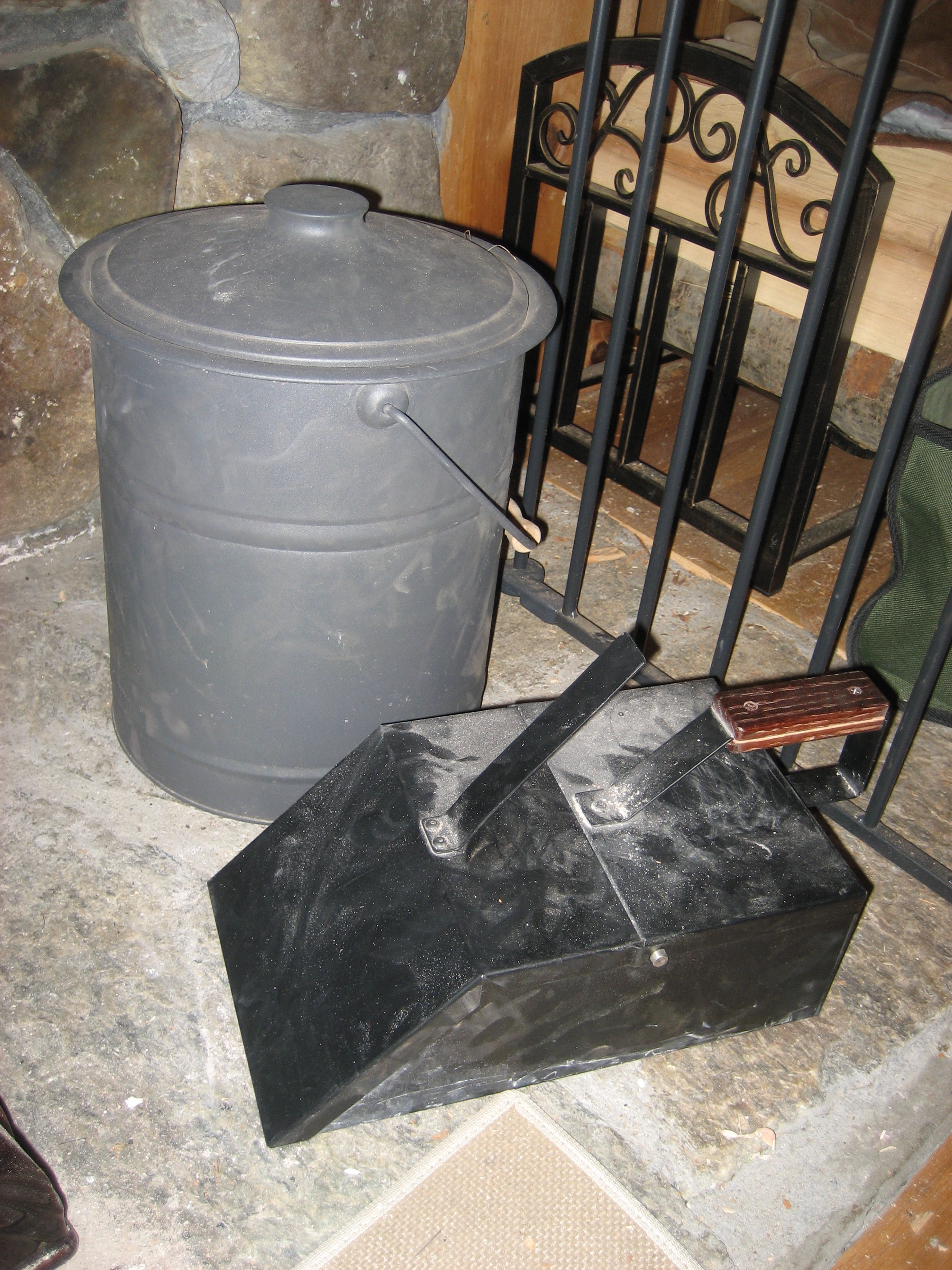
I have a more literal understanding of ashes now that I have to handle them every day. I feel like I’m covered in ashes half the time. Proper ash disposal has become an obsession of Erick’s. Many of his latest “man toys” have something to do with the safe removal of ashes from our fireplace; we even have the “Ash Dragon.”

The ash can and Ash Dragon!

Because the thing is, ashes are really REALLY messy, and they’re also dangerous.

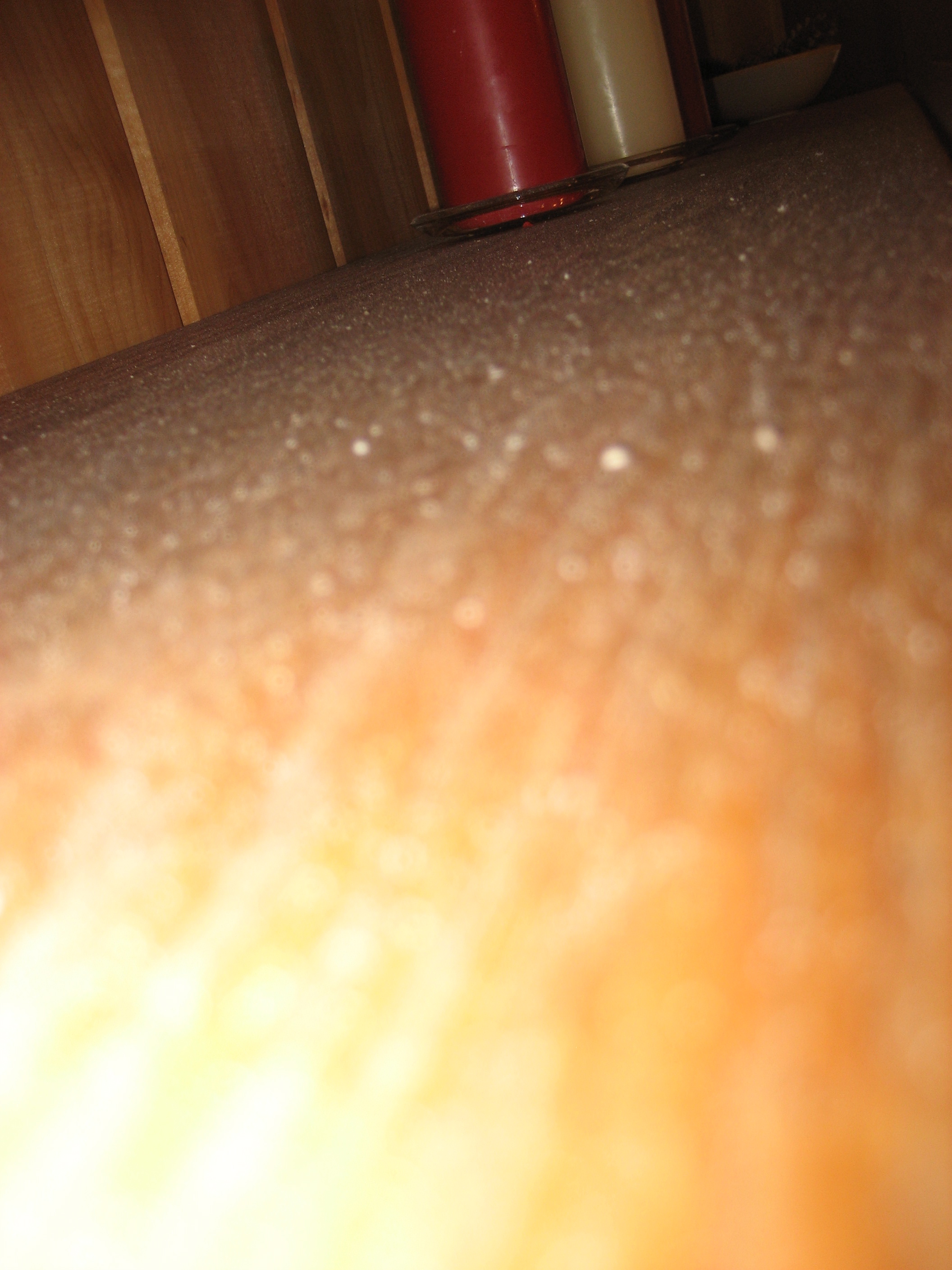
They’re messy because, no matter how careful we are, whenever we open our wood stove little puffs of ash come floating out. Ashes are light, so it only takes the slightest breath of air to make them swirl in all directions. Our entire house now has a fine coating of ash over everything. I could honestly spend every day dusting and sweeping up ashes, and still feel like I’d made no progress. (Which is either depressing, or a nice excuse to just give up dusting).

Some of our dust.

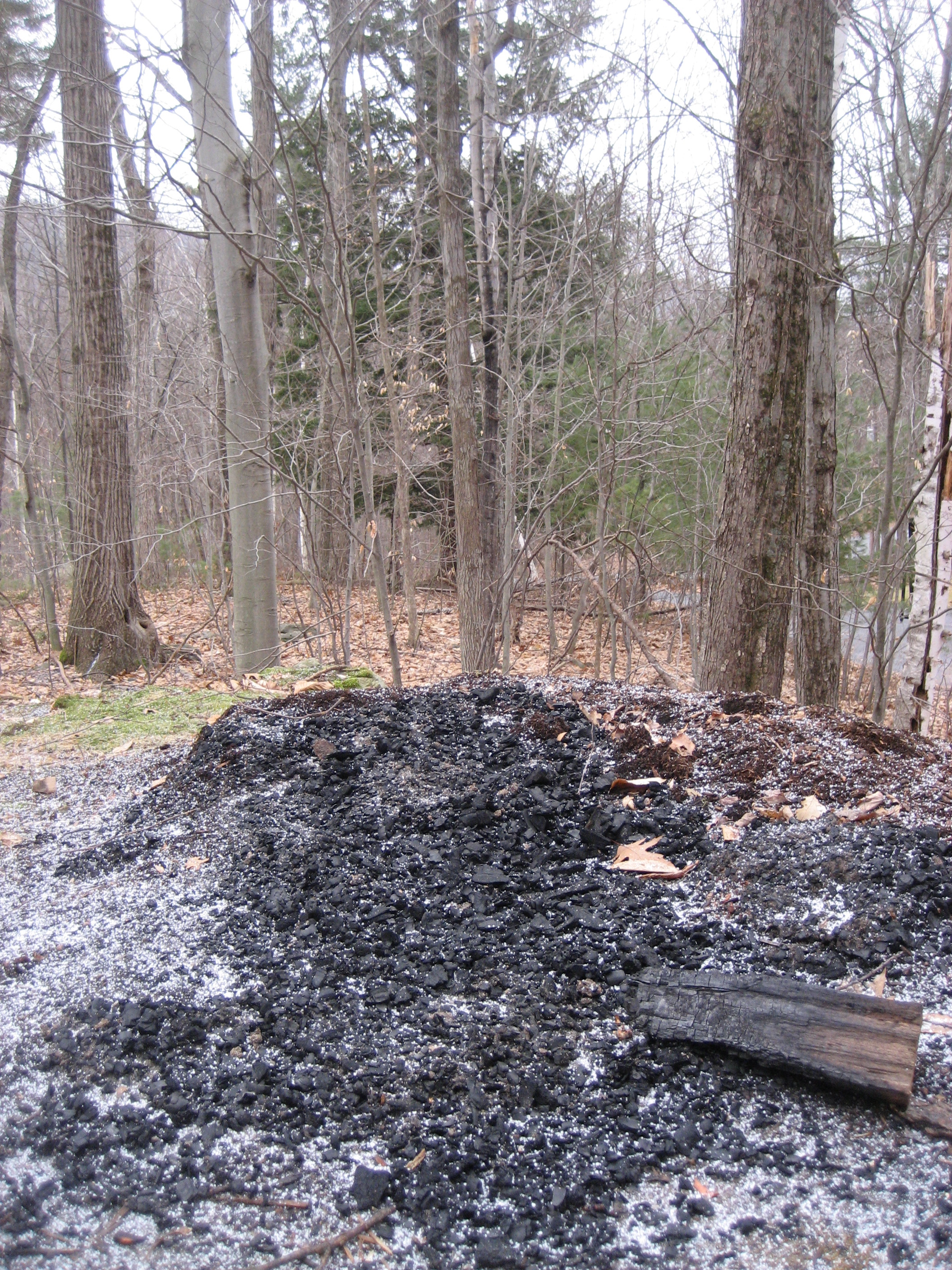
Ashes are dangerous because they’re deceptive: they hide the glowing embers underneath. When we go down to the wood stove in the morning, it looks like the fire has burned itself out and the bottom of the stove is filled with harmless ash. But one stir of the ashes will uncover enough orange-pulsing embers to start up the fire for the day. That’s why proper ash disposal involves transferring the ashes to an airtight ash bin, where we let them sit for at least a day before dumping them on the ash heap in our yard (yes, we have an ash heap!). And even then, Erick is paranoid enough to pour water on top of them.

Our ash heap.

But ashes are necessary. They’re the by-product of what we do to survive the winter.

Ashes: messy, dangerous, necessary.  It occurs to me that those same three qualities also apply to repentance. The word “repentance” probably makes a lot of people shut down right away — it sounds too harsh, too judgmental, too “churchy.” But I’m referring here to all types of repentance: spiritual and/or interpersonal. (Although I’m not sure that there’s a big difference). When we realize we’ve been wrong and ask forgiveness — whether from god or another person — it’s a messy business: nobody likes to admit that we’re to blame when things go wrong. It’s also dangerous: we could get hurt in the process, by losing our pride or failing to win forgiveness.

In the end, though, repentance is as necessary to our lives as the heat sources that help us to survive. Without acknowledging the ways we fail ourselves and others, and without seeking to right those wrongs, we go cold.

Aw, Shoot….

Image via Southern Vermont Primitive Biathlon

Every Friday this winter, my husband woke up early, put on warm layers, ate a huge breakfast, and went target shooting before work with a friend’s grandfather, a 70-something hunter and biathlete. Right before Christmas, they invited me to join them. So, I went target shooting, too. Three times.

Just to be clear, I’m saying that my husband and I shot guns. We had fun. It could be only a matter of time until we consider hunting….Click here to continue reading about our adventures over at The Addison Independent.

Where the Woods Have No Trails

IMG_1882

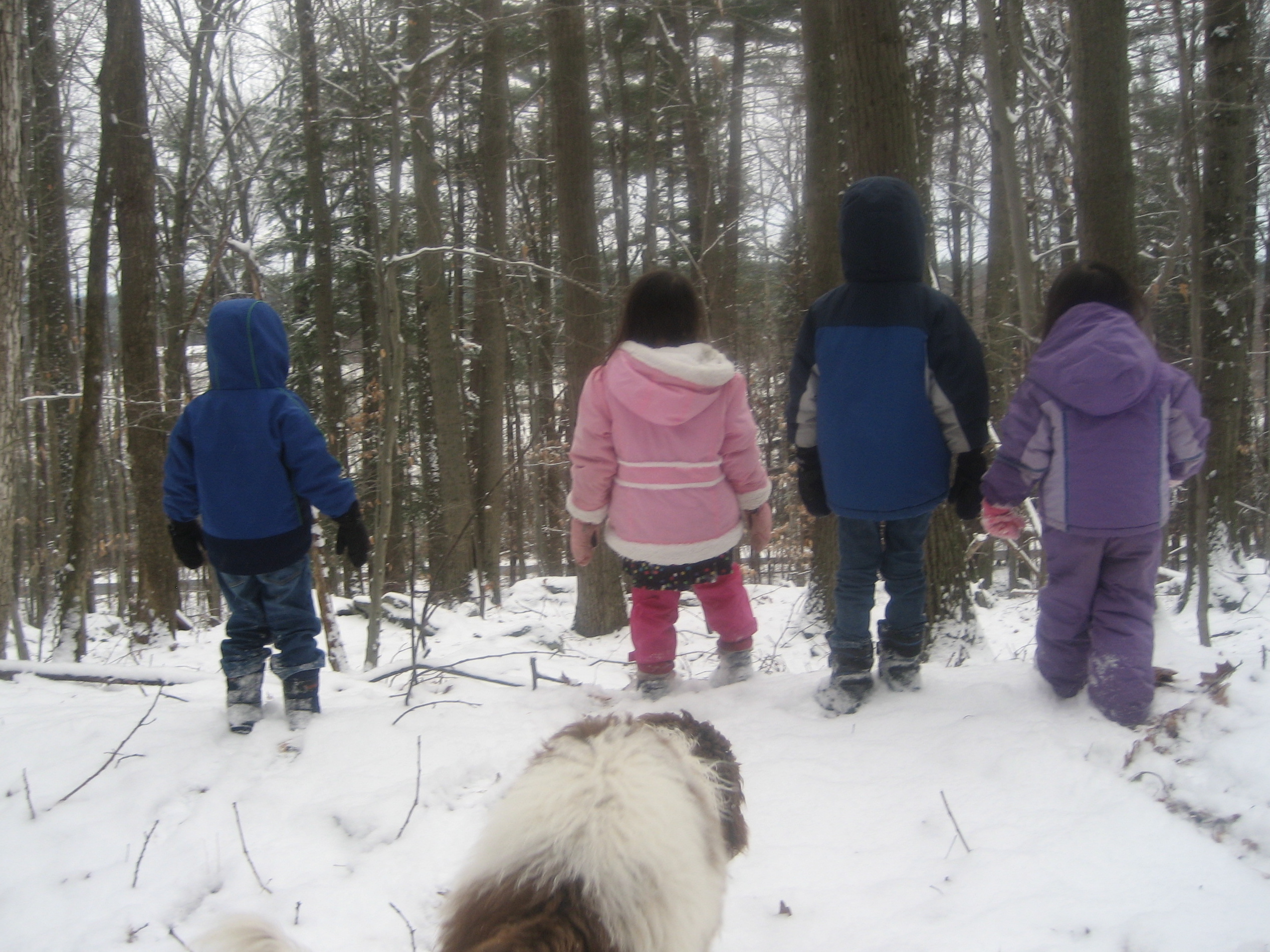
To say that we live in the woods is accurate enough, but after a couple of years in Vermont you learn that there are “woods” and there are WOODS. Behind our house is a long stretch of “woods” that rises up to a rocky ridge, and then slopes down to a small local road. Our official property encompasses 1.25 acres. In contrast, we know people who own 350 acres of WOODS, making our own woodsy setting seem tame and suburban by comparison.

Nevertheless, the woods back there are relatively unspoiled. Beyond our own property line the woods are protected land, which means no hunting or logging allowed. No trails, just pure forest.

Here’s what I’ve learned about trails during my time in Vermont: it takes BACKBREAKING labor to make them. Somebody — most likely our house’s previous owner — created two trails running from our backyard to our property line (where the trail-less forest starts), and it’s all I can do during the warmer months to keep these trails marginally clear of brush and saplings.

This past summer, I blazed my own trail. Because our dog is best friends with the neighbors’ dog, and our girls are best friends with both dogs, someone is always having to tromp through the woods that separate our house from our neighbors’. To make the going easier, I cleared a 40-foot path between the trees. After that, I declared my work done for the summer. Ever since, in order to enjoy trail hikes through the woods, I have to force myself NOT to obsess about how much work it took to create the trail.

On the other hand, whenever I hike a trail these days I appreciate the fact of there BEING a trail. As difficult as it is to create trails, it’s also extremely difficult to walk through the woods without them. Once our little backyard trails drop us off in untouched forest, it’s tough going. There are roots and sticks to trip you up, piles of leaves to slow you down, rocks cropping up every few feet, and branches smacking you across the face. Each time we decide to hike in “our” woods, we set off with the highest of family-bonding expectations. By the time we start heading for home, usually about 10 minutes later, 2/3 of the girls are being carried, 3/3 of the girls are whining about something (cold hands, sore feet, impending starvation), and Erick is cursing under his breath.

This winter, Vermont is doing its job and giving us some lovely snow; between Christmas and New Year’s, over a foot of powder was laid down in our woods. As we eagerly strapped on the snowshoes that we never got to use last year, I expected that snow would make our woodland trek much easier by leveling the terrain and making a path clear. It turns out that, NO: Snow only gives the illusion of level terrain and clear paths; once your snowshoe sinks into that powder, you’re just as likely to slip on a rock or get tangled in a root as when the ground is clear.

Trail-less hiking always makes me think of The Last of the Mohicans — the Daniel Day Lewis movie, not the book. Somebody in my college dorm owned this movie, and during the winter of my freshman year I watched it about 28 times. If you’ve seen this movie even once, you’ll probably recall that it includes numerous scenes of Mr. Day Lewis and his Native American counterparts running through the woods. Not stumbling, never falling flat on their faces, but RUNNING full speed ahead, gracefully dodging trees, in complete silence (save for the swelling music of the score).

Now that I’ve had my direct experience with trail-less woods, I wonder: HOW IS THIS POSSIBLE?!?!? I’m sure that the actual Native Americans who once populated Northeastern forests were amazing and knew the woods like the back of their hands, but I still can’t fathom silent, graceful running through the woods, no matter how much practice you have. For that matter, how did they even film those scenes in The Last of the Mohicans? The movie was made in 1992, which, as far as I know, was before post-production technology that allowed digital addition of trees. I can only assume that Daniel Day Lewis had to undergo months of tree-evasion training to prepare for his role.

But what do I know? Not a whole lot, as it turns out. One of the neatest things about snowshoeing in the woods is that you can see the deer tracks in the snow. And let me tell you: those deer and I are not on the same wavelength. Whenever I cross their tracks, I cross their tracks; I think I’m choosing the obvious, easiest route, and they’re going in a completely different direction. Granted, deer are created to know things about the woods that I never will. Granted, the deer were not also lugging Georgia behind them in her baby sled (as I was). But it got me thinking.

The next time I go snowshoeing out in our woods, I’m going to take a closer look at the deer trails. It could be that what I consider to be the path of least resistance isn’t the best choice after all. There’s probably a lesson in there somewhere….

IMG_1880

Chloe and Kylie Kill the Chickens

IMG_1820

This is about fresh starts, new beginnings, and healing.

If you’ve been reading this blog for a few months, you’ll recall that earlier this fall, two neighborhood dogs broke into our chicken coop and killed all of our chickens. Our next-door neighbor notified the dogs’ owner, who called and was very apologetic and offered to help in any way possible. But really, what can you do?

I received some responses to that post, written and verbal, that were ANGRY with the dogs’ owners. Things like: They should do more! and Did you report the dogs to the police?!

I’d like to say that Erick and I maintained only peaceful, loving thoughts towards those neighbors, but I’ll be honest: not always. Especially when the dogs CONTINUED to escape their fence and run through our yard, we went grumble grumble.

And then, one afternoon in early December, the dogs’ owner showed up at our front door, carrying an ENORMOUS basket of doggie treats. She’d somehow gotten word that we had a new puppy, and wanted to welcome our “new addition.” Attached to the basket was a note, including another apology for the chicken massacre. This was the first time I’d met her in person; we chatted a few minutes, and she was just lovely.

From the note attached to the gift basket, we learned that the dogs’ names are Chloe and Kylie. My two oldest girls were fascinated by that fact, and the day after the basket arrived they showed me a little something about healing.

It started as they were getting dressed in the morning. “Hey, Campbell,” said Fiona, “want to pretend to be Chloe and Kylie?”

“What’re you going to play?” I asked, in my always wise, mature mothering style, “Chloe and Kylie Kill the Chickens?”

“YES!!!!!!” screamed my girls in unison. And for the next 30 minutes, they alternately pretended that their stuffed animals and Georgia were chickens. They chased, and bit, and ate. The game included lines like, “Hey, I just threw up a whole bunch of feathers!”

My girls are weird, yes, but they are also resilient. Over the course of a few months, they were able to take the sight of their chickens torn apart, and turn it into a game. They LAUGHED.

I mention this to give us all closure, especially those of you who shared in our grumbling. And also, as we start a New Year, to give us all hope: that fresh starts are possible, that healing happens, and that most people, when you get right down to it, are pretty freakin’ great.