Hello, Again! An Update.

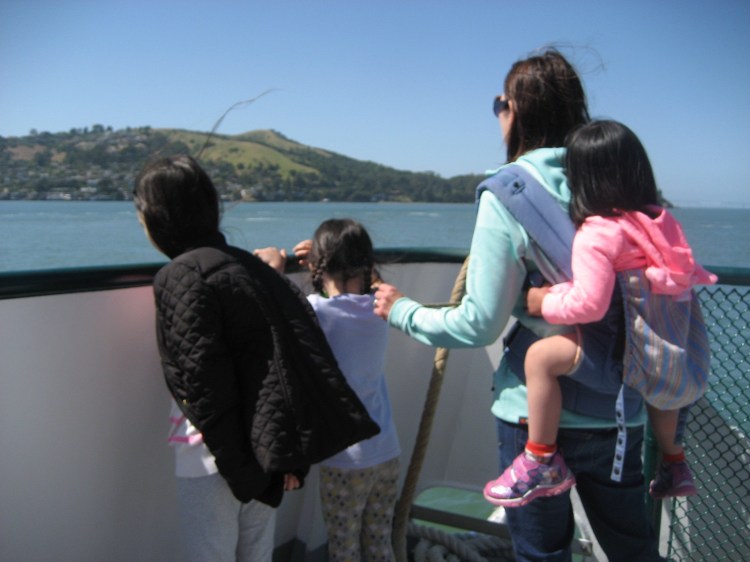
My view every day while washing dishes.


Today is my birthday. Last year, when I turned 40, I used the occasion to write an update on the topic of discomfort. My husband and I had just concluded a very difficult, uncomfortable year hashing out what we should be doing with our lives and whether that included moving homes, and we were gearing up for a potentially difficult, uncomfortable year. Added to the regular chaos of raising four young children was a 5-month sabbatical in Berkeley, California (including a venture into homeschooling), followed immediately by summer “vacation” and a local move, and then the start of the new school year.

If you’re a regular reader, you know this.

A year ago, I embraced this discomfort as an opportunity for growth and change. I still believe that, but I have to admit that part of me was expecting a break sooner or later. If you’d asked the me of a year ago how I thought I would feel on my next birthday, my honest answer would’ve been: “Relieved and settled.” With multiple moves behind me, and with our family and our stuff installed at last in what we hope will be our final home, I anticipated that this would be the year when I could relax and breathe again.

Turns out that just because you’re not moving doesn’t mean that you’re settled.

Lest you think this post is about to veer into whiny ingratitude: Don’t worry. I have a loooong list of things to be grateful for, and I know it. I have a loving, supportive, and healthy family. My husband likes to cook. My daughters are growing up, and becoming more fun and interesting and enjoyable every day. As of this year, all of our girls are in some sort of school at least a few days each week, and I even get to homeschool one of them, which is one of the most special, fulfilling, and challenging things I’ve ever done.

And this new home: A year ago, I could never have imagined what a gift it would be. It is full of light, and its size, layout, and spirit just work for our family. Then there’s the land. I’m not sure that I can even begin to do written justice to the land yet: the beautiful rolling green fields that I see out every window, where we walk the dog and watch butterflies and collect milkweed pods in order to send their feathery seeds into the wind.

All of this is so, so good.

But moving a family of six takes an awful lot of cleaning, and packing, and unpacking, and cleaning again. We spent the better part of a month lifting boxes and climbing stairs and pushing vacuums and wielding paintbrushes, and we are exhausted.

Our old house is still on the market, and we expect it to sit on the market through the winter: The Vermont real estate market is slow on a good day, and it appears that we may have chosen a bad day to put our house up for sale. We will survive, but obviously this isn’t ideal.

And that land, that beautiful land: We have plans for it. Plans that involve garden beds and brush hogs and tree cutting and chicken fencing. My to-do list these days includes things like: Research building compost bins from pallets, and Borrow Tricia’s pickup truck for bulk mulch and soil. 

Then there are some days that are just mice-in-the-glove-compartment, beavers-felling-backyard-trees, blueberry-bushes-mysteriously-dropping-leaves, one-child-has-Lyme-disease type of days. I’m not kidding: That was one morning. Later that day, my husband came in and said, “There’s a rabid skunk in the shed,” and I just shrugged in resignation, because of course there was. (There wasn’t: He was kidding.)

Some of our girls had difficult transitions to school. My husband is stressed about going back to teaching after a year’s sabbatical, with tenure looming a year away. We have aches and pains. And there are still big, huge “What are we going to do next?” decisions that we need to discuss, but we can’t quite seem to find the time because once the girls are (finally!) asleep at night we’re just too sore and exhausted to do anything other than eat popcorn and read.

What I’m saying is: One year later, we’re hardly “relieved and settled.” We are still smack in the middle of uncomfortable.

So, in a way, I got my wish: I concluded last year’s birthday blog post with:  “I hope to be uncomfortable for a long time to come.”

But, you see, I didn’t really believe that. In my heart of hearts, I thought that discomfort was like a mountain peak. Maybe you spent a year struggling uphill, but then you got a break. You got to look around at the stunning views, celebrating how far you’d come. You got to catch your breath.

If there’s one thing I’ve learned in a year’s time, it’s that life doesn’t guarantee you a break. Sometimes you don’t get to catch your breath. Life is not plotted out like a race, with water stations for optimal comfort.

have known all of this. I have written versions of this same thing before. Still, every time I’ve climbed up one mountain only to find that there’s another peak right in front of me, or that the descent is even more difficult than the ascent, my knee-jerk reaction is: “That’s SO UNFAIR!

But here, I think, is some good news:

With age does come the opportunity to learn from our past in order to shape more realistic expectations for the present. We consider things unfair when they’re unexpected. But if I channel my four decades of experience into the expectation that life will be hard, then it won’t seem so unfair when it is. I’ll waste less time being angry when I don’t get a break, and I’ll be gratefully surprised when I do find rest.

And a word on rest: Because life doesn’t simply hand us moments of relief and comfort, we must become adept at grabbing them for ourselves. I’m slowly learning to go to bed earlier and wake up earlier so that I can claim more quiet hours, to say no to things that will clutter up our family’s calendar with needless busy-ness, and to spend as little time as possible  in front of screens.

So my birthday prescription for optimal mental, physical, and spiritual health combines lowered expectations with being proactive about rest.

How am I doing with that? Honestly, I struggle. (Also, my children seem hell-bent on destroying any chance I have to rest.) But I cling to the rope of knowing that I am not alone on this climb.

It is all a work in progress: Our family, our land, life. Frequently uncomfortable and exhausting, with quick and surprising moments of joy and relief. But I’ll leave you with this quote by Henry David Thoreau, which I’ve been reflecting upon this birthday week: “It’s not what you look at that matters, it’s what you see.”

Addendum to “No Child of Ours”

Thanks to everyone for your kind comments and shares of my latest “Faith in Vermont” column in The Addison Independent. 

Although I did feel that this column was one of the most important things I’ve written thus far, that was more because it was the first time I’d attempted to tackle a BIG ISSUE (racism) head-on in “public.” My frustration with the column was that I doubted whether I’d said enough. It’s hard when the most we can do is to identify something that stinks; when we can’t solve the problem quickly.

But what I can do is to share with you the complete video of the “Unlikely Advocates” talk by Dr. Brenda Salter McNeil that I referenced in my article. The link is below, and includes both Dr. Salter McNeil’s keynote address (one of the most powerful talks I’ve experienced firsthand) and the panel discussion that followed. Both are well worth your time. (The “Unlikely Advocates” event was put on by Project Peace East Bay, the nonprofit that I used to work for when our family lived in Berkeley. I am so proud and impressed and humbled by the good work that they continue to do in Bay Area communities.)

Mosquitoes: The War on Summer

Why did I have to be born so tasty?!?” my daughter wailed, raking her fingernails across her shins. “I hate summer!”

In our neck of the woods, summer – which should be a season of backyard barbeques, kiddie pools in the yard, hours spent in the garden, and late nights chasing fireflies – is mosquito season. Before venturing outside, we slather on bug spray, don hats and inappropriately warm clothing, light citronella candles, and position fans by the picnic table. Those who don’t take these precautions, who treat summer like it’s a carefree time to wear shorts and tank tops and flip-flops, are condemned to scratch the itchy red welts covering their bodies.

And there are those, like the aforementioned daughter, who deal with summer by refusing to leave the house.

Click here to continue reading this week’s “Faith in Vermont” column in The Addison Independent. 

California Sabbatical: Some Lessons of Sabbatical

IMG_7364

I was not exactly looking forward to our family’s sabbatical in Berkeley, California. Our five-month sojourn was a year-and-a-half in the planning, so my mind had plenty of time to run through every nightmarish scenario imaginable. I worried that we couldn’t possibly find a comfortable and affordable home for a family of six. I worried that I would be stuck in this uncomfortable and expensive home all day long with four bickering children and no breaks. I worried that I would miss our life back in Vermont and become depressed.

Yet, even as I worried about these things, here’s how I expected the narrative to unfold: We would arrive in Berkeley, and everything would be fine! All of my worries would prove unfounded, and – as has happened repeatedly in the past – I would say, “I don’t know why I worried so much!”

Imagine my surprise, then, when in fact everything I’d worried about came true – and then some! A few weeks into our sabbatical, not only was I depressed, missing Vermont, and stuck all day in a cramped and expensive rental home with four bickering children, I’d also been blindsided by unexpected setbacks. I hadn’t expected to fracture my foot on our second day in California. I hadn’t expected my husband and children to miss Vermont as much as I did. I hadn’t expected to find the Bay Area – where we’d lived for five years – infinitely more challenging than I remembered because we were no longer used to city life and lines and traffic. I hadn’t expected our California friends to be so very, very busy that it would take months to see some of them.

“It wasn’t supposed to go this way,” I told my husband tearfully. “I worried, so everything was supposed to work out.”

It took nearly the full five months for me to realize that sabbatical was an enormous gift to our family.

Click here to continue reading about the lessons I learned from our sabbatical in this week’s “Faith in Vermont, California Sabbatical” column in The Addison Independent. (This will be the FINAL California edition of this column — actually filed from Oregon, where our family is on vacation before heading back to Vermont!)


California Sabbatical: Goodbye To Berkeley

IMG_7321

As we prepare to leave Berkeley, California and return home to Vermont, here are some Berkeley stories from the past five months of our family’s sabbatical:


It’s late January. We are a few weeks into our homeschool curriculum, and for science I’ve been taking my daughters on nature walks around our neighborhood to observe West Coast flora and fauna. This particular morning, we’re squatting on the sidewalk sketching a Bird of Paradise plant, when a nearby house’s door opens and a man emerges. I’m concerned that he’s about to chase us away, but he asks what we’re doing in a friendly manner.

Then he says, “My wife sent me out here to offer you some lemons.” He gestures towards the lemon tree in his front yard, laden with lemons bigger than my fist (he tells us they’re Eureka lemons.) He cuts down four lemons, one for each of my daughters. We thank him and take the lemons home; later, we will use a recipe from The World of Little House, a companion book to Laura Ingalls Wilder’s series of pioneer memoirs, to make delicious lemonade from these lemons.

For more of our Berkeley adventures, click here to continue reading this week’s California edition of “Faith in Vermont” in The Addison Independent. 

Using Our Words

IMG_6603

I took my two-year-old and my five-year-old to a playground this afternoon, while my two older daughters attended their little homeschool History Club.

After a while, my five-year-old came up to me and said, “Mommy, I want to play with somebody. Somebody new. Somebody who’s not my sister. I want to make a new friend.”

There weren’t many other children at the playground: a handful of babies, the rejected two-year-old sister — and three girls who were, from the looks of them, about two years older than my daughter. Of course, these were the girls my daughter was eyeing.

“Go ahead and ask if you can play with them,” I prompted, praying silently that these “big girls” would be kind.

“I’m feeling a little shy,” she said. “Will you come with me?”

So I said I would hold her hand and come with her, but I wouldn’t speak for her — she had to do the asking.

Hand-in-hand, we approached the big girls.

Here is what my daughter said, completely on her own, in her tiny voice:

“Hi, I was wondering if I could play with you? Because I don’t have a friend here, and I’m feeling lonely.”

They were kind: They said yes. (Thankful prayer from me.)

I walked away from this exchange marveling at the beautiful request my daughter had made. It was simple, honest, and vulnerable. This is not because my daughter is anything special — of course, think she’s something special, but really she’s just a regular kid. She said what she did precisely because she’s a regular kid, and to say anything else wouldn’t occur to her.

And then I realized that the days when my daughter can make this sort of request are numbered.

Think about it: If somebody approached you and said, “I was just wondering if we could hang out for little bit, because I don’t have a friend and I’m feeling lonely,” how would you react? I know how would react: I’d probably make some excuse and dash off. We adults are generally too busy for this kind of neediness. If we’re honest, vulnerability freaks us out a little bit.

It’s funny: I’ve spent the first five years of each of my daughters’ lives — what will amount to twenty years’ worth of effort — encouraging, begging, pleading with them to use their words. “Please, stop screaming and just tell me what you want,” I exhort them.

But then, not too long after — by about mid-elementary school, by my estimation — we (the big “we:” society, culture, all of us) begin implicitly teaching our children to stop using their words. To put up a brave front. To not say what they want. Because in our world, to be vulnerable, to admit loneliness, is to be weak. It freaks people out. It’s tantamount to an admission of failure.

It occurs to me that a great deal of trouble — emotional distress, interpersonal strife, political discord — might be avoided if we hadn’t somehow been discouraged along the way from just using our words.


California Sabbatical: They Paved Paradise

IMG_6623

It’s late afternoon, and I’m looking east through the big picture windows of my favorite café in Berkeley, California. I’m used to seeing the Green Mountains when I look east, but today I see the Berkeley Hills.

There’s no confusing the Berkeley Hills for the Green Mountains. The slopes of the Berkeley Hills are covered with more houses than trees; the electric lights in those houses are blinking on right now, and will outshine the constellations tonight. The hills’ summits are ridged with cell phone towers. And to see the Berkeley Hills I must look across a parking lot, past six lanes of traffic and the BART train tracks, and beyond a network of power lines and street lights.

A refrain runs through my head that’s been haunting me since we arrived in Berkeley for my husband’s sabbatical. It goes like this: What have we done?

Click here to continue reading this week’s “Faith in Vermont, California Sabbatical” in The Addison Independent. 

California Sabbatical: Where The Heart Is?

When friends and family from Vermont ask how we’re doing during our five-month sabbatical in Berkeley, California, I usually answer, “It’s been a good experience. But it’s not home.” 

The funny thing is, it was home.

I’ve been contemplating this concept of home: What is it that makes one place clearly home, and another place – a perfectly nice and familiar place filled with beloved friends and family – so clearly not home?

Obviously, home is where your house is, in the physical sense. But I am talking about the more spiritual sense of “being at home.”

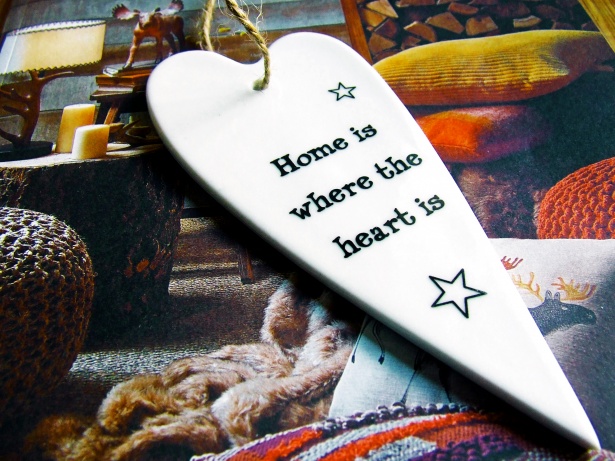
The old platitude claims, “Home is where the heart is.” One of my daughters drew a picture and captioned it with this saying. When my husband asked, “Where’s your heart?” she didn’t miss a beat: “Vermont.”

Click here to continue reading my latest column, “Faith in Vermont, California Sabbatical,” in The Addison Independent.

California Sabbatical: The Surprising Joy of Homeschooling

IMG_6970

Husband: I was thinking we could go to Berkeley for the second half of my sabbatical. We have family and friends there, and I could do research in my old department at UC Berkeley.

Me: Sure, that makes sense.

Husband: And we’d enroll the girls in school in Berkeley for the spring?

Me: Oh no, I’ll just homeschool them while we’re out there.

And so, over burgers at Park Squeeze in Vergennes in the spring of 2014, some very major decisions were made very quickly.

Click here to continue reading about our homeschooling adventure in this week’s “Faith in Vermont” column in The Addison Independent. 

California Sabbatical: Journey to Points South

IMG_6836

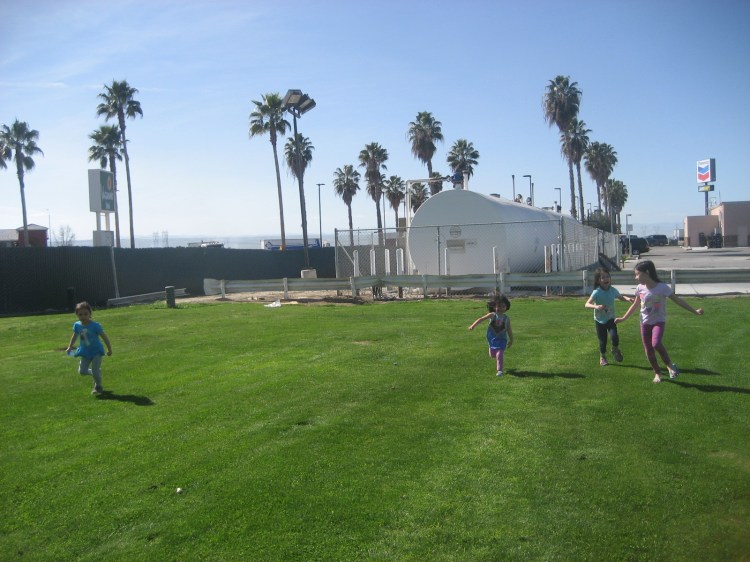
In mid-February our family left the house we’re renting during my husband’s sabbatical in Berkeley, California and drove south for eight hours.

Our destination: Orange County, a sprawling collection of suburbs just south of Los Angeles.

Our purpose: To visit my husband’s brother and his family…and Disneyland.

Click here to continue reading the latest update from California in my “Faith in Vermont” column in The Addison Independent.