Throwback Thursday: A Still Small Christmas
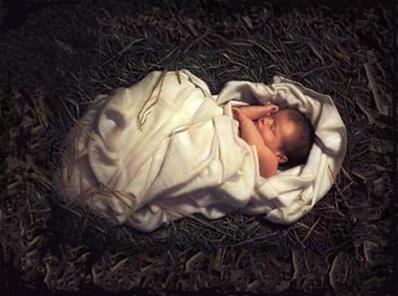
baby-jesus-sleeping

As we head into Christmas, I am always thrown back to Christmas 2019-2020, which was one of the most difficult Christmas seasons our family ever experienced. It was also one of the most real and meaningful. 

I know that many of you are walking through difficult seasons now. In fact, this year there have been two deaths in my own immediate family over the past two weeks: my grandmother and my aunt. So often in life, our mourning and our rejoicing are commingled. 

So I’m reposting this piece, which I wrote next to my infant son’s hospital bed, to remind us all that hard things are not inconsistent with Christmas; that our holidays don’t have to big big and shiny and perfect, but can sometimes look like still, small moments of awareness.

***

I hesitate to assume that there’s such a thing as a “typical” Christmas, but if it exists then I feel quite confident in stating that this has been a very atypical Christmas for our family.

As some of you may know, I have spent the past five days in the pediatric inpatient ward of the University of Vermont Medical Center with our 7-week-old son. This was completely unexpected and sudden. Our entire family – including all four daughters – had driven happily up to Burlington for some scheduled testing for the baby. We’d planned to have lunch and look at holiday decorations after what we assumed would be an hour-long appointment. But, to quote Joan Didion, “Life changes in the instant. The ordinary instant.” And in that instant, we were being told that the doctor was concerned about our baby’s growth trajectory and wanted to admit him to the hospital for “failure to thrive.”

So, without any preparation or planning, without a toothbrush for me or extra clothes for the baby, and with a long list of pre-Christmas plans and to-dos that was going to require sudden and extreme revision, I found myself ushered into a pediatric hospital room. I found myself discussing who-takes-the-girls-where-and-when logistics with my husband (whose birthday was the following day.) I found myself groping through my own dashed expectations as I tried to explain to four teary girls what I knew of the immediate plan, and how little idea I had of anything beyond the next couple of hours.

This is not a medical drama, so I will very quickly set your mind at rest about our son: He is fine. He was tiny at birth and has always been a robust spitter-upper. His pediatrician has been monitoring his weight since birth, and everyone was pleased with his steady gains until his spitting up increased dramatically after a routine outpatient hernia repair surgery. His weight gain never stopped or reversed, but it slowed. After a couple of days of testing at the hospital to rule out Big Scary Things, he was diagnosed with severe reflux, which we will manage at home until he outgrows it eventually.

But I didn’t know the end of the story as I sat in our hospital room that first night, trying in vain to sleep in a pull-out chair while my freaked-out baby fussed beside me and nurses came and went all night long. The next days would be the darkest of the year; this made a certain narrative sense to me. What I couldn’t quite manage was to find the sense in our situation – I couldn’t figure out where God was in the whole thing.

Even though you know better, it’s so easy to fall into thinking that life should reward the good and punish the bad. We are adopting our son, not to earn brownie points with any person or deity, but because we love children (this one in particular; he’s our son) and we wanted to provide a good home for a child who needed one. Since his birth, our sweet boy has not had an easy road: Each of his seven weeks of life has brought some new health wrinkle – none deeply serious, all treatable, but most of them involving a degree of disruption and discomfort for him and for the rest of our family. All of this is outweighed by the extravagant amount of love the little guy has brought into our lives. Still, the temptation every time we hit the next hurdle is to say, “Really, God? This kiddo has been through so much; can’t he just get a break? We’ve all been through so much; would it have killed you to make this just a little less hard?”

On that first night in the hospital, I looked out the window at a narrow strip of dark winter sky barely visible between the buildings opposite our room, and my heart screamed, “Where ARE you, God?”

A passage of the Bible that I’ve always loved for the beauty of its language is 1 Kings 19:11-12. The backstory is that the prophet Elijah has been doing everything right, risking his life by warning the Israelites and the corrupt King Ahab and Queen Jezebel to turn back to God. In response, Ahab and Jezebel kill all the other prophets and threaten to do the same to Elijah. Elijah escapes into the wilderness, where he is on the run for forty days and nights until he reaches a cave on Mt. Horeb.

11 Then He [God] said, “Go out, and stand on the mountain before the Lord.” And behold, the Lord passed by, and a great and strong wind tore into the mountains and broke the rocks in pieces before the Lord, but the Lord was not in the wind; and after the wind an earthquake, but the Lord was not in the earthquake; 12 and after the earthquake a fire, but the Lord was not in the fire; and after the fire a still small voice. [New King James Version]

When Elijah hears that still small voice, he knows it’s God, and God gives Elijah instructions about what to do next.

It took me three days in the hospital to realize that the answer to my cry, “Where ARE you, God?” was: Right here. It took that long because God’s voice didn’t boom down from heaven, there were no chariots of fire, comets, flashy miracles, or apparitions. But there was a still small voice – a series of them, in fact.

God was not in the wind, the earthquake, or the fire:

God was in the nurse who, while tenderly giving my son a bath, told me how she’d switched from geriatrics to pediatrics seven years earlier, when she learned she couldn’t have children.

God was in the young man from Patient Transport who, while wheeling my son down to a swallow study, told me how he drives his mother an hour to her haircut appointments in our town. (“She used to go with my grandma, but after my grandma died, I started taking her.”)

God was in the doctor from radiology who, observing me walk the halls for an hour as the barium solution moved through my son’s digestive tract, ushered me into the staff break room. “There’s a nice, big window,” he explained.

God was in the gentle hands and kind words of the countless doctors, nurses, and staff throughout our stay who counseled us and brought bottles, warm blankets, white noise machines, and mobiles to make my son more comfortable.

God was in the faces of the hospital patients – the really ill ones who passed us on gurneys in radiation, the other children on the pediatric floor – and their caregivers.

God was in my parents, who took our daughters at no notice and provided them with love, security, and fun.

God was in my husband, who couldn’t have cared less that his birthday had been overshadowed, and who drove an hour up to and back from the hospital numerous times to bring me clothes, toiletries, and Chipotle dinners.

God was in my daughters, whose primary concern was never their own plans, but the fact that they were separated from their baby brother.

God was in the stunning sunrise in the strip of sky between buildings on the morning of the darkest day of the year – a reminder that there is always light in the darkness.

And God was in our baby, because this experience taught us that he needs us, and we need him.

Since this all happened days before Christmas, I was thinking of another baby, too: A New Testament baby who was the embodiment of the “still small voice” in 1 Kings. Isn’t that just like God? He doesn’t show up like you’d expect, in the earthquake, wind, or fire, or with the rich, powerful, or lovely; He shows up in the hospital corridors, amid those who suffer and those who serve. He shows up as a helpless newborn baby, born in a barn on the back edge of an empire. There may have been choirs of angels in the sky, but God lay in the straw crying for milk.

On this most atypical of Christmases, I learned to stop scanning the skies for those angel choirs, and to listen instead for the still, small voice in the dark.

A Nearsighted Holiday

As I am writing this there are nine days left until Christmas, and we still don’t have a Christmas tree.

Bear in mind that we live next door to a Christmas tree farm. Not only that, but for the past month our two oldest children have been working at said Christmas tree farm. So we don’t really have any excuse: This December hasn’t been more busy or stressful than any other December; there just hasn’t been a good time for our entire family (because, yes, it requires the entire family) to walk next door and pick out a tree. Sometimes the nearest things are the hardest to do. 

Sometimes the nearest things are also the hardest to see. 

My annual vision checkup always falls between Thanksgiving and Christmas. This year, my optometrist gave me a Sophie’s Choice: My distance vision had worsened to the point that I was going to have to sacrifice clarity at close range in order to see far off. 

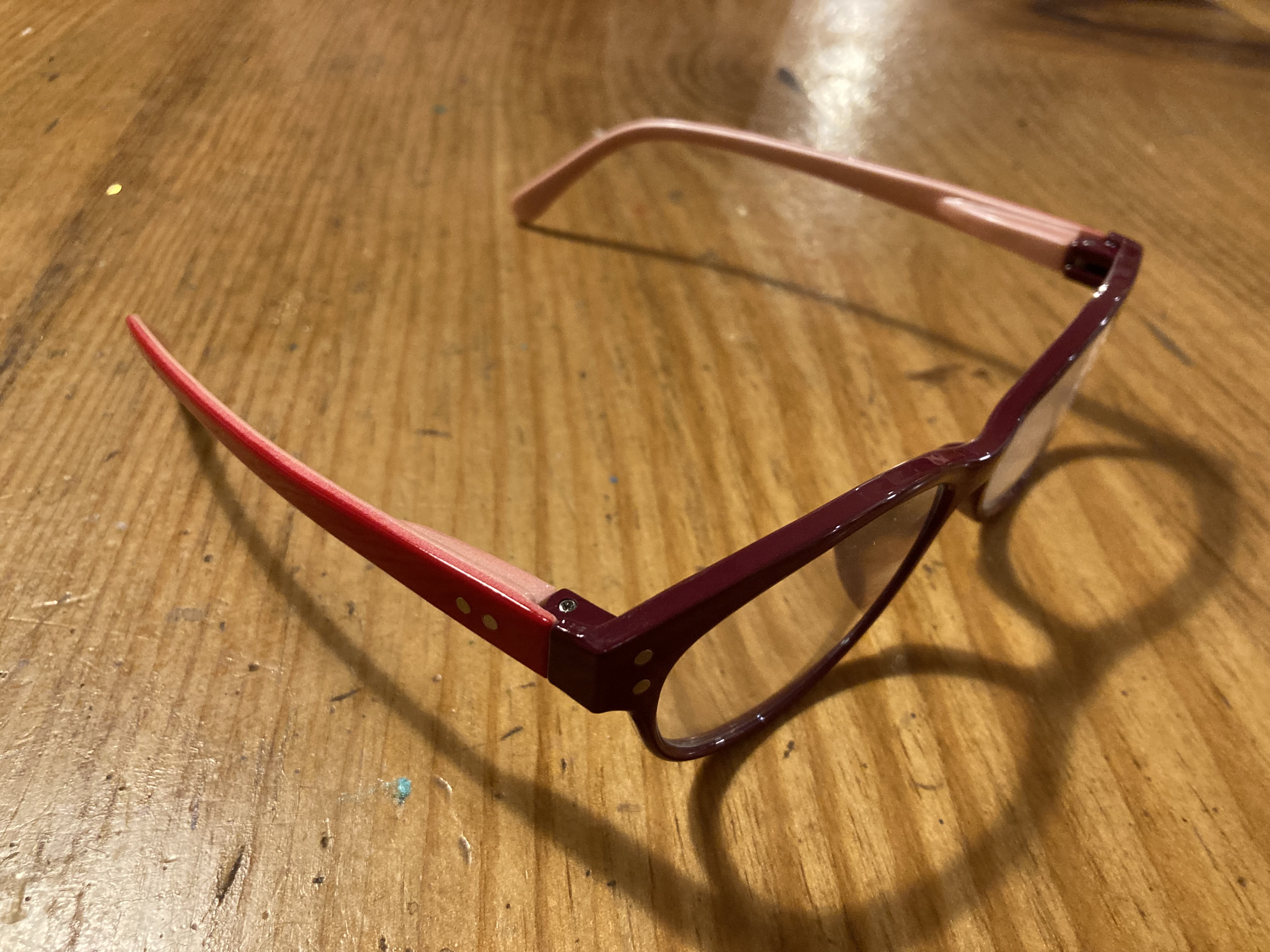
And so I have become a wearer of reading glasses. 

Click here to continue reading this week’s “Faith in Vermont” column in The Addison Independent.

Holiday Film Review: Disenchanted

Over the Thanksgiving holiday, our entire family sat down to watch the new Disney film, Disenchanted. In a rare occurrence, all our children were excited to view the long-awaited sequel to 2007’s Enchanted. The original film, which we’ve seen multiple times, follows Giselle – a stereotypical Disney princess in search of “true love’s kiss” – as she’s transported in modern-day New York City. The film is a smart satire of the more absurd elements of traditional Disney films (including singing rats and pigeons), but of course Giselle’s dewy-eyed goodness wins over the cynical Manhattanites in the end. 

The two films bookend my parenting years: I first watched Enchanted with a visiting college friend while my newborn firstborn slept upstairs; the release of Disenchanted corresponded with that first child’s 15th birthday. 

Disenchanted reunites the stars from the original movie, including Amy Adams as Giselle, Patrick Dempsey as her husband, Robert, and Idina Menzel and James Marsden as the King and Queen of Andalasia (Giselle’s native fairytale kingdom.) Fifteen years later, these actors are all decidedly middle aged. The sequel addresses the question: What comes after “happily ever after?” When it begins, Giselle and Robert are still living in an increasingly cramped Manhattan apartment with their daughter Morgan (a young girl in the original film, she’s now a sarcastic teenager) and their baby daughter, Sofia. In a rather predictable middle-aged move, they decide to relocate to the suburbs, where Giselle is sure that they can make a fresh start. Disney-fied chaos ensues, including talking animals, large musical numbers, and the eventual triumph of goodness and love over evil. 

The movie has received a tepid response from critics. It wasn’t even released in theaters, but was streamed directly to Disney+, which says something. My own children were lukewarm-to-negative in their reviews. A friend who watched Disenchanted with her family said her response was, “What am I watching?” 

That’s all valid if you’re watching Disenchanted purely as a film. But I thought it was brilliant, because about partway through I realized that it wasn’t just a film. That’s when I leaned over and whispered to my husband, “This is the perfect metaphor for perimenopause!”

Click here to continue reading this week’s “Faith in Vermont” column in The Addison Independent.

Of Toddlers and Teens

I am writing this at Vivid Coffee, just off of Church Street in Burlington. It’s an ideal writing spot: hip, but also spacious, with plenty of tables and couches where one can settle in for the afternoon. And many people have settled in on this frosty afternoon; mostly UVM students, from the look of things. The drinks menu is basic, but all I need is coffee. My final coffee shop rating criteria is baked goods, and when I arrived there was a single salted chocolate chip cookie waiting in the case, just for me. Clearly it was meant to be.

I would never have found Vivid Coffee were it not for Genevieve, my daughter’s friend. I’m in Burlington today because I drove a group of four teenagers up here and turned them loose on Church Street as part of my eldest daughter’s 15th birthday festivities. 

Fifteen. We’re in a whole new parenting sphere now. She made a short but expensive birthday list, consisting of clothes, shoes, and a donation to help sexually exploited girls worldwide. Tomorrow, she plans to take the online test for her learner’s permit so that she can spend the next year driving in the company of her parents. She’s sure she’ll pass, although she hasn’t spent much time studying the 140-page driver’s manual online. I remind her that it costs $32 just to take the test. She offers to pay for it, which is thoughtful, but I know that she has only $19 in her checking account. She works as a page at the library and next week will add a second, seasonal job making wreaths at the Christmas tree farm next door; still, the money seems to flow out quickly, spent on books, accessories, and coffee shops.

Which brings me back to this café. Classic rock is playing over the speakers, but I look up the lyrics to Taylor Swift’s song, “Fifteen,” which features the line, “This is life before you know who you’re going to be.”

Click here to continue reading this week’s “Faith in Vermont” column in The Addison Independent.

The November of Middle Age

“I think that November might be the most beautiful month,” said my daughter as we drove through the barren brown landscape. A few scraggly leaves clung resolutely to the skeletal tree branches. November, memorialized by Thomas Hood’s bleak poem (a long list of “no’s,” concluding with, “No fruits, no flowers, no leaves, no birds! – November!”) is usually far down the list of months ranked by beauty. This daughter turns 15 in two weeks, so she has a vested interest in finding goodness in her birth month. 

And yet, I could see what she meant. The sky gets bigger in November without leaves in the way. The light is spectacular: The sunrises and sunsets become kaleidoscopic shows of orange and purple and are more conveniently witnessed as the daylight contracts towards the middle of the day. And, sorry Thomas Hood, but there are birds – the hardy ones who hunker down for the winter – and they’re easier to appreciate in the absence of competition: the brilliant blue jays, sinister crows, stern red-tailed hawks, and swooping murmurations of starlings.

Here is what I have been thinking about lately: Middle age is a lot like November.

Click here to continue reading this week’s “Faith in Vermont” in The Addison Independent.

The Dog Days of Autumn

The fall sports season is over. As always, it was brief but intense, with afternoons that felt like tactical maneuvers as my husband and I shuttled four children who were playing two sports (soccer and field hockey) on three teams. Gone are the hours spent huddled in a folding chair amidst the growing cold and dark, trying to divide my attention equally between the players on the field, the parents and grandparents on the sidelines, and my two-year-old son who’d run off with some surrogate big siblings he’d picked up. (Our family’s scoreboard for the season boasts not a single victory, but three tied games feel close enough.) 

The garden was levelled by an early hard frost just as the zinnias and cosmos were at their peak. Now, when the golden autumn sun shines, I go outside and chop down the dead brown stems and lug them by wheelbarrow out to the compost pile like a botanical undertaker. There is still some hardy kale left in the garden, but I keep forgetting to cut it in time for dinner.

The foliage has been glorious, as usual: avenues of maple that glow red-orange, birch and poplar that spill yellow light like tree-sized buttercups. But yesterday I drove five children to and from the Vermont History Museum in Montpelier, and although the lovely drive took us across three mountain passes still decked in autumnal beauty, a 12-year-old in the car kept repeating, “This would’ve been a lot prettier last week.” 

The sunrises and sunsets have been gorgeous symphonies in purple and orange: I know this because as the days grow shorter, my twice-daily dog walks often coincide with the rising and setting sun. Sometimes there is mist haunting the fields in the mornings, or the graceful cacophony of migrating geese overhead in the afternoons.

We have done our best to check off all the boxes: we visited the apple orchard and the corn maze, we bought mums and the pumpkins for our front porch, we decked the house in gourds and fake fall leaves, the Halloween costumes are ready to go. (Which reminds me that I still need to make pumpkin bread!) According to these metrics, our fall has been a success, but I am having trouble focusing. I feel distracted from the present moment, troubled by the vague sense that I’m always missing something. This morning, my 11-year-old daughter said, “I don’t know why, but I’m not really feeling excited about anything right now,” and I thought to myself: Me, too. 

Click here to continue reading this week’s “Faith in Vermont” column in The Addison Independent.

Story of My Life

Perhaps because I’m a writer and a lover of literature, it’s been helpful for me to view life in terms of story. I’m a firm believer that, whether we’re aware of it, we all tell ourselves stories about the world and our place in it, and that our view of the world is formed by the particular stories we think we’re in. Are you a hero in an epic adventure, a supporting character in a buddy comedy, or a victim in a tragedy? Your outlook and attitude will be shaped accordingly.

In other words: We have some control – if not over circumstances themselves, then at least over how we frame those circumstances. I will often remind my children of this: “You could tell yourself that everything’s terrible and nobody loves you, or you could tell yourself a different story.” Either way, life will tend to affirm your narrative.

Live with other people long enough, and you may also notice the ways in which our stories bump into each other. Sometimes this works out neatly and we have coauthors and collaborators along for the ride. But sometimes other people may try to cast us in their own stories in roles that we don’t want to – or shouldn’t – play. “Resist being a part of that narrative!” I cautioned my daughter just the other day. 

Again, this framework implies some sense of control: I believe that the stories we tell ourselves shape our life experience, and I believe that we can choose with whom we will collaborate in writing our life stories. Sometimes, I take it even further: When the sun is shining and life is going well, I can often delude myself into believing that, to quote the oft-quoted poem “Invictus” by William Ernest Henley, “I am the master of my fate, I am the captain of my soul.”

But every so often – and increasingly, the older I get – events occur that make me question whether I’m the primary author of my own life. I suspect very strongly that I am not.

Click here to continue reading this week’s “Faith in Vermont” column in The Addison Independent.

Lessons From a Paddleboard

“If we’d really thought this through, we probably wouldn’t be going,” I said to my husband as we loaded up the minivan for our family’s final trip of the summer. 

We’d agreed to the trip – four days in New York’s Finger Lakes region with our friends Jeff and Annie and their three children – in the flush of good feeling following a wonderful Vermont visit together in February. 

Jeff and Annie are those rare friends with whom we’ve only become closer after marriage, children, and moves. I went to college with them both, and we all ended up in New York City after graduation. There were some lean years when we lived on opposite coasts, but since our families reconnected at our 20th college reunion and we discovered that our children were kindred spirits (my children recently declared their offspring, “honorary cousins”), we’ve tried to get together regularly.

The Covid pandemic interfered for a couple of years, but this past winter we gathered for a long weekend and picked up right where we’d left off.

“Let’s do a trip together this summer,” we gushed as we hugged goodbye. 

Click here to continue reading this week’s “Faith in Vermont” column in The Addison Independent.

Surf City…With Kids

[An earlier version of this post appeared without a link to the full article. My apologies!]

I am typing this from a desk in our Airbnb rental house in Huntington Beach, California: a beige stucco bungalow in a residential neighborhood of tightly packed stucco bungalows surrounded by high walls. There are three palm trees in the front yard. The back yard consists of a cement patio and a small patch of astroturf (an increasingly popular option in a region that suffers from continuous drought conditions and water restrictions.) 

That’s a backyard?!?” my 11-year-old daughter exclaimed. “I’ve seen bigger swimming pools!” 

Her insistence that a yard should be at least as big as a swimming pool was evidence of how living in Vermont has skewed our perspective. 

Click here to continue reading this week’s “Faith in Vermont” column in The Addison Independent.

On the End of the World (With a Book Recommendation)

The other week, I found myself having repeated versions of the same conversation with various friends, family members, and myself. 

A few examples:

My husband, who is reading the sermons of Dr. Martin Luther King, Jr. for a research project, shared some of Dr. King’s thoughts on race, nonviolence, and forgiveness. Preached in the 1950s and 60s, his sermons are prophetic and his words are just as true and necessary today. “Was anybody listening?” I wondered.

We had friends over for dinner the other night and began discussing literature. My friend Jane mentioned reading James Baldwin and thinking, “He wrote all this back then?! Wasn’t anybody listening?”

I pulled out a book for summer reading that’s been sitting on my shelf for some time: Resident Aliens: A provocative Christian assessment of culture and ministry for people who know that something is wrong, by Stanley Hauerwas and William Willimon. Then I noticed that my copy – which was published in 2014 – is the “Expanded 25th Anniversary Edition.” Which means that for at least the past 33 years some people have been saying that things are wrong both inside and outside the Christian church. Was anybody listening?

My father, who is reading a biography of Thomas Jefferson, shared this quote from a letter Jefferson wrote to John Holmes in 1820: “I regret that I am now to die in the belief that the useless sacrifice of themselves by the generation of 1776…is to be thrown away by the unwise and unworthy passions of their sons [.]” 

Did you catch that?!? Just 44 years after the Declaration of Independence, one of our founding fathers died believing that America had failed.

Life is usually so busy and loud that it takes a lot for me to have an epiphany. But these events, within the span of a single week, seemed to be circling around a single concept. Was it that humans have terrible hearing? That we do hear, but are too distracted or selfish to act? Or perhaps that humans, regardless of our hearing, have terrible memories: We cycle through the same problems, and what seem like new problems today have actually been problems for generations?

Click here to continue reading this week’s “Faith in Vermont” in The Addison Independent.