Light and Sound

The latest “Faith in Vermont” column in The Addison Independent: How living in Vermont has given me a new perspective on the holidays. Click here to read.
Life. Motherhood. Vermont. (Not necessarily in that order.)
The latest “Faith in Vermont” column in The Addison Independent: How living in Vermont has given me a new perspective on the holidays. Click here to read.


WARNING: If you have not yet seen the first Star Wars trilogy and don’t like spoilers, DO NOT READ THIS!!
I saw my husband destroy the future of a 5-year-old boy.
Here’s how it happened:
Last month, Erick and I went on what passes as a “date” for us these days: we left the girls with their visiting grandparents, and took our cars to get snow tires put on. Because it would take over an hour to get the snow tires on both cars, we decided to go for a walk in the neighborhood behind the tire dealership.
Since we live in a small town, it was inevitable that we’d run into somebody we know. In this case, we ran into some good friends from church: a mother and her two sons, playing outside. The oldest son, age 5, had recently discovered Star Wars thanks to some “easy reader” books in his kindergarten library. Let’s call him Lucas. As we approached, Lucas and his younger brother were racing around a grassy field, using sticks as light sabers.
Since Erick has three daughters, he doesn’t get to engage in much light saber play these days. So while I talked to the mom, Erick happily jumped into the action, declaring himself Boba Fett and submitting to 30 minutes of poking by little boys with sticks.
As it began to get dark and we walked our friends back to their house, Erick and Lucas discussed whether the Jedi or the Sith win at the end of Star Wars. “Of course the Jedi win,” said Erick, “The good guys always win in the end.”
Lucas’s mom, who wasn’t entirely thrilled by her son’s exposure to the violence in Star Wars, seized on this as a teachable moment. “Right, Lucas,” she said. “and it’s like we talked about: if somebody’s being mean, instead of fighting back, you can show them how to be kind.”
“Yeah,” Erick added, “Like when Luke Skywalker finds out Darth Vader is his father, Luke gives him a chance to do good at the end.”
Lucas stopped short, and looked up at Erick with huge eyes. “Wait,” he demanded, “Darth Vader is Luke Skywalker’s FATHER?!?”
Erick and I slowly turned to look at each other, our faces twin masks of horror: eyebrows raised, mouths in silent O’s.
Because, of course, the discovery that Darth Vader is actually Luke Skywalker’s father is a pivotal plot point in Star Wars, and it isn’t revealed until the end of the second film. Lucas has yet to watch any of the Star Wars films, but now it’s too late; Erick has ruined the experience for him. While his friends watch innocently, set up to be shocked along with Luke at this horrible revelation, Lucas will now know what’s coming. With one sentence, Erick stole his innocence. It’s the equivalent of announcing that (WARNING: More spoilers!) Santa Claus, the Easter Bunny, and the Tooth Fairy don’t exist, or that Rosebud is a sled.
I shared this story because I think it’s funny, but there may also be a point to it. Sometimes, as parents, we’re perhaps a bit too quick to jump on those “teachable moments,” to become didactic and rush to impart deep life lessons to our children. Our intentions are completely honorable. But could it be that, in doing this, we rob our children of the magic that comes from direct experience? Simply put, we talk too much. We didn’t need to tell Lucas that the good guys win in the end; eventually, when he watched Star Wars, he would’ve figured that out for himself.
This parenting gig, it’s like flying your X-Wing Fighter into the Death Star without a radar. May the force be with you.

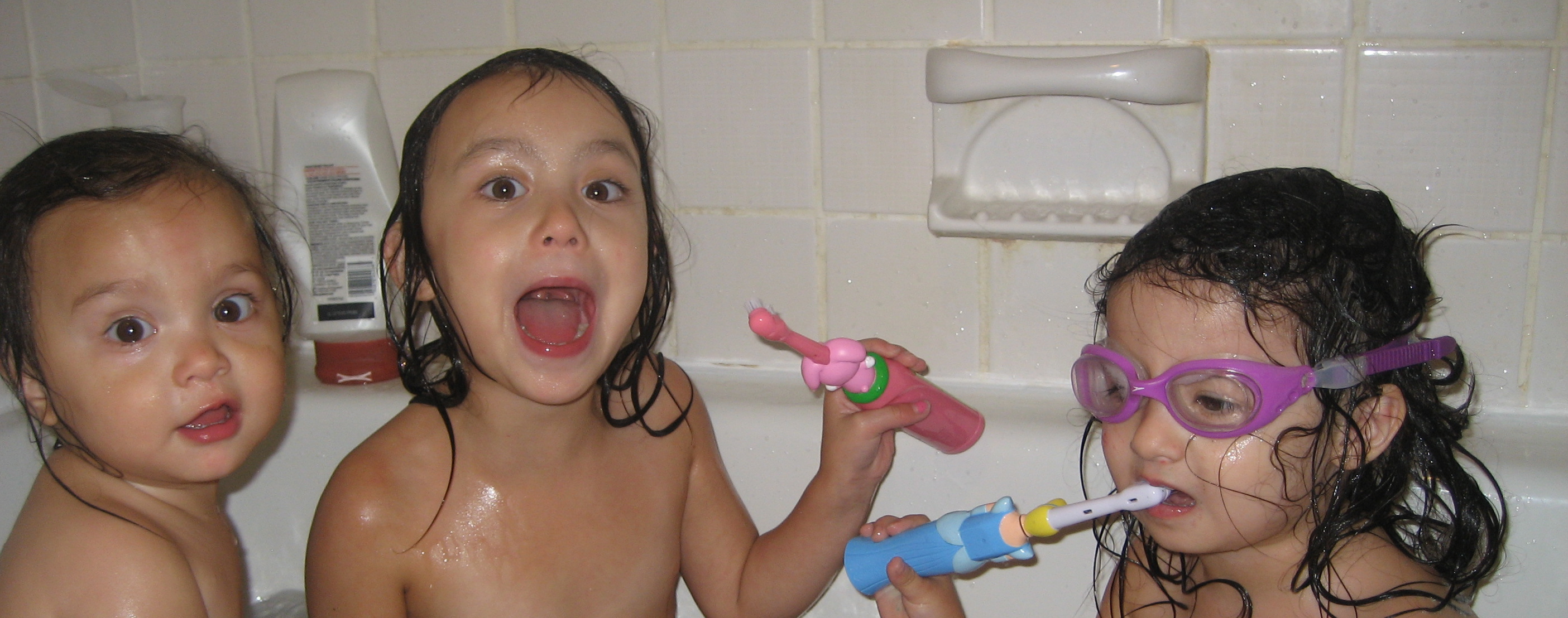
In my last post, I announced that we’re expecting our fourth child in early June. This may have surprised some of you, but not as much as it surprised us! That’s right; if it wasn’t already obvious, this child was a WHOOPS!
Let me be clear right away that I’m totally aware of what an unfair blessing it is to conceive a child without trying. So, when I say that this child was a WHOOPS!, I don’t mean that we aren’t happy to be expecting, or that we don’t already love this baby.
It’s just taking me a while to process.
I had convinced myself that we were through having children. I’d laid out all sorts of rational arguments against having a fourth child. I’d even written down my logical progression from wanting a fourth child to wanting a dog, and that story made up the bulk of my last post. If the ending of that post seems abruptly tacked on, that’s because IT WAS. I wasn’t expecting to be expecting. The big news was supposed to be the dog.
But, here we are.
When you’re pregnant with your first, second, or even third child, people are so happy for you. “Congratulations!” they squeal.
When you’re pregnant with your fourth child, most people aren’t quite sure whether to congratulate you. “Wow,” they whisper, and their eyes get really big and scared, like you’ve just told them that you’re starting a cult — which, in some ways, I guess you are.
And when you’re pregnant with your first, second, or even third child, it can be such a fun and creative thing to figure out how to break the news to your husband. When I found out I was expecting Campbell, Fiona handed Erick a little jar with two pickles in it — get it? Because we were going to have TWO pickles in our family.
Here’s how it went with #4. Scene: Dawn. Erick sitting on our bedroom floor, checking his email.
ME (emerging from bathroom): Um, so, I think I might be pregnant.
ERICK: You’re SERIOUS?!?
Four children seem a little…excessive. We will now have no extra room in our minivan, no empty seats at the dining room table. And I can’t even imagine how much MILK we’ll go through in a week. (Note to self: Need larger refrigerator, stat). Erick has pointed out that, if we ever want to get those little personalized stick-figure family decals for the rear windshield of our van, we’re close to running out of space.
I feel guilty: Guilty about our family’s combined carbon footprint. Guilty because we’re contributing to overpopulation. Erick tells me not to worry, that in his professional opinion as a PhD-holding economist, our family won’t make a significant difference in these problems. But I know that if everybody thought that way, we’d be in trouble. And most people DO think that way.
Also, I feel anxious: Anxious about having to go through the whole pregnancy/childbirth/newborn thing AGAIN. Anxious about where we’re going to put one more child. Anxious that this baby will be a BOY (we aren’t finding out) — what will we do with a BOY?!? Anxious that Erick and I will never have another date night for the next decade, because frankly, I think four children (and a dog) is even a little too much for the grandparents to babysit.
I’ve written before about my tendency to add things like children, chickens, and dogs to our lives, motivated by the adage that “You can never have too many things to love.” Although this fourth baby wasn’t an intentional addition, it’s reminded me that another good (but hard) reason to add things is this: It keeps me from any illusion that I’m in control.
I grew up in a pretty controlled environment. I was an only child, and the only pet I had (aside from some fish that cooked when the aquarium heater malfunctioned) was an outdoor cat who didn’t like us very much. So, for the first half of my life, I honestly believed that it was possible to be in control of your life; it was possible to have a spotless house, clean clothes, neat hair, and perfect grades. This kind of thinking caused me endless trouble and anxiety, because the implication is that if you’re not in total control of your life, you’re failing.
When you have three (almost four) children and a puppy, it is impossible to be in total control. Erick likes to say that we’re “Beta Parents:” parents who admire some of the IDEAS of alpha parenting (like teaching your child a foreign language, practicing flashcards, serving only organic foods, and using cloth diapers), but are just too exhausted and burnt to actually follow through. Kiddo Four will cement our status as Beta Parents. Family creed: “Sometimes, a B is just good enough.”
You can either see that as a freak-out-worthy situation, or you can see it as freeing. I’m trying to choose the latter. (Some days I choose it better than others).
So, bring it on Kiddo Four. We are waiting to love you in our own imperfect, not-in-control way. I hope you like dogs, and sisters.

My latest over at On the Willows, about the first holiday party that Erick and I hosted together. Click here to read.

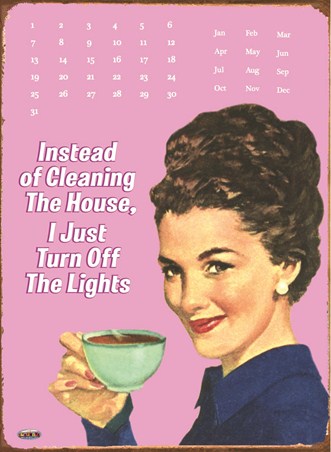
Earlier this year, I published a post on this blog (“I Hate Housework, Too”), in which I confessed my tormented ambivalence towards housework: Having grown up in a spotless house, I have high standards for cleanliness, but I hate the actual effort needed to reach those standards. I admitted that my own house suffers from “creeping kids’ stuff,” which I handle through a combination of breaking the cleaning into manageable pieces, and shrugging off any oversights with the “I have three kids” excuse.
While I was writing that piece, and for about five minute afterwards, I felt great. I felt like I’d finally found equilibrium when it came to the state of my house.
And then, because this is real life, I went right back to stressing about housework. In fact, my husband will tell you that housework is almost always the straw that breaks my mental health — and with it, the overall mental health of our family. I can handle the kids screaming and the dog barking, but if I feel like the house is spinning out of my control, I start to become unhinged. “I need some degree of neatness in order to think!” I’ll wail to my husband, who will in turn catch my stress, and so on, until the whole family is entangled in my stress cycle.
Of course, with three young children and now a DOG, the house is constantly spinning out of my control, and any effort I put into wrestling it into a state of basic neatness is undone minutes later. HOWEVER, just the other day I had a revelation that I think may change my perspective for good. It came to me, oddly enough, while washing the dishes. Here it is:
MY HOUSE IS NOT ALIVE.
That seems like an obvious statement, and it is. But to expand a bit: I am surrounded by living things that, at this moment, depend on me for their physical, mental, emotional, and spiritual growth. My house is not one of them. My house has no chance of ever going out into the world and making a positive difference. No matter how I care for it, my house is slowly breaking down, and will continue to do so until the day (decades hence, I hope) when some young, investment-banking couple from Manhattan will arrive to gut the place and install granite counter-tops and jacuzzi tubs.
My house is not going to attend my funeral and eulogize me for the amount of care I gave it. And while we’re on the subject, have you EVER been to a funeral at which it was said of the deceased, “She was so CLEAN!”?
No, my house is not alive. But my daughters, and my husband, and my dog, and my family, and my friends, and mySELF, they are alive. Am I prioritizing my time and energy and mental health accordingly?
It my be that I’m alone in this war with myself over the state of my house, this pointless battle to maintain a baseline of cleanliness. But in case I’m not alone, perhaps this thought will help you, too: your living space is not going to feel hurt if you neglect it a little. The living beings who surround you, they’re another story.
Here’s hoping that you and I can let ourselves off the hook for good this time!


My latest for the Addison Indpendent: a little pre-Thanksgiving reflection on how Hurricane Sandy affected me, Me, MEEEEEE! Click here to read.


Sometimes, when reading stories to my children that were read to me as a child, I discover how truly dark and twisted children’s literature can be. Or perhaps it’s really how innocent I was as a child, and how my memory has failed me. Two sides of the same coin, in any case.
That’s how I stumbled upon the problem with Ping.
Ping, of course, is the title character in the classic 1933 children’s book The Story About Ping, by Marjorie Flack and Kurt Wiese. I remembered this book fondly as a story about a naughty little yellow duck who doesn’t want to get spanked. The other week, Fiona was, as she put it, “really into Ping,” so I had occasion to read her The Story About Ping five times in one sitting. When you read a book repeatedly like that, you start to notice things.
Ping is a young Chinese duck who lives with his large duck family on “a boat with two wise eyes on the Yangtze river.” The tension in the story is that, at the end of every day, the boatmaster calls the ducks back to the boat from the riverbank, and the last duck to cross over the gangplank always gets a spank on the back with a stick. Ping really, really does NOT want to get a spank on his back. But one day, when he’s upside down in the river catching a fish, Ping doesn’t hear the boatmaster call. When he resurfaces, it’s clear that he’ll be the last duck across the plank. Rather than suffer a spanking, Ping hides along the riverbank.
It was Fiona who pointed out a major issue with the book’s exposition: “Why does the last duck always get a spanking?” she asked. I explained that this was the boatmaster’s way of getting all the ducks to hurry up. NObody wants to stand around waiting for a bunch of ducks to straggle up a gangplank, right?
But I couldn’t deny the fundamental injustice of the boatmaster’s system. Because, of course, when you have a group of ducks waddling up a narrow gangplank, somebody’s always going to be the last duck. That’s just common sense. And it doesn’t necessarily mean that the last duck is a slacker. Take Ping, for instance: he wasn’t doing anything wrong, he was just unlucky enough to miss the boatmaster’s first call. I’m sure he would’ve busted his tail once he realized that it was time to go home, if he wasn’t so afraid of that spanking.
I started to wonder if maybe Ping was really a fable about capitalism, or unions — something like that. I don’t know; there’s only one economist in this family, and it ain’t me, babe.
In any event, once Ping runs away, the story unfolds in a familiar “journey-and-return” sequence. Ping spends a lonely night on the riverbank, and then travels down the river to find his family. Along the way, he has some sobering experiences: Ping sees a fisherman who uses captive birds to fish by fastening metal rings around their necks so that they’re dependent on the small pieces of fish he rewards them with, and then Ping is captured by a boat family who would’ve cooked him for dinner, if not for the mercy of their young son. At the end of this adventurous day, Ping hears the boatmaster’s call and sees the boat with two wise eyes — his home! Although he’s clearly going to be the last across the plank again, this time Ping presses on and submits to the spanking, before snuggling up with his family.
The moral of the story, as I always understood it: there are rules to being part of a family, and sometimes you have to accept discipline in order to live in love and safety.
Except that by about the third reading, I started to wonder: Just how safe WAS Ping’s life with his family? What was REALLY going on in that boat with two wise eyes? I can’t be sure, of course, but somehow I doubt that the boatmaster was raising all those ducks as pets, or simply for their eggs. I married into a Chinese-American family, and I know what happens to ducks. My guess is that Ping and his whole family were going to be Peking-ed before too long.
I sat for a while, letting this bother me. What gives, Kurt and Marjorie? You put Ping through a brush with death and force him to submit to unjust punishment, only to have him end up hanging, roasted, in the window of some restaurant?!?
But then, I realized that it was possible to consider another moral for this story, one that made a lot more sense to me.
We all know that life is unjust: there will always be a last duck over the gangplank who gets unfairly spanked. We also know that we’re all headed for death, eventually. In the meantime? You might as well snuggle up with the ones you love. Go home.

Thanks to Hurricane Sandy, we may not be trick-or-treating at any actual doors this year, but I do have a little Halloween reflection in the Addison Independent. Click here to read.


And the posts just keep on coming! Here’s my latest over at On the Willows, about some life lessons I’ve learned from home improvement. Click here to read.


As our girls are getting older, their anger is getting more personal.
Back when they were toddlers, they’d howl and scream and throw themselves on the ground when they were upset about something — like all toddlers. But their howls and screams weren’t personal: they were cries of fury directed at the universe, existential angst. WHY can’t I have what I want RIGHT NOW?!? Even when I was the cause of that angst, I wasn’t the target of their anger. Their tantrums launched them into another realm, and even their garbled yells rarely, if ever, included my name.
That’s all changed in the past six months. Now, when I say “no,” or look askance, or fail to use the nicest possible tone, my oldest daughters are quick to make it personal: “You’re being mean. We’re getting a new mommy!”
(Note on the idea of “getting a new mommy,” which seems particularly cruel: this idea did not originate with my girls. Maybe, just maybe, it’s something that I suggested once in an effort to lighten up a heated exchange….but the girls latched on to the concept).
I suppose another way of saying this is that, as my girls grow up, they’re learning how to hit where it hurts. I’m so proud.
Not for the faint of heart, this parenting gig. It’s incredible how quickly children turn from innocent, adorable, dependent infants, into such willful, flawed little people. NOBODY warned me that adolescence begins during preschool, but it does. Oh yes, it does, complete with the pouting, eye rolling, and shouting “FINE!” while stomping upstairs.
For a while, I responded to the “You’re being mean!” complaint by trying to reason with the girls. “I’m not being mean,” I’d say calmly. (The calm is important; I’ve learned that if my anger rises to meet theirs, things will only escalate and I’ll feel terrible afterwards. This way I can say, “Well, at least I remained calm.”) Then I’d point to the evidence; almost every single time I was accused of being mean, I was, in fact, engaged in activities that would suggest just the opposite. Like driving the girls to get ice cream. Preparing dinner for the entire family. Getting everybody dressed to go out.
But of course there’s no convincing a preschooler that you’re not being mean. We’re not talking about logical people here. It doesn’t matter that I’m doing non-mean things for the greater good; if they’re not getting what they want, when they want it, I’m mean. I could be discovering the cure for cancer with one hand, but if the other hand isn’t putting exactly the right ponytail into my daughter’s hair, I’m “not nice.”
Finally, one day when daughter #1 pulled out the “You’re being mean” card, I responded, “You know what? That’s okay. It’s not my job to be nice.”
That surprised us both for a minute. After all, I’ve spent my whole life trying to be nice; my attempts to be nice, to make everybody like me, have defined my character for most of my life — and have been at the root of some of my very worst choices.
But after I said it, I realized that I was right: being nice is NOT part of my job as a mother.
It’s my job to LOVE my children. But “love” and “nice” are not synonyms.
Here’s what I think love looks like: keeping my children alive (to the extent that I can control), nurturing their bodies and minds and spirits, encouraging them to become the best versions of themselves, and giving them the tools to grow into independent adults. Nothing in there about “nice.” On the contrary, the items on that list will probably require a whole lot of behavior that, at the time, looks “mean” to my kids.
What a concept. This is something that does NOT come naturally to me. But I’ve kept repeating, “It’s not my job to be nice,” as a reminder to myself and to my girls of what love really looks like.
One more thing: The other night, as I was putting them to bed after a day filled with “mean” accusations from my girls, Fiona asked what I planned to do for the rest of the evening.
“Oh,” I said, “I think I’m going to read this great new book I just got. It’s called 101 Ways to be Mean to Your Kids.”
“MOMMY,” she said, and in the dark I could hear her eyes rolling.
But I think she got it. It’s not my job to be nice, but it is my job to help us all keep a sense of humor about life. I see it as a favor to that new Mommy they’ve ordered, whenever she arrives.

 The Pickle Patch