The Joy of…Cooking?

First published in January 2012. Still true today, except that the list of foods my girls will eat has NARROWED since then: now I have one girl who will only eat PB&J, one who will only eat bagels with cream cheese, and one who wants a little bit of whatever her sisters are eating. Somewhere along the line, they started boycotting mac & cheese. I even have one who won’t eat bacon. Sheesh!

When we moved to Vermont, it wasn’t just a change in location, weather, lifestyle…it was also a change in our cooking arrangements.

Let me ‘splain: When Erick and I met, my cooking repertoire involved either a) walking down the block to Burritoville, or b) opening a carton of yogurt and stirring in some granola. (In my defense, I was  living in a New York City studio apartment smaller than most walk-in closets). Once we got married and acquired all kinds of nifty kitchen tools, I entertained brief visions of the delicious meals I’d cook for my husband. I even recall making gazpacho, once.
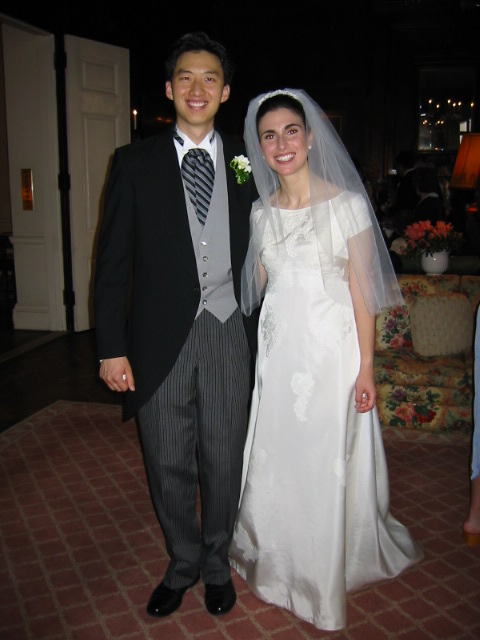
Can you spot the cook in this picture?

Now, for virtually our entire marriage, Erick has been a graduate student. While he was a hardworking graduate student and disciplined about going into his office daily (in Berkeley I suspect this was mostly to get away from the house filled with babies), he did have a great degree of flexibility. If he left the house at 10 and returned at 4:30, it was no big deal. So, a brief time after our wedding, Erick announced, “You know, I actually enjoy cooking. All day I’m working with ideas and I feel like I have nothing to show for it at the end of the day. It’s nice to come home and create something useful. I’d like to take over most of the cooking.” I can’t remember if this was before or after I gave us both food poisoning from undercooking pork dumplings, but either way I was happy to turn over the cooking to Erick.

And that was our arrangement…until this year. Now that he has a real job — not only a real job, but a job in which he will be judged closely for 7 years to determine whether he’ll make tenure — Erick is no longer flexible. His hours now are more like 8:30-6; reasonable enough, but bedtime for our girls is at 7 (as it will be until they turn 18), which means that we need to eat right when Erick walks in the door. This conundrum became clear to me shortly after we moved here. I looked around for other willing cooks, but as I’m the only other member of the family who can currently reach the kitchen counters, the cooking duties fell to me.

But guess what? We’re doing okay. For those of you who’ve been worried about the health and well-being of our family, I will refer you to the photos in this blog. Don’t we all appear healthy? Well fed?

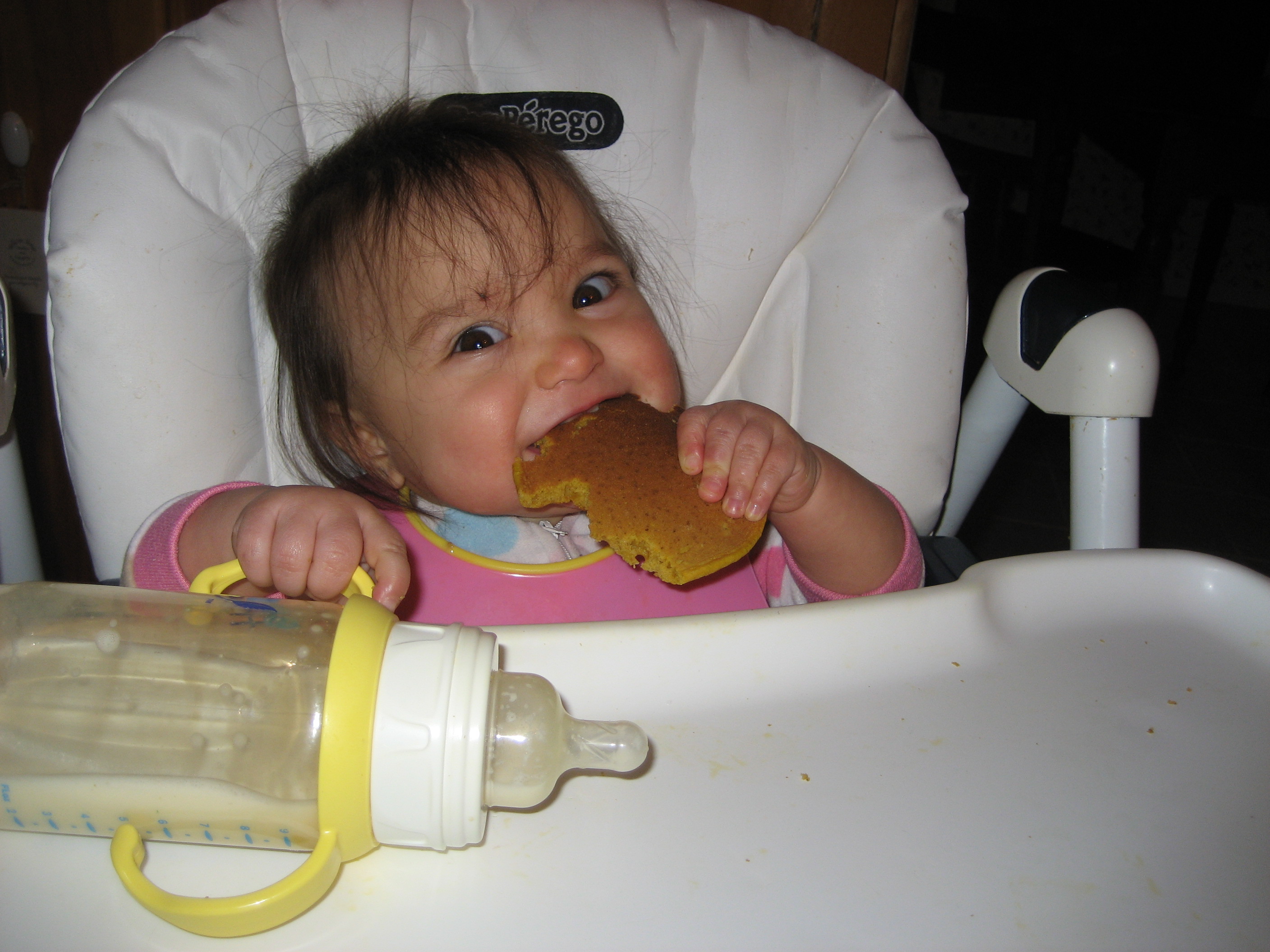
See? Happy eater!

So, how did I do it? Here are 5 Tips For How I Found (Some) Joy in Cooking and Kept My Kids on the Growth Curve:

1. Make friends with people who can cook. Back in Berkeley, I knew a lot of REALLY GOOD cooks. Perhaps the best was my friend Celeste, who somehow managed to be an outstanding cook while working as a nurse practitioner at a Spanish-speaking health clinic and being a great mother to two beautiful girls. (Miss you & love you, Celeste!).
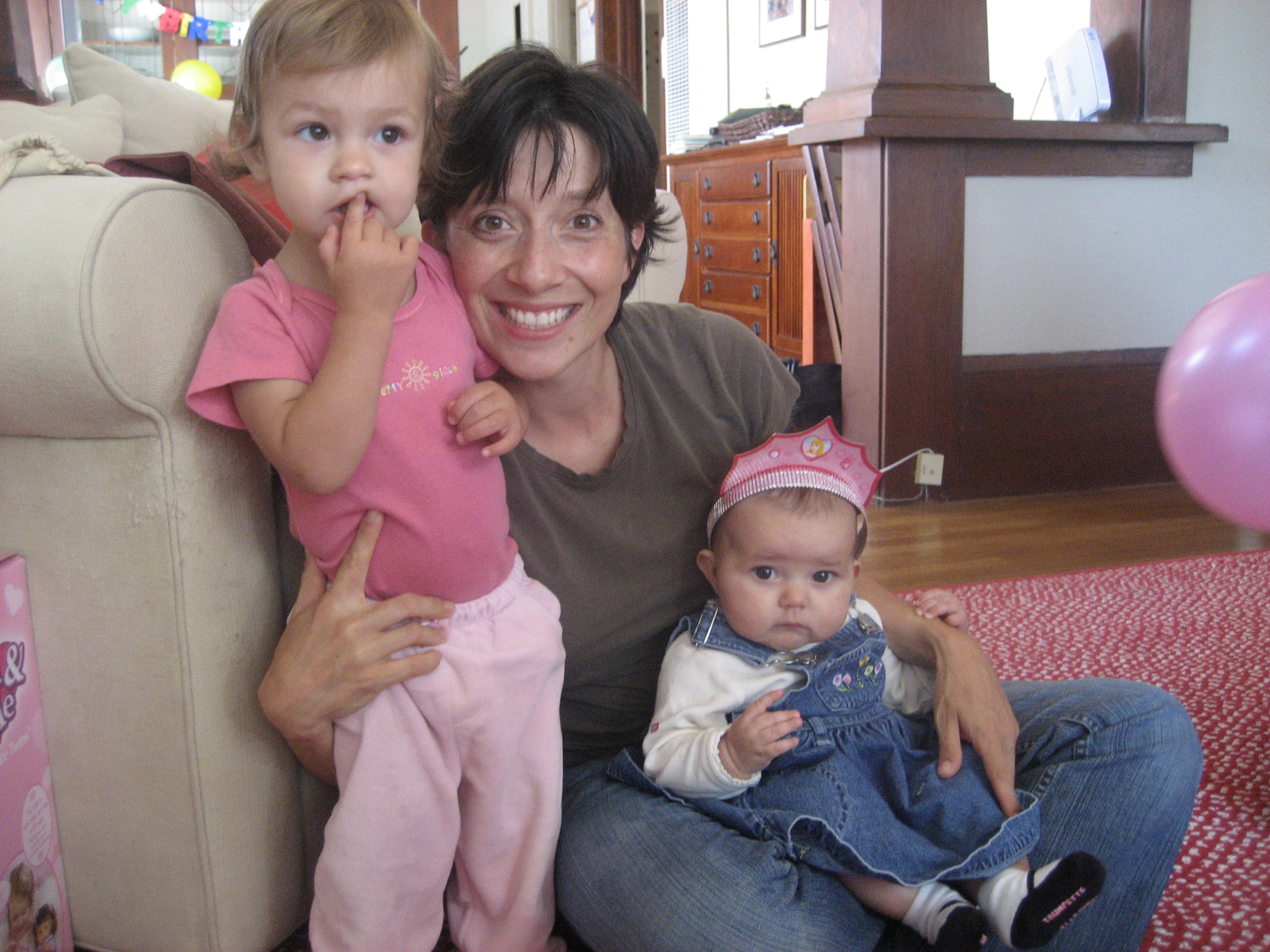
The amazing Celeste, with her girls.

Because Celeste is an amazing friend, when I was pregnant with Georgia she asked me about throwing a baby shower. Now, I happen to think that by the time you’re having your third child, you’re done with baby showers. I didn’t need one more baby thing (although if Georgia had been a boy, he’d have been wearing lots of pink), but what I DID want were: 1) a girls’ night out with friends, and 2) recipes. Because Celeste is an amazing friend, she made both things happen. Here is the recipe book she put together, with recipes from my Berkeley friends:
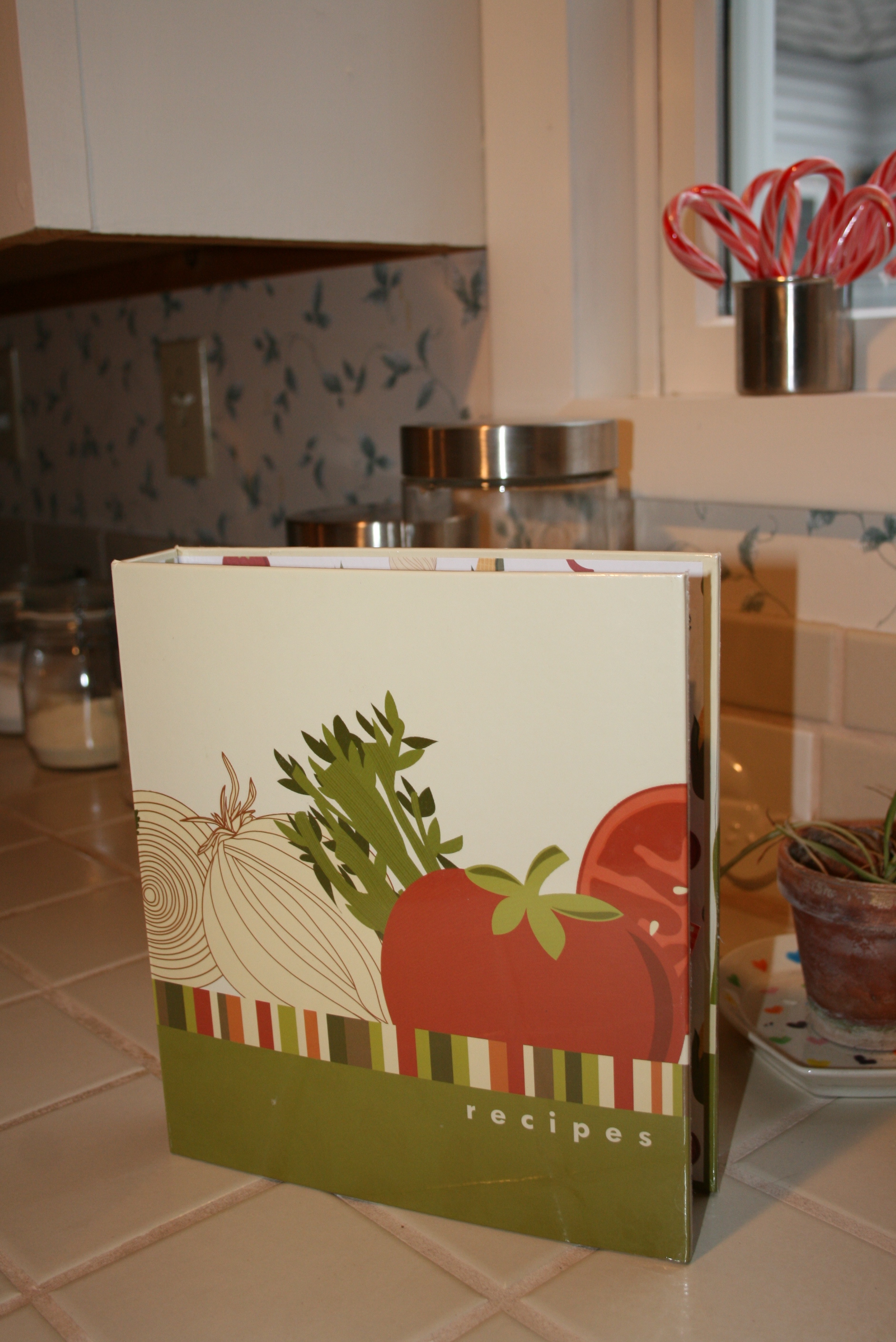
This was one of the best gifts ever. I’ve made almost everything in it, and it’s all family-friendly and delicious. Better yet, I get to think about my friends while I’m cooking. (I especially appreciate the little personal touches they added to their recipes; for instance, my friend Laura confessed that she sometimes feeds her kids her peanut butter oatmeal chocolate chip cookies for breakfast, which is something I will definitely try someday!).

By the way, if you’re a friend who cooks, and you have a delicious, simple (preferably involving a crock pot) recipe up your sleeve that I do not yet have, I’m still accepting submissions. 🙂

2. Make friends with your crock pot. This is our crock pot:
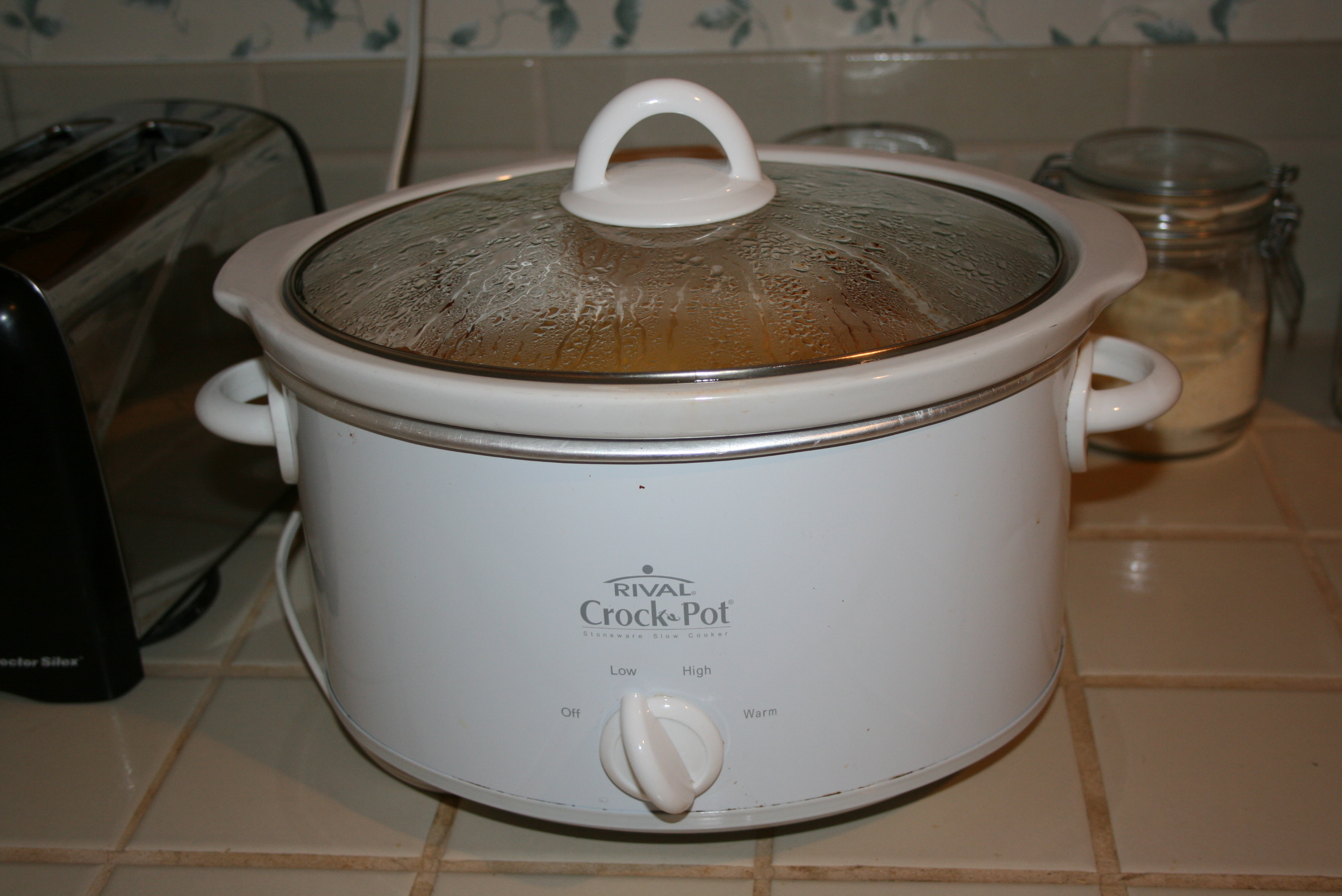
We’ve had it for a while, but this year I’ve come to appreciate it on a new level. It is, hands down, my favorite kitchen tool. Why, you ask? Here’s what it’s like when I try to make dinner WITHOUT a crock pot:

It’s 5 PM. We’ve recently gotten home from picking Fiona up from preschool. Because she’s been on her best behavior all day, she’s exhausted and ready to cut loose. She incites Campbell to join her in a game that takes on different names, but basically involves putting on dress-up clothes and running in circles around the house while taking out all the toys within reach and dumping them on the floor. Oh, and screaming at the top of their lungs. They’re happy enough, so I prop Georgia up in the kitchen with some toys and try to prep dinner. Interruptions every 5 minutes or so because: Fiona has to use the bathroom, Fiona/Campbell wants a drink, Campbell hit Fiona, Fiona/Campbell injured herself, someone needs a costume change, etc. By 5:30, I give up and put them in front of a video. At that very moment, Georgia decides she’s DONE being good & quiet, and she wants her dinner RIGHT NOW! I put Georgia in her high chair, fix her a bottle, throw some Cheerios at her, and attempt to fix dinner with one hand. Shortly thereafter Erick walks in the door, dinner’s not yet done, the other two girls are getting hungry so all three girls are screaming, and I’m a wreck.

Now, here’s what it’s like when I make dinner WITH a crock pot:

It’s 9 AM. We’ve just returned from dropping off Fiona at preschool. I put Georgia down for her morning nap. Campbell plays or looks at books or eats a snack while I toss some ingredients into the crock pot and turn it to “Low.” By 5:30, dinner is ready.

Which scenario would you rather live out?

My best crock pot resource, to date, is this blog (suggested, I believe, by the amazing Celeste). Usually what I do is to search it (most often the night before) for whatever ingredients I have in the fridge.

Another satisfied customer.

3. Do not expect your kids to eat what you cook. All kids are different, but with very rare exceptions, here is what our girls will reliably eat: mac & cheese, peanut butter & jelly, grilled cheese, pizza, crackers, and potato chips. This is not for lack of trying; our girls were born in Berkeley, for crying out loud. They have all been offered spinach, broccoli, carrots, and all other manner of healthy and wholesome options. They just won’t eat them.

So for lunch, they pretty much get a rotating selection of things that they will reliably eat; they’re happy, and it’s easy for me. But when dinner rolls around, there’s someone else to consider: Erick. He’s a good guy, and he spends all day teaching undergraduates the principles of economics, and when he’s not teaching, he’s conducting research that deals with how to stamp out HIV/AIDS in Sub-Saharan Africa. It just doesn’t seem right to welcome him home with: “Hi, honey, how’s the AIDS stuff going? Here’s a PB & J!”

It took a couple of months of having my heart broken when my girls would not eat my dinners, but then I realized that I could make the most delicious meal on earth, and if it didn’t fall into one of the six food groups listed above, they’d have none of it. So I just stopped sweating it. I make grown-up dinners that Erick and I will enjoy, and this is what I serve. And I don’t cook a separate dinner for the girls, because that’s just craziness.* But I don’t fight with them either, partly because they’re girls and I have firsthand experience with eating disorders, and partly because this is just not one of the battles I choose to spend my energy on. If they don’t eat dinner, we have more leftovers for later. If they’re hungry, they should have eaten dinner. And I have confidence that they’ll make up the calories later. Possibly through consuming massive quantities of crackers, but isn’t that what multivitamins are for?
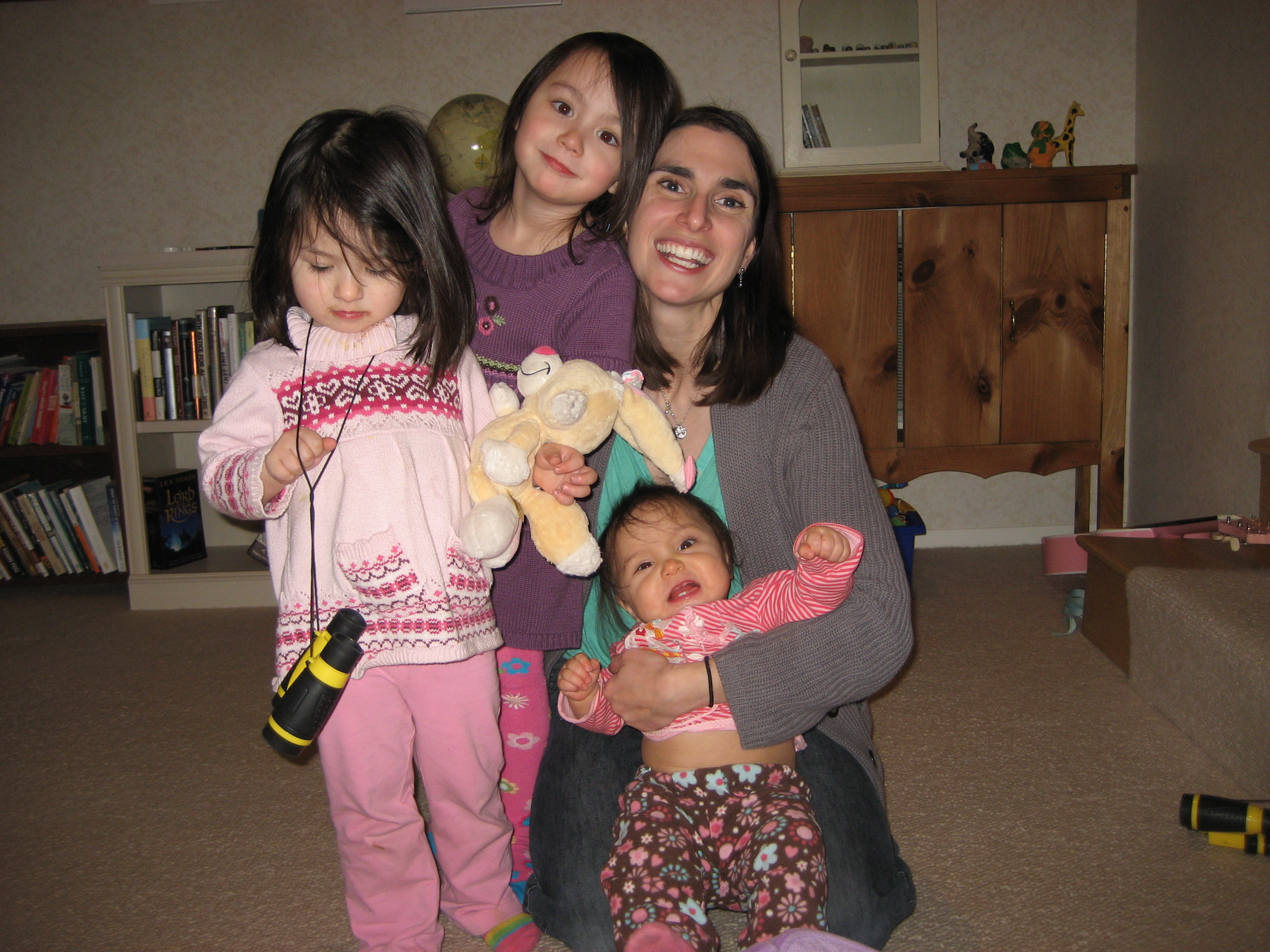
Love me, love my cooking?

*I do break this rule when I’m preparing something fancy and expensive for dinner, like rib eye steak. Rib eye steak before my girls = pearls before swine. They get mac & cheese on those nights.

4. Practice the art of one-stop shopping. Especially if you have young kids, the worst part of cooking is having to SHOP for the cooking. I have partially solved this problem by doing my shopping in one place (Hannaford’s) at one set time (Friday morning) each week. If we run out of food before the next Friday rolls around, it’s just too bad.

One-stop shopping is much easier to do here in Vermont than it was in Berkeley. Berkeley, the beating heart of the locally-grown, organic, free range food goodness movement, had an overabundance of fresh and wholesome EVERYTHING, but it wasn’t all located in one place. By the end of our time in Berkeley, “we” (by which I really mean Erick — in our house, the cook does the shopping) sometimes had to visit no fewer than FOUR food stores per week in order to gather all of the produce, meat, and grains that “we” needed.

There’s something to be said for simplicity. In our small town, there are basically two chain supermarkets (one on our side of town, one on the other side), a local food co-op. The Middlebury Food Co-op could have been uprooted from Berkeley by a tornado and deposited down here in Middlebury (and somewhere along the way, you’d look out the window and there would be Michael Pollan riding a bicycle outside. Taking the Wizard of Oz reference too far? Okay, that’s all).

Michael Pollan, not on his bicycle.

It is filled with locally-grown, organic, free range goodness. And — I am about to utter blasphemy here — I do not shop there. I hope to, someday, like when all three girls are in school, but right now I can’t convince myself of the logic — or the economics — of shopping at the Co-op. Expressed in an equation, it would look like this:

Less consumer guilt < Cost of my time + cost of my sanity + more expensive food

I haven’t run that by Erick yet, but it seems sound to me. So I shop at Hannaford’s, and I do so for one reason, and one reason only: the car carts.
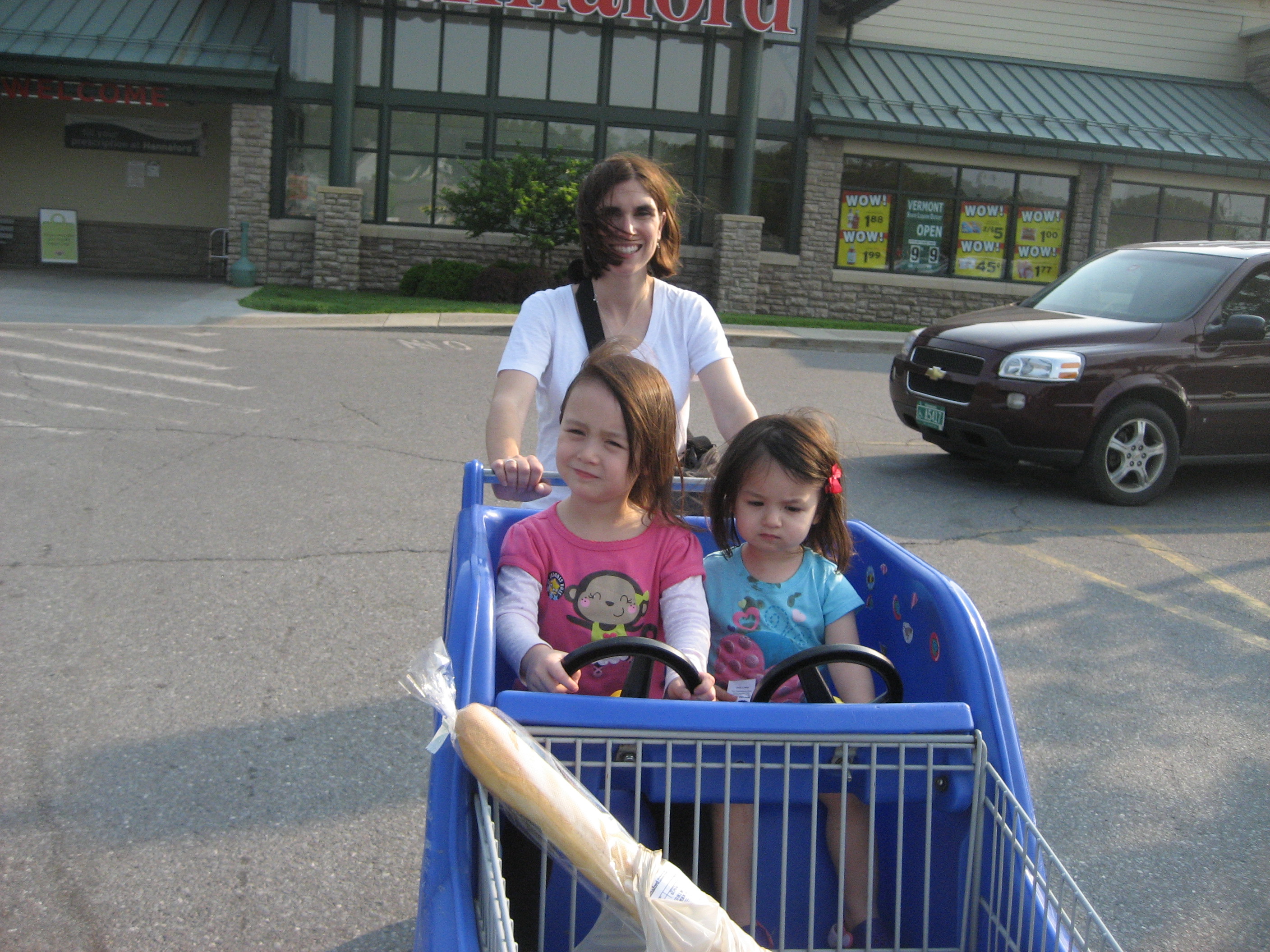
Everybody’s happy with a car cart.

The car carts can keep our girls entertained for almost an entire shopping trip.

I shop on Friday mornings because Fiona is in preschool so I only have to wrangle 2/3 of our girls, and because for some reason I am always able to get a car cart on Friday mornings. (If you are from Middlebury and you are reading this, DO NOT take my car cart! I will sic Campbell on you. Also, if you have a car cart and only one child in it, I fully expect you to remove your groceries and hand over the cart immediately, because I WIN! Okay, that’s all).

Here is my shopping routine:

-Grab a car cart, stuff Campbell and Georgia into it and hand them snacks

-Using my very organized shopping list that is divided according to the various zones of the store (guess which Gong grown-up created the shopping list?) to guide my shopping, throw groceries into the cart as fast as I can (I’m always AMAZED at how many groceries a family of 5 needs each week — by the end of the trip, the front of our cart is actually dragging on the ground)

-Choose the check-out line that’s as close as possible to the lottery ticket dispenser (which has enough blinking lights to hypnotize the girls during the worst part — checking out a cart filled to dragging with groceries).

Done! As one of the girls’ friends is prone to say: “Easy peasy, mac & cheesy.”

5. Accept who you are, but don’t rule out miracles. I am more of a baker than a cook. I appreciate precise directions and sweet results (as opposed to Erick, who hates having to follow a recipe). So when I have dinner going in the crock pot, it enables me to use the girls’ naptime to bake. This way, even if my dinner wasn’t so hot, I can redeem myself with a yummy dessert that EVERYBODY in our family will eat. Play up your strengths, I always say.
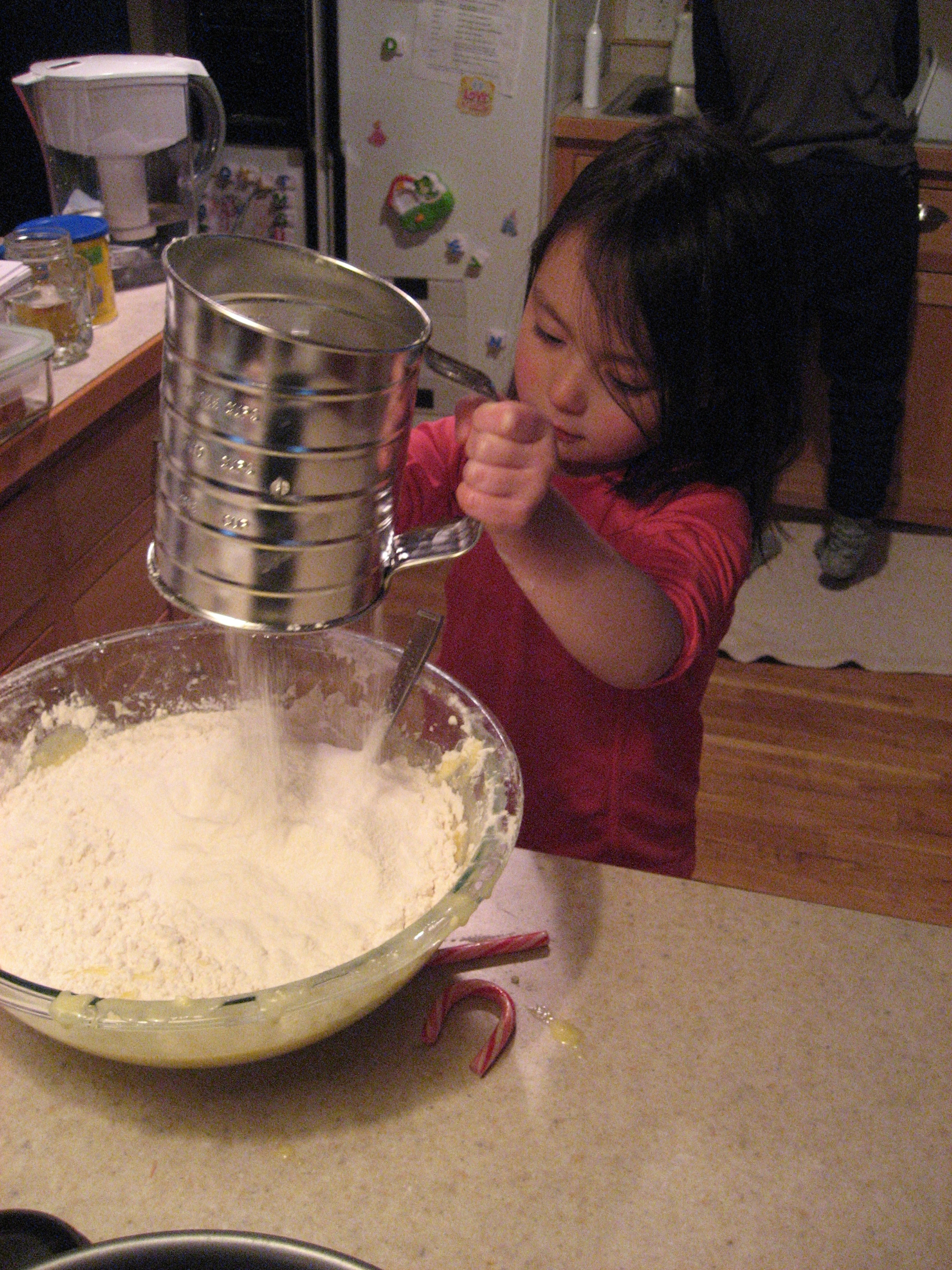
Another tip: when baking, it’s a good idea to get your kids to do the tasks you hate, like sifting flour.

But sometimes miracles happen. Like this Fall, when I actually invented a pretty good pot roast recipe. I will share it with you below as a reward for making it through a long post that included very few pictures of cute children. I promise more pictures of cute children very soon.

Faith’s Pot Roast (That the Gong Girls won’t touch)

3 lb beef roast

1/2 c. water

1 c. beef broth

1 package onion soup mix

1 bay leaf, crumbled in 1 tsp. salt and 1 tsp. pepper

handful of rosemary

2 cloves garlic, minced

1/2 onion, chopped

Throw it all into a crock pot and cook on low for 6-8 hours. Voila!
Final cute kid photo. Aren’t you glad you read to the end?

Mommy Can’t Fly

As per The Plan, this is the first of my re-posts from The Pickle Patch Archives. First published on March 18, 2012.

A brief note about how I selected this and the other re-posts that you’ll be seeing for the next bit: I chose pieces that were some of MY personal favorites. I took into account whether they were dated (i.e. anything chicken-related was out, R.I.P. chickens), and I favored posts that hadn’t received too much attention — for various reasons — the first time around. 

WordPress actually has a tool that allows one to see the most-read posts on your blog, so for about 3 minutes I considered just re-running the top 10 most popular pieces from The Pickle Patch. But then I saw what they were, and I was humbled. The #1 most popular post? “Like Lambs to the Potty,” which is cute, but it’s not popular because of my writing; it’s popular because apparently search engines send anybody looking for “lambs” (or “jehne” or “kuzu,” which apparently mean “lamb” in other languages) to this post. Ditto most popular post #2: “Luke… I Am Your Father.” That one gets lots of hits because of all the Star Wars fans out there. And most-read post #3? I didn’t even write it: it’s the Valentine’s Day guest post written by my husband.

So much for popularity! I hope you enjoy my personal picks; feel free to let me know if  you have any favorites that you’d like to see again.

********

Yesterday, an unseasonably warm and sunny Saturday, I took the girls to their friend’s 5th birthday party. In one of those perfect moments of synchronicity, the party was being held at the playground of the local elementary school, so we were all able to bask in the glorious springlike weather.

At the end of the party, each child was allowed to pick a helium balloon from the big balloon bouquet that decorated the picnic table. Now, Campbell loves balloons. She also, recently, has declared her love for the color yellow. So she was just about beside herself when she was handed the string of a big yellow balloon. Various adults urged her to allow them to tie the balloon string around her wrist. “NO!” protested our two-year-old. “I DON’T WANT TO!” Then, in more reasonable tones, “I’ll be careful, Mommy. I’ll hold on.”

So the girls and I headed off across the field that separates the playground from the parking lot, me pushing Georgia in the stroller, Fiona and Campbell bopping behind with their balloons. And I didn’t have to turn around to know what had happened when, 30 seconds later, Campbell started screaming: she’d let go of her balloon, and it was heading straight up into that blue, sunny sky.

I had to hold her to keep her from running after it, and all the while she was screaming, “GET IT, MOMMY!!! Go get it back! GET IT!!!!” Here’s what I said: “I can’t get it for you, Campbell, because Mommy can’t fly. It’s gone. BUT now so many more people will see your balloon, and think how happy it’ll make them. Maybe it’ll fly all the way up to an airplane, and everybody on that plane will look out their windows and see it. Maybe it’ll fly all the way to China, and some little girl will find it and take it home. Maybe it’ll fly all the way to Africa, and a pride of lion cubs will play with it.” Fiona started getting in on the act, too: “Maybe it’ll fly all the way to California, and Grandmommy and Granddaddy will find it!” Before too long, Campbell was smiling again.

Thinking back on it, this whole episode strikes me as a micro-example of our job as parents. The world is rough, life is full of tragedies and disappointments, and our job is not to fix these things for our children, because we can’t — anymore than I could fly up into the sky and retrieve my daughter’s balloon. But what we can do is teach our children to frame these tragedies and disappointments into stories with happy endings.

That might be a good place to end this reflection, except that if you stop and think hard for a minute (which you probably will, because everyone who reads this is pretty smart), you will start to wonder whether I am saying that our job is to lie to our children. After all, in framing Campbell’s little tragedy into a “story with a happy ending,” wasn’t I essentially lying to her? I know perfectly well that odds are that Campbell’s balloon will end up tangled in some tree branches a few miles away, where it will flap like the wayward piece of trash it is, as cheery yellow slowly turns to grey.

Okay, fine. But if, as Joan Didion wrote, “We tell ourselves stories in order to live,” the question is: what kind of lives do I want my children to live? Do I want them to have the kind of lives that would conclude the runaway balloon story as: “It’s gone, too bad. You should’ve held on to that string like everyone told you, so it’s your own fault”?  Or do I want them to have the kind of lives that believe that, maybe – just maybe – the story ended when some little girl in a dreary Chinese city found a slightly deflated yellow balloon that made her smile? I know what the odds are, but for all I know it could happen.

I believe it’s called “hope.” And I believe we all need it in order to live, or at least to live well.

Photo credit

My Barbaric YAWP!

As per my last post, I’m not supposed to be generating new material here at this point. But I’m breaking my self-imposed maternity leave because inspiration has struck! Today! On Facebook (of course)!

Here’s the thing: today I am 38 weeks pregnant, and I have been stuck at home with all three girls ALL DAY. Stuck this morning because Erick had to take the minivan to Burlington for servicing; stuck this afternoon because of greenish skies that come with a forecast of severe thunderstorms and flash floods. Have my girls risen to this situation by being on their best behavior? They have not. Instead, they’ve taken turns having meltdowns and squabbles about crucial issues like: not wanting to wear bug spray, not having a roof for their pillow fort, and why their sisters won’t play with them when they’re in the middle of a temper tantrum.

So, of course, this is the day when multiple friends (beloved, respected friends and wonderful mothers) shared a viral link on Facebook about the importance of not yelling at your kids.

Guess what? I yelled at my kids this very morning.

Guess what else? I don’t really feel guilty about it.

Mind you, I’m not a fan of indiscriminate, totally out-of-control screaming at my kids. But:

-There are definitely times when I think a well-placed yell is completely appropriate. The author of the Facebook article writes about seeing the fear in her daughter’s eyes after spilling a bag of rice as her inspiration to stop yelling. I would not consider food or drink spillage — which my girls do countless times each day — as appropriate grounds for yelling. However, there are PLENTY of times when I’d like to see a little fear in my children’s eyes when they look at me. “Fear” might be a loaded word; I’m talking about “respect,” “knowledge of wrongdoing,” and — at the very least — “attentiveness.” These situations include but aren’t limited to: hitting/biting/spitting at your sister, refusing to hold hands and running into the street, and all three girls screaming at the top of their lungs — just for fun — after repeated pleas to tone it down.

I’m all for taking a deep breath and using a reasonable voice the first time (or two) that I ask my girls to stop a certain behavior. After that, if I don’t raise my voice to get their attention and show that I’m serious — as the saying goes — shame on me.

-There are definitely times when I yell wrongly, but I wouldn’t trade those moments. Do I sometimes lose it too much? Is my yelling sometimes less about my kids and more about me feeling (theoretically) exhausted, swollen, and sweaty? You bet.

So guess what I do after those bad-mommy moments? I apologize. I apologize sincerely, ask my kids to forgive me, and emphasize that I, too, am human and make mistakes. I think that’s a really important part of parenthood: letting our kids see that we’re not perfect, that we regret certain behaviors, and that we can confess to those behaviors and ask forgiveness and move on. This gives them permission to acknowledge their own inner darkness, and an example for how to handle outbursts in a healthy manner. In the end, I’d rather be a mom who’s human than a mom who always speaks at the same calm pitch.

I’m certainly not advising anybody to yell at their kids. I just wanted to say that, if anybody read that Facebook article and felt guilty, felt like a bad parent — DON’T. We’re all just human moms (and dads), doing our best, trying to simultaneously love our kids and guide them towards being functional members of society. That ain’t easy work. At the end of the day, like so many things we feel guilt about, worrying that we yell too much at our kids is a first-world parenting problem.

And I’ll shout that from the rooftops!

Where the Sidewalks End

IMG_1162

If you were to ask me now, almost two years since I moved to Vermont, what I miss most about the other places I’ve lived – the Virginia suburbs, Manhattan, the San Francisco Bay Area – I would answer: “Sidewalks.”

To continue reading the harrowing details about what it’s like taking sidewalk-less walks with our whole family, click here for my “Faith in Vermont” column in The Addison Independent.

This is NOT a Mother’s Day Post….

I’m a little nervous about this one, folks; it’s more opinionated than I’m usually comfortable with. In reading it, please just remember that — to quote my middle child — “I love EVERYBODY! Because that’s what God says to do!”

6
Image link

This week was blank on my blog calendar for some time. Finally, I posted a note for myself that said, “Something for Mother’s Day?” and left it at that. Then I fretted and stewed, because I’m just not inspired to write about Mother’s Day; I don’t get excited by this holiday. Some say, “Every day is Mother’s Day!” Well, maybe it is and maybe it isn’t, but what’s definitely true is that I’m a mother every day; all that seems different about Mother’s Day is that my husband and kids get stressed out trying to thank me properly for my sacrifice. I’d much rather have moments of genuine thanks scattered throughout the rest of the year than delivered under pressure from Hallmark.

Also, I’m not interested in writing about motherhood as an institution. Motherhood has been around for a long time. Billions and billions of women have done it. Women have children, and then they raise them as best they can. Really, what is there to say other than, “It’s crushingly hard most of the time, but love balances it out?” I’d rather write about my own life experiences, my own thoughts and feelings, and hope that they make other moms smile or feel a little more okay.

Inspiration came, as it often does, in an unexpected form; in this case, it was this article that popped up on my NPR news feed one afternoon. The article’s focus is an argument against gay marriage put forth by Ryan T. Anderson of the Heritage Foundation; according to Anderson, government legislates marriage because when a man and a woman get together, children may result. The government has an interest in making sure that children are permanently cared for by both a mother and a father, so that the government won’t have to provide child support later on. To quote Anderson, “Marriage is the way the state non-coercively incentivizes me to be in the institution that does best for children.” He believes that allowing gay marriage would weaken marriage as a “coercive” force for heterosexual couples.

Now, before anybody’s heart rate gets going (too late?!?), let me assure you of something: I’m NOT trying to use this blog to advance my own political or spiritual views, which are too personal and uninformed to be of much use in any dialogue. Ryan T. Anderson is a smart man who’s spent far more time pondering these issues than I have; Slate apparently called his book What is Marriage? Man and Woman: A Defense, “the best argument against gay marriage.”

To the extent that my political or spiritual views DO seep into my writing, it’s because they’re intertwined with my experience. So I AM going to write from the logic of my own experience. The NPR article got me thinking about families — the families I know. I don’t know the families that Ryan T. Anderson knows, but it seems that his reality doesn’t look much like mine.

Here’s my reality: I know families composed of a mother + father + kids. I know families who’ve lost moms and dads to death, divorce, or abandonment. I know kids who honestly might have been better off without certain mothers or fathers in the picture. I know unmarried people, and childless married couples. And let me tell you this: Some of the most delightful, polite, intelligent, and well-adjusted kids I know right now — kids who make my own kids look like hooligans — are being raised by two married mothers.

My experience is that the religion I practice doesn’t give me a whole lot of specifics on how to vote or how government should legislate. But it DOES give me a WHOLE LOT of specifics on love, and grace, and humility. Specifically, it tells me to embody these things.

So, I’d like to re-christen this Mother’s Day as “Family Day.” I think that we need to celebrate the brave, important, and incredibly difficult work of raising children — shepherding the next generation — that’s being done every day in any number of family configurations. I want to salute the mothers and fathers and non-biological “family members” who are in the trenches — either alone or together — doing their darndest to nourish little people.

I also want to celebrate the people who choose to remain single, and married people who decide not to have children. These are brave decisions in a culture that sets the “norm” at marriage and children. To make these choices requires a confidence and a self-awareness that I admire. It also frees these people to function as productive members of society — and in the lives of children — in ways that may be impossible to married or child-laden people. They’re still family.

I’m not sure on what evidence Anderson reached the conclusion that heterosexual marriage is “the institution that does best for children.” Marriage as father + mother + children is Anderson’s ideal, and it’s not a bad ideal: It’s the way my own life looks right now. But like most ideals, it’s something that many people don’t have. (I’m not convinced that it’s something that the majority of people throughout history ever did have). Advancing this ideal as something that’s so “best for children” that it must be the only legal option — that excludes a lot of people I know, and diminishes the wonderful love happening in all sorts of families.

So, what really “does best for children?” (After all, until fairly recently my own marriage — which is interracial — would not have been included among relationships that “do best for children.”)

Here’s what I think: I think we all need each other. My own children have a father and mother, but we certainly don’t do it alone — we can’t do it alone. It wasn’t until I had kids that I realized my children need so much more than just Erick and me; they need their grandparents, they need their teachers, they need every one of the loving adult friends and family members who surround them. No one family situation is truly ideal — sometimes your mother dies, sometimes your father leaves, sometimes you get two drunk and abusive parents — but I think if kids are surrounded by enough love from whatever source, then they’re usually able to take the best of that and make it through life in one piece.

So here’s to all the families and parents and just plain folks out there who are trying to “do best” for our kids. When it comes to kids, all we can do is our best, and our best will always be better if we do it together. Whatever comes at the start of the equation, More Love = More Love. Happy Family Day.

Retreat!

IMG_2159

Last month, I went on a 24-hour retreat with a group of women from our church.

That statement in no way conveys what a Big Deal this was. The last time I’d gone away all by myself was over five years ago. I was pregnant with our first child and working for a nonprofit; in that role, I spent one night at a camp we ran for high school students. Fun, but hardly a “retreat.”

Click here to continue reading about my first solo getaway in five years over at On the Willows.

Family History

Meader_in_Dorset
Image via The Meader Family Association

This fall, I suddenly became fascinated with my ancestry. It all started when my husband and I went to see Skyfall, the latest James Bond film. The movie’s final showdown was filmed in Glencoe, in the Scottish Highlands, and there was something about the landscape that stirred me to the point of telling Erick, “Once the kids leave home, I’d love to visit Scotland.”

My reaction to the Scottish landscape was similar to the reaction I had to the landscape of Tanzania on my first visit to Africa. I’d always attributed my sense of heart-recognition in Tanzania (which is certainly not a unique experience) to the fact that human life probably began somewhere near where I was standing. In other words, I had this response to Africa because my DNA recognized the place.

It seems to me that a fascination with the past typically occurs twice in life. The first is in late elementary school, with the obligatory school project of mapping one’s family tree; this timing tends to coincide with the beginning of puberty, and it’s convenient to use family history as a peg upon which to hang your just-forming identity.

The second round of ancestor research usually comes much later in life. Making sure that every branch of the family tree is accurately filled, that oral histories are recorded, and that cemeteries are cataloged seems to be the domain of the elderly. My guess is that this is a way of insuring an orderly system into which we can be inserted when we pass on.

I am no longer in elementary school, so I can only conclude that my interest in my family’s past means that I’m officially old.

After I saw those stirring film images of the Scottish Highlands, I recalled what little family history I’d learned during my own elementary school ancestry project. I don’t know much about my father’s ancestors, although his family immigrated fairly recently, around the turn of the 20th century from the countryside near Naples, Italy to work in the leather factories of Lawrence, Massachusetts. There’s much more information about my mother’s side, perhaps because those ancestors immigrated centuries ago and it takes time to become nostalgic for what you left behind. I recalled a morning spent with my mother in the Daughters of the American Revolution Library in Washington, D. C., researching the McDuffie branch of her family.

Now we have the internet, so it didn’t take me long on Google to learn that the McDuffie family came from somewhere near Argyll, Scotland – not too far from Skyfall’s Glencoe setting. The forbears of Grace McDuffie probably arrived in Rochester, New Hampshire around 1715. Grace’s son, Richard, was my maternal grandfather.

What does all this mean for me today? I happen to like the landscape where a handful of my ancestors once lived – big deal! I spend most of my days tethered to the wheel of a minivan or typing at a computer; is it relevant that I’m descended from farmers and factory workers? Will looking back at their patchy history shed any new light on who I am? My first ancestor to set foot in North America seems to have been John Meader, who arrived in Oyster River, New Hampshire from Dorset, England in 1647, seeking religious freedom or plentiful farmland – or both. Did he look back?

My husband is a mystery to me because he seems to exist outside of his own history. He has very few memories of his childhood, and displays no interest in his past – neither bitterness nor nostalgia. When his father gave us a two-volume history about Erick’s great-grandfather – the first Gong to arrive in North America from China – I was the one who read it. Erick’s stance is that looking back is an excuse people use to avoid taking personal responsibility for their lives.

But I don’t know about that. It’s generally a good thing to go through life with some self-awareness, and we’re all part of a history. People came before us, and we carry bits of them inside of us. Maybe learning your family history can be a way of taking personal responsibility, instead of an outlet for placing the blame; rather than I’m a jerk because my great-uncle was a jerk, we can say: My great-uncle was a jerk, so I’d better keep an eye out for jerk-ish tendencies.

And then we move on, because this little life we have may continue our ancestors’ story, but at this moment it’s OUR story.  Understanding the forces that shaped us before we had any control, but moving forward knowing what we can control: I believe that’s called “growing up.”

In the end, there’s a limit to the understanding that looking back can give. Family history, like human history, tends to be a big mess. It’s full of deaths and divorces and tragedies and hurt feelings. Every family has its jerks; every family has its saints. Why did that marriage fail when this one survived? Why did he die young while she lived to an old age? How does it shape someone to leave the country of their birth; how does it shape someone to be left? And what does it mean that we’re here now – that somehow, against many odds, we came from the ones who survived?

Another part of growing up, it seems to me, is that we become more comfortable saying I don’t know.

I Shall Wear My Trousers Rolled….

A picture of me on my cellphone. (Before I've shaved, obviously).
A picture of me on my cellphone. (Before I’ve shaved, obviously).

Do you know why I quit photography?

I started studying photography while teaching elementary school in Manhattan. I’d long been interested in photography, and since I was single (Erick and I had just started dating) in the Art Capital of the World!, I began taking photography classes at night.

My first love was the darkroom. I got such a high from the magic of the photo-making process: putting that little negative into the enlarger, bringing the image into focus, experimenting with just the right brightness and exposure time to make the best possible photograph, and then seeing the results emerge through the chemical baths. I could — and did — spend hours in the darkroom.

And I was pretty good. My first photography professor at NYU gave my printing skills high praise. So, after I took the major step of getting married, I took another major step: I quit teaching and enrolled in NYU’s Studio Art master’s program.

About halfway through getting my master’s degree, it became clear that I was a dinosaur. Digital photography was all the rage, and you had to be proficient in Photoshop if you wanted to be a marketable photographer. I had no interest in digital photography or Photoshop, which seemed more like computer science than art, but it was clear that film and darkrooms were going the way of the daguerrotype.

I completed my degree and freelanced for a year, but without joy. It’s hard enough to make it as a photographer, even if you love what you’re doing. Handing me a digital camera and forcing me to edit my images on a computer was the equivalent of making me write with my left hand. When we moved to California for Erick’s PhD program, I let photography quietly slip away.

I’m telling you this because I recently had a morning that gave me the same feeling as my first Photoshop class.

For the past couple of years, the thing that’s given me the most pleasure — after my family, of course (she said dutifully) — has been writing: writing for this blog, for On the Willows, and for The Addison Independent. I’m starting to feel like I can call myself a “writer” without apology. So I finally went to our local bookstore and bought myself a copy of the 2013 Writer’s Market, a massive reference guide to literary agents, publishers, and various publication outlets. (Don’t worry, I’m not getting any fancy ideas. But Stephen King, among others, says that all writers should own a copy). Our local library’s copy is either stolen or lost, so I’d been eying this book for months. Finally, with a bookstore gift certificate in hand and a baby arriving soon, I decided to throw caution to the wind.

Flipping through the first pages of Writer’s Market while Georgia snoozed in her stroller, I found a little essay titled, “Blogging Basics: Get the Most Our of Your Blog” by Robert Lee Brewer. Seconds into reading, I was horrified. Brewer’s suggestions included tips like:

-Use your name in your URL and as the title of your blog. (OOPS!)

-Find like-minded bloggers, comment on their blogs regularly, and link your blog to theirs. (Writing this blog is about all I can handle. I really appreciate it when other bloggers find me, like me, and follow me, but I’m horrible at returning the favor!)

-Use lists, bold main points, and headings — especially if your posts are longer than 300 words. (Triple OOPS! I’m making a bold list now, but I don’t usually employ lists or headings. And this is now word #590 of this post).

In other words, I’ve been writing this blog for two years, and I’VE BEEN DOING IT ALL WRONG!

Okay, but what does Robert Lee Brewer know, anyway?

So I got in the car, and on the drive home I listened to one of my favorite programs on VPR (our NPR affiliate): “On Point” with Tom Ashbrook. The day’s topic was social media, specifically (notice how I’m making a bold list here):

-Email is dead, going the way of the handwritten letter. (I still love the handwritten letter! When the Postal Service considered stopping Saturday delivery, it made me so sad: What would I have to hope for on Saturday afternoons?)

-Facebook is getting “musty” — it’s becoming so uncool that people’s PARENTS and GRANDPARENTS are on it; most teenagers use it only for study groups.

-The NEW new thing is chatting, specifically something called “Snapchat,” which deletes the content you send after it’s been viewed. (Erick and I don’t have Smartphones, and have no plans to get them. Our cellphones are the ancient kind where you have to push each key multiple times to get the letter you want, making even texting virtually impossible).

I felt like that same old darkroom dinosaur again. Here I am, blogging badly, and promoting it through outdated means like email and Facebook. 

I’m always late to the party.

I’ve never been hip. Even — especially — during the decade when I might have reached my hip-ness apex, people who knew me will tell you that I was a NERD. So I don’t really care about keeping up with the latest gadgets and trends. What I do care about is being able to communicate; writing is a form of communication. I usually get frustrated with people who refuse to get email or cellphones because they fear new technology; I respect the many grandparents I know who embrace social media in all its forms. I always thought I’d be one of those grandparents.

But now, I don’t know. I’m starting to feel TIRED. Why can’t I just blog how I want, and send emails, and post to Facebook for the next decade, before I have to learn some new program?

I don’t have any answers; I just leave you with questions. Plus, this is word #988 of this post. What would Robert Lee Brewer say?

Sigh.

Dear Reader: I’m sorry; I’ve never before published two posts on this blog in one day. I know you’re busy and have a lot of things coming at you. Really, who has the time? But this was something I had to write, for ME more than anybody else, so I’m just going to take a deep breath and put it out there. Then I promise you won’t hear from me for a couple of days!

badnews

The Boston Marathon bombing happened yesterday. I learned the news, as I usually do, when I logged onto my computer after a day spent running the girls around to various activities and saw the headline on my Google news feed. Then I opened my email and found two VERY BAD NEWS emails waiting in my inbox. As usual, there seems to have been a lot of BAD NEWS all at once. Lately I’ve felt like I’m barraged daily by the reality of senseless badness. People place bombs where they’re sure to kill and injure other innocent people.  Cancer strikes beloved grandfathers and fathers of young children. People hurt babies. It feels like TOO MUCH.

Sigh.

That’s all I could come up with on Monday night: just a heavy, sad sigh.

I read everyone’s eloquent responses on Facebook: the prayers for Boston, the same old Fred Rogers quotes, the praise for those who ran towards the victims. All I could think was, Weren’t we JUST HERE? Yes, we were — back in December, after the Sandy Hook shootings. And I was living in Manhattan when 9/11 happened. And I was in school just down the street from the CIA — where my father worked — when, in 1993, two people were killed and three wounded when a man shot into their cars at a stoplight. Part of getting older, it seems, part of having lived three decades, is tragedy deja vu. First comes the stunning evidence of humanity’s capacity for darkness and destruction, followed by the stunning evidence of humanity’s capacity to cling to hope and sift through the rubble for meaning.

Sigh.

I’m SO TIRED of this cycle of tragedy and hope. Mind you, I don’t want my heart to stop breaking; I don’t want to get hard and bitter. But I’m worn out, fatigued. I don’t want to HAVE TO “look for the helpers” anymore. And when comedian Patton Oswalt writes in his viral Facebook post that “We would not be here if humanity were inherently evil,” I think, Gosh, I dunno about that.

I have a friend, a dear friend who loves children, who works with children, who is like MAGIC with children. And, the last time I discussed it with her, she had decided not to have kids because she didn’t want to subject any more children to this cruel world.

It’s a good point. It’s an honest point. I’ve written before that children are about HOPE — that word again — because we believe that our children just might get things right. But that’s a little selfish, isn’t it? My children give me hope, and I give them…senseless tragedy. We’re not telling our girls about the Boston bombings, but that same day they asked — begged — to check out the movie Bambi from the library. I was concerned about this; parts of Bambi are scary and sad — and not in a pretend-magic way, but in a real-life way. So I decided that the best thing I could do was to prepare them. “Okay,” I said, “But remember that Bambi’s mother gets killed by a hunter, and there’s a forest fire at the end.”

And that was just a movie; pretty soon, I’m going to have to do the same thing for them with LIFE. How can I prepare them for the cruel realities of life and still give them hope, when I’m so tired and the hits just keep on coming?

I don’t know if Patton Oswalt is right that humanity isn’t inherently evil; that’s a HUGE moral and spiritual claim to make. But here’s what I THINK I know: I think that humanity knows that we’re not supposed to be evil. I can’t say that my kids were all born evil, but they were certainly all born selfish — they’d cry and scream until they got what they wanted or needed, and as they grow they keep crying and screaming, with punches and kicks and pulled hair bestowed on their loved ones for emphasis. They do what they know is wrong, what they’ve been TOLD not to do — and that starts to look a lot like a capacity for evil.

But with each of my children, when they were still babies, there was a moment when I’d pick them up and they’d pat me on the back. I don’t think they really knew what they were doing, but they were mimicking what I’d been doing to comfort them; they were reaching out to connect with another person in a compassionate way. And just this week, for the very first time, my oldest child apologized to me after a nasty battle completely unprompted and on her own. Which is really the same as the back pat: recognition that we’re not meant to be evil, that we’re meant to TRY to do the hard work of reaching out in love. These moments may give me selfish hope, but they also give me unselfish hope — that my girls’ lives will be enriched and enrich the world as they struggle to NOT be evil, and as they see others doing the same.

Hope is hard work. Here’s what I know about hard work: two-thirds of my children were born without an epidural (this was not really for reasons of principle, unless by “principle” you mean “fear of having a needle stuck in my spine”). But in both of those labors, I reached a point where I was about to give up. This hurts TOO MUCH; I can’t do this anymore! Bring in the epidural! Make me numb! And BOTH TIMES (you’d think I’d learn), at the very moment when the anesthesiologist was walking through the door, the nurse would check me and say, “Oh, you’re ready to push!” Minutes later, my baby would be born.

So I think it’s usually when we reach the point of greatest fatigue, when we’re sure we can’t keep going, when it’s all TOO MUCH, when we just want to be numb — it’s then that hope can carry us forward one more breath, and beautiful things can be born. It’s okay if hope comes with a heavy, sad sigh — or when we’re crawling on bloodied knees — or even with a scream of rage. It’s okay to be tired, just so long as we don’t go numb.