And Down Will Come Baby — My Messy Beautiful

IMG_3924
Keep a grip on that baby, ma’am!

My husband and I are raising four daughters in a small town in Vermont. Once you have four children, people assume you have a certain parenting expertise. “Four children! You must be a pro by now!” I hear from friends, colleagues – even our pediatrician.

The truth, of course, is that parenting isn’t a video game; they don’t give you another kid once you’ve mastered the first. I never expected to have four children. But (most days) I love our crazy, noisy brood. And (most days) I love being a mom. I’m far from perfect: I’m always exhausted and often one tantrum away from a breakdown, but I think I’m a pretty good mom.

But I’m a pretty good mom who’s dropped my baby.

In fact, I have – unintentionally, clumsily, stupidly – endangered every one of my daughters during her first year of life.

When our first child was several months old, I set her, in her carseat, a little too close to the edge of the ten concrete steps leading to our front door, while I rummaged around for the keys. I turned to see, as if in slow motion, the carseat wobble backwards and slide down the entire flight of steps.

I swore I wouldn’t make the same mistake twice. I was only partly right.

Because when our second daughter was 4 days old, I was nursing her in bed late one night, attempting to stay alert by reading. Despite my best efforts, I nodded off with her in my arms. I woke to a loud THUD and my baby wailing. She had rolled off the bed (which, thankfully, was only 18 inches from the floor); more accurately, since I’d been holding her when I dozed, I had dropped my newborn.

I didn’t drop our third daughter; instead, when she was 5 months old, I nicked a chunk of skin out of her tiny finger while trimming her fingernails. She bled for the better part of an hour, through two washcloths and countless tissues.

After these incidents, my daughters were fine. In every case, my baby cried for a minute – mostly in response to the panicked signals she got from me, no doubt – and then carried on with being a baby. No daughter has any memory of these events today; no signs of the mental, emotional, or physical distress I feared I’d inflicted upon them.

On the other hand, I was beside myself with guilt each time. Like anybody in their right mind, I’m no fan of hurting babies. Since becoming a parent, there are movies I can no longer watch and books I can no longer read because they feature bad things happening to children. Yet I’d been careless with the very babies I’d been trying so hard to nurture and protect – not once, but three times.

You’d think that the fourth time around I’d have learned something, or at least exhausted all possible disastrous scenarios.

Nope.

The fourth time around, I brought innocent bystanders down with me.

In retrospect, it was a poor choice to use the stroller. The stroller in question was a “Snap & Go” model: a wheeled frame that can hold an infant carseat. This stroller had been through three babies already; it was rusty, the fabric basket was torn, and I expected a wheel to pop off any day. But since our fourth daughter was 8 months old, it only had to last a while longer.

This rickety stroller was my baby transportation while running errands in town the day after a snowstorm. Mounds of snow were heaped beside the sidewalks, and deep puddles of slush pooled along the curbs. Every few feet the stroller would get stuck and I’d have to puuuuuuush it through the slushy snow.

But I soldiered on with the stroller; with two bags and two additional children in tow, it was my best option. Of course I didn’t fasten the belt that secures the carseat to the stroller frame; I hadn’t done that in years — who has time? Also, the baby wasn’t buckled into her carseat, because she’d been fussy in the store and I’d had to unsnap her to soothe her. But since we weren’t driving and she couldn’t get herself out of the carseat, I figured it was fine to simply lay her back in.

The girls and I crossed Main Street. Then, at the curb, I hit a slush trap. The stroller was stuck and wouldn’t budge. I would have to lift it over the curb and onto the sidewalk.

At that moment, my Good Samaritans appeared. This happens frequently when you have young kids in our nice little town, especially when you look as frazzled as I do — someone’s always offering to help me out. In this case it was a young couple — a childless young couple, I later deduced.

“Do you need help?” asked the husband.

“Thanks, I’m okay,” I grunted, wrestling with the stroller while my two older daughters ran ahead.

He didn’t buy my independent act, and stepped towards the stroller. “Well, okay, maybe if you can lift that side…” I said gratefully.

At which point, he lifted not the stroller, but the carseat sitting atop the stroller. And remember how I didn’t have that carseat belted on? So, he lifted the back end of the carseat out of the stroller frame, flipping the carseat right over.

And remember how my daughter wasn’t buckled into that carseat? So, when the carseat flipped over, my baby flew out and landed on her stomach in a puddle of slush.

The husband stared at me, eyes wide, and exclaimed, “Holy s*#%t! There was a baby in that stroller?!?” Apparently, when he saw my other daughters run ahead (good thing they did, so that I didn’t have to define “s*#%t” for them) he assumed I was a normal person with two children, pushing an empty stroller.

When I picked up my daughter (unhurt, just a little soggy), she was totally unfazed. She even smiled at the man who’d just flipped her out of her carseat. Her entire demeanor said: Yup, I’m a fourth child and I have no concept that my life is supposed to be safe and easy.

The couple didn’t notice how fine she was; they apologized frantically. They even offered to give me their names — I guess in case I wanted to sue for damages. (I probably should have jumped on the opportunity and requested a scholarship fund. But I chose the high road).

“It’s really okay,” I reassured them. “She’s a fourth child. This sort of thing happens to her every day. It’s my fault; I knew there was a baby in the stroller. Excuse me, I should probably catch my other children now.” (At this point, my two older daughters were small dots in the distance, oblivious to their sister’s traumatic experience).

As I trudged away, I’m sure the nice young couple stared after me in horror. Perhaps they felt guilty, or perhaps they were wondering whether they should call social services. (In either case, that’s one couple that’s probably going to wait a while before having kids.)

SO, I am living proof that time and experience don’t necessarily make you a better parent; they just make you an older parent. I’m as capable of dropping my fourth child as my first.

But I do think that time and experience can bestow perspective.

Looking back, I see these little traumas – the times I accidentally endangered my babies –as valuable life training. I can even chuckle at these stories now, because they ended well (thankfully — I know that’s not always the case). But regardless of the outcome, the point is: We cannot keep our children from being hurt. Futhermore: It is highly likely that, despite our best efforts to love and care for our children, sometimes we will be the ones doing the hurting. As my daughters grow older, I’m less likely to physically drop them (phew!). But in the future, try as I might, I’m surely going to leave them with emotional wounds.

Parenting is messy like that.

But there’s beauty in the mess, if we look for it. When I unintentionally hurt my children – physically or emotionally – I can allow myself to be crushed by guilt. OR I can see it as an opportunity to experience grace: grace from my daughters when they forgive my slip-ups (or, better yet, don’t remember them!), and the grace that I extend myself by acknowledging my imperfection and moving forward (God helps me with that — a lot).

The most beautiful things to emerge from our parenting messes, though, are our children. My daughters astonish me with their resilience, their ability to weather the hurts that the world — and I — throw their way. I pray that they will always find the strength and grace to emerge from a puddle of freezing slush…and smile.


This essay and I are part of the Messy, Beautiful Warrior Project — To learn more and join us, CLICK HERE! messy-beautiful-450b

Meeting Your Meat

A cuteness bonanza. (Photo by Fiona Gong)

Last month, we loaded our four daughters into the minivan on a Sunday afternoon and drove to Duclos & Thompson Farm in Weybridge to see the new lambs and piglets.

This was our first time at the Duclos & Thompson open barn, an event that for many local families is an annual sign of spring — much like the appearance of sap buckets on the maple trees, or red-breasted robins, or removing your snow tires. Like those other rites of spring, it’s quite possible that the new lambs and piglets will arrive when there’s still snow on the ground; that March weekend, there was a mountain of snow next to the Duclos & Thompson barn that served as a secondary diversion for all the children present.

The primary attraction, of course, was inside the barn: lambs! Two floors worth of black and white lambs sleeping, eating, frolicking, and climbing atop the bigger sheep. So many lambs, plus a little pile of piglets nursing on their mama. It was a cuteness bonanza.

Click here to continue reading my latest “Faith in Vermont” column for The Addison Independent.

Just A Season….

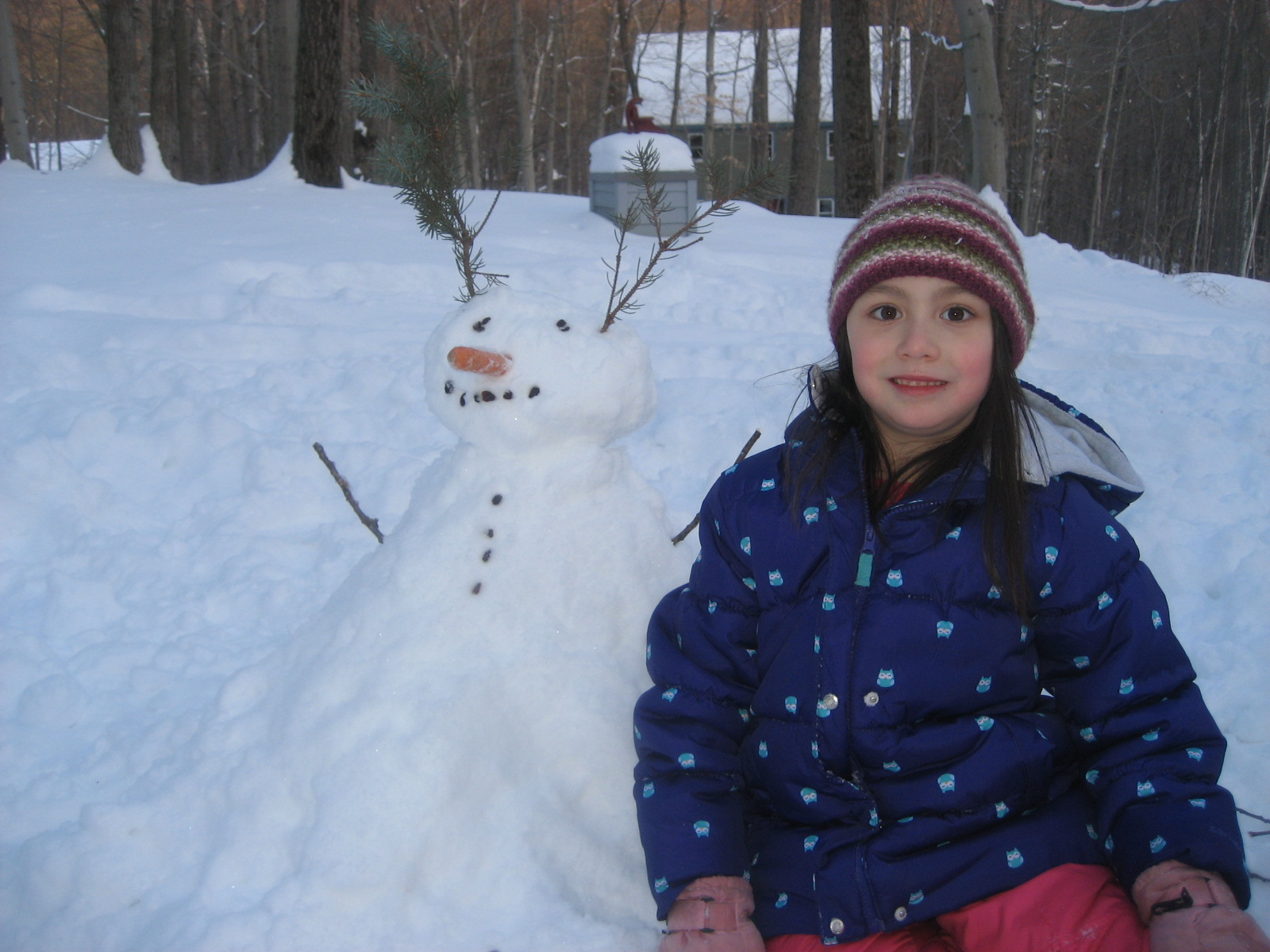
Hang in there, Mr. Snowman; it's just a season!
Hang in there, Mr. Snowman; it’s just a season!

“It’s just a season.”

I heard that phrase tossed around by other mothers all the time after I had children. Its intent was to convey the fleeting nature of the various woes and sacrifices we endure in the name of parenting; to give hope that this, too, shall pass.

Haven’t slept a full night in months? “It’s just a season.”

No date night with your spouse since Junior arrived? “It’s just a season.”

Can’t finish a book longer than Green Eggs and Ham? “It’s just a season.”

Excercise? HA! “It’s just a season.”

Feeling conflicted/stressed/embittered about work/life balance? “It’s just a season.”

I started using the phrase, too, because I believed it. Once you’ve survived your first child’s newborn stage, you do see how quickly things change. The self-denial that’s necessary in early parenting (like not showering for a week, the better to constantly hold your newborn) evaporates once your toddler can play by herself — and the next thing you know, you’re putting her on a school bus that whisks her away for 7 hours a day.

Hope is important. During the first years of parenting, sometimes it’s all you’ve got.

However, now that I’m a new parent again for the fourth time, I’ve been doing the math. If we consider the first five years of a child’s life “that season” — the time during which we’re most likely required to put our own plans and desires on hold — then from the birth of my first child until the moment I put my fourth child onto the school bus, 11 years will have elapsed. Eleven years is not “a season;” 11 years is more than a decade, more than a quarter of my life-to-date.

This scares me, because lately I’ve noticed that I’ve been using “It’s just a season” to justify what might charitably be called “complacency” — and what might truthfully be called “laziness.”

So, I’m not as involved in the community, in volunteering, in helping others as I might like? “It’s just a season.”

So, I’m terrible at keeping in touch with friends who live elsewhere? “It’s just a season.”

So, I have all these creative ideas percolating but all I can manage is to write a couple of 900-word blog posts a week? “It’s just a season.”

So, we used to dream about traveling the globe with our children, but we haven’t been more than 3 hours from home in almost 4 years? “It’s just a season.”

This is intended neither as an underhanded way of fishing for compliments, nor as an overhanded smack to anybody who doesn’t do these things or have these goals. This is just an honest assessment of where I am right now: I worry that I’m getting too comfortable.

It used to be a stated goal of our marriage and our individual lives that we wanted to get uncomfortable whenever possible. Doing things that were out of our comfort zone — like managing a school build in central Tanzania, living in a neighborhood where our bikes got stolen and our windshield got shot out, or even just hosting a big group to dinner at our place — was good for our souls, because discomfort forces reliance on things greater than yourself: FAITH.

But throw in four kids, home-ownership, and a steady job, and suddenly comfort looks mighty appealing. It takes us 30 minutes to get out the door. Not to mention, there’s malaria out there….

It’s both unavoidable and appropriate that parenthood changes one’s risk tolerance. Things like travel now involve the safety of four additional little people — and have also become really, really expensive. But I suspect that, too often, I’m hiding behind my children, using them as an excuse to take the easy way out of experiences that might be slightly complicated.

If  the “It’s just a season” mentality encourages us to delay adventure and challenge until some elusive future when things will get easier, it also encourages us to miss the present moment. “it’s just a season” implies that where we are right now — in the trenches with very young children — is a time to be endured, the way we grit our teeth and wait out the grey, frigid, shut-in season of late winter by focusing on the promise of coming spring. So I sit them in front of a video and count the hours until school starts again….

Writing this from the middle of my season, I worry that I’m missing it: missing both the chance to embrace challenge, adventure, and discomfort — and also missing out on the quieter joys of having a house full of little ones.

When I began writing this post, I didn’t know where it would lead. (That’s usually the case, which is why writing is one of the few adventures in my life these days). Now I see that it was leading to two goals. Here they are, my attempts to thrive rather than just survive this season:

1. I resolve to do at least one thing that makes me uncomfortable each week, whether that’s picking up the phone to call an old friend or flying to Uzbekistan.

2. I resolve to feel grateful for at least one thing each day, to find joy in my present circumstances, even if that circumstance was playing My Little Pony on the carpet for hours.

I have a hunch that, when this season ends in five years, I’ll find that the next season isn’t quite as rosy as it looked from a distance; having four children in school may not be as freeing as I’ve expected. I won’t know for sure until I get there, but at the very least I can try to live now in such a way that I won’t look back and wonder, “Where was I those 11 years?”


Sun Bread and Commitment

IMG_3948

I’m making Sun Bread with the girls today.

Sun Bread comes from the children’s book Sun Bread, by Elisa Kleven. (Elisa Kleven has written many beautiful children’s books — The Paper Princess is another of our favorites. She lives in the San Francisco Bay area, and her illustrations always remind me of the time our family lived there). The story begins with a cloudy day, which is transformed when the baker makes Sun Bread and shares it with everybody. In the back of the book is a recipe for Sun Bread.

Sun Bread became part of our family culture because our daughters’ preschool reads it and bakes Sun Bread every year. Our oldest daughter loved the book and the bread, so I found the book in the library and xeroxed the recipe. Since we’re only halfway through preschool with our kids, I expect we’ll be reading and baking for years to come.

I am not a person who bakes bread regularly, although I’d like to be. It’d been about a year since we’d last baked Sun Bread when, last week, my preschooler asked if we could make it. Since I’d like to be the kind of mom who bakes bread with her children, I said yes; because I’m not a person who bakes bread regularly, this required some preparation, like buying yeast.

Given that the Sun Bread recipe comes from the back of a children’s book, I’m assuming it’s not difficult to make, as breads go. All the same, it involves a number of precise steps followed by a lot of waiting, so when I say “I’m making Sun Bread with the girls,” I’m not really making it with them. It’s still a little much for me to shepherd three young children through a major baking project while holding a baby. When “we” make Sun Bread, I make the dough during naptime and let it rise for an hour. Then the girls shape the dough into a sun (from whence comes its name), it rises for another hour, and I bake it so that it’ll be ready for dinner.

Last week at naptime I dutifully set about making the dough for Sun Bread, and something went terribly wrong. Although I’d followed the recipe successfully several times before, this time the dough ended up a runny, lumpy mess. There was nothing to do but toss it out and admit that I’d wasted the better part of an hour (plus three eggs and an entire stick of butter). I promised the girls we’d try again this week, once I could get to the store and buy some more yeast.

So today was Sun Bread, Take 2. I repeated the same steps as last week, and the dough again looked runny and lumpy. But this time I used my hand mixer to combine the elements, and within a few minutes I had soft, smooth dough. Which led me to the regrettable conclusion that, with a bit more patience and ingenuity last week, I probably could’ve salvaged that dough, too.

Once the Sun Bread dough is mixed — steps #1-4 in the recipe — I’m always dismayed to reach step #5: “Knead dough on greased, floured surface for 8 to 10 minutes.”

Eight to 10 minutes!?!? I always think, WHO does she think I am?!? WHO has the time and endurance to knead bread for 8 to 10 minutes?!?

I stewed about this while kneading, and after three minutes I’d realized that this is probably why I’m not a person who bakes bread regularly: It all comes down to commitment.

I’d like to be a person who bakes bread regularly, a person who starts and completes crafting and sewing projects, a person who cooks new and delicious meals nightly, a person who journals daily, a person who exercises with some consistency. But I’m not. I do each of these things in fits and starts, with short spurts of regularity, but in the end my efforts fall flat. They all require too much commitment.

It would be nice and tidy to file my inability to commit under the “I have four young kids” excuse. But I can’t do that with a clear conscience. The truth is that I was like this well before I ever had kids; it accounts for my difficulty deciding on a college major (biology to anthropology to psychology, followed by graduate school for both education and studio art) and my meandering path through post-college life (teacher to photographer to nonprofit manager to mother to distracted mom-blogger). Another truth is that I know plenty of mothers with young children who have absolutely no problem committing to a number of activities and pastimes.

The problem is me.

I suspect I’m not alone. Our generation expects things to be quick and efficient, and we’ve developed some marvelous tools to spare us the commitment required of past generations, who had to grow and cook their own food, sew their own clothes, handwrite letters and send them via mail, and track somebody down in person in order to have a conversation.

But the tools that make our lives so quick and efficient have trained us to be multitaskers. We now expect ourselves to be able to talk with a friend, send an email, write a report for work, take a picture, supervise children, clean the house, and cook dinner — simultaneously. Multitasking is at odds with commitment; it’s trying to do many things in the shallow end, rather than one thing deeply. I’m not saying that past generations weren’t busy, or couldn’t multitask; I am saying that kneading a ball of dough for 8 to 10 minutes makes it difficult to do much else.

Here’s what it’s easy to do while kneading a ball of dough: think. I thought about my commitment issue, wondered why all of my well-intentioned commitments kept fizzling out, and concluded that perhaps the issue is that I keep trying to multitask my commitments. I expect myself to commit deeply to baking, sewing, writing, exercising — simultaneously. Perhaps instead I need to commit to a commitment. Choose one thing and take it from there.

No question: I choose writing. How about you?

[The Sun Bread, by the way, turned out well and was delicious. Next time I may be brave and let the girls help me with each step of the process. Especially the kneading.]

It’s Not About the Food

This is National Eating Disorders Awareness Week. In solidarity with the 0.5-10% of the female population who struggle with some form of eating disorder (according to the Academy for Eating Disorders), I’ve written about my own post-college experience with anorexia. This was not an easy piece to write, as it required me to dredge up some rough memories, but I hope you’ll check it out over at On the Willows. Click here to read.

A Few Thoughts on Love

IMG_3672

It being Valentine’s Day, I thought I might write a little something about love. So a few nights ago at dinner, I asked my family how they’d define love. I was hoping for some cute little sound bites.

Of course, my children can tell when I’m sniffing around for quotable material, so they clammed up immediately. “Uh, I dunno,” they said. “Love is when you like somebody a lot.”

So, sorry folks; you don’t get to read a lighthearted piece about love. Because my children were right to resist my efforts to boil love down to a cute quote. In the same way, we should probably resist the Valentine’s Day Marketing Department’s efforts to boil love down to cards and candy and flowers. Throughout the course of this past decade, which has encompassed 10/11 of my marriage and all of my childbearing years, I have learned repeatedly that LOVE IS NOT CUTE; LOVE IS TERRIFYING.

Listen: I’m an enormous fan of love. I happen to believe that love is the purpose of our lives, the most important thing we can do with our time on this planet.

But we’ve been sold a lie about love. For my first two decades of life, I longed for love in any form: romantic love, friendship love, spiritual love, the love between parents and children. I longed for love because it would make me feel good. Everything I’d heard and seen indicated that love would validate me, would be an assurance that I was okay, would make me feel happy.

Partly, I blame fairy tales for my misconception of love, especially the Disney-fied versions. One of my daughters recently noted, “None of the princes in fairy tales has a name. Are they all just called Prince Charming?” Good point. We make a big to-do about the portrayal of females in fairy tales, but if I were the mother of boys I’d be pretty steamed at the absence of male role models. Love in fairy tales is only about the female protagonist; her nameless love object only exists to free her in some way.

Likewise, my initial impression of love was primarily about ME: how I felt (mostly, I was supposed to feel good). It took almost another two decades to discover that that was the opposite of love. In fact, love is not really about me at all; it’s primarily about the other person, the loved one. Which means that mostly, I won’t feel “good” when I’m being loving. Mostly, love will feel like work, like a fight, like “a cold and a broken ‘Hallelujah.'” (Leonard Cohen told the truth about love).

Perhaps the purest incarnation of love is dying for somebody else. Stepping in front of an oncoming car so that your child won’t be hit. Sydney Carton going to the guillotine in place of Charles Darnay at the end of A Tale of Two Cities. Jesus on the cross on behalf of all humankind.

I used to imagine these scenarios as a way of testing my love. Would I take a bullet for a friend? Put my children onto the lifeboat and go down with the ship? Push my husband out of the way of the runaway train?

Then I realized that love asks us to die a little bit for our loved ones every day. Sure, occasionally love demands a big dramatic gesture, but mostly it involves doing things that you don’t really want to do.

For instance, I never, ever want to wake up in the morning while it’s still dark in order to change diapers, fix meals, and mediate disputes, but every morning that I force myself up out of bed, I’m dying a little for my children. Erick and I would both probably rather read or watch T.V. once the kids are in bed and the house is quiet at last, but every evening that we force ourselves to sit and discuss our days and ourselves and our relationship, we’re dying a little for our marriage. And I’m usually scared to fix a meal for somebody else (Will they like my cooking?), or pick up the phone to call a friend (Will I be interesting enough?), or host a party (The house is a mess and I’m so tired….), but whenever I force myself to do these things, I’m dying a little for my friends.

Love is a gradual process of killing yourself for others.

(To be clear, I’m not talking about a martyr complex: If you’re sacrificing yourself to manipulate others into gratitude or repayment, it negates love because you’re really just making things all about yourself. I’m also not suggesting that love requires giving up your identity. If you have no sense of self, no boundaries, then it’s impossible to love others without fizzling out. A healthy sense of self is not the same as selfishness).

Oh my gosh, it’s so hard, isn’t it? Especially when your child accuses you of being mean when you’ve just spent all day ministering at her sickbed. Or when you feel like your spouse just doesn’t get you. Or when your friends seem to keep taking and taking.

We’re not big on hard these days; our culture is all about making things easy for ourselves. We can do so many things with the touch of a few buttons: cook a meal, buy stuff, pay our bills. Love is one of the few things that remains hard.

So why bother?

I’d submit that the most worthwhile things in life are hard — the things that we have to work or fight for. But what about when love doesn’t feel worthwhile, when your efforts are repaid with eye rolls or indifference or divorce papers?

That’s where faith comes in. Faith is love’s water; it’s necessary in order for love to survive. We put love out into the world like a seed that we may never see germinate. Or like making a fire in the woodstove; I pile the wood on top of the glowing embers, but then I have to sit and wait a while until the wood heats up enough and suddenly bursts into flame. We love even though we may never see a payoff; we love because we have faith that it’s the right thing to do, that somewhere down the line it’ll make a difference in a life — or in the world.

We’re all gradually dying anyway. We’re slowly killing ourselves simply by living another day. The question is: what are we dying for? Are we spending our lives serving self, work, pleasure… or love? I’ve tried serving all of those things. And love is a slow dying to ourselves, but it’s the only thing I know of that doesn’t kill my soul.

The Worm and Me

Happy February! I’m back.

In a manner of speaking.

I’m back, but a little broken.

“Humbled,” might be a more accurate word.

“Still exhausted,” would also be true.

If you regularly read this blog, then you know that in early January I announced that I would extend the “Pickle-cation” I began over the holidays in order to do some restorative reflecting and writing. I had high hopes that this month-long break would provide me with tons of new material, a fresh outlook, inspiration by the truckload.

This is not a triumphal re-entry.

I can’t remember a more difficult month — personally or for our whole family — than this January. Like anybody, I have bad days; days when I feel like I’m clawing my way up the walls of a deep, dark pit, trying desperately to find some joy. The entire month of January was like that for me.

There weren’t any big tragedies, just a steady stream of days that became progressively more difficult. There was the freezing Arctic air — colder than usual, even for Vermont — which kept us housebound and cancelled school and skiing and, one particularly busy morning, froze both garage doors shut. Then Erick went to Africa for two weeks. Four days after he left, the girls started getting sick. By the time he returned, every girl had been sick at least once with either a stomach bug, a fever bug, or a confirmed case of the flu. The Gong supervirus also took down three grandparents (who’d come in shifts to help while Erick was away), and me. Three days after his homecoming, Erick was also sick.

Did I mention that, during this time, our bathroom was being renovated? Also, Georgia was getting potty-trained for good, which meant a lot of bodily fluids always needed wiping up at exactly the worst possible moment.

So, on January 31 — the last day of my “break” — I sat at my computer, exhausted and with nothing to show for my month of bloglessness except a hacking cough, and I felt very, very sorry for myself.

Self-pity brings out my worst self. It’s probably one of the most dangerous emotions, because it promotes selfishness and gives birth to resentment and anger. Poor me, I thought, this was supposed to be my month of rest, but I’m more exhausted than when it started. It was supposed to be my month to concentrate on writing, and I had less time than ever to write. I spent all my time taking care of other people, and NOBODY took care of ME!

See? Dangerous. Before too long, that kind of thinking would have me angry at my husband, resentful of my kids, and ungrateful for all the help I do receive.

Self-pity is like living by the banks of a poisoned river, but choosing to use the water for drinking and cooking and washing because, hey, it’s right there. Then, one day, someone passes by and says, “You know, there’s a lake filled with beautiful, clean, clear water right over that mountain!”  But instead of making the effort to get to that clean water, you say, “Naw, I’m good. I’ll just keep poisoning myself with this water right here.” The worst emotions are always the easiest. They’re also the ones that slowly poison our souls. But getting out of them, finding our way back to joy, to gratitude, to selfless love — that’s HARD WORK. It’s like scaling a mountain — or clawing out of a dark pit.

How could I claw my way out of this self-pity?

It just so happened that when half of our girls were sick and sacked-out on the couch, their grandfather had shown them the VeggieTales version of Jonah on his iPad. Which reminded me that the story of Jonah gives an honest (and hilarious) portrayal of self-pity.

Even if you didn’t do time in Sunday School, you probably know the first half of Jonah: God tells Jonah to take a message to the evil city of Nineveh, Jonah says, “No way!” and sails in the opposite direction, terrible storm rocks the boat, Jonah realizes it’s his fault and demands to be tossed overboard, fish swallows Jonah (thus saving his life), Jonah feels grateful, fish spits out Jonah.

But that’s only the first half. In the 3rd and 4th chapters of Jonah, Jonah finally does go to Nineveh to deliver God’s message. The message is: “God’s going to destroy this city in 40 days.” But instead of getting mad at Jonah and killing him (which is presumably what Jonah feared at the outset), the Ninevites repent. Once they’ve repented, God changes his mind and doesn’t destroy the city.

And Jonah is LIVID. “Awwww, God, I knew you’d do this!” he yells. “That’s why I didn’t want to come here; you sent me to condemn this horrible city, but I knew you’d take pity on them in the end! I’m so mad I could DIE!” Jonah sits down on the ground and pouts. Like some kids I know. Like myself.

A plant growing over Jonah gives him shade, and he feels a little better. But then a worm eats the plant so that it withers and dies. “I’m so angry I wish I were dead!” Jonah whines again.

I understand exactly how Jonah is feeling here: Not only has he just had a harrowing near-death nautical adventure, NOW God’s used Jonah against his will as a tool to save the wickedest city of his time, and on top of that he can’t even pout in peace because a worm just killed his nice shade plant. Sheesh.

It’s classic self-pity.

And here’s what God says to Jonah: “You have been concerned about this plant, though you did not tend it or make it grow. It sprang up overnight and died overnight. And should I not have concern for the great city of Nineveh, in which there are more than a hundred and twenty thousand people who cannot tell their right hand from their left — and also many animals?”

Boom. That’s it; that’s the end of the book of Jonah. God’s great like that: “–and also many animals.” Full stop. No further advice or explanation.

But God’s saying: Get over yourself, Jonah. You’re so worried about your little shade plant, but I’m worried about an entire city of lost people (and also many animals). And that may just be the best advice for overcoming self-pity: Get over yourself. Raise your head and look around at all the people who need your help.

I thought this would be my month to get into myself; to spend time hanging out in my head, putting my thoughts into words and putting the words into print. But God had other plans. Instead, this was my month to get over myself. There were people who needed my help. (And also one animal). My people are more important than my words. That’s a blessing, not a pity.

It’s good to be back.

Post-Holiday Lessons from Christmas Cards and Fudge.

IMG_3921
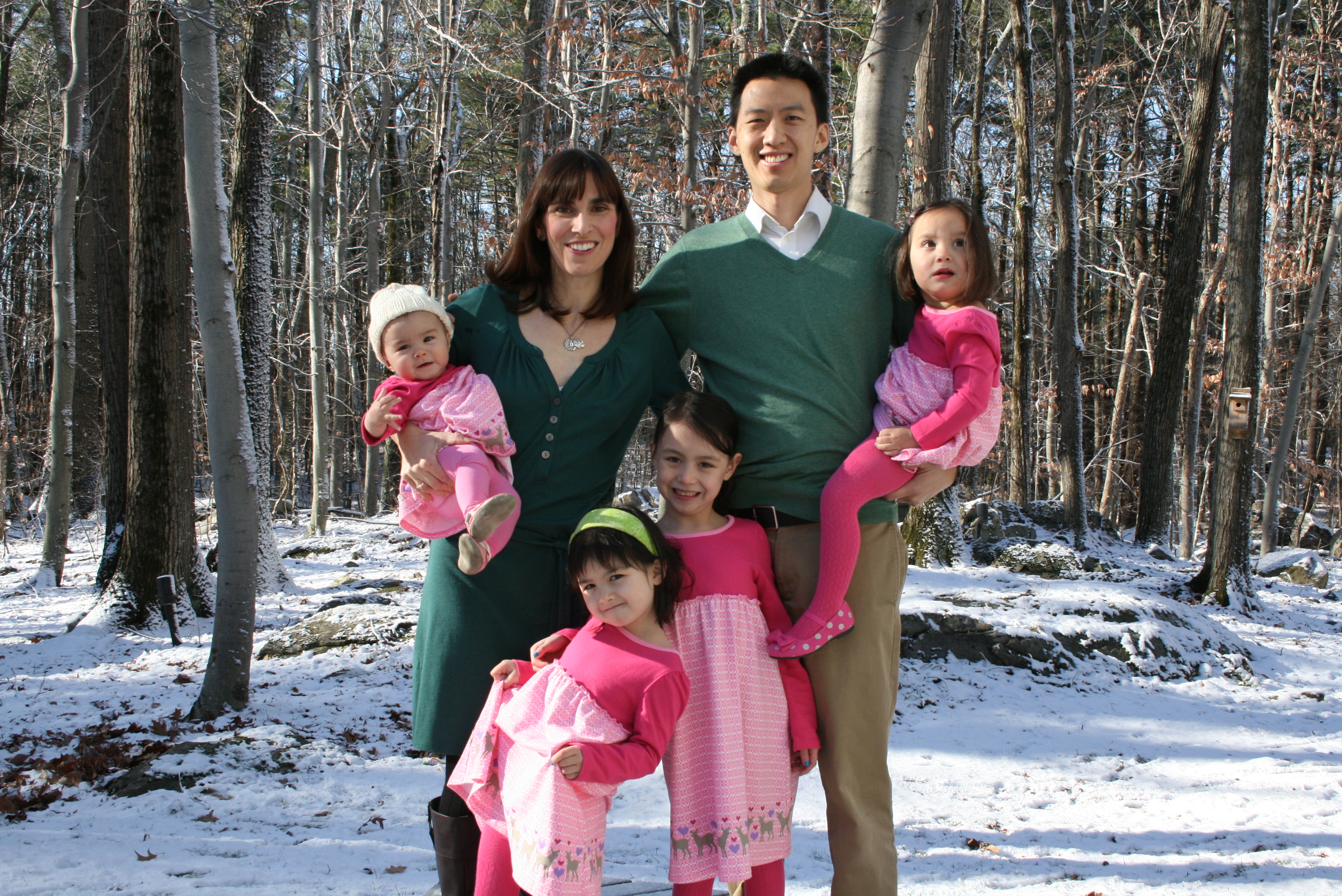
This year’s Christmas card photo

Every year, I feel conflicted about Christmas cards. They’re impersonal; many on our Christmas card list hear from us once a year, and at best we send them a form letter. Christmas cards can seem braggy; we showcase our best photo and write a rosy update — no mention of the potty accidents or the fights or the dusty corners. Christmas cards have absolutely nothing to do with the real Christmas, and they’re a lot of work and expense at a time of year that’s already stressful and expensive.

Click here to continue reading — and for a recipe for my Nana’s famous fudge — over at On the Willows.


A Break From My Break

IMG_3580

In early December, I announced that I would take a “Pickle-cation” from writing for this blog. The break was to extend through the holidays, and I envisioned it as a time to “write…reflect…and to enjoy the holidays with my family” without the pressure of writing weekly posts for The Pickle Patch.

Well, folks, this is me checking in from my self-imposed exile to give you the update: there has been NO writing, and NO reflecting, but an overabundance of “enjoying the holidays with my family.” In other words: Holidays: 1, Faith: 0.

Please don’t misunderstand: I love the holidays, and I love my family. The Gongs had a wonderful Christmas season. There was skiing and sledding and skating and hikes in the woods. There were grandparents. There were holiday parties and sleepovers with friends. There were “Mommy dates” with my oldest, who’s usually at school all day. There was baking and crafting. There were many candles lit and books read. There was the joyful hysteria of Christmas morning. There was the Christmas pageant in which Campbell performed a moving interpretation of an attention-seeking cow with poor impulse control.

It was lovely.

But every holiday or vacation time, there are moms who post something like this on Facebook: “So glad for the school break! It’s wonderful to have all the kids at home.”

And every holiday or vacation time, I’m reminded that I am not yet that mom. Maybe I never will be; maybe that kind of selfless desire for togetherness requires a special kind of temperament — or medication. I prefer to think that it requires time; that, when the girls are older and school holidays don’t just mean that I have double the number of voices calling, “Mommy! Mooooommmmmy!” every two minutes, perhaps I really will welcome extended times of togetherness.

For now, though, holidays mostly feel draining and confusing. I know that holidays can feel that way for everyone; there are errands to run, events to attend, and the expectation that every single second should somehow be “special” and “memorable.” In my case, I also forgot one crucial thing: at this point in my life, “writing and reflecting” and “enjoying the holidays with my family” are not compatible.

You see, during our regularly-scheduled life, I’m able to write and reflect due to the presence of certain structures that are built into the day to keep the kids away from me: school, naptime, and bedtime. I also wake up an hour earlier than any of our kids so that I can get dressed, wash my face, and start the day in peace. But during vacations and holidays, all of that goes out the window.

It starts first thing each day with this dilemma: Do I keep to my regular, pre-dawn wake-up time, or do I sleep in? Every morning, I decide to sleep in. It’s vacation, after all, there’s no need to rush the kids off to their schools, and I need the rest. And every morning, when the girls come racing down the hall (much earlier than is warranted by their way-too-late holiday bedtimes) screaming, “I have to go potty!” or “She hit me!” and I’m stuck wiping bottoms and resolving disputes without having had the chance to get dressed and centered, I think, This is horrible. I NEED to get up earlier tomorrow. The next day, it’s the same scene all over again.

Each day of holiday vacation is a nonstop marathon of togetherness, without the separation imposed by school and universal naptimes. About midway through the vacation, Erick can see that I’m starting to fray, so he’ll say something like, “How about I take the girls to see the train display, so that you can have a break?” And almost without fail, I’ll respond, “You’re going to see the train display? But I want to come, too!” The next day, I’ll feel overwhelmed and put-upon, with thoughts like, “Why is Joan of Arc considered a martyr? I could teach her a thing or two about martyrdom — she didn’t even have kids!!!” But then, when Erick says, “Hey, how about I take the girls out for breakfast tomorrow?” I’ll say, “Can I come, too?”

I think I read somewhere that the definition of insanity is repeatedly doing the same things, but expecting different results. You can draw your own conclusions, but when I examine my own behavior during the holidays, I do not look sane.

I’m coming to see that the problem isn’t with what I’m doing; the problem is my expectations. It’s okay — healthy, even — to sleep later and adopt a more relaxed schedule during the holidays. It’s more than okay to sacrifice alone time — even if that’s time normally spent doing things that feed your soul, like reflecting and writing — in favor of time spent with family. In general, I think it’s important to be selfish about things that feed your soul, but it just may be that Christmas week isn’t one of those times.

This reminds me of this year’s Apple holiday commercial, which went viral because it touched so many people. You know: the one with the awkward teenage kid who won’t put down his iPhone throughout the family holidays, and then on Christmas morning he plays the holiday video he’s been recording all along, and everyone weeps as if to say, “It’s okay that you’ve spent the entire holiday tethered to your smartphone, since you were using it to create this digital memory!”

I HATE that commercial.

I get that it’s supposed to be about understanding, and how the person on the sidelines might not be as tuned out as they seem. But the first time Erick and I saw it, we looked at each other and burst out laughing, because it was such a naked attempt to justify our culture’s electronics addiction.

Here’s the thing: all the time, but especially during vacations and holidays, YOUR FAMILY WANTS YOU. Who cares if you’ve spent a week making a digital video, if it sidelined you from participating fully in your life? Let’s face it: in a decade, that footage will probably be unwatchable, anyway, because Apple will have developed some new video technology. Likewise, my daughters could care less if I’m carving out daily writing time during the holidays, even if I’m writing beautiful and thought-provoking pieces about the holidays; they do care that I’m available to play and bake and read and participate fully in our family’s holiday.

So, I’ve learned something: next year I will again take a Pickle-cation, but I will NOT expect to get any writing done until after the New Year. Which is to say: I now need a break from my break, and so I will be extending my Pickle-cation through January to do the writing and reflecting that didn’t happen in December. See you in February!

Pickle-cation

IMG_3392
Heading out…. (Yes, this is how our girls sometimes go outside to play).

Dear Friends,

I hope that you all had a wonderful Thanksgiving — and I hope that you’re continuing to feel gratitude as you wash out the final Thanksgiving Tupperware and head on to the next holiday. We Gongs had a lovely harvest feast, complete with a set of grandparents and a dusting of snow — doesn’t get much better than that! We also managed to keep Gracie apart from the turkey, to take a family photo in which just about everybody has their eyes open and is looking in the same direction, and to take the girls cross-country skiing the morning after Thanksgiving — all feats requiring a mix of luck and Olympic fortitude.

Where we live, there are many cornfields. Having lived here three years now, I’ve observed how cornfields are plowed and planted for a few years, and then allowed to rest for a season. Come summer, I’ll notice that a certain field is no longer an orderly series of cornstalks, but instead is dressed in its natural grasses. This allows the soil to breathe and replenish before the field is planted again. Lesson here: Creation takes effort, and everything needs a rest.

So now I am going away (virtually speaking) for a little bit. As you can imagine, the holiday season at our house is a little crazy (as it probably is at your houses, too!), and this year it feels particularly busy. Whether that’s due to having more — and older — girls, a baby who’s still not quite sleeping through the night, or the near-constant stream of (very welcome) houseguests we’ve had since Halloween, I’m not sure. Probably all of the above.

Bottom line: I’m tired. And I haven’t had as much time to think or to write as I generally need for optimal mental health. At the same time, I’ve been trying to keep up with the pace I’d set for this blog, where I’ve been churning out at least one new post a week for two years (minus a few weeks of re-posts when Abigail was born). For two years, I’ve loved every second of writing The Pickle Patch, but it’s starting to feel like…work. A grind. Unsustainable.

So, since I’m my own boss here, I’ve decided to take some time off — send myself on a “Pickle-cation,” so to speak. I’m not going to publish any new material for The Pickle Patch at least through New Year’s. I’m keeping the end date of my Pickle-cation open, but I expect to be back here by February. I will continue to publish new material for On the Willows and The Addison Independent, because those are outside commitments, and I’ll post those links here in case you’re going through major withdrawal.

I plan to use my Pickle-cation writing a lot, but with the leisure of not having to publish weekly. I plan to sit back and reflect on what I’ve got to say, to think new thoughts, and to play around with new ideas that may or may not have anything to do with this blog. Above all, I plan to enjoy the holidays with my family without resenting early mornings or missed naps or late nights that might take me away from writing. My hope is that you’ll thoroughly enjoy your holidays, too, without feeling the need to read anything new from me!

With love and gratitude to you all, until 2014,

Faith

IMG_3265