Following Through

IMG_5401

As of today, I have finished the “birth books” of my two oldest daughters.

Their prenatal ultrasound pictures are tucked inside the front covers; photographs from their early years, baptismal certificates, birthday invitations, and Christmas cards are affixed where appropriate. Most of the lines are filled with writing — not all, as I will never be able to answer the question about the fashion trends when they were born– but enough to look like I put some effort into the thing.

The birth book seemed like such a nice thing when I was pregnant with our first baby. It even seemed essential, in the same way it seemed essential that our nursery have a “theme,” with linens matching the lamp matching the wall art. (Ours was “Safari.”) Who wouldn’t want to record their child’s earliest moments for posterity? Hadn’t my own mother kept a detailed birth book for me?

So I bought one: a thin, hard-bound book with Winnie-the-Pooh on the cover. Inside were pages dedicated to the family tree, the pregnancy and birth details, celebrations, and major developmental milestones.

It was only once I began keeping a birth book for my first — and then second — child, that I realized its reassuringly thin spine and apparent simplicity were clever disguises for something more sinister. To begin with, this was not a “birth” book: each book is designed to cover the first five years of your child’s life, up through kindergarten. There were pages to accommodate multiple baby showers (I missed my first baby shower because I was giving birth, and never had a traditional shower again.) There were questions about current events during your baby’s birth year. There were lines for recording information about every single visit to the doctor or dentist. There were guilt-inducing blank boxes in which I was instructed to paste before-and-after photos of my child’s first haircut.

In short, these birth books were designed for first-time parents. And now I had to do four of them.

By the time I got to my third and fourth children, the format of the birth books I ordered had changed slightly: Now, the books expected you to record your baby’s height, weight, and developmental milestones during each month of their first year of life.

These birth books are exercises in following through.

I responded with denial. All four birth books sat on a shelf beside my computer, and I reassured myself that I’d work on them when I had “free time.” This meant that, every couple of months, I’d enter a guilty panic when I realized I’d gotten behind and couldn’t remember when my third child began walking, or how my fourth child slept at five months. The younger half of my children are going to have hard evidence that I loved them less than their older siblings.

But this morning I recalled that both my first and second child have turned five, which means that I no longer had to keep up their birth books! Freedom! I spent a few minutes tying up loose ends, and then stashed the books in each daughter’s memory box in the closet.

Two down, two to go.

***

If pressed, I would say that one reason we’ve yet to wipe out poverty, war, injustice, and climate change is due to lack of follow-through. The problems are daunting, and we are all, to various degrees, lazy, selfish, exhausted, busy, and scared.

I’m no different: In addition to the baby books, the list of things I’ve left hanging includes planting a raised-bed vegetable garden, baking fresh bread weekly, going through the boxes of pictures that we shoved in a closet 5 years ago, and a pile of mending.

I am particularly bad at following through with people. During my sophomore year of college, I was asked to mentor a young woman about five years older than myself. She was the daughter of a family in town, and I gathered that she’d been a bit wild until she’d suffered a traumatic brain injury in a car accident. Now, her parents wanted her to have a friend who’d be a good influence.

I can’t recall how I became that friend; I think it was arranged through the church I attended at the time. I knew that I was in over my head almost immediately, but I persevered through a series of awkward conversations over coffee. Looking back, it seems ludicrous to charge a  19-year-old who’s just left a sheltered home with mentoring a 24-year-old who’s lived hard. I don’t remember the last time we talked. I certainly never followed through after I graduated, and have no idea what became of her.

That young woman was the first in a series of people whom I’ve failed similarly. I’ve neglected to follow through on relationships from Africa to California and in between.

The church we attend now isn’t one of those churches where people dress nicely and have all their stuff together. Every Sunday, our pews hold people who struggle openly with addiction and mental illness. (I like to imagine that Jesus would be more comfortable there than in a suburban mega-church.)

But every Sunday some of those struggling people are missing. Sometimes they’re gone for weeks or months; sometimes they disappear completely. I know this is common, but I always feel badly, like maybe if I’d been more friendly, or done something to help, they’d still be there.

I’m not proud of my lack of follow-through, and I’m trying to do better. I’m trying to reach out to people when I think of them and to do kind things when they occur to me, instead of hiding behind the “I have four young children” excuse.

Because the truth is that something is always better than nothing. And finished is always better than left hanging. Like with those baby books: Sometimes you just have to fill in what you can and call it done, even if you leave a few blank lines. There will always be blank lines. Maybe they weren’t yours to fill in, anyway.



Some Gifts of Spring

IMG_5340

We are starting to move outward now. The turning point came a few days before Easter, when I looked outside one morning and saw that there was more bare ground than snow visible through the window.

Later that morning, I took my two youngest daughters and several friends to the playground in East Middlebury for the first time in about six months. The playground was hopping with caregivers and their young charges. As is always the case on those first warm days of spring, I saw people whom I hadn’t laid eyes on since the fall, people I’d nearly forgotten during our long hibernation.

We ate both snack and lunch outside that day. Then, while my daughters napped, I pulled the gardening book down from its shelf with some trepidation. Much to my relief, it told me that since I live in a cold climate, I can safely leave most of the gardening work until May. I left the book on the kitchen counter to refer to in another month, when the ground is thawed and dry and the chance of snow is almost zero.

As if to justify my leisure, the temperature dropped 30 degrees and it snowed the next day, and the day after that.

Click here to continue reading my latest “Faith in Vermont” column for The Addison Independent.

My New Collection

IMG_5387

Almost every Thursday afternoon when school lets out, my daughters and I drive to the Sarah Partridge Library in East Middlebury.  From 4:00-5:00 PM on Thursdays, Mona Rogers, the Sarah Partridge Librarian, has a “Craft Circle” for children. The original vision for this craft hour was that Mrs. Rogers would teach all of us to knit. This idea was abandoned when it became clear that most of my daughters are still too young to knit — and since my daughters make up 98% of the children who attend craft hour, they direct the agenda. In the end, Mrs. Rogers taught me to knit, which I continue to do during craft hour: I knit while standing, with frequent breaks in order to referee sibling squabbles or pull my youngest child off the bookshelves.

Between the knitting and the child-wrangling, it’s rare that I have time to look at books. But the other week, thanks to a big bowl of microwave popcorn that was occupying all of my children, I was able to peruse the used books for sale.

This isn’t a normal activity for me, children aside. I’m not especially anxious to add to our already-overflowing home bookshelves, and when I’m at the library I figure that the point is: free books! But since my children were munching their popcorn next to the shelves of used books, I could browse and still keep an eye on them.

Used book sales are about hope. There’s a reason why most of these books have been exiled from the library shelves or donated by their prior owners. There’s usually a large selection of boilerplate mysteries, spy thrillers, and romance novels. I’ve decided that cookbooks are the bread machines of books: people think they’ll use them, but instead they just take up space in the kitchen. And travel books are quickly out-of-date, plus fairly useless once you’ve actually visited the place.

But every once in a while, there’s a used book gem to be found. That day, I found it.

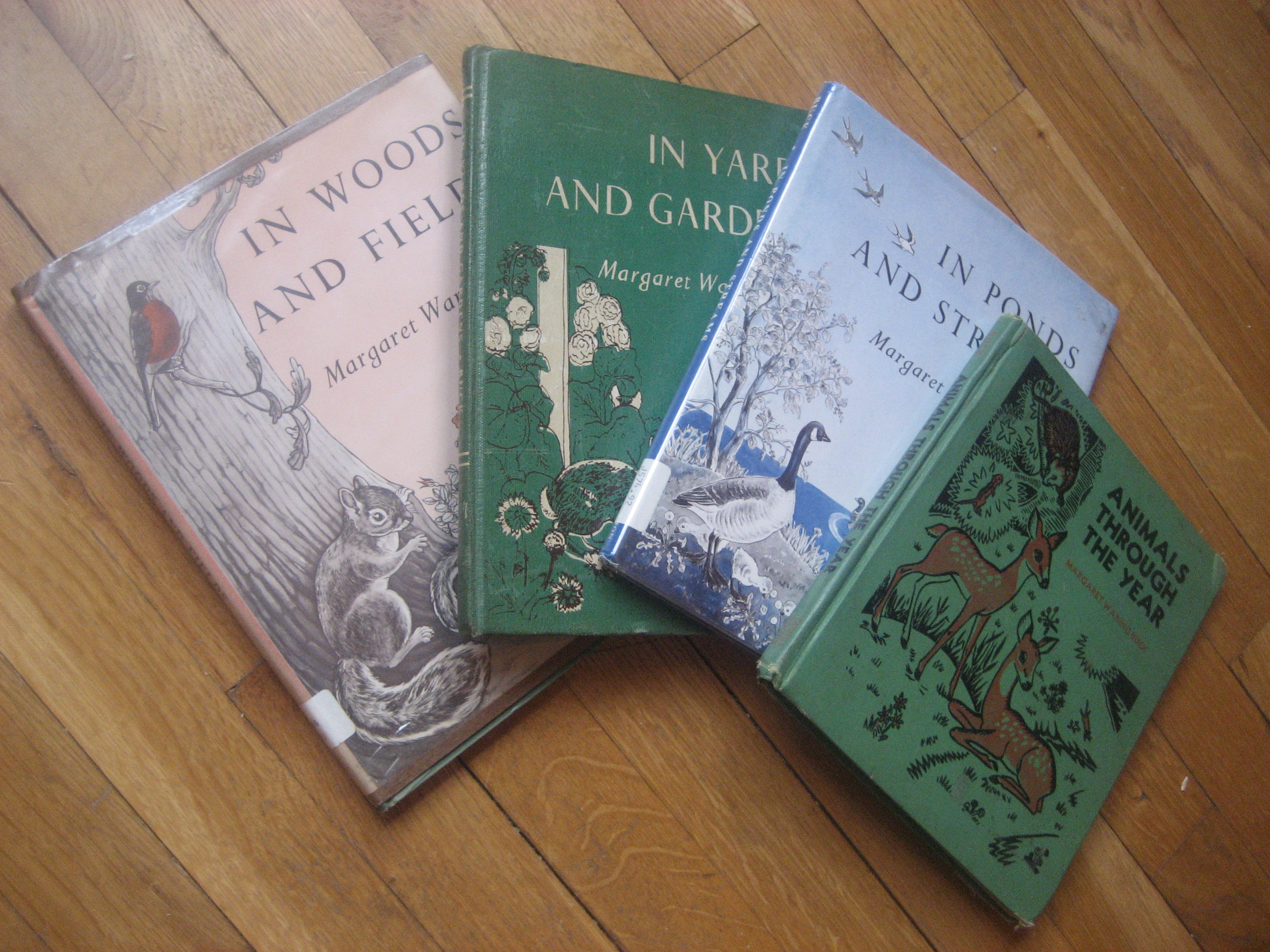
I can’t remember what prompted me to pick up the slim, green hardcover. It was clearly very old. The book’s title and author were stamped into the front cover — Animals Through the Year by Margaret Waring Buck — along with a beautiful print depicting two young deer, a possum, a chipmunk, and a mouse in the wild. It was clearly a children’s book — and we have so many children’s books at home that I wasn’t looking for one more.

Opening the book, I saw that it was a discard from the Sarah Partridge Library (back when it was the Community House Library). The book was first published in 1941, although this was a 1949 edition, and it had been checked out last on August 30, 1993.

When I fanned through the pages, I knew that I had to buy Animals Through the Year. It’s organized by season, and each page describes a certain animal (20 in all) and how it spends that season. The descriptions are clear and fascinating, written for young children without oversimplifying or pandering.

What really sold me, though, were the illustrations: On every page is a gorgeous block print of the animal described. Some are in color, but most are black-and-white.

Animals Through the Year cost me $1 — more than the usual 10 cents, because it was “antique.” I showed it to my daughters once we returned home, and they all huddled together on the couch, looking at the pictures while my 7-year-old daughter read out loud.  Later that night, she asked if she could take the new book to bed with her. Since then, one daughter or another has picked it up from its home on the table beside our living room “comfy chair” to look at the pictures or learn more about what our animal neighbors are doing this time of year.

Meanwhile, I have become obsessed with Margaret Waring Buck. There’s not much to be found about her, but her papers now reside in Archives & Special Collections at the University of Connecticut’s Thomas J. Dodd Research Center. The brief biography on the Dodd Center website informed me that Margaret Waring Buck was born in New York City in 1905, and died in Mystic, Connecticut in 1997. She was an illustrator, naturalist, and physiognomist. Animals Through the Year was her first book, and she wrote and illustrated ten more between 1947 and 1979. All were nature books for children, with the exception of The Face — What it Means: The Merton Method of Character Analysis,  which was based upon her studies with Dr. Holmes W. Merton on the “science” of Face Reading.

All her books are out of print now, but that hasn’t stopped me. Thanks to the magic of online shopping, I’ve been able to obtain used copies — all library discards — of In Woods and Fields, In Yards and Gardens, and In Ponds and Streams for under $10. Like Animals Through the Year, these books are filled with plainspoken information and gorgeous illustrations (ink drawings instead of block prints). Along the Seashore and How they Grow are on my wish list, because I don’t want to be greedy and buy up  Waring Buck’s entire oeuvre in one swoop; it’s important to have something to look forward to.

The obvious question is: WHY? Why have I suddenly become a fan and collector of the works of a little-known author and illustrator of children’s nature books? I am not the collecting type — haven’t collected a thing since my childhood doll and thimble collections.

I’ve thought about this, and I believe the answer is: It’s April, and there’s still snow on the ground. For over four months, the only nature we’ve seen outside has been limited to the occasional squirrel or crow. I am ready for the plants and animals to return; I am craving wildlife.

And when wildlife returns, I will pull down one of our books by Margaret Waring Buck, find the relevant page, gather my girls around me, and read. Because, 74 years later, the first words of Animals Through the Year are still true: “Many baby animals first see this beautiful world in the spring months of March, April, and May.”


Saying No to Lucky

IMG_5374

It’s important to learn how to say “No.”

I know, I know, you think, rolling your eyes. C’mon, tell me something new.

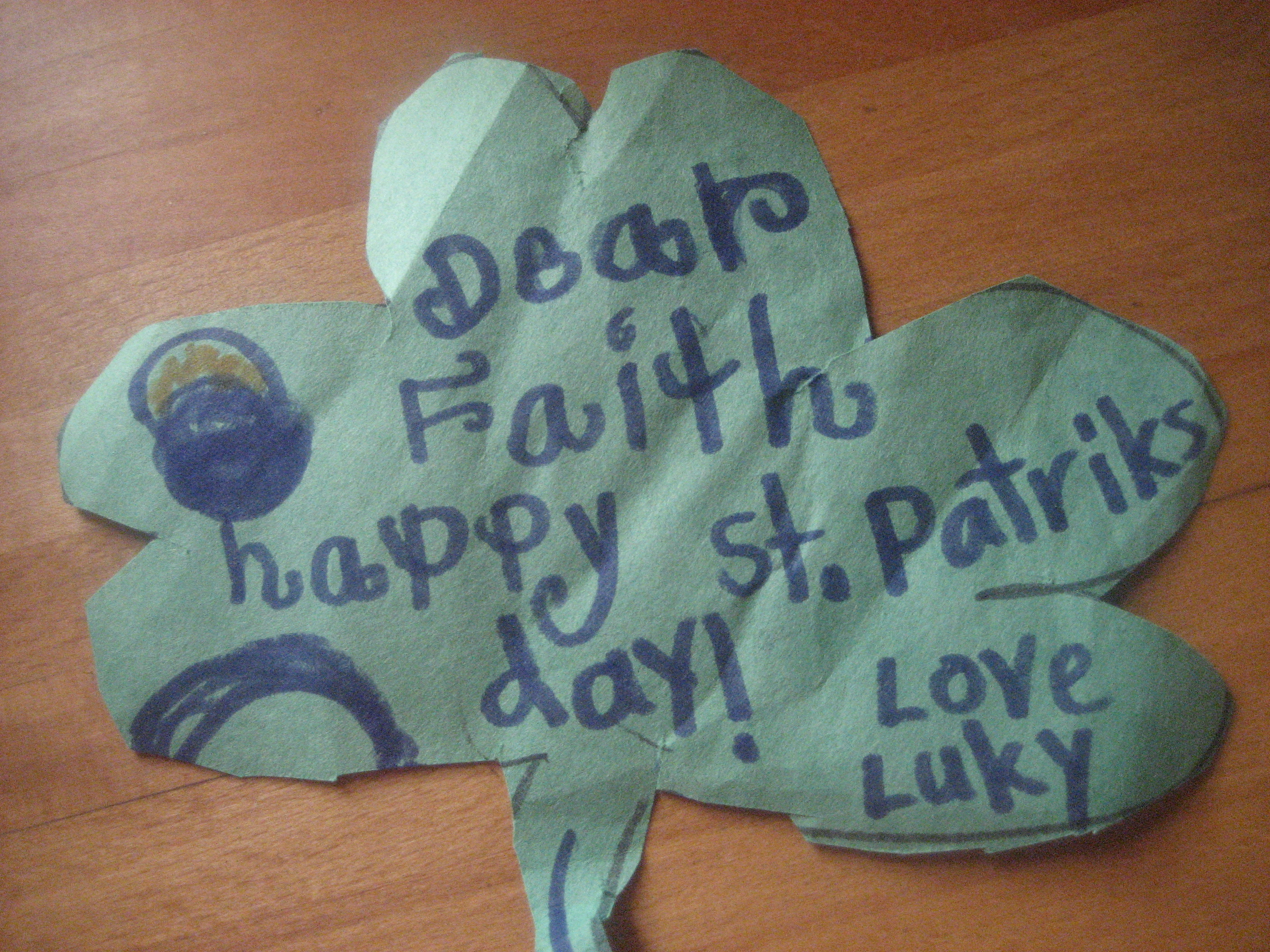
Here’s my best shot at something new: I’d wager that not many people have been taught to say “No” by Lucky the Leprechaun.

Click here to continue reading my latest “Faith in Vermont” column in The Addison Independent.

A Tale of Two Women

So there was this woman, and she was pretty comfortable. After a decade of moving every few years, she’d been settled in a nice small town for nearly five years. Healthy kids, good marriage. She was mostly “at home” with the kids, but had carved out a little sideline writing for a few blogs and her local newspaper. Life was crazy, sure: She had four young children. But she felt like she’d finally nailed the rest-work balance. Three kids were in school now. She had her village firmly in place: school, church, friends, and her parents, who lived 15 minutes away.

And she was about to lose it all, because the following year, her husband was going on sabbatical. Sabbatical: from the Greek word “sabatikos,” meaning “of the Sabbath” – the day of rest. For her husband, sabbatical was a year of rest from his job as a college professor. For her, it felt like the opposite of rest.

Click here to continue reading this post over at On the Willows.  


On Summer Activities, Economic Development, and Overthinking

IMG_5314

Because I have children who still live at home, and because the work I do does not (yet) contribute to our household expenses, the standard description for me is: “stay-at-home mom.”

I find this description inaccurate at best. I may be a mother who often stays at home, but the truth is that I spend an awful lot of time trying to get my children out of the house.

As much as I love my children, I never cry on the first day of school. In fact, the happiest moment of my day is usually when the mudroom door closes behind my husband and three-quarters of my daughters at 7:45 every weekday morning, and I put our fourth daughter down for her morning nap. The house is quiet, and for one blissful hour I am free to do whatever I want – even if that just means folding laundry (as it often does.)

I cry on weekends. I cry on snow days. And as summer vacation approaches, I feel panic setting in.

Summer vacation is approaching.

Click here to continue reading my latest “Faith in Vermont” column in The Addison Independent.

On March and the In-Between

IMG_5275

Even if you love winter, March can feel like a waiting room: You sit, in between where you’ve been and where you’re going, trying to focus your eyes on a tabloid (if you’re lucky) or one of those dull preventive health magazines filled with recipes and uplifting stories about B-list celebrities. Either way, you can’t focus on the magazine because every time the door opens you look up expectantly, wondering if it’s finally time.

March can feel beside the point, in-between.

The other day, I stopped our minivan at the bottom of our driveway in order to put a letter in the mailbox. As I made my way carefully across the sheet of solid ice standing between the U.S. Postal Service and me, I noticed something different. That noise…was that – birdsong? I slid back over to the minivan and opened all the windows, sending a blast of single-degree air into my daughters’ faces.

“Girls, listen!” I shouted. “Hear that? Those are birds!

Click here to continue reading this week’s “Faith in Vermont” column over at The Addison Independent.

You’ve Got Some ‘Splaining to Do

IMG_5199

The tooth fairy is notoriously cheap in our house: Her going rate is 25 cents — one shiny silver quarter — per tooth. Yesterday, while at school, my 7-year-old daughter lost her eighth tooth. She hopped off the bus with her discarded baby tooth sealed in a white paper envelope. That night, she tucked the tooth into the tiny pocket of the tooth pillow that once belonged to me, and shoved the pillow under her three bed pillows. She worried that the tooth fairy might get crushed; I reassured her that no matter how many pillows one sleeps upon, it’s impossible to crush magic.

This morning, that daughter — usually the last to be dragged from her bed — was the first one up. I heard thirteen thuds as she jumped down the stairs. She raced into the kitchen: “Mommy, look!” As she uncurled her hand, I saw…two shiny silver quarters sitting in her palm.

“Wow!” I stuttered. “You got two quarters?”

“Yup!” she beamed. “I wonder why.”

After breakfast, as the girls got ready for school, I cornered my husband in the kitchen. “Did you put another quarter under her pillow?” I hissed.

“No, why would I do that?” he answered in all sincerity. And I knew he was telling the truth; tooth fairy duty isn’t in his job description, and he’d been out late at a meeting the previous night, anyway.

So, how to explain that additional quarter? How to account for my daughter awaking to find, in addition to the Vermont quarter I’d tucked into her tooth pillow the night before, an Idaho quarter as well? Surely there’s a rational explanation; either that, or the tooth fairy is messing with me. Whatever the case, inflation has just hit the tooth market in our house.

In my experience, parenthood is filled with moments like this: happenings that I can’t quite explain, questions to which I have no answer. There are the silly things, like the tooth fairy mystery, or what happens to all those missing socks, or why, when I put our winter coats in the dryer with two tennis balls, I found only one tennis ball when I removed the coats.

Then there are the serious things. The same daughter who brought home her baby tooth from school brings home other things from school, as well: worries, slang, rumors she’s overheard. Earlier this week, she came out of her room long after we’d said goodnight. She was afraid, she said.

“Why?” we asked.

“Because a boy at school said that sometimes people shoot themselves in the head.”

And just like that, I found myself trying to explain depression and suicide to my 7-year-old at 9 o’clock at night.

In retrospect, I could’ve skirted the whole issue by turning it into a gun safety lesson: “Yes, sweetie, sometimes accidents happen with guns. And that is why you should never play with a gun if you see one at a friend’s house.” Done, and off to bed.

But that would’ve been dishonest; I knew as well as she did that her issue was not with guns. Her issue was with death.

My husband and I flailed around for a few minutes. “Well, honey, you know, sometimes people just feel really, really sad. They feel like they don’t have any hope. And so they think it’s better if they’re not alive anymore.”

“But then they’re dead.

“That’s right, but they think maybe it’s better to be dead.”

She stared at us a minute, then said, “You know, that’s doesn’t make me feel any better.”

And she was absolutely right.

Because, frankly, suicide is no place for moral tiptoeing, especially when discussing it with children. I want to teach my daughters to respect people with different viewpoints, appearances, and lifestyles. But I do not ever want my daughters to have the impression that it’s a valid life choice to kill themselves. (PLEASE NOTE: This is very different from saying that I lack sympathy for those who do.)

But how to explain all that to a 7-year-old?

I didn’t do it very well, and I’m sure we’ll have the same discussion again — also late at night, no doubt. But I did find some words that surprised myself, which is what often happens in these cases.

I said: “You know, life is kind of like a story that you tell yourself: The way you live your life depends on the kind of story you believe you’re in. And, you know how stories can have sad endings, or they can have happy endings?”

She nodded; our family’s big on stories.

“Well, people who shoot themselves in the head believe that their story has a sad ending. But I hope that’s not the story you’ll tell yourself; I hope you’ll live like your story has a happy ending.”

The “what-ifs” started then, as expected.

“But what if you’re really sick? What if you’re going to die anyway?”

These are excellent questions, and my response to them will always be: Everything depends on where you place your ending.

If death is The End — the finish line, the full stop — then we all have sad endings.

But if you believe that there’s something more than death, then all the tragedies, illnesses, and injustices life throws at you — including death itself — are just the equivalent of the various trials necessary to any good story: challenges that refine and prepare us for the ultimate ending, the one that’s happy.

Obviously I am touching closely on my family’s religious beliefs here. And when I said these things to my daughter, as often happens in these cases, I was also speaking to myself.

How can you be sure that what you believe is true? you ask.

My daughter asked the same thing, certainly not for the last time.

My answer: can’t be absolutely sure that what I believe is true. Can anybody?

I can give you plenty of sound theological and historical arguments. But those will only take us so far, because I am talking about faith. And while faith may be logical, it can’t be explained satisfactorily by logic.

Faith, by its very definition, must be believed rather than known. Faith is not fact — which makes it no less true, in my opinion. (Oxygen is not a carrot, either, but both exist.)

So perhaps I can’t explain very well, either to you or to my daughter, but I can submit this:

If none of us really knows for absolute certain where the ending lies — if we’re all just grasping towards it as best we can — isn’t it worth living as if our stories have happy endings?

Consider the Orchid

IMG_5146


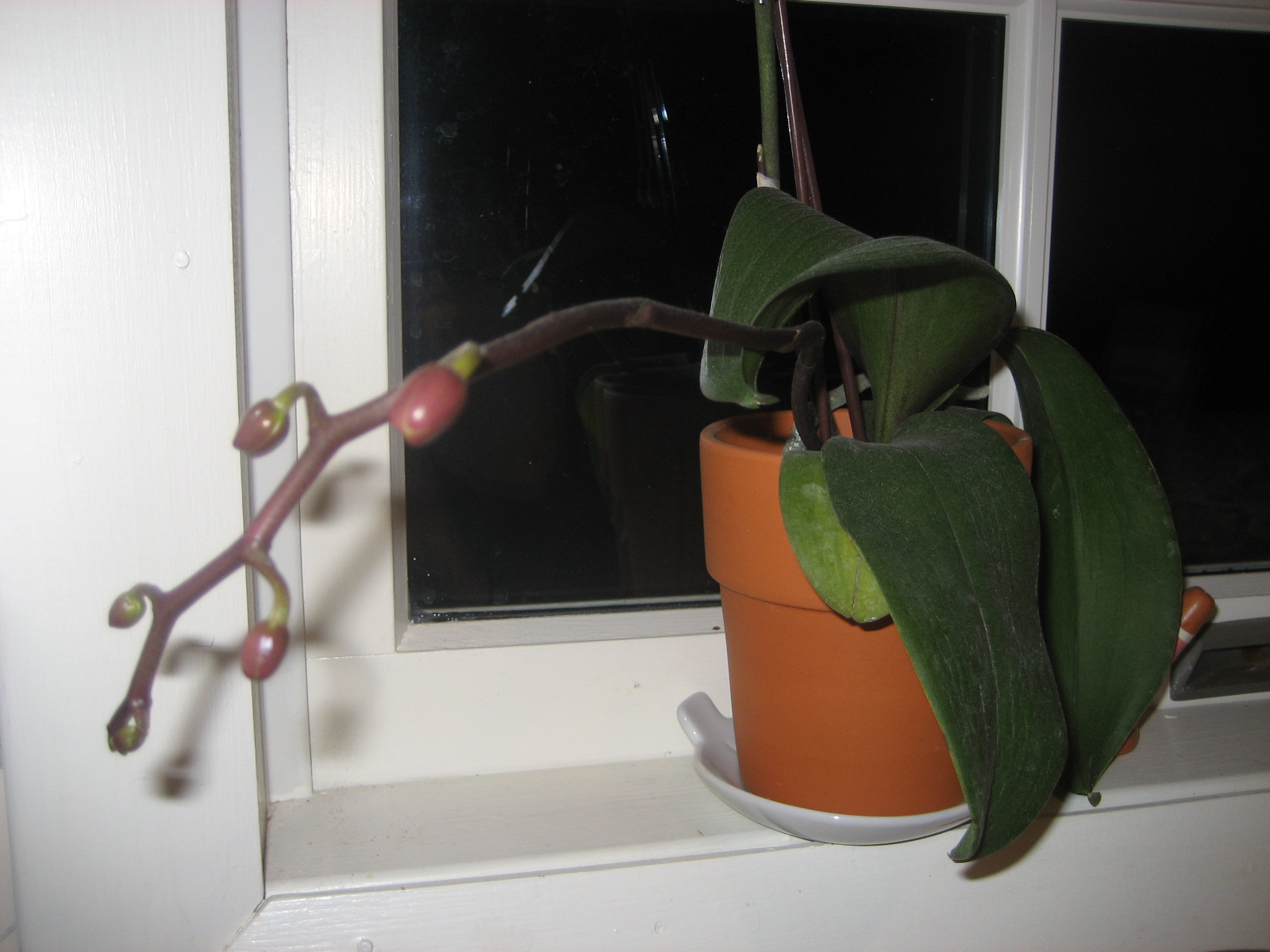
Somehow, I have failed to kill the orchid.

The orchid in question is the first I’ve ever owned. It was bestowed upon me this past July as a hostess gift from a visiting friend. This friend — unlike me — does not have to drive an hour in order to reach the nearest Trader Joe’s, so she arrived at our house thoughtfully bearing an array of exotic Trader Joe’s products: dried mango, chocolate-covered cherries, seasoning salt. Also: the orchid.

“It’s beautiful. Thank you,” I said as she handed me a tiny pot containing the single curved stalk upon which three delicate blossoms trembled. “I’m going to kill this.”

Click here to continue reading over at On the Willows.

Children Get Older

IMG_5096

That title seems obvious. But is it, really? Like most obvious life facts — you should floss daily, we’re all going to die, squirrels are evil — the always-advancing age of our children is something we’d rather not think about. So, mostly, we don’t.

In this area, I think parents of young children tend to suffer from lack of imagination as opposed to denial. It’s just impossible to imagine (even if you had the time) your helpless baby or your adorable toddler as a scrawny grade-schooler who reads to him- or herself, is capable of running a vacuum cleaner, and who also occasionally rolls his or her eyes, snaps “I don’t care!” and slams the bedroom door.

I myself can imagine only as far as that grade-schooler, because I have one now. Middle and high school are still shadowy places on the distant horizon — although they’re becoming ominously clearer the more I experience grade school behavior.

“Just wait,” every parent of young children has heard from certain well-meaning (probably) and honest (undoubtedly) parents of grown children, “it only gets harder.”

As a parent of four, with one foot in early toddlerhood and one in early grade school, I’m not convinced that “harder” is the right word. There’s not much that’s “harder” than waking up every two hours throughout the night to nurse an infant after enduring toddler tantrums, managing sibling squabbles, and serving as activities coordinator/chauffeur/errand runner all day. Granted, I speak with limited authority — I have yet to see a child through to adulthood — but I think those experienced parents are trying to say that the struggle moves from the physical realm (How do I stay alert and lug the grocery bags and my children?) to the mental/emotional realm.

By mental/emotional realm, I mean a little something like this:

You are standing outside a door that your 7-year-old has just slammed, after rolling her eyes and shouting “I don’t care!” The precipitating event changes (you weren’t properly attentive to her artwork, you let a sibling share first at dinner, you used the wrong tone of voice when making a request), but the underlying issue is always the same: she doubts your love. She’s angry with you for falling short, and she’s also angry with herself for still needing you. It spiraled out of control, and now you stand in the hall, thinking: She needs discipline; I can’t allow her to talk to me like that. I need to set boundaries of respectful behavior, to be tough. But also, she needs to know I love her, no matter how she behaves. She needs affection and reassurance. 

And you think that there’s probably some perfect combination — if you could just balance the right amount of toughness with love, or find the exact words — and the lock will spring and her eyes will light up again and you’ll hug and she’ll mend her ways and become a kind, well-behaved, well-adjusted adult. Otherwise, you imagine, she’s in for a lifetime of conflict, broken relationships, hundreds of dollars spent on therapy and pharmaceuticals.

You feel all this, because you’ve been there, on the other side of that door — it seems like just minutes ago. But you can’t quite remember what would have made the lock spring back then; you only remember the hurts that you’re still getting over.

That’s the mental/emotional realm.

[Side note: “I don’t care,” with its dishonest bluster that hides anger behind indifference and shuts down further discussion, has become my least favorite phrase. I understand now why Maurice Sendak devoted an entire children’s book — the classic Pierre — to its dark potential. I’m convinced that most of the world’s ills can be blamed on “I don’t care.”]

What the “It only gets harder” parents never told me is that adolescence — by which I mean the basic Webster’s Dictionary definition of “the state or process of growing up” — seems to begin around 1st grade. According to the American Academy of Pediatrics:

Now prepubertal, bigger, more interactive, and involved with friends, the emotionally developed 7- and 8-year-old child now uses his increasing cognitive strengths and communication skills to plot a developmental trajectory toward mature independence and autonomy. His newly formed superego, or conscience, allows the understanding of rules, relationships, and social mores. Moral development progresses. Early experiences with separation foster individuation.

Or, to quote my college developmental psychology textbook: “Parents report that children at this stage are often sulky, depressed, or passively noncooperative, or that they avoid them after an angry conflict.”

I thought I’d have more time to prepare before the eye rolls, the slammed doors, the “I don’t care”s.

When we were first-time parents, an older friend of my husband’s told him, “All you really have to worry about between birth and 2 years is  keeping them alive.” This is good advice. The following two years are spent enduring tantrums. Then, after roughly one year of peace, you find yourself trying to mold them into decent human beings — but it’s too late! They’re already pushing away.

In a jaw-droppingly beautiful essay in the September 29, 2014 issue of The New Yorker, the writer Meghan Daum hashes through her lack of desire to have children and her experiences as a court-appointed advocate in the foster-care system. One of her conclusions is that “maybe creating a diversion from aging is in fact much of the point of parenting.”

I love her writing, but I completely disagree: Since becoming a parent, I have become more acutely aware of aging. It’s not only that parenting has aged me prematurely, with its stress, sleep deprivation, and the physical toll of carrying 20 pounds of child plus 50 pounds of diaper bag. It’s impossible to deny time’s progression when every day my children unfold upwards and outwards a little bit more; I search their baby photos for clues, traces of who they are now, and I can barely recognize today’s child inside the infant they were.

Nothing in my life has forced me to grow up more than parenting.

Working out how to relate to a grade-schooler is only the latest way in which parenting is grinding me into a grown-up. To say that it’s humbling seems far too trite. I’m learning for the thousandth time that life is not all about me; when I’m on one side of that slammed door, if I insist completely on me — on my idea of justice, on what want and need, on how feel — then I blow it.

Instead, I’m learning that sometimes it’s best to let perfect justice take a backseat to mercy, because that’s a developing person on the other side of the door. I’m learning to choose my words with care and bite my tongue often, because my words carry extra weight when the recipient is still acquiring a vocabulary. And I’m learning the awful truth that it’s entirely possible to dislike your offspring on occasion, and that the grittiest work of love is not pulling away in moments of dislike, because that’s not an option: This is your child.

Above all, I’m learning that I will blow it, which is okay since it’s not all about me. I remind myself of the power of apology, the resilience of children, and the grace of the other voices in my child’s life.

Sometimes I think that parenting is kind of like what they say about doing volunteer work in Africa: I’m probably getting more out of it than they are.