A Still Small Christmas
baby-jesus-sleeping

I hesitate to assume that there’s such a thing as a “typical” Christmas, but if it exists then I feel quite confident in stating that this has been a very atypical Christmas for our family.

As some of you may know, I have spent the past five days in the pediatric inpatient ward of the University of Vermont Medical Center with our 7-week-old son. This was completely unexpected and sudden. Our entire family – including all four daughters – had driven happily up to Burlington for some scheduled testing for the baby. We’d planned to have lunch and look at holiday decorations after what we assumed would be an hour-long appointment. But, to quote Joan Didion, “Life changes in the instant. The ordinary instant.” And in that instant, we were being told that the doctor was concerned about our baby’s growth trajectory and wanted to admit him to the hospital for “failure to thrive.”

So, without any preparation or planning, without a toothbrush for me or extra clothes for the baby, and with a long list of pre-Christmas plans and to-dos that was going to require sudden and extreme revision, I found myself ushered into a pediatric hospital room. I found myself discussing who-takes-the-girls-where-and-when logistics with my husband (whose birthday was the following day.) I found myself groping through my own dashed expectations as I tried to explain to four teary girls what I knew of the immediate plan, and how little idea I had of anything beyond the next couple of hours.

This is not a medical drama, so I will very quickly set your mind at rest about our son: He is fine. He was tiny at birth and has always been a robust spitter-upper. His pediatrician has been monitoring his weight since birth, and everyone was pleased with his steady gains until his spitting up increased dramatically after a routine outpatient hernia repair surgery. His weight gain never stopped or reversed, but it slowed. After a couple of days of testing at the hospital to rule out Big Scary Things, he was diagnosed with severe reflux, which we will manage at home until he outgrows it eventually.

But I didn’t know the end of the story as I sat in our hospital room that first night, trying in vain to sleep in a pull-out chair while my freaked-out baby fussed beside me and nurses came and went all night long. The next days would be the darkest of the year; this made a certain narrative sense to me. What I couldn’t quite manage was to find the sense in our situation – I couldn’t figure out where God was in the whole thing.

Even though you know better, it’s so easy to fall into thinking that life should reward the good and punish the bad. We are adopting our son, not to earn brownie points with any person or deity, but because we love children (this one in particular; he’s our son) and we wanted to provide a good home for a child who needed one. Since his birth, our sweet boy has not had an easy road: Each of his seven weeks of life has brought some new health wrinkle – none deeply serious, all treatable, but most of them involving a degree of disruption and discomfort for him and for the rest of our family. All of this is outweighed by the extravagant amount of love the little guy has brought into our lives. Still, the temptation every time we hit the next hurdle is to say, “Really, God? This kiddo has been through so much; can’t he just get a break? We’ve all been through so much; would it have killed you to make this just a little less hard?”

On that first night in the hospital, I looked out the window at a narrow strip of dark winter sky barely visible between the buildings opposite our room, and my heart screamed, “Where ARE you, God?”

A passage of the Bible that I’ve always loved for the beauty of its language is 1 Kings 19:11-12. The backstory is that the prophet Elijah has been doing everything right, risking his life by warning the Israelites and the corrupt King Ahab and Queen Jezebel to turn back to God. In response, Ahab and Jezebel kill all the other prophets and threaten to do the same to Elijah. Elijah escapes into the wilderness, where he is on the run for forty days and nights until he reaches a cave on Mt. Horeb.

11 Then He [God] said, “Go out, and stand on the mountain before the Lord.” And behold, the Lord passed by, and a great and strong wind tore into the mountains and broke the rocks in pieces before the Lord, but the Lord was not in the wind; and after the wind an earthquake, but the Lord was not in the earthquake; 12 and after the earthquake a fire, but the Lord was not in the fire; and after the fire a still small voice. [New King James Version]

When Elijah hears that still small voice, he knows it’s God, and God gives Elijah instructions about what to do next.

It took me three days in the hospital to realize that the answer to my cry, “Where ARE you, God?” was: Right here. It took that long because God’s voice didn’t boom down from heaven, there were no chariots of fire, comets, flashy miracles, or apparitions. But there was a still small voice – a series of them, in fact.

God was not in the wind, the earthquake, or the fire:

God was in the nurse who, while tenderly giving my son a bath, told me how she’d switched from geriatrics to pediatrics seven years earlier, when she learned she couldn’t have children.

God was in the young man from Patient Transport who, while wheeling my son down to a swallow study, told me how he drives his mother an hour to her haircut appointments in our town. (“She used to go with my grandma, but after my grandma died, I started taking her.”)

God was in the doctor from radiology who, observing me walk the halls for an hour as the barium solution moved through my son’s digestive tract, ushered me into the staff break room. “There’s a nice, big window,” he explained.

God was in the gentle hands and kind words of the countless doctors, nurses, and staff throughout our stay who counseled us and brought bottles, warm blankets, white noise machines, and mobiles to make my son more comfortable.

God was in the faces of the hospital patients – the really ill ones who passed us on gurneys in radiation, the other children on the pediatric floor – and their caregivers.

God was in my parents, who took our daughters at no notice and provided them with love, security, and fun.

God was in my husband, who couldn’t have cared less that his birthday had been overshadowed, and who drove an hour up to and back from the hospital numerous times to bring me clothes, toiletries, and Chipotle dinners.

God was in my daughters, whose primary concern was never their own plans, but the fact that they were separated from their baby brother.

God was in the stunning sunrise in the strip of sky between buildings on the morning of the darkest day of the year – a reminder that there is always light in the darkness.

And God was in our baby, because this experience taught us that he needs us, and we need him.

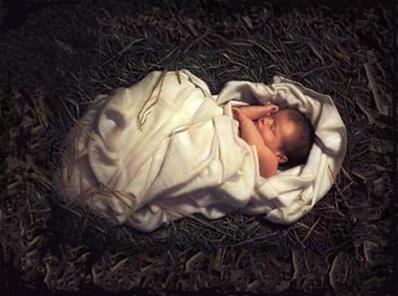
Since this all happened days before Christmas, I was thinking of another baby, too: A New Testament baby who was the embodiment of the “still small voice” in 1 Kings. Isn’t that just like God? He doesn’t show up like you’d expect, in the earthquake, wind, or fire, or with the rich, powerful, or lovely; He shows up in the hospital corridors, amid those who suffer and those who serve. He shows up as a helpless newborn baby, born in a barn on the back edge of an empire. There may have been choirs of angels in the sky, but God lay in the straw crying for milk.

On this most atypical of Christmases, I learned to stop scanning the skies for those angel choirs, and to listen instead for the still, small voice in the dark.

On the Art of Waiting

bank_of_river_a_fisherman_is_waiting_for_fish_2818674488329

“I can’t stand it! I just can’t wait any longer!”

I hear these words from my daughters on a daily basis, it seems. Sometimes they’re spoken in frustration, sometimes in excitement. Always, the object of their waiting is something pleasurable, wished-for. It might be a birthday, time with a friend, a destination, or simply dinner. These days, of course, it’s Christmas. The problem is that they’re not there yet; they have to wait.

“It’ll come,” I tell my daughters repeatedly. “Just be patient.”

Right now, we are smack in the middle of Advent. The major Christian holidays of Christmas and Easter have built-in waiting times attached to them: Easter comes after 40 days of Lent, and the four Sundays before Christmas Day make up the season of Advent. We celebrate Advent by lighting candles (our church lights one candle for each Sunday, but our family has an Advent wreath with a candle for each of the 24 days prior to Christmas.) We open the doors on Advent calendars (our family prefers the ones with a small piece of fair-trade chocolate for every day of Advent.) We play Christmas carols and decorate the house.

In these modern times, we also spend Advent shopping, addressing Christmas cards, and running around to a dizzying variety of holiday parties and events.

I was surprised this year when I heard an interview with the British poet and priest Malcolm Guite, in which he said that Advent used to be a time of quiet, a time to stay in, a time to be thoughtful. The celebratory part of Christmas would begin on Christmas Eve and last for the twelve days between Christmas and Epiphany; Advent was a time to be still and wait.

But we don’t like to wait, especially in our current culture of high-speed internet, movie streaming, and free two-day delivery. The way in which we spend modern Advents is further evidence of our impatience: We distract ourselves from the wait by filling the days with a flurry of activity. How can we be still when there’s so much to buy, do, and bake?

Click here to continue reading this week’s “Faith in Vermont” column in The Addison Independent. 

Holiday Hullabaloo Makes for Tired Mom

christmas-cookies-1539360565xu4

We were just between the main course and dessert of our Thanksgiving meal, when my daughters asked when we could start decorating for Christmas.

Once I’d convinced them that it was not appropriate to begin ripping down the Thanksgiving gourds, turkeys, and autumn leaves and to retrieve the Christmas boxes from the basement immediately, they began happily making plans for the Advent season in between bites of apple pie.

“Oh, I can’t wait to make the Christmas cookies!” my ten-year-old exclaimed.

Click here to continue reading this week’s “Faith in Vermont” column in The Addison Independent.

Meditations on Stick Season

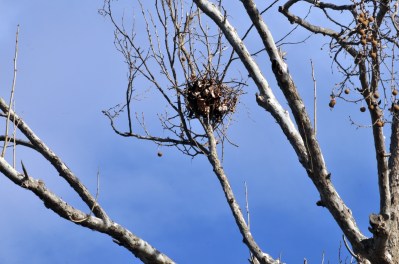
bird-nest-in-tree

I’m not sure if I can still call this “stick season,” since snow has lain on the ground for a week now. The most accurate definition of stick season is the period of time between the fall of the last golden leaves and the fall of the first sparkling snow. It’s not really a season at all – just a week or two between late October and early November, a time when the view out our windows displays only grey sticks against the grey sky.

But early this morning as the sun was rising and I was feeding the baby, I couldn’t see the icy snow on the ground; all I could see were the bare branches of the aspen trees outside my window.

Click here to continue reading this week’s “Faith in Vermont” in The Addison Independent. 

The Only Alpine Slide in Vermont

IMG_1717

Vermont is a small state, so it’s easy to assume that after living here eight years we would be aware of all the attractions Vermont has to offer young families. But a couple of weeks ago, we were surprised when a friend told us about Bromley Mountain’s alpine slide.

I’d never heard of an alpine slide before, and for a good reason: There are only 37 such slides in the world. Alpine slides dot Australia, Europe, and Asia, but the United States slides tend to be located out West, and the Bromley slide is the only alpine slide in Vermont.

Click here to continue reading the latest “Faith in Vermont” column in The Addison Independent!

Adventures in Back-to-School Shopping

size0

Our family went back to school the day after Labor Day. The Addison County schools began the week before Labor Day, but since we homeschool I figured: Why be crazy? (My daughters take a great deal of joy in their delayed start; every year they fantasize about appearing on the Mary Hogan School sidewalk on the first day of school in their pajamas, munching doughnuts and waving to their friends as they get off the bus. What prevents them from putting this plan into action is that they’re not even closeto awake at that time.)

One of my favorite things about homeschooling is that I feel like I’m learning (or re-learning) right along with my daughters. As I remind them constantly, you’re never too old to learn, to grow, to change. Which may be why, this past weekend, I did something I thought I’d never do: I took my daughters shopping at big chain stores in Williston and Burlington.

I still remember our family’s first trip to the stores in Williston. We’d just moved to Vermont, and we needed to pick up a lot of cheap, basic home furnishings. We loaded our three daughters, aged three months through three years, into the minivan, and drove north for an hour. At those ages, an hour drive passes in dog years; we kept the minions pacified by tossing fruit chews into the backseat at regular intervals, and braced ourselves for long stretches of baby wailing. When we’d lived in California, an hour drive took us to wine country; driving the same distance for a bunch of chain stores hardly seemed worth the hassle. “I will do anything possible to avoid this drive,” I recall thinking to myself.

For eight years, I did avoid it. But now we have a tween, and our tween “needs” to go to Old Navy.

Click here to continue reading this week’s “Faith in Vermont” column in The Addison Independent.

Walking the Labyrinth

14598109107_0c082c8ee0_b

Were you to ask me what our family has done this summer, my response would be, “Very little.”

This summer, my daughters decided they wanted to do nothing. With the exception of a handful of brief or sporadic local activities, they shook their heads at any sort of camp or sport. Many of their friends head to sleepaway camp for weeks on end; not one Gong daughter has even a passing interest in such a thing – and, as a former miserably homesick camper myself, I’m not inclined to push it.

Sure, there was the weeklong vacation in Maine. A couple of trips to the lake and the pool. A few outings to local museums. And that’s about the sum total.

Now, this isn’t my first rodeo: When it became clear that our summer calendar was going to have its fair share of blank spaces, I printed out a nifty little sheet for each daughter with the heading, “My Summer Goals.”

“Just think of three things you want to accomplish this summer, and write them down,” I instructed them. “That way, you won’t feel like you didn’t get anything done this summer.” This is parent code for: Good Lord, we’ve got to have at least a little bit of structure or we’re all going to KILL EACH OTHER!

Click here to continue reading this week’s “Faith in Vermont” column in The Addison Independent. 

Inside the Blue Whale

blue_whale_clip_art_19546

This past week, as I’ve done for the past six years, I spent three straight days at Branbury Beach State Park, where I spent three hours each day teaching nature classes to children aged 5-11 as part of an annual summer camp run by our church.

On the second day of camp, my nature theme centered around blue whales, so I dug up a copy of one of our family’s favorite blue whale picture books (recommended years ago by my friend Amy, of Vermont Book Shop fame): Billy Twitters and his Blue Whale Problem, by Mac Barnett. The story centers around Billy Twitters, a boy who won’t do his chores, and who gets a whole new sense of responsibility when his parents buy him a blue whale to care for. In the end, Billy moves into his blue whale’s massive mouth, concluding: “Sometimes the only way to escape from the problems caused by your blue whale is to spend some time inside your blue whale.”

That line haunted me. After reading it aloud three times to my campers, I was certain that Mac Barnett was trying to tell me something profound, but it took me a while to pinpoint just what.

Billy Twitters moving inside his problematic blue whale reminds me of how our family has been dealing with death lately.

Click here to continue reading this week’s “Faith in Vermont” column in The Addison Independent. 

Spring Travels, Part 2: The Nation’s Capitol

IMG_20190519_202243.jpg

“We never go anywhere!

This refrain has been moaned repeatedly by certain children of mine over the past year. I have about as much sympathy for it as I do the other oft-whined complaint: “I’m bored!

They’ve heard the practical considerations: the expense and hassle of traveling with four young children, the 33 animals (last time I counted) that depend on us, the jobs and activities that constrain our schedule.

Sure, there are obvious benefits to travel for young children: It’s educational and world-expanding. The same could be said of books.

As I frequently remind my children, my own childhood trips were annual summer drives from Northern Virginia to New England to visit family, with occasional side trips. My first journeys to California and abroad didn’t happen until I was in college. And I felt none the worse for any of that; if anything, I got far more out of my travels in my 20s than I would have as a younger child.

My children have already been to California, the Caribbean, andCanada, so they’re miles ahead of where I was at their ages. But until this spring, they hadn’t explored the city of my childhood: Washington, D.C. So, when my parents announced plans to attend a memorial service in Washington, we decided to tag along.

Click here to continue reading this week’s “Faith in Vermont” column in The Addison Independent.

A Room of One’s Own

6bfcddf2fce766b661011ed4ced4032b-open-window-window-view

Our family spends a lot of time at home.

My husband leaves for his office on weekdays, but since I homeschool our daughters, our house is the center of our daily activities. We eat most meals at home, given the expense and hassle of dining out with four young children. Caring for 31 animals (give or take) and a garden during the warmer months limits our ability to travel. All told, I’d estimate that I spend an average of 147 hours a week at home – out of a possible 168.

While I haven’t been able to find a definitive figure, a quick bit of internet research turned up the estimate that the average American spends roughly 45% of their time at home (including sleep), which would translate to 76 hours a week.

I often fail to notice the obvious in my life until it’s pointed out by others. For example, a fellow homeschooling mother with whom I was sharing tea happened to drop the statement that, “Homeschooling is a full-time job.” It was like a jolt of electricity had passed through me. “OH!” I thought. “THAT’S why I’m so busy!”

That same mother, in the same conversation, enlightened me further with the observation that it’s difficult for homeschooling families to have clean, orderly houses because the kids are always there.

“OH!” I thought. “THAT’S why there’s a constant trail of books and art supplies stretching from our entryway up to the girls’ rooms, and a massive cardboard box/transmogrifier/time machine in the middle of the kitchen.  And why any attempt to wipe, vacuum, or straighten away evidence of my four children seems futile, since they’ll just undo it the next minute.”

I’ve also started to wonder if the amount of time we spend at home has something to do with why my daughters keep asking for furniture.

Click here to continue reading this week’s “Faith in Vermont” in The Addison Independent.