And Down Will Come Baby — My Messy Beautiful

IMG_3924
Keep a grip on that baby, ma’am!

My husband and I are raising four daughters in a small town in Vermont. Once you have four children, people assume you have a certain parenting expertise. “Four children! You must be a pro by now!” I hear from friends, colleagues – even our pediatrician.

The truth, of course, is that parenting isn’t a video game; they don’t give you another kid once you’ve mastered the first. I never expected to have four children. But (most days) I love our crazy, noisy brood. And (most days) I love being a mom. I’m far from perfect: I’m always exhausted and often one tantrum away from a breakdown, but I think I’m a pretty good mom.

But I’m a pretty good mom who’s dropped my baby.

In fact, I have – unintentionally, clumsily, stupidly – endangered every one of my daughters during her first year of life.

When our first child was several months old, I set her, in her carseat, a little too close to the edge of the ten concrete steps leading to our front door, while I rummaged around for the keys. I turned to see, as if in slow motion, the carseat wobble backwards and slide down the entire flight of steps.

I swore I wouldn’t make the same mistake twice. I was only partly right.

Because when our second daughter was 4 days old, I was nursing her in bed late one night, attempting to stay alert by reading. Despite my best efforts, I nodded off with her in my arms. I woke to a loud THUD and my baby wailing. She had rolled off the bed (which, thankfully, was only 18 inches from the floor); more accurately, since I’d been holding her when I dozed, I had dropped my newborn.

I didn’t drop our third daughter; instead, when she was 5 months old, I nicked a chunk of skin out of her tiny finger while trimming her fingernails. She bled for the better part of an hour, through two washcloths and countless tissues.

After these incidents, my daughters were fine. In every case, my baby cried for a minute – mostly in response to the panicked signals she got from me, no doubt – and then carried on with being a baby. No daughter has any memory of these events today; no signs of the mental, emotional, or physical distress I feared I’d inflicted upon them.

On the other hand, I was beside myself with guilt each time. Like anybody in their right mind, I’m no fan of hurting babies. Since becoming a parent, there are movies I can no longer watch and books I can no longer read because they feature bad things happening to children. Yet I’d been careless with the very babies I’d been trying so hard to nurture and protect – not once, but three times.

You’d think that the fourth time around I’d have learned something, or at least exhausted all possible disastrous scenarios.

Nope.

The fourth time around, I brought innocent bystanders down with me.

In retrospect, it was a poor choice to use the stroller. The stroller in question was a “Snap & Go” model: a wheeled frame that can hold an infant carseat. This stroller had been through three babies already; it was rusty, the fabric basket was torn, and I expected a wheel to pop off any day. But since our fourth daughter was 8 months old, it only had to last a while longer.

This rickety stroller was my baby transportation while running errands in town the day after a snowstorm. Mounds of snow were heaped beside the sidewalks, and deep puddles of slush pooled along the curbs. Every few feet the stroller would get stuck and I’d have to puuuuuuush it through the slushy snow.

But I soldiered on with the stroller; with two bags and two additional children in tow, it was my best option. Of course I didn’t fasten the belt that secures the carseat to the stroller frame; I hadn’t done that in years — who has time? Also, the baby wasn’t buckled into her carseat, because she’d been fussy in the store and I’d had to unsnap her to soothe her. But since we weren’t driving and she couldn’t get herself out of the carseat, I figured it was fine to simply lay her back in.

The girls and I crossed Main Street. Then, at the curb, I hit a slush trap. The stroller was stuck and wouldn’t budge. I would have to lift it over the curb and onto the sidewalk.

At that moment, my Good Samaritans appeared. This happens frequently when you have young kids in our nice little town, especially when you look as frazzled as I do — someone’s always offering to help me out. In this case it was a young couple — a childless young couple, I later deduced.

“Do you need help?” asked the husband.

“Thanks, I’m okay,” I grunted, wrestling with the stroller while my two older daughters ran ahead.

He didn’t buy my independent act, and stepped towards the stroller. “Well, okay, maybe if you can lift that side…” I said gratefully.

At which point, he lifted not the stroller, but the carseat sitting atop the stroller. And remember how I didn’t have that carseat belted on? So, he lifted the back end of the carseat out of the stroller frame, flipping the carseat right over.

And remember how my daughter wasn’t buckled into that carseat? So, when the carseat flipped over, my baby flew out and landed on her stomach in a puddle of slush.

The husband stared at me, eyes wide, and exclaimed, “Holy s*#%t! There was a baby in that stroller?!?” Apparently, when he saw my other daughters run ahead (good thing they did, so that I didn’t have to define “s*#%t” for them) he assumed I was a normal person with two children, pushing an empty stroller.

When I picked up my daughter (unhurt, just a little soggy), she was totally unfazed. She even smiled at the man who’d just flipped her out of her carseat. Her entire demeanor said: Yup, I’m a fourth child and I have no concept that my life is supposed to be safe and easy.

The couple didn’t notice how fine she was; they apologized frantically. They even offered to give me their names — I guess in case I wanted to sue for damages. (I probably should have jumped on the opportunity and requested a scholarship fund. But I chose the high road).

“It’s really okay,” I reassured them. “She’s a fourth child. This sort of thing happens to her every day. It’s my fault; I knew there was a baby in the stroller. Excuse me, I should probably catch my other children now.” (At this point, my two older daughters were small dots in the distance, oblivious to their sister’s traumatic experience).

As I trudged away, I’m sure the nice young couple stared after me in horror. Perhaps they felt guilty, or perhaps they were wondering whether they should call social services. (In either case, that’s one couple that’s probably going to wait a while before having kids.)

SO, I am living proof that time and experience don’t necessarily make you a better parent; they just make you an older parent. I’m as capable of dropping my fourth child as my first.

But I do think that time and experience can bestow perspective.

Looking back, I see these little traumas – the times I accidentally endangered my babies –as valuable life training. I can even chuckle at these stories now, because they ended well (thankfully — I know that’s not always the case). But regardless of the outcome, the point is: We cannot keep our children from being hurt. Futhermore: It is highly likely that, despite our best efforts to love and care for our children, sometimes we will be the ones doing the hurting. As my daughters grow older, I’m less likely to physically drop them (phew!). But in the future, try as I might, I’m surely going to leave them with emotional wounds.

Parenting is messy like that.

But there’s beauty in the mess, if we look for it. When I unintentionally hurt my children – physically or emotionally – I can allow myself to be crushed by guilt. OR I can see it as an opportunity to experience grace: grace from my daughters when they forgive my slip-ups (or, better yet, don’t remember them!), and the grace that I extend myself by acknowledging my imperfection and moving forward (God helps me with that — a lot).

The most beautiful things to emerge from our parenting messes, though, are our children. My daughters astonish me with their resilience, their ability to weather the hurts that the world — and I — throw their way. I pray that they will always find the strength and grace to emerge from a puddle of freezing slush…and smile.


This essay and I are part of the Messy, Beautiful Warrior Project — To learn more and join us, CLICK HERE! messy-beautiful-450b

Meeting Your Meat

A cuteness bonanza. (Photo by Fiona Gong)

Last month, we loaded our four daughters into the minivan on a Sunday afternoon and drove to Duclos & Thompson Farm in Weybridge to see the new lambs and piglets.

This was our first time at the Duclos & Thompson open barn, an event that for many local families is an annual sign of spring — much like the appearance of sap buckets on the maple trees, or red-breasted robins, or removing your snow tires. Like those other rites of spring, it’s quite possible that the new lambs and piglets will arrive when there’s still snow on the ground; that March weekend, there was a mountain of snow next to the Duclos & Thompson barn that served as a secondary diversion for all the children present.

The primary attraction, of course, was inside the barn: lambs! Two floors worth of black and white lambs sleeping, eating, frolicking, and climbing atop the bigger sheep. So many lambs, plus a little pile of piglets nursing on their mama. It was a cuteness bonanza.

Click here to continue reading my latest “Faith in Vermont” column for The Addison Independent.

Talk to Me

IMG_3022

Last month I took my oldest daughter on a weekend “Mommy Date.” It’s amazing how quickly you go from being with your kids all the time to feeling like you never see them. (That’s not necessarily a bad thing, mind you). This year, between all-day kindergarten and activities and three younger children, my big girl and I don’t have much time together. And this is a girl who needs a lot of time.

This Mommy Date was a combination of consumerism and sugar: I took her to T.J. Maxx to use the spending money she’d saved up (Her choice: an ENORMOUS plush horse purse. Totally practical.), and then to the bakery for lemonade and brioche (She’s moved on from cookies. I blame Fancy Nancy.)

I’ve had enough of these Mommy Dates to know not to expect any deep, quality conversation. In my experience, when you load down a Mommy Date with the expectation that there’s going to be some sort of meaningful relationship breakthrough, you’ll almost always be disappointed. On previous Mommy Dates I’ve  asked probing questions about my daughter’s deepest thoughts and feelings, only to be answered with monosyllabic grunts. (The really meaningful conversations always seem to happen in the middle of the bedtime story that I’m trying to rush through because bedtime is running 20 minutes late.)

This is Example #5,784 of How My Daughter is NOT Like Me. When I was growing up, I wore my heart on my sleeve, especially when talking with my mother. I told her everything: my deepest thoughts, dreams, fears. In retrospect, of course, there was a negative side to this openness; it’s a wonder that my mother had so much patience with me, and I learned pretty quickly after getting married that I couldn’t expect the same kind of fascination with all things ME from my poor husband.

But because I was such a confessional child, I can’t understand — I worry a little, in fact — when my daughter keeps her cards so close to her chest.

For instance, one day she came home from school holding a sweet little apology note (“I sorry becase I ben mean.”) from one of her good friends. It turns out that the day before, this girl had taken my daughter’s seat at a table, there was a dispute, and mean things were said. Now, the friendship was repaired. And this was the first I was hearing of it.

“How did you feel about this yesterday?” I asked. “Did it bother you?”

“No,” my daughter shrugged.

“Well, friend things can be hard sometimes. But, you know, when things like this happen you can always talk to me about it.” I said.

“I know, Mommy,” my daughter replied, practically rolling her eyes “I AM talking to you about it.”

She had me there. But she was telling me about it after the fact. When I was her age, I’d have come home from school in tears and spent half the night reviewing the dispute with my mother. It’s hard for me to believe that any child of mine could be so…stoic.

When I hear about these things after the fact, it makes me wonder what I don’t hear about. My mother had one child; there aren’t enough hours in the day for all four of my daughters to share with me the way I did with my own mother — even if they wanted to.

But there we were at our cozy little table in the bakery, munching our brioche. This time, between sips of coffee, I asked simple, fact-based questions. “What’s your favorite favorite thing to do in school?” “What friends are you really enjoying these days?” “What do you guys like to play on the playground?”

And with that last question, I hit the jackpot.

My daughter talked and talked — easily a 10-minute monologue — about the games that she and her friends play during recess. On the surface, it was the superficial ramblings of a kindergartener, but embedded in her chatting were revealing details about who she likes, the kindergarten social structure, and where she sees herself fitting in. Bottom line: It sounds like the kids are all right.

So, I’m coming around to a new way of thinking as we enter this latest stage with our daughters — this stage in which they’re out of sight for so much of each day, and I rely on their own reporting on their lives away from home. I’m thinking that it’s okay for my daughters to be different from me; if they’re happy to tell me about issues only after they’ve been resolved, so be it. And if there are things about which I never hear, so be it, too. Their mental and emotional health do not hinge on whether they report back on every detail of their lives.

As with so much of parenting, I need to take a deep breath, open my hands, and just trust.

What I can do is be available. And keep asking silly questions. And keep my ears open to really hear their answers.

Open hands, open ears: not a bad mantra for parents.

Guess I’d better increase my brioche budget….

Just A Season….

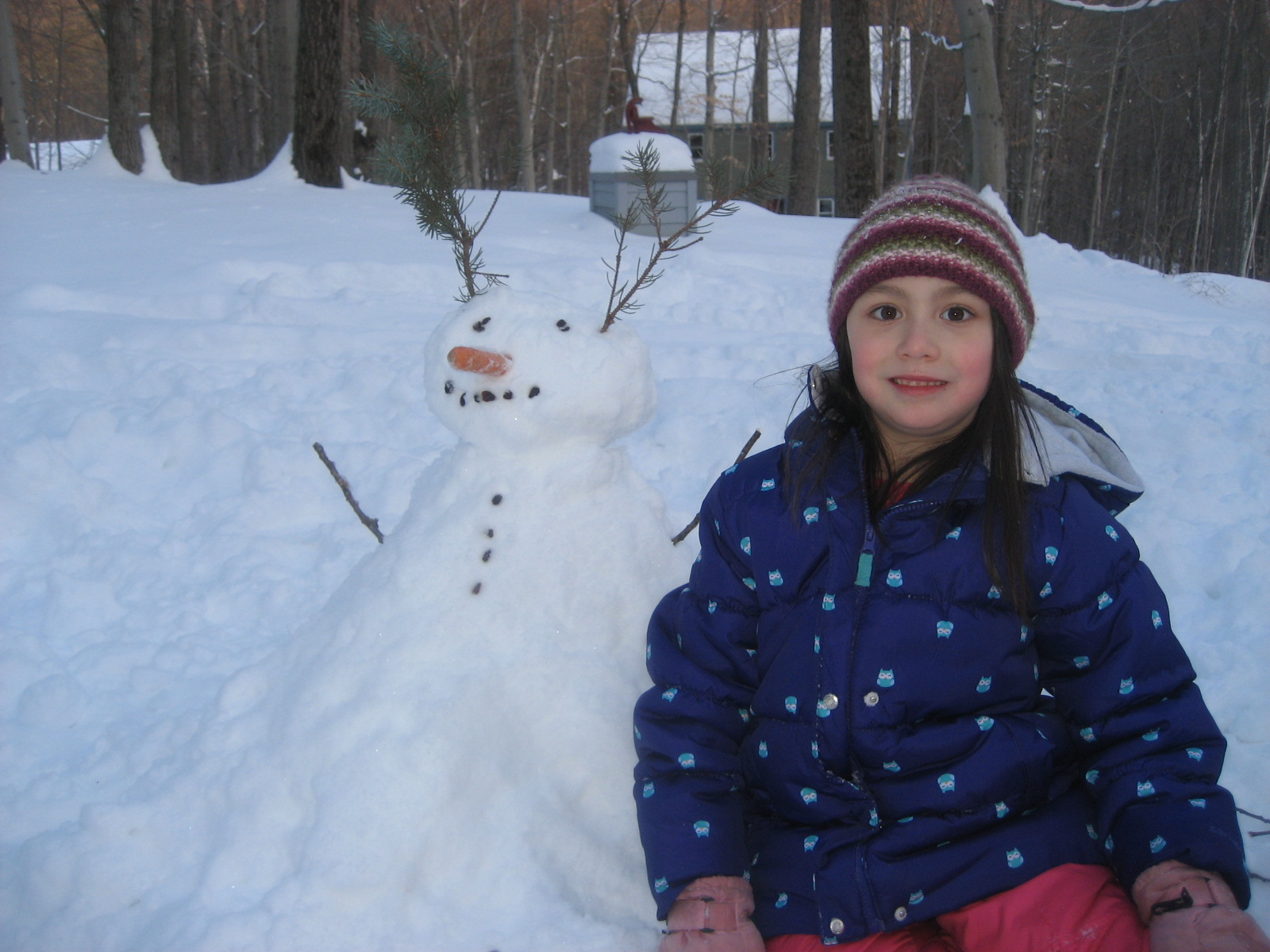
Hang in there, Mr. Snowman; it's just a season!
Hang in there, Mr. Snowman; it’s just a season!

“It’s just a season.”

I heard that phrase tossed around by other mothers all the time after I had children. Its intent was to convey the fleeting nature of the various woes and sacrifices we endure in the name of parenting; to give hope that this, too, shall pass.

Haven’t slept a full night in months? “It’s just a season.”

No date night with your spouse since Junior arrived? “It’s just a season.”

Can’t finish a book longer than Green Eggs and Ham? “It’s just a season.”

Excercise? HA! “It’s just a season.”

Feeling conflicted/stressed/embittered about work/life balance? “It’s just a season.”

I started using the phrase, too, because I believed it. Once you’ve survived your first child’s newborn stage, you do see how quickly things change. The self-denial that’s necessary in early parenting (like not showering for a week, the better to constantly hold your newborn) evaporates once your toddler can play by herself — and the next thing you know, you’re putting her on a school bus that whisks her away for 7 hours a day.

Hope is important. During the first years of parenting, sometimes it’s all you’ve got.

However, now that I’m a new parent again for the fourth time, I’ve been doing the math. If we consider the first five years of a child’s life “that season” — the time during which we’re most likely required to put our own plans and desires on hold — then from the birth of my first child until the moment I put my fourth child onto the school bus, 11 years will have elapsed. Eleven years is not “a season;” 11 years is more than a decade, more than a quarter of my life-to-date.

This scares me, because lately I’ve noticed that I’ve been using “It’s just a season” to justify what might charitably be called “complacency” — and what might truthfully be called “laziness.”

So, I’m not as involved in the community, in volunteering, in helping others as I might like? “It’s just a season.”

So, I’m terrible at keeping in touch with friends who live elsewhere? “It’s just a season.”

So, I have all these creative ideas percolating but all I can manage is to write a couple of 900-word blog posts a week? “It’s just a season.”

So, we used to dream about traveling the globe with our children, but we haven’t been more than 3 hours from home in almost 4 years? “It’s just a season.”

This is intended neither as an underhanded way of fishing for compliments, nor as an overhanded smack to anybody who doesn’t do these things or have these goals. This is just an honest assessment of where I am right now: I worry that I’m getting too comfortable.

It used to be a stated goal of our marriage and our individual lives that we wanted to get uncomfortable whenever possible. Doing things that were out of our comfort zone — like managing a school build in central Tanzania, living in a neighborhood where our bikes got stolen and our windshield got shot out, or even just hosting a big group to dinner at our place — was good for our souls, because discomfort forces reliance on things greater than yourself: FAITH.

But throw in four kids, home-ownership, and a steady job, and suddenly comfort looks mighty appealing. It takes us 30 minutes to get out the door. Not to mention, there’s malaria out there….

It’s both unavoidable and appropriate that parenthood changes one’s risk tolerance. Things like travel now involve the safety of four additional little people — and have also become really, really expensive. But I suspect that, too often, I’m hiding behind my children, using them as an excuse to take the easy way out of experiences that might be slightly complicated.

If  the “It’s just a season” mentality encourages us to delay adventure and challenge until some elusive future when things will get easier, it also encourages us to miss the present moment. “it’s just a season” implies that where we are right now — in the trenches with very young children — is a time to be endured, the way we grit our teeth and wait out the grey, frigid, shut-in season of late winter by focusing on the promise of coming spring. So I sit them in front of a video and count the hours until school starts again….

Writing this from the middle of my season, I worry that I’m missing it: missing both the chance to embrace challenge, adventure, and discomfort — and also missing out on the quieter joys of having a house full of little ones.

When I began writing this post, I didn’t know where it would lead. (That’s usually the case, which is why writing is one of the few adventures in my life these days). Now I see that it was leading to two goals. Here they are, my attempts to thrive rather than just survive this season:

1. I resolve to do at least one thing that makes me uncomfortable each week, whether that’s picking up the phone to call an old friend or flying to Uzbekistan.

2. I resolve to feel grateful for at least one thing each day, to find joy in my present circumstances, even if that circumstance was playing My Little Pony on the carpet for hours.

I have a hunch that, when this season ends in five years, I’ll find that the next season isn’t quite as rosy as it looked from a distance; having four children in school may not be as freeing as I’ve expected. I won’t know for sure until I get there, but at the very least I can try to live now in such a way that I won’t look back and wonder, “Where was I those 11 years?”


Adventures in Teeth

No teeth were harmed in the taking of this picture....
No teeth were harmed in the taking of this picture….

[WARNING: Tooth fairy spoiler below!]

One of the fun things about having a six-year-old and a six-month-old in the house is the synchronicity around teeth; during a one-week period this January, Fiona lost her two bottom front teeth just as Abigail’s two bottom front teeth came in.

So now Abigail has two tiny teeth, which is awfully cute but not that interesting. I’ve seen this happen three times before. And I don’t know about you, but I find it difficult to get excited about new baby teeth, since they typically get the blame for all the baby’s fussiness. (To be honest, I could never verify that teeth were to blame with any of our babies; it wasn’t clear to me whether they were fussing from dental distress, or simply because they were babies, and babies fuss. Nevertheless, starting at 2 months of age, whenever one of our babies would holler, some wise-looking person would nod and say, “Ah, teething!” And I’d nod wisely right back, because, hey, I know what I’m doing.)

Fiona losing her teeth, though — that was exciting! This was the first time any of our girls had lost a tooth. Her teeth had been loose for over a month when they finally detached. We got the news first thing in the morning: Erick and I were still in bed when I heard the girls’ bedroom door slam open and footsteps pounding down the hall.

“MOMMY!” Fiona shouted, throwing open our bedroom door, “My tooth fell out and I can’t find it!!!”

I confirmed that her tooth was, in fact, no longer in her mouth. She didn’t know what had happened; she’d just woken up and realized her tooth was gone. I assumed that she’d swallowed it in her sleep, but I dutifully followed her back down the hall to do a sweep of her bed. This was extra challenging because Fiona had recently decided she was too afraid to sleep in her own bed, and had moved herself into Georgia’s bed. So I was searching for a baby tooth in the pre-dawn light, in and around a bed that contained two girls’ worth of stuffed animals, books, blankets — and a still-sleeping Georgia.

Just as I was about to give up hope and put a positive spin on the missing tooth (drawing heavily from Sal’s lost tooth in the classic children’s book One Morning in Maine) — I found it!

There was much rejoicing. The next task was figuring out how to deliver the tooth to the tooth fairy. Thankfully, because I was an only child and my parents never discarded any of my childhood possessions, I had my old “tooth pillow” ready for just this purpose. The tooth pillow has a little pocket for the tooth; in the morning, the tooth has been replaced by a coin.

The best thing about the tooth pillow is that it provides an alternative to the traditional tooth-under-the-pillow scenario. What with three girls sharing a room, and — as aforementioned — Fiona sharing a bed with Georgia, I was a little nervous about performing my tooth fairy duties in secrecy. “Here’s your tooth pillow,” I said to Fiona, “Put it at the foot of your bed.”

She didn’t buy it. Who started this tooth-under-the-pillow business, anyway? According to Fiona, failure to place her tooth under her pillow would confuse the tooth fairy and negate the tooth-coin switcheroo. So we reached a compromise: The tooth would go into the tooth pillow, and the entire tooth pillow would go under Fiona’s pillow. It would be bulky, but easier to locate than a lone tooth.

One more thing: Fiona wrote a note to the tooth fairy, requesting that her tooth be returned to her (via the tooth pillow) the next night. So now my tooth fairy duties included two nights of pillow-groping deception.

I tucked Fiona and her tooth pillow into bed that night, and all was well.

Five minutes later, I heard the girls’ bedroom door bang open and the sound of footsteps thundering down the hall. This is not unusual, and typically involves requests for water/potty/bandaids/ice packs/conflict resolution. That night, though, Fiona stood at the top of the stairs shouting, “MOMMMY! My OTHER tooth just fell out!!!”

Turns out that Fiona had allowed Georgia to wiggle her other loose tooth — the one next to the tooth that she’d lost that morning. And Georgia, always energetic, had wiggled the tooth right out of Fiona’s mouth.

So, that night, the tooth fairy successfully replaced two teeth with two quarters. And the next night, the tooth fairy returned both teeth to their original owner.

A few days later, we went to church and saw Fiona’s best friend, who had just lost her first tooth, too. Much excitement! “Congratulations!” I exclaimed, “Did the tooth fairy visit you?”

“Yes!” Fiona’s friend replied, “And she gave me one five dollar!”

“One five dollar”?!? In case you missed it, OUR tooth fairy gave Fiona two quarters — one for each tooth. But apparently, just across town, the tooth fairy was shelling out five bucks for a single tooth.

I cast a panicked look in Fiona’s direction, but she didn’t seem to notice that anything was amiss. I don’t know how long that’ll last, though. WHY has nobody yet thought to standardize tooth fairy exchange rates? My only hope is that all of her teeth will fall out before she learns the value of money. Because our tooth fairy is going to stay cheap; after all, unless our other daughters are as efficient at losing teeth as Fiona, the tooth fairy still has to make 78 trips to our house.

Live from the Pajamadome!

IMG_3092

My husband, Erick, has very few vices; it’s almost annoying how disciplined he is. (And he’s so humble that if you compliment his discipline, he’ll say, “No, actually I’m the most undisciplined person ever; that’s why I have to be so disciplined.”) He’s installed internet-blocking software on all of his electronic devices. He does the stretches that his chiropractor assigned him every single day. And if he’s going to drive within a three-hour period after drinking, he’ll order nonalcoholic beer.

But I know the real Erick, so I’m here to tell you that he does have ONE vice: sports talk radio.

For those lucky few who’ve never experienced it, sports talk radio refers to any of the hundreds of national radio stations that feature discussions about sports — all sports — all day long. Typically these sports programs are hosted by a male; sometimes there are two or more hosts, but they all sound the same: like cocky college freshmen who’ve drunk too much Red Bull and are talking through a tin can. They speak quickly, and loudly, and confidently. Often, they’ll take calls from listeners, but the content is all the same: dissecting yesterday’s game, giving the play-by-play for the game happening now, or forecasting the next game or draft.

I can’t stand to listen to sports talk radio. Not only do I have no idea what the hosts are discussing, but it all sounds so much the same that it becomes a nonsensical buzz in my ears (no doubt similar to what Erick hears when I tell him about my day): blah blah blah blah. And yet, whenever possible, Erick will turn on sports talk radio. I’ll leave him washing dishes in the kitchen listening to our local NPR affiliate, and when I return: sports talk radio. If he takes the girls out in the car, he’ll veto whatever Disney soundtrack in the CD player; the girls will return home complaining, “Daddy made us listen to sports talk radio!”

Little did I expect that sports talk radio would become my biggest ally in the getting-ready battles.

If you’ve had any experience with children, you’re probably familiar with the getting-ready battles. These are the standoffs that happen whenever a transition in activities requires a child or children to get ready. Prime times for getting-ready battles include, but are not limited to: getting dressed and washed up in the morning, getting out the door for school or activities, getting ready for bed at night, and getting to the table for any meal.

The funny thing about getting-ready battles is that they recur at predictable moments every day. That’s what makes them SO frustrating; every day I find myself repeating the same things, with escalating volume and threats: wash your hands, get on your boots, time to get dressed, brush your teeth. And every day my children stare at me blankly, as if thinking, “Hang on a minute, it’s morning and you expect me to get dressed? And eat breakfast??? When did THIS start happening?!?”

One day, my two-year-old said to me, “Mommy, I can’t hear you because you’re always talking.”

The toddler wisdom of that statement was undeniable. And as I pondered the problem, I wondered, What if it’s not ME talking?

One night at bedtime, it all came together. I was doing my usual routine, repeating, “Put on your pajamas….Put on your pajamas….Put on your pajamas!” Then I paused and said, “Hey, girls, want to do sports talk radio bedtime?” They nodded, intrigued.

So, I put on my best sports talk show host voice (as I’ve said, they all sound the same) and announced, “LIIIIIIIVE from the Pajamadome, it’s the Gong Girls’ Bedtime! It’s the first round, putting on pajamas! Whooooo will have their pajamas on first? Fiona’s looking focused, Georgia’s a close second, but Campbell’s the dark horse!”

As they raced down the hall to brush their teeth, I got more sophisticated. “Aaaand now, for a toothbrushing play-by-play, let’s hear from Frank on the field.” “Yeah Ted,” I continued, deepening my voice, “Toothbrushing raises the game to a whole new level. To be a star toothbrusher you have to get the toothpaste on the brush, and then clean the fronts and backs of both the top and bottom teeth! And then there’s the flossing…..”

It worked like a charm. The girls loved it; I’d never seen them move so quickly. It turns out that when Daddy’s background noise applies to them, it’s a major motivator.

Sports talk radio hasn’t been a total victory in the getting-ready battles. I can’t do it all the time, because then they’ll start tuning me out just like when I use my normal voice. And occasionally it backfires if somebody thinks I’ve unfairly declared a “winner,” and tantrums ensue. I’ve tried taking more of a “Team Gong” approach, but then they miss the individual accolades, so I can’t win.

In any event, it’s a tool. It’s worked for us, and it’s a lot more fun than yelling.

Now I’m trying to take a more creative approach to our child-management issues. I’ve even rewritten the words of our daughters’ current favorite song, “Let it Go” from the movie Frozen, in order to suit my needs (Let’s go/Let’s go/Can‘t wait for you anymore/Let’s go/Let’s go/Get in the van and close the door/I don’t care/If you want to play/Get your coat and shoes ON/Tantrums never bothered me anyway!).

Next on the list: Dinnertime conversation, which currently consists of three girls shouting over each other. One night, Erick came down to dinner holding a large speciman from our shell collection. “So, girls,” he began, “there’s this book called Lord of the Flies where they use a ‘Talking Shell….'”

That one ended about as well as it did in the book.

The Problem with Playdates

A quiet moment during a recent playdate.

Actually, there is no problem with playdates; in and of themselves, they are wonderful things, providing socialization for children and breaks for parents.

I do have a small problem with the term “playdate,” however. The word has become widely used across geographic boundaries — or, at least, it’s used in both California and Vermont. I never heard the word “playdate” until I started having children of my own, and at first I thought it was absurd; it struck me as pretentious, corporate. Back in my day, we’d say we were “going over to Susie’s house to play,” or “having a friend over.” But I guess in this age of efficiency, everyone’s too busy to use that many words. “Playdate” it is.

Here, based on my own experience, is the evolution of the playdate:

Birth to age 2: These aren’t really playdates; they’re “mommydates.” Mommydates serve a valuable purpose, but let’s not pretend that they’re really for the kids: Mommydates are for the mothers. They are:  1) chances to leave the house and have some adult interaction, and 2) chances to compare your baby to everyone else’s baby and feel either reassured or insecure.

Age 2: The Parallel Playdate. This type of playdate involves two or more children who are playing near each other, but not with each other. A parallel playdate usually requires lots of parental suggestion, as in: “How about you go play with Johnny? Remember your friend Johnny, right over there?”

Age 3: The Contentious Playdate. As children become more aware of other children, they begin to see those other children as adversaries; competitors for the best toys, books, and dress-up clothes. These playdates involve brief moments of peaceful, interactive play, followed by long stretches of conflict resolution.

Age 4: The advent of the Drop-Off Playdate! This is the beginning of the golden age, when you can take your child to a friend’s house and leave them there. Two four-year-olds playing together are reliably housebroken, and will typically be able to entertain each other for long stretches without major, parent-calling conflict.

Age 5 and beyond: Smooth sailing! The harmony and endurance of the four-year-old playdate continue. One added benefit, at least in my house (based on a complicated set of calculations having to do with the nature of our yard, the town in which we live, and the presence of two large dogs) is that by age 5+ I feel confident allowing my children to play outside by themselves. This may occasionally backfire, as it did last month when the girls had two friends over. Everyone played contentedly in the snow for 90 minutes. I checked on them regularly (I was inside with a napping baby and treats baking in the oven), and could see that they’d found their sand pails and shovels in the shed and were busily filling the pails with snow. What ingenuity! I thought. It was only later, when I realized that they’d actually been filling the shed with snow and I had to shovel two inches of snow off the shed’s wooden floor, that I had second thoughts about independent outdoor play.

All the same, playdates are wonderful. But over the years, as we’ve added to our family,  playdates have become a little more complicated for us. Playdates with a family of four children raise some issues, like:

1. It’s scary to invite us over.  The number of playdate invitations we receive decreases each time we add a child. We had four kids in five years, so all of our children are quite close in age. Our first three daughters have  friends in common, which makes it hard to invite one Gong Girl without including one or two others. Not many people are brave enough to invite ALL of our children over to play, and for good reason — we’re overwhelming. And once you invite more than two Gong Girls, it’s pretty much a given that I have to come along, for crowd control. Then you’ve got three children, a mom, and a baby storming your house; you’d better time it well so that you don’t have to feed us! (What’s amazing is that so many generous friends still DO invite our family to playdates!)

2. It’s scary to come over. Most of the families we know have one or two children. When we invite these children over, first I have to convince the parents that REALLY, we want your child to come over! It won’t be too much for me to handle! Additional children actually HELP, because they distract my daughters from me! Once that’s been accomplished and the guest children come through our door, they’re instantly outnumbered. It’s a very special child who’s not completely overwhelmed by the attentions of a six-, four-, and three-year-old (with a host mother who’s distracted by a baby). I understand; it’s hard enough to parent these girls — I can’t imagine having to play with them!

3. The problem of the younger half. I spent a lot of time arranging social interactions for our first two daughters. Back when they were toddlers, I had energy and a desire to “socialize” them outside of their own family. Then came daughter #3. She got dragged around to all of her big sisters’ social events and activities, so there was no time left over to focus on a separate social program for her. I justified this by thinking, She’s got TWO sisters; she’s getting plenty of socialization within our house! The result is that our third daughter has almost no friends her own age. She tags along at her sister’s playdates (“Hey, guys, wait for me!”). We allowed her to invite friends to her third birthday party, and she chose two of her big sisters’ friends, aged five and six. When I take her to activities with her same-aged peers, I know almost none of the other parents or children there, and I don’t make the effort I should to meet them because a) I’m so tired, and b) my social glass is pretty full with the relationships I’ve amassed via our oldest daughters.

I can only imagine how much worse this will be for daughter #4.

The solution to all of the above problems, as with so many problems, is: school. Once our daughters go to school, they’ll each make friends of their own. With one daughter already in kindergarten and one in preschool, it’s increasingly the case that families invite only one of our daughters to play. It’s not quite accurate to call this a “solution,” though, since it turns me into a taxi driver with one drop-off and three unwilling passengers, at least one of whom is screaming, “I want to play, too!” And I realize that, in its final form, this “solution” will have me driving in four different directions, while our house becomes a revolving door to four sets of friends.

None of which really sounds all that bad, especially since by that point I’ll have four girls in school all day long. Vive l’education!

Sun Bread and Commitment

IMG_3948

I’m making Sun Bread with the girls today.

Sun Bread comes from the children’s book Sun Bread, by Elisa Kleven. (Elisa Kleven has written many beautiful children’s books — The Paper Princess is another of our favorites. She lives in the San Francisco Bay area, and her illustrations always remind me of the time our family lived there). The story begins with a cloudy day, which is transformed when the baker makes Sun Bread and shares it with everybody. In the back of the book is a recipe for Sun Bread.

Sun Bread became part of our family culture because our daughters’ preschool reads it and bakes Sun Bread every year. Our oldest daughter loved the book and the bread, so I found the book in the library and xeroxed the recipe. Since we’re only halfway through preschool with our kids, I expect we’ll be reading and baking for years to come.

I am not a person who bakes bread regularly, although I’d like to be. It’d been about a year since we’d last baked Sun Bread when, last week, my preschooler asked if we could make it. Since I’d like to be the kind of mom who bakes bread with her children, I said yes; because I’m not a person who bakes bread regularly, this required some preparation, like buying yeast.

Given that the Sun Bread recipe comes from the back of a children’s book, I’m assuming it’s not difficult to make, as breads go. All the same, it involves a number of precise steps followed by a lot of waiting, so when I say “I’m making Sun Bread with the girls,” I’m not really making it with them. It’s still a little much for me to shepherd three young children through a major baking project while holding a baby. When “we” make Sun Bread, I make the dough during naptime and let it rise for an hour. Then the girls shape the dough into a sun (from whence comes its name), it rises for another hour, and I bake it so that it’ll be ready for dinner.

Last week at naptime I dutifully set about making the dough for Sun Bread, and something went terribly wrong. Although I’d followed the recipe successfully several times before, this time the dough ended up a runny, lumpy mess. There was nothing to do but toss it out and admit that I’d wasted the better part of an hour (plus three eggs and an entire stick of butter). I promised the girls we’d try again this week, once I could get to the store and buy some more yeast.

So today was Sun Bread, Take 2. I repeated the same steps as last week, and the dough again looked runny and lumpy. But this time I used my hand mixer to combine the elements, and within a few minutes I had soft, smooth dough. Which led me to the regrettable conclusion that, with a bit more patience and ingenuity last week, I probably could’ve salvaged that dough, too.

Once the Sun Bread dough is mixed — steps #1-4 in the recipe — I’m always dismayed to reach step #5: “Knead dough on greased, floured surface for 8 to 10 minutes.”

Eight to 10 minutes!?!? I always think, WHO does she think I am?!? WHO has the time and endurance to knead bread for 8 to 10 minutes?!?

I stewed about this while kneading, and after three minutes I’d realized that this is probably why I’m not a person who bakes bread regularly: It all comes down to commitment.

I’d like to be a person who bakes bread regularly, a person who starts and completes crafting and sewing projects, a person who cooks new and delicious meals nightly, a person who journals daily, a person who exercises with some consistency. But I’m not. I do each of these things in fits and starts, with short spurts of regularity, but in the end my efforts fall flat. They all require too much commitment.

It would be nice and tidy to file my inability to commit under the “I have four young kids” excuse. But I can’t do that with a clear conscience. The truth is that I was like this well before I ever had kids; it accounts for my difficulty deciding on a college major (biology to anthropology to psychology, followed by graduate school for both education and studio art) and my meandering path through post-college life (teacher to photographer to nonprofit manager to mother to distracted mom-blogger). Another truth is that I know plenty of mothers with young children who have absolutely no problem committing to a number of activities and pastimes.

The problem is me.

I suspect I’m not alone. Our generation expects things to be quick and efficient, and we’ve developed some marvelous tools to spare us the commitment required of past generations, who had to grow and cook their own food, sew their own clothes, handwrite letters and send them via mail, and track somebody down in person in order to have a conversation.

But the tools that make our lives so quick and efficient have trained us to be multitaskers. We now expect ourselves to be able to talk with a friend, send an email, write a report for work, take a picture, supervise children, clean the house, and cook dinner — simultaneously. Multitasking is at odds with commitment; it’s trying to do many things in the shallow end, rather than one thing deeply. I’m not saying that past generations weren’t busy, or couldn’t multitask; I am saying that kneading a ball of dough for 8 to 10 minutes makes it difficult to do much else.

Here’s what it’s easy to do while kneading a ball of dough: think. I thought about my commitment issue, wondered why all of my well-intentioned commitments kept fizzling out, and concluded that perhaps the issue is that I keep trying to multitask my commitments. I expect myself to commit deeply to baking, sewing, writing, exercising — simultaneously. Perhaps instead I need to commit to a commitment. Choose one thing and take it from there.

No question: I choose writing. How about you?

[The Sun Bread, by the way, turned out well and was delicious. Next time I may be brave and let the girls help me with each step of the process. Especially the kneading.]

Scenes From A Snow Day

IMG_3928

It’s snowing again as I write this, which means it’s now been snowing for over 24 hours. I’m not sure of the total accumulation from this Valentine’s Day storm; looks like there’s over a foot on the picnic table, and that’s on top of several inches that we already had on the ground.

I love the snow. Our first two winters in Vermont were uncharacteristically mild. This has been a more “typical” winter (if there is such a thing), and I’ll take it. In my opinion, cold is much more tolerable if there’s snow to play in. Plus, it’s so beautiful. Whenever it starts snowing, I’m like a kid again — looking out the window, hoping for maximum accumulation, rooting for a snow day.

Except that lately I don’t root for snow days.

Today is a snow day.

It’s a snow day, and it’s Valentine’s Day, and it’s Friday, and next week is Winter Break. Which makes this the first of ten straight days of having all my kids at home.

My two oldest daughters recently went to see the new animated Disney film, Frozen. This was a BIG DEAL because it was the first movie they’d ever seen in a theater. (Our town’s little movie theater has only two screens, so there aren’t a lot of kid-friendly choices). They loved everything about the movie and the experience.

I mention this because today — this snow day — I feel like my life has become the Frozen movie. There’s the seemingly endless snow; this time of year, it’s easy to imagine eternal winter. There’s my oldest daughter, who’s been vamping around singing the movie’s Big Hit, “Let It Go” all morning long. (Note to self: Apologize to my family, who endured me belting out “Memory” from Cats for an entire year all those decades ago. There’s nothing worse than a six-year-old attempting a power ballad). Also: there’s the fighting sisters. Throw in a couple of trolls, and that’s basically the movie.

Then again, maybe I’m the troll.

I’ve said this before, but I can’t relate when I see other parents post on Facebook that they’re thrilled when there’s a snow day because they get to spend all that extra time snuggling with their kids and playing in the snow and baking and crafting. I think those are lovely sentiments, and I know that some parents genuinely feel that way. But I don’t, and I feel badly that I don’t.

After I got the snow day call from the school district, I posted a slightly snarky comment on Facebook about how the kids would be in school until July if these snow days kept up. Some people interpreted that to mean that I considered it a bad thing that school would run into July, as in: “Don’t steal my precious summer vacation time with the kids!” On the contrary, making up snow days on the other end is the payoff, as far as I’m concerned. I’ll take all the school I can get!

I love being a parent (most of the time). And I LOVE my children. Honestly? I just don’t love them all together, all day long. It’s challenging to be an introvert with four children. I’m aware that we “chose” to have four kids, and thus are responsible for spending time with them.  Perhaps someday I’ll genuinely look forward to snow days and weekends and summer and school holidays; maybe when the kids get older and aren’t constantly underfoot, or can put on their own snow boots.

Here are some scenes from our snow day:

-One daughter had a tantrum at breakfast because the blueberry pancakes her father had made didn’t include chocolate chips.

-One daughter proclaimed it “The worst Valentine’s Day ever!” and pouted for an hour because I didn’t praise her quick teeth-brushing.

-Erick left for work. (The college didn’t have a snow day; the students — i.e. tuition-payers — can all walk to class). He had to dig his car out at the bottom of our driveway, but he made it.

-Once we got those fires under control, we resumed our regular routine, in which I fielded nonstop, rotating requests from all four daughters (non-verbal, in Abigail’s case).

-I tried, unsuccessfully, to interest the girls in Valentine’s Day crafts.

-Mid-morning, I attempted a baking project, like a good mother: The three oldest girls helped me make pink buttercream frosting to decorate our Valentine’s Day cupcakes. This entailed ten minutes of heart-stopping chaos: each girl demanding a turn with the hand mixer, confectioner’s sugar spilled on the floor and me, Georgia eating frosting by the spoonful, and sprinkles everywhere. (Did I mention I was holding a baby the entire time?) They loved it; I needed a nap.

-Naptime! I put all three big girls on the floor of their room in their sleeping bags, and allowed them to watch the entire DVD of The Lorax.

During my 86 minutes of naptime quiet, I sat at my computer and was reminded that my Valentine’s Day blog post had just published. I was reminded that, in this blog post, I wrote that love usually means doing things that you don’t want to do; dying to yourself on behalf of the ones you love. I realized that this snow day had asked for that kind of love from me, and I’d been pretty trollish about it.

Easy to write, hard to do.

After naptime, a friend and mother of two who lives down the street invited all of us — the four girls and me — to go sledding on their hill. So we all bundled up and went out to play in fluffy snow that came up to my knees. And then, this friend invited us all into her house for hot chocolate. Six children and two parents; can you even imagine what her mudroom looked like after we’d all disrobed and tromped through it??? THAT is love. And on this day, when I’d been so grumpy with my own love, it was also grace.

One Flu Over the Cuckoo’s Nest

IMG_3613

The challenge of writing a bi-weekly column as a mother of four young children is this: Most writing benefits from the writer leaving the house. Seeing the greater world. Having new experiences. While I do occasionally manage to leave the house, it takes 30-minutes to get out the door, and then my attention isn’t so much on the greater world as on the wriggling little people in my care.

Last month, my usual challenge was made even more challenging when our entire family fell sick over the course of a ten-day period. So, because I’ve left the house even less than usual in the past two weeks, I’m going to write about what I know: illness.

Click here to continue reading my “Faith in Vermont” column for The Addison Independent. I promise it’s not depressing….