On Summer Activities, Economic Development, and Overthinking

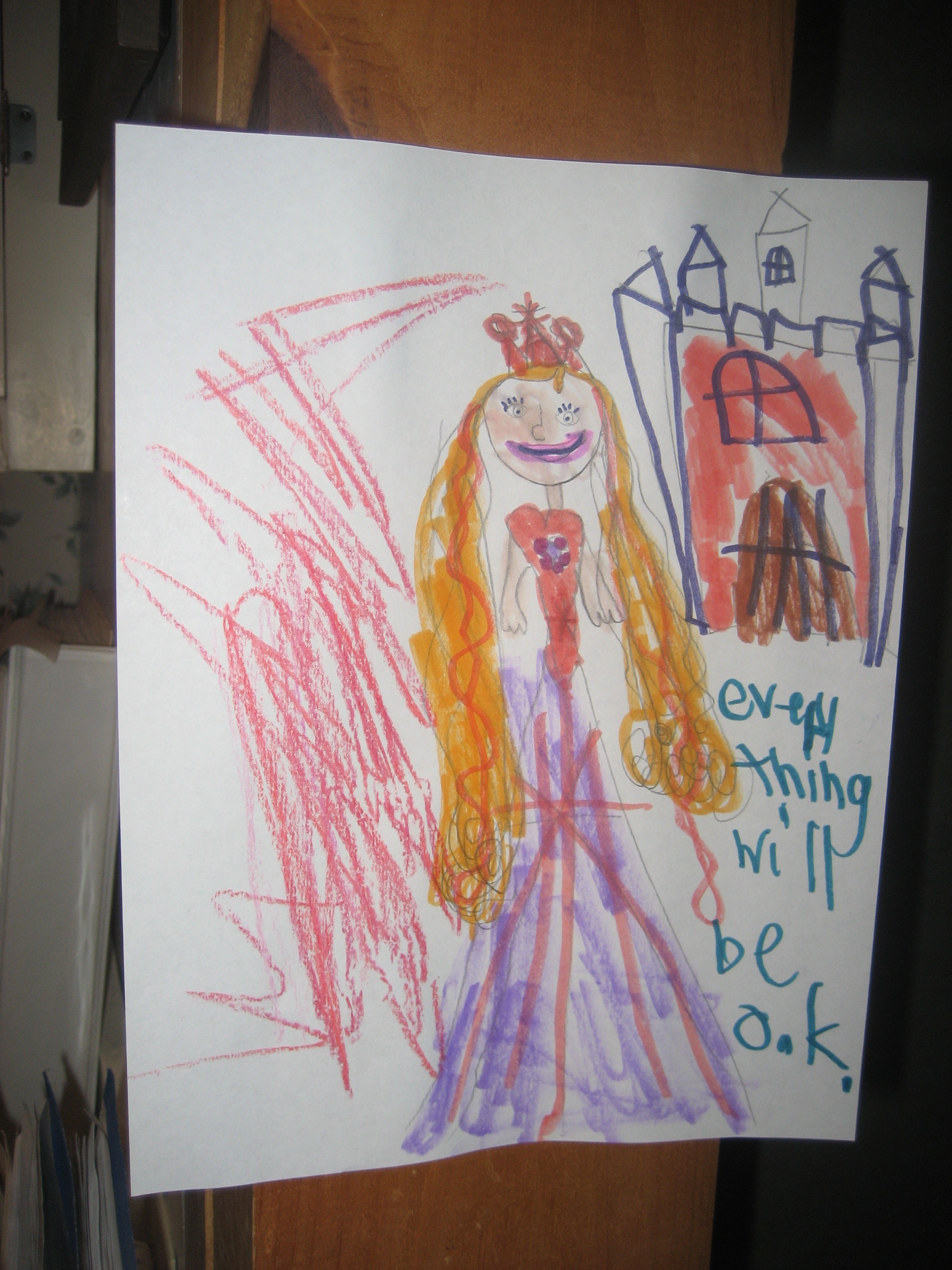
IMG_5314

Because I have children who still live at home, and because the work I do does not (yet) contribute to our household expenses, the standard description for me is: “stay-at-home mom.”

I find this description inaccurate at best. I may be a mother who often stays at home, but the truth is that I spend an awful lot of time trying to get my children out of the house.

As much as I love my children, I never cry on the first day of school. In fact, the happiest moment of my day is usually when the mudroom door closes behind my husband and three-quarters of my daughters at 7:45 every weekday morning, and I put our fourth daughter down for her morning nap. The house is quiet, and for one blissful hour I am free to do whatever I want – even if that just means folding laundry (as it often does.)

I cry on weekends. I cry on snow days. And as summer vacation approaches, I feel panic setting in.

Summer vacation is approaching.

Click here to continue reading my latest “Faith in Vermont” column in The Addison Independent.

You’ve Got Some ‘Splaining to Do

IMG_5199

The tooth fairy is notoriously cheap in our house: Her going rate is 25 cents — one shiny silver quarter — per tooth. Yesterday, while at school, my 7-year-old daughter lost her eighth tooth. She hopped off the bus with her discarded baby tooth sealed in a white paper envelope. That night, she tucked the tooth into the tiny pocket of the tooth pillow that once belonged to me, and shoved the pillow under her three bed pillows. She worried that the tooth fairy might get crushed; I reassured her that no matter how many pillows one sleeps upon, it’s impossible to crush magic.

This morning, that daughter — usually the last to be dragged from her bed — was the first one up. I heard thirteen thuds as she jumped down the stairs. She raced into the kitchen: “Mommy, look!” As she uncurled her hand, I saw…two shiny silver quarters sitting in her palm.

“Wow!” I stuttered. “You got two quarters?”

“Yup!” she beamed. “I wonder why.”

After breakfast, as the girls got ready for school, I cornered my husband in the kitchen. “Did you put another quarter under her pillow?” I hissed.

“No, why would I do that?” he answered in all sincerity. And I knew he was telling the truth; tooth fairy duty isn’t in his job description, and he’d been out late at a meeting the previous night, anyway.

So, how to explain that additional quarter? How to account for my daughter awaking to find, in addition to the Vermont quarter I’d tucked into her tooth pillow the night before, an Idaho quarter as well? Surely there’s a rational explanation; either that, or the tooth fairy is messing with me. Whatever the case, inflation has just hit the tooth market in our house.

In my experience, parenthood is filled with moments like this: happenings that I can’t quite explain, questions to which I have no answer. There are the silly things, like the tooth fairy mystery, or what happens to all those missing socks, or why, when I put our winter coats in the dryer with two tennis balls, I found only one tennis ball when I removed the coats.

Then there are the serious things. The same daughter who brought home her baby tooth from school brings home other things from school, as well: worries, slang, rumors she’s overheard. Earlier this week, she came out of her room long after we’d said goodnight. She was afraid, she said.

“Why?” we asked.

“Because a boy at school said that sometimes people shoot themselves in the head.”

And just like that, I found myself trying to explain depression and suicide to my 7-year-old at 9 o’clock at night.

In retrospect, I could’ve skirted the whole issue by turning it into a gun safety lesson: “Yes, sweetie, sometimes accidents happen with guns. And that is why you should never play with a gun if you see one at a friend’s house.” Done, and off to bed.

But that would’ve been dishonest; I knew as well as she did that her issue was not with guns. Her issue was with death.

My husband and I flailed around for a few minutes. “Well, honey, you know, sometimes people just feel really, really sad. They feel like they don’t have any hope. And so they think it’s better if they’re not alive anymore.”

“But then they’re dead.

“That’s right, but they think maybe it’s better to be dead.”

She stared at us a minute, then said, “You know, that’s doesn’t make me feel any better.”

And she was absolutely right.

Because, frankly, suicide is no place for moral tiptoeing, especially when discussing it with children. I want to teach my daughters to respect people with different viewpoints, appearances, and lifestyles. But I do not ever want my daughters to have the impression that it’s a valid life choice to kill themselves. (PLEASE NOTE: This is very different from saying that I lack sympathy for those who do.)

But how to explain all that to a 7-year-old?

I didn’t do it very well, and I’m sure we’ll have the same discussion again — also late at night, no doubt. But I did find some words that surprised myself, which is what often happens in these cases.

I said: “You know, life is kind of like a story that you tell yourself: The way you live your life depends on the kind of story you believe you’re in. And, you know how stories can have sad endings, or they can have happy endings?”

She nodded; our family’s big on stories.

“Well, people who shoot themselves in the head believe that their story has a sad ending. But I hope that’s not the story you’ll tell yourself; I hope you’ll live like your story has a happy ending.”

The “what-ifs” started then, as expected.

“But what if you’re really sick? What if you’re going to die anyway?”

These are excellent questions, and my response to them will always be: Everything depends on where you place your ending.

If death is The End — the finish line, the full stop — then we all have sad endings.

But if you believe that there’s something more than death, then all the tragedies, illnesses, and injustices life throws at you — including death itself — are just the equivalent of the various trials necessary to any good story: challenges that refine and prepare us for the ultimate ending, the one that’s happy.

Obviously I am touching closely on my family’s religious beliefs here. And when I said these things to my daughter, as often happens in these cases, I was also speaking to myself.

How can you be sure that what you believe is true? you ask.

My daughter asked the same thing, certainly not for the last time.

My answer: can’t be absolutely sure that what I believe is true. Can anybody?

I can give you plenty of sound theological and historical arguments. But those will only take us so far, because I am talking about faith. And while faith may be logical, it can’t be explained satisfactorily by logic.

Faith, by its very definition, must be believed rather than known. Faith is not fact — which makes it no less true, in my opinion. (Oxygen is not a carrot, either, but both exist.)

So perhaps I can’t explain very well, either to you or to my daughter, but I can submit this:

If none of us really knows for absolute certain where the ending lies — if we’re all just grasping towards it as best we can — isn’t it worth living as if our stories have happy endings?

Children Get Older

IMG_5096

That title seems obvious. But is it, really? Like most obvious life facts — you should floss daily, we’re all going to die, squirrels are evil — the always-advancing age of our children is something we’d rather not think about. So, mostly, we don’t.

In this area, I think parents of young children tend to suffer from lack of imagination as opposed to denial. It’s just impossible to imagine (even if you had the time) your helpless baby or your adorable toddler as a scrawny grade-schooler who reads to him- or herself, is capable of running a vacuum cleaner, and who also occasionally rolls his or her eyes, snaps “I don’t care!” and slams the bedroom door.

I myself can imagine only as far as that grade-schooler, because I have one now. Middle and high school are still shadowy places on the distant horizon — although they’re becoming ominously clearer the more I experience grade school behavior.

“Just wait,” every parent of young children has heard from certain well-meaning (probably) and honest (undoubtedly) parents of grown children, “it only gets harder.”

As a parent of four, with one foot in early toddlerhood and one in early grade school, I’m not convinced that “harder” is the right word. There’s not much that’s “harder” than waking up every two hours throughout the night to nurse an infant after enduring toddler tantrums, managing sibling squabbles, and serving as activities coordinator/chauffeur/errand runner all day. Granted, I speak with limited authority — I have yet to see a child through to adulthood — but I think those experienced parents are trying to say that the struggle moves from the physical realm (How do I stay alert and lug the grocery bags and my children?) to the mental/emotional realm.

By mental/emotional realm, I mean a little something like this:

You are standing outside a door that your 7-year-old has just slammed, after rolling her eyes and shouting “I don’t care!” The precipitating event changes (you weren’t properly attentive to her artwork, you let a sibling share first at dinner, you used the wrong tone of voice when making a request), but the underlying issue is always the same: she doubts your love. She’s angry with you for falling short, and she’s also angry with herself for still needing you. It spiraled out of control, and now you stand in the hall, thinking: She needs discipline; I can’t allow her to talk to me like that. I need to set boundaries of respectful behavior, to be tough. But also, she needs to know I love her, no matter how she behaves. She needs affection and reassurance. 

And you think that there’s probably some perfect combination — if you could just balance the right amount of toughness with love, or find the exact words — and the lock will spring and her eyes will light up again and you’ll hug and she’ll mend her ways and become a kind, well-behaved, well-adjusted adult. Otherwise, you imagine, she’s in for a lifetime of conflict, broken relationships, hundreds of dollars spent on therapy and pharmaceuticals.

You feel all this, because you’ve been there, on the other side of that door — it seems like just minutes ago. But you can’t quite remember what would have made the lock spring back then; you only remember the hurts that you’re still getting over.

That’s the mental/emotional realm.

[Side note: “I don’t care,” with its dishonest bluster that hides anger behind indifference and shuts down further discussion, has become my least favorite phrase. I understand now why Maurice Sendak devoted an entire children’s book — the classic Pierre — to its dark potential. I’m convinced that most of the world’s ills can be blamed on “I don’t care.”]

What the “It only gets harder” parents never told me is that adolescence — by which I mean the basic Webster’s Dictionary definition of “the state or process of growing up” — seems to begin around 1st grade. According to the American Academy of Pediatrics:

Now prepubertal, bigger, more interactive, and involved with friends, the emotionally developed 7- and 8-year-old child now uses his increasing cognitive strengths and communication skills to plot a developmental trajectory toward mature independence and autonomy. His newly formed superego, or conscience, allows the understanding of rules, relationships, and social mores. Moral development progresses. Early experiences with separation foster individuation.

Or, to quote my college developmental psychology textbook: “Parents report that children at this stage are often sulky, depressed, or passively noncooperative, or that they avoid them after an angry conflict.”

I thought I’d have more time to prepare before the eye rolls, the slammed doors, the “I don’t care”s.

When we were first-time parents, an older friend of my husband’s told him, “All you really have to worry about between birth and 2 years is  keeping them alive.” This is good advice. The following two years are spent enduring tantrums. Then, after roughly one year of peace, you find yourself trying to mold them into decent human beings — but it’s too late! They’re already pushing away.

In a jaw-droppingly beautiful essay in the September 29, 2014 issue of The New Yorker, the writer Meghan Daum hashes through her lack of desire to have children and her experiences as a court-appointed advocate in the foster-care system. One of her conclusions is that “maybe creating a diversion from aging is in fact much of the point of parenting.”

I love her writing, but I completely disagree: Since becoming a parent, I have become more acutely aware of aging. It’s not only that parenting has aged me prematurely, with its stress, sleep deprivation, and the physical toll of carrying 20 pounds of child plus 50 pounds of diaper bag. It’s impossible to deny time’s progression when every day my children unfold upwards and outwards a little bit more; I search their baby photos for clues, traces of who they are now, and I can barely recognize today’s child inside the infant they were.

Nothing in my life has forced me to grow up more than parenting.

Working out how to relate to a grade-schooler is only the latest way in which parenting is grinding me into a grown-up. To say that it’s humbling seems far too trite. I’m learning for the thousandth time that life is not all about me; when I’m on one side of that slammed door, if I insist completely on me — on my idea of justice, on what want and need, on how feel — then I blow it.

Instead, I’m learning that sometimes it’s best to let perfect justice take a backseat to mercy, because that’s a developing person on the other side of the door. I’m learning to choose my words with care and bite my tongue often, because my words carry extra weight when the recipient is still acquiring a vocabulary. And I’m learning the awful truth that it’s entirely possible to dislike your offspring on occasion, and that the grittiest work of love is not pulling away in moments of dislike, because that’s not an option: This is your child.

Above all, I’m learning that I will blow it, which is okay since it’s not all about me. I remind myself of the power of apology, the resilience of children, and the grace of the other voices in my child’s life.

Sometimes I think that parenting is kind of like what they say about doing volunteer work in Africa: I’m probably getting more out of it than they are.


Well, The Kids Had Fun….

IMG_5091

Every year I fight to downsize Christmas.

Christmastime is when my soul craves meaning, peace, spiritual focus. Yet I always end up feeling like I’m beating back a crushing tide of too much: too much to do, too many gifts, too many social obligations. By December 26, even if it’s been a “good” Christmas — and it usually is — I’m exhausted and faintly disappointed that I got sucked under by too much. Again.

Who’s with me?

Anyway, this year, taking inspiration from some other families, I suggested to my husband that we drastically curtail our gift giving and use the money we’d save to take our family on a mini vacation.

He looked at me for a long minute before saying, “Yeah, because it’s always so relaxing to travel with our kids.”

He had a point, but I was undeterred. Time spent together sharing experiences as a family seemed much more meaningful than gift-wrapped boxes.  I pictured us all laughing together, cuddling together, making lasting memories. Despite knowing better, I succumbed to the rosy glow of my imagination and booked our family for a two-night stay at the Highland Lodge in Greensboro, Vermont during a long weekend in January.

We’d stayed at the Highland Lodge twice before, but always in summer. In summer we inhabit a small cabin on the Lodge property and spend our days swimming and boating in nearby Caspian Lake.

The cabins are closed during the winter months, and Caspian Lake becomes a frozen expanse dotted with ice fishing shanties, so this winter visit promised to be a very different experience.

***

On Saturday morning we crammed our minivan chock full with the ridiculous amount of gear required to spend two nights away with four young children. Thanks to our portable DVD player, the 2.5-hour drive to Greensboro was mostly peaceful. It seemed like the perfect time to get away: my husband had been particularly stressed lately, which concerned me because usually I’m the stressed one.

We arrived to find that we were sharing the Highland Lodge’s main building with one elderly couple. All weekend long my husband made references to The Shining, but it wasn’t spooky at all: It was nice not to worry about the girls bothering anybody. Willie and David, the innkeepers, kindly gave us two rooms right next to each other, clear across the Lodge from the other guests.

The girls settled in to their room, with all the bossing and bickering that entails. Then we spent a fun afternoon on the Lodge’s excellent sledding hill. I even slipped away for a short run on some of the Lodge’s gorgeous nordic ski trails. The rosy image from my imagination was becoming reality.

The call from our dog sitter came just before dinner.

***

We’ve attempted a variety of care arrangements for Gracie, our two-year-old, overly-anxious Labradoodle. Our next-door neighbors — owners of her canine friend Brinkley — used to watch her for us, which was ideal. Then they moved. We tried boarding her: The first night at the boarding kennel she jumped an 8-foot fence and ran away. (Luckily we were still in town, so I drove out and lured her back, but she’s forever restricted to a crate and leashed walks at that kennel.)

Her second time at the kennel, Gracie came down with an intestinal virus and “kennel cough,” so her first day back at home I followed her around cleaning up phlegm.

“We’re never boarding her again,” I swore.

The next time we went away, we hired a wonderful dog sitter: the son of a friend, an experienced dog watcher, who would stay at our house and care for Gracie. She’d met him only once before, so when he entered our house, she did her usual thing: barked like crazy. When he finally got her out in the yard, Gracie broke through the electric fence and ran away. She spent an entire night outside in snow and sub-freezing temperatures, before returning the next morning.

Nevertheless, the dog sitter was undeterred, and so were we. NO problem! I thought, This time we just won’t let her roam the yard. 

When I answered my cell phone at the Highland Lodge, the dog sitter said: “It’s worse than last time.”

This time, when he’d arrived, Gracie had been so nervous that she’d run around the first floor, peeing. Then she’d bolted up the stairs, jumped the child safety gate, and run down the upstairs hallway, pooping. She’d poop, step in the poop, then try to climb the walls.

When our dog sitter managed — miraculously — to get Gracie outside on the tie-out, she yanked her head through her collar and ran away.

That’s what we had to deal with, hours into our vacation.

We made arrangements: We called in the grandparents. Gracie returned later that night, my parents arrived to let her in the house, and they spent hours scrubbing her bodily fluids off our floors and walls.  How do people manage when there aren’t grandparents nearby?

***

Our daughters were up before dawn the next morning, ready for hot chocolate. If that sounds cozy, consider: one daughter doesn’t like hot chocolate, one won’t drink it with marshmallows, one will only drink it with marshmallows, and the baby wants to sit on my lap and pour her hot chocolate all over me.

We survived breakfast, and the rest of the day included more sledding, cross country skiing, and a walk on the frozen lake.

That evening, daughters successfully tucked into bed, my husband and I settled in the downstairs library to read and munch popcorn. All was peaceful, until I heard what sounded like pounding from upstairs. I mentioned it to my husband, who went to investigate.

“Uh, there’s sort of a situation,” he said when he returned. “Georgia’s in our bedroom, and she’s locked the door.”

Remember: We had two bedrooms right next to each other, and we were virtually the only people staying at this lodge in a tiny town in northeastern Vermont. So, did we lock our doors? No! My husband stashed the keys up on our closet shelf. That’s where they were when Georgia, our three-year-old, entered our room and locked the door behind her.

Georgia is prone to drama; when I arrived upstairs she was yelling and pounding on the door.

I put on my best “Calm Mommy” act. “It’s okay, Georgia,” I said soothingly. “All you have to do is turn the knob. Can you turn the knob?”

“NO!” she sobbed. “I can’t!”

“It’s just like in the Alfie book,” I reasoned [the classic Alfie Gets in First by Shirley Hughes, in which Alfie locks himself in his house and the whole neighborhood talks him through unlocking the door.] I had her pull a box of diapers over to the door and stand on it, the better to turn the knob.

“I can’t!” she kept crying from atop the diaper box.

Finally, my husband took the easy route: he called the innkeepers to find where they kept the extra keys. Georgia was released, and to this day maintains that she never locked the door.

“It was my unicorn’s fault,” she insists.

***

Vacation was almost over; in a few short hours, we’d drag our exhausted selves back to whatever horrific scene awaited us at home.

“I’m so sorry!” I moaned to my husband. “This trip was my idea, and I feel like I’m causing you more stress than if we’d stayed home! And the dog was my idea, too! And I had all these kids! All I do is stress you out!”

“Don’t be silly,” he reassured me. “The kids are having a great time.”

It’s true: Our daughters didn’t want to leave. And we returned to a house that — thanks to my parents’ ministrations — was cleaner than we’d left it. (The dog was very happy to see us.)

LESSONS LEARNED:

-Always maintain control of the hotel room keys.

-Contact the vet about anti-anxiety medication for Gracie.

-Keep grandparents close by.

-When “vacationing” with young children, the expectation should be no higher than that the kids have fun. That’s good enough.

 

Powerless

IMG_4977

Life changes with the phone’s ring and a single recorded sentence:

“Good morning, this is Peter Burrows, ACSU Superintendent.”

That’s the call we received at roughly 5:30 AM last Wednesday. These calls always seem to come when I’m already up, dressed, and halfway through washing my face. Which leads to the conundrum: Do I go back to bed fully clothed? Will this be the day when my children finally sleep late?

The call informed us that school would be closed for the day: the first snow day of the 2014-15 school year. What had started as an unimpressive slushy rain the day before had turned to thick, wet snow overnight. The snow would continue, on and off, for the next two days, ultimately dropping about 16 inches in our yard.

So, once again, I was forced to confront my ambivalence about snow days. This ambivalence started only when I became a parent; as a child — and as a childless working adult — snow days were welcome chances to relax and recreate. Now that I’m at home with young children, snow days don’t affect my movements or my work as much as they once did. Instead, snow days bequeath me four children — two of whom are usually in school all day and one of whom attends morning preschool — all day long.

Click here to continue reading this week’s “Faith in Vermont” column in The Addison Independent.


The Slumber Party

A 1924 slumber party.


When my oldest daughter turned seven last month, she requested a slumber party.

I’m not sure where the idea originated; she’d never attended a slumber party before. Sure, she’d spent nights at her grandparents’ houses. She and her sister once slept over at a friend’s house. We’ve had company come to stay, which often involves a few extra children sleeping on her bedroom floor. And because my daughter shares a bedroom with three younger sisters, one could argue that every night of her life is a slumber party.

But she wanted a birthday slumber party, with three friends from school. This is a girl who has a vision of her birthday party each year, down to the color scheme; she’s a force when it comes to celebrations.

As it happens, I have a fraught history with slumber parties. After a few innocuous sleepovers, when I was around my daughter’s age I attended what has become known as — in my mind — The Slumber Party From Hell. Not because it was a bad party, but because I behaved badly. I was not prone to bad behavior, but as an only child from a quiet, orderly household, I found slumber parties overly stimulating: More girls than parents! Whoo-hoo! At this particular party, I hoisted a large ceramic ball (a sculptural item belonging to my hostess’s parents) over my head in an attempt to impress my friends, which I inevitably dropped and broke. Then I laughed so hard that I wet my pants.

Click here to continue reading my latest “Faith in Vermont” column for The Addison Independent. (I promise this link will open; sorry for the “Subscription Only” limitation on yesterday’s feature. If it’s in the print version, apparently, it’s protected.)

Family Art

This is a follow-up to my “Fall Cleaning” post a couple of weeks ago, in which I mentioned that, as part of an uncharacteristic burst of domestic energy I’ve had this fall, I was planning to work with my daughters to create brighter artwork for our walls.

I did. I dove headlong into my home mania and ordered a large blank canvas from Amazon. (If you don’t live in Vermont, chances are you have an art supply store within easy driving distance and don’t have to support massive, evil, online retailers. I do not have that option.) I bought a fresh pack of Crayola’s Washable Kids’ Paint from the grocery store. There were exactly six colors in the box — one for each member of our family. Perfect!

Armed with these simple materials, I was ready to make my vision a reality. I used pencil to trace the outline of a heart on the canvas. My vision was to have each member of our family — our four girls plus my husband and me — dip their hands into a different color of paint and make two colored handprints on either side of the heart. The finished product would be a heart shape outlined neatly by our family’s handprints.

I decided to start with our youngest child, 17-month-old Abigail (paint color: orange.) She’s the wiggliest, so I’d get her out of the way first. I scooped her up and dipped her palms into the pool of orange paint that I’d poured onto a paper plate. She looked at her hands, looked at me as if to say, “What are you doing???,” then balled up her fists and started yelling. I tried to pry open her palms and press them onto the canvas: no dice. She was all resistance. After a few fruitless minutes, I had two orange blobs up at the top of our heart.

Not an auspicious beginning, but not a huge problem. She’s the baby; one day, we’ll point to those blobs and laugh about her paint panic (this from a child who ends every meal covered with food — I don’t get it.)

Next up was daughter #2: five-year-old Campbell (paint color: yellow.) Campbell was enthusiastic; so enthusiastic that, after making her first two handprints on the heart, she re-dipped her hands in the paint and — before I could stop her — smeared yellow around the inside of the heart.

“No, Campbell, that’s –” I began, then stopped myself. Almost seven years of parenting to get to this point, but at that moment I realized that this was no longer my project. And that was okay. This was a family effort, and if my family wasn’t behaving according to my perfect plan, I’d just have to roll with it.

So I stood by and watched while Campbell made several more sets of handprints around the canvas, until she was satisfied.

Then came Georgia, three years old, who’d be adding red handprints. Her preschool does a lot of handprint art, so I was dealing with a pro. She dipped her hands neatly into the paint, wiped off the excess, and made multiple sets of beautiful red prints across the canvas.

Six-year-old Fiona approached the canvas and wailed, “They didn’t leave any space for me!” When I pointed out the few white patches still visible, she dipped her hands into the purple paint and got busy making her mark, proudly smearing purple around and over everyone else’s prints like a true firstborn.

Our artwork no longer bore any resemblance to a heart; instead, it was a big, colorful, smeary mess of handprints. But I wasn’t giving up: two grown-ups to go. So, Erick and I used our handprints (green and blue, respectively) to trace out the original heart on top of the girls’ impressionistic prints.

Here is the result:

IMG_4880

I stood back and looked at our artwork, and it wasn’t at all like my original vision. It was perfect: The perfect representation of our family. There are Erick and I, trying with love to give some shape to the chaos. And the chaos itself: these colorful, exuberant, uncontainable girls. Showing me how lack of control is more beautiful than perfection.

Fiona thought we should write a Bible verse in the middle of the heart, so in light pencil I inscribed her favorite verse: “With man this is impossible, but with God, all things are possible.”

Which is also a very accurate representation of our family.

IMG_4879

Regrets (I’ve Had a Few)

IMG_4854

October in Vermont is a month that tugs your heart back and forth. It is undeniably beautiful: peak foliage season, bringing busloads of “leaf peepers” and wavering chains of backroad cyclists into our town. Looking out the windows from where I sit at my computer, I feel like I’m inside a golden box. The woods are yellow and brown and red and just the tiniest bit of green, and they glow. It’s a breathtaking time of year.

But it tugs at your heart because you know it won’t last. It’s a quick transition between the emerald warmth of summer and the white freeze of winter. And, like all transitions, it’s not without mess: the green leaves mixed in among the autumn colors, the temperatures that swing wildly from the 30s to the 70s.

It is quite possible that I’m in the October of my life right now.

I spent the first part of the month looking backwards with some regret. “If I’d known then what I know now, I’d have had all the kids right away, in my 20s, and then gone to college,” I told my husband one night. Never mind the glaringly obvious logistical problems with that statement (like: How is it in any way easier to go to college AFTER having four kids?); what I meant was that it seems wasteful that I invested in my education when I was mentally young (i.e. immature), thus delaying offspring until I was physically older. Childbirth and rearing would’ve probably been less taxing when I was physically younger, and higher education would’ve been less wasted on my when I was mentally older.

That’s all beside the point; the point is that I didn’t know then what I know now, and that’s the crucial fly in the ointment of all regrets. If I’d had children earlier, I’d have been a very different mother with very different children. If I’d waited to launch my education and career (such as it is), I’d have skipped over some vitally important formative experiences. Flip-flopping my timeline doesn’t get me to where I am now, just younger and with a better vocational plan: It changes everything.

But there I sat, in October of 2014 and in my own emotional October, looking back with regret, wondering why I hadn’t made better use of my summer.

Blah.

Then the other night, my husband pointed out that this week is the 15-year anniversary of when we started dating. That news sent me into a completely different sort of backward glancing.

It sent me back to that Halloween weekend of 1999, when a young couple on their third date had just finished a nice dinner in Greenwich Village. As they crossed lower Sixth Avenue, they held hands for the first time.

This sort of backward glancing always makes me think about how much fun it must be to be God. Because I see this couple, as if from above, and I think: They have no idea.

We didn’t know then what we know now.

We didn’t know that three years later we’d get married, after a dating relationship that tested every bit of faith and commitment we had in us.

And then, when we were newly married, there was a certain little girl who lived in our building and who always made us chuckle when we shared an elevator with her and her mother. My husband called her “the sassy Asian girl.” He’d say, “It would be fun to have a sassy Asian girl someday.”

He had no idea.

So I’ve spent these final days of October looking back over the past 15 years with this “God’s-eye view.” Revisiting the quarrels and the make-ups, the trips around the world, the years of graduate school and jobs, the loving moments with friends and family, the illnesses and the childbirths. And the thing is, when I take this view, there’s just so much joy. Joy, and wonder at it all.

And yes, there were hard and sorrowful and horrible times. But when I take the “God’s-eye view,” I don’t see any of those times with regret. I just think: I didn’t know then what I know now. I didn’t know that it would be okay in the end. I didn’t know how those moments would become crucial pieces of the whole.

Where does that lead me?

Having looked back with regret, and having looked back with joy and wonder, the common denominator is: I didn’t know then what I know now. Our cosmic ignorance in each present moment can lead to regret, or it can lead to joy and wonder. And, like most things — like October — it’s a both/and. Regrets can coexist with joy and wonder.

But, given the choice, it’s probably better for your heart to try and take the “God’s-eye view.” It’ll keep you warmer come winter.


Learning to Knit

IMG_4813

This month, I’ve been learning to knit.

It’s the second — or possibly third — time I’ve learned to knit. I’m not sure, because I’ve also learned to crochet in the past and I can’t recall when I was knitting vs. crocheting. Which gives you some idea of the problem. I imagine neuroscientists studying my brain: “Fascinating,” they say, “it all lights up, except the parts responsible for recalling card games and knitting.”

My re-learning how to knit is part service project, and part for my daughters.

It’s challenging to volunteer with young children. Many of us parents were Community-Minded Volunteers for Important Social Causes before having children. When we had children, we thought, “This is wonderful! We’ve created small volunteers! They’ll grow up being involved in their community! Our family will have such fun serving together!”

Then we tried it.

The first challenge to volunteering with young children is that there just aren’t that many kid-friendly volunteer opportunities out there. They may claim to be kid-friendly, but “they” are usually childless 20-somthing idealists who haven’t thought through the implications of having a three-year-old serve food, or pick up trash, or even garden.

The second challenge is the children themselves. Young children have short attention spans and limited skills. My husband and I learned very quickly that whenever we attempted to volunteer as a family, one of us might be able to get some actual work done; the other parent spent the entire time chasing the kids around once they got bored with whatever they were supposed to be doing.

None of this is a reason not to volunteer with your children. Sure, there will be seasons when your family is of limited usefulness — maybe even detrimental to the Important Social Cause — but the point is to model commitment for our kids. It’s like how I wince whenever one of my daughters says, “I want to help!” while picking up a plate from the table, or hoisting a grocery bag, or wielding a shovel; chances are I’ll be cleaning up the mess they create by “helping,” but it’s more important to validate their desire to help.

Despite these challenges, I’d found the ideal volunteer opportunity: Every Tuesday for the past two years, I sat at the circulation desk of the Sarah Partridge Library — our town’s teeny, three-room branch library — while the sole librarian, Mrs. Rogers, led preschool story time. Whichever daughters were with me could participate in story time while I worked, and if they got wiggly they could amuse themselves in the children’s room.

That all changed this fall, when our third daughter started preschool and her pick-up time conflicted with story time.

I called Mrs. Rogers to see if there was anything else I might do to help. She suggested I help lead the Thursday afternoon craft time, when children in grades 1 and higher learn to knit. Their knit squares become a baby blanket, which Mrs. Rogers donates to a local charity.

“Sure!” I said. Craft time was conveniently after school, and my older daughters had expressed an interest in knitting.

There were only two potential red flags in my new volunteer gig:

1. I didn’t remember how to knit.

2. My oldest child is in Grade 1. Which meant I’d be bringing along three additional children who couldn’t participate in the craft time.

But Mrs. Rogers seemed okay with everything. What could go wrong?

WEEK 1: We show up to craft time 30 minutes late, because I had to get two of my daughters up from nap and into the minivan, get the other two off the bus and into the minivan, and drive into town and back in afternoon traffic to get our dog from the groomer. When we arrive, Mrs. Rogers teaches us how to roll the amount of yarn we’ll need into a ball. It turns out that this is harder than it sounds. All of my children lose interest after 5 minutes and go play with their friends in the children’s room.

WEEK 2: We show up 15 minutes late because one of my daughters had a post-school meltdown. Mrs. Rogers has everyone sand their own pair of knitting needles. Then she teaches us to “finger knit” yarn bracelets. With a great deal of help (and frustration), my two oldest daughters are able to produce bracelets. Then Mrs. Rogers makes popcorn, which my children spill all over the floor. Over the next week, they show off their knit bracelets to all of their relatives, so I suppose it was worth it.

WEEK 3: We’re on time! The knitting needles are ready! Mrs. Rogers teaches us to cast on and we begin knitting! My daughters lose interest after 3 minutes, but I’m hooked — so hooked that I neglect to stop the baby from eating popcorn off of the floor (to the horror of several grandmothers present). Then my daughters clog the toilet. There’s no plunger, so craft time ends with me scooping an enormous ball of toilet paper out of the toilet using my bare hands.

WEEK 3.5: After spending several evenings knitting and listening to old NPR podcasts, I’m confident…and addicted. Before dinner one night, I suggest to my oldest daughter that we practice knitting together. She’s delighted. The problem? She wants to practice on my knitting, not her own. Feeling much the same as when my daughters offer to “help,” I manage to squash my proprietary feelings for my own knitting and show her how to continue what I’ve started.

And she gets it!

I’m thrilled; she’s thrilled.

Then I have to get dinner on the table. At that moment, things go awry with the knitting. What follows is one of those timeless mother-daughter exchanges:

HER: Mommy!!! Help!!! This isn’t working!!!

ME: Hang on! I can’t help right now! I’m holding a boiling pot and a fussy baby!

HER (in tears): You don’t love me! You never loved me!

Or something like that.

WEEK 4: The dog jumps the fence and goes on a joy run as we’re preparing to leave for craft time; by the time we get her back in, we’re 20 minutes late. My mother shows up to help wrangle the little ones. My oldest daughter knits happily — for about 4 minutes.

“I don’t know,” I said to Mrs. Rogers the other day, “I feel like I’m creating more chaos than I’m helping.”

“Oh no, it’s good to have you here,” she said. It sounded convincing.

So we carry on. There will be knitting.

And this time, maybe I’ll even remember how to knit next year.

Rest: Why You (Yes, You) Need It!


LambCardrossWebsite

I would love to hear about your process in realizing you need to “step back” and care for yourself. What happened to cause that? What has changed in the way you go about doing things?

Those lines are from an email I received from a college student we know.

I laughed when I read her email. I’d just been up half the night before having a panic attack. I’d laid in bed, mind racing, breathing hard, every muscle firing. Finally, so as not to disturb my sleeping husband, I went downstairs and walked around, forcing myself to breathe deeply.

Click here to continue reading my latest post over at “On the Willows.”