How School Does Not Solve All Problems

IMG_5696

At the start of every summer, I focus all my hope on the first day of school. When school begins again, I tell myself, everything will be okay. I can survive those long, hot days of summer vacation because the first day of school will arrive to usher in a new era of sanity. On that day, I will bid a fond farewell to my oldest children at 7:30 AM, and greet them as they thump down the bus steps at 3:20 PM, exhausted and full of knowledge. I picture myself leaving their school after that first morning drop-off like a Disney princess: birds singing sweetly around my head, deer approaching me shyly – maybe I’ll even attempt a twirl for good measure.

And every year I am shocked — shocked! – at how school fails to be the happy ending I’d expected.

Click here to continue reading this week’s “Faith in Vermont” column in The Addison Independent.

The Second Day


IMG_5974

The two oldest Gong Girls started 1st and 2nd grades today. We did it! Or, as Dora would say: Lo hicimos! We survived another summer vacation!

Of course, it’s not all that clean and simple. I have complicated thoughts about school starting. For instance, all day I have had to respond to the repeated query of my lonesome two-year-old: “Where sisters?”

As I was mingling with other liberated parents over coffee and muffins in the school gym this morning, I remembered this post from a few years back. All of the parents were swapping stories about that first drop-off: Some children had been fine after suffering from weeks of anxiety, some had had terrible mornings, some had raced into their classrooms without looking back.

This was my fifth first day of school, and our morning went quite well as it turned out. But I’ve learned never to trust the first day: It’s always, always the second day — and the month that follows — that requires true parenting elbow grease. 

For the record, most of this essay still rings true: The chickens are no longer with us (for now), and Campbell has graduated to saying “poop” instead of “poo,” but the rest stands. 

***

Fiona and Campbell started preschool at the end of August. For Fiona, this was a return to the same preschool, same classroom, and same teacher as last year. Her fellow students, however, were almost entirely new to her. (Because of Fiona’s November birthday, she was placed in the four-year-old class last year; because the cut-off date for kindergarten is September 1, Fiona and a few other classmates will spend another year in the four-year-old class, while most of their peers from last year move on to kindergarten).  For Campbell, starting out in the three-year-old class next door to Fiona, the whole experience was new.

Both of them were hugely excited for the first day of school — but not as excited as I was!

There’s a lot of build-up before the first day of school each year: anticipation, nervousness, new clothes and shoes and supplies. Even I felt a little nervous, although my main priority was just getting the kids out of the house. I hoped and prayed that Fiona would make friends and be happy with her new peer group. I hoped and prayed that Campbell would respect her teachers and be kind to the other students and avoid inappropriately using the word “poo-poo” — at least for the first day.

But, having done the first-day-of-school thing last year, I also knew this: It’s not the first day of school that’s the issue; it’s the SECOND day.

See, the first day, everything is fresh and exciting. There may be jitters, there may be wrenching goodbyes — but in my experience, adrenaline mostly carries everyone through. I’ve been the mom patting myself on the back after the first day of school, proudly relieved that my child had NO PROBLEM saying goodbye.

And then the second day hit.

By the second day, the kids have wised up. It’s not fresh and exciting anymore; instead, they can see past the new clothes and school supplies to the rules, expectations, and social minefield that they’re going to have to navigate EVERY SINGLE DAY. You mean I have to KEEP GOING?!? their eyes seem to say.

I was thinking about this as school began, and I realized that much of what makes life hard has to do with The Second Day. It’s not always literally the second 24-hour day, but it’s the state of mind we face when the newness has worn off. Think about it: You get married, and at first you’re swept along through the wedding and honeymoon, but pretty soon comes that Second Day, when you stare at your partner across the table and think, You mean I have to KEEP GOING?!?

Or, say, you have a baby, and you’re all jazzed up because you survived labor and now you have this cute little munchkin and you’re getting all sorts of attention and your house is stuffed with nifty new baby supplies…but then you come home from the hospital and have to face the Second Day, when nobody cares anymore that you have a new baby (except your parents — they’ll always care), and all your clothes are covered with bodily fluids and that munchkin is STILL waking up every two hours and you think, You mean I have to KEEP GOING?!?

OR maybe you do something really great in your profession/vocation/calling/art: you win an award, or obtain a degree, or invent something new, or create a painting/performance/book/film/play/blog post that people really like. Congratulations! You feel like your existence is finally validated…for about 24 hours. Because then comes that Second Day, when you have to sit at your desk or computer or easel again, and you think, You mean I have to KEEP GOING?!?

OR EVEN, let’s say you move to a small town in Vermont, and everything is new and wonderful. You love your new house, your new friends, the new landscape — your entire new lifestyle. But then the second year rolls around, and suddenly nothing’s quite so new anymore. You’ve seen all these seasons before, done just about everything there is to do at least once. And one dark and freezing winter morning, when you’re heading outside to feed those damn chickens AGAIN, you think, You mean I have to KEEP GOING?!?

Hey, it could definitely happen.

That Second Day is no joke. Based on the examples above, I’d venture that it’s the root cause of many cases of divorce, postpartum depression, and personal and professional burnout. I myself have experienced it plenty. In fact, I abandoned my first profession — teaching — because after four years I just couldn’t face a lifetime of Second Days in the classroom.

I have no tips for avoiding the Second Day phenomenon. It’s an inescapable part of life. Nothing stays new forever; if every day were a FIRST day, life would eventually become hyperactive and exhausting. All I have is this insight: the Second Day is difficult and depressing, but if you persevere through it, that’s when things start to take root and get really interesting. Marriage and parenting will always be HARD WORK — filled with multiple Second Days — but when I think back to my husband on our wedding day, or my kids when they were first born, I realize that I love them now with much more richness and complexity. I wouldn’t go back to that first day for anything.

I suppose the best way to handle Second Days is to anticipate them. I know now that I need to be just as prepared — if not more — to help my kids navigate that second day of school. I need to linger with a few extra hugs and kisses at the door, maybe even slip a little love note or special chocolate treat into their lunch bags. I need to offer encouragement that the most worthwhile thing in life — deep and genuine LOVE: for others, for what you do, for where you live — requires pushing past that Second Day. Perhaps we should all treat ourselves accordingly when we face life’s Second Days. Especially the extra chocolate treat.

So, now I’ve thought this through, and I feel more equipped to tackle those Second Days. But you know what?

I still have to get up tomorrow morning and feed those damn chickens.

Once More to the Water

IMG_5839

“It only gets really hot in Vermont for about one week every summer.”

That’s what we tell ourselves here in order to make ourselves feel better about Vermont’s widespread lack of central air conditioning.

It’s not true, of course: This summer, like every other summer since our family moved to Vermont, we experienced at least three distinct bouts of uncomfortably hot and humid temperatures. But, you see, it’s not worth investing in central air because it’s only really hot for about one week every summer.

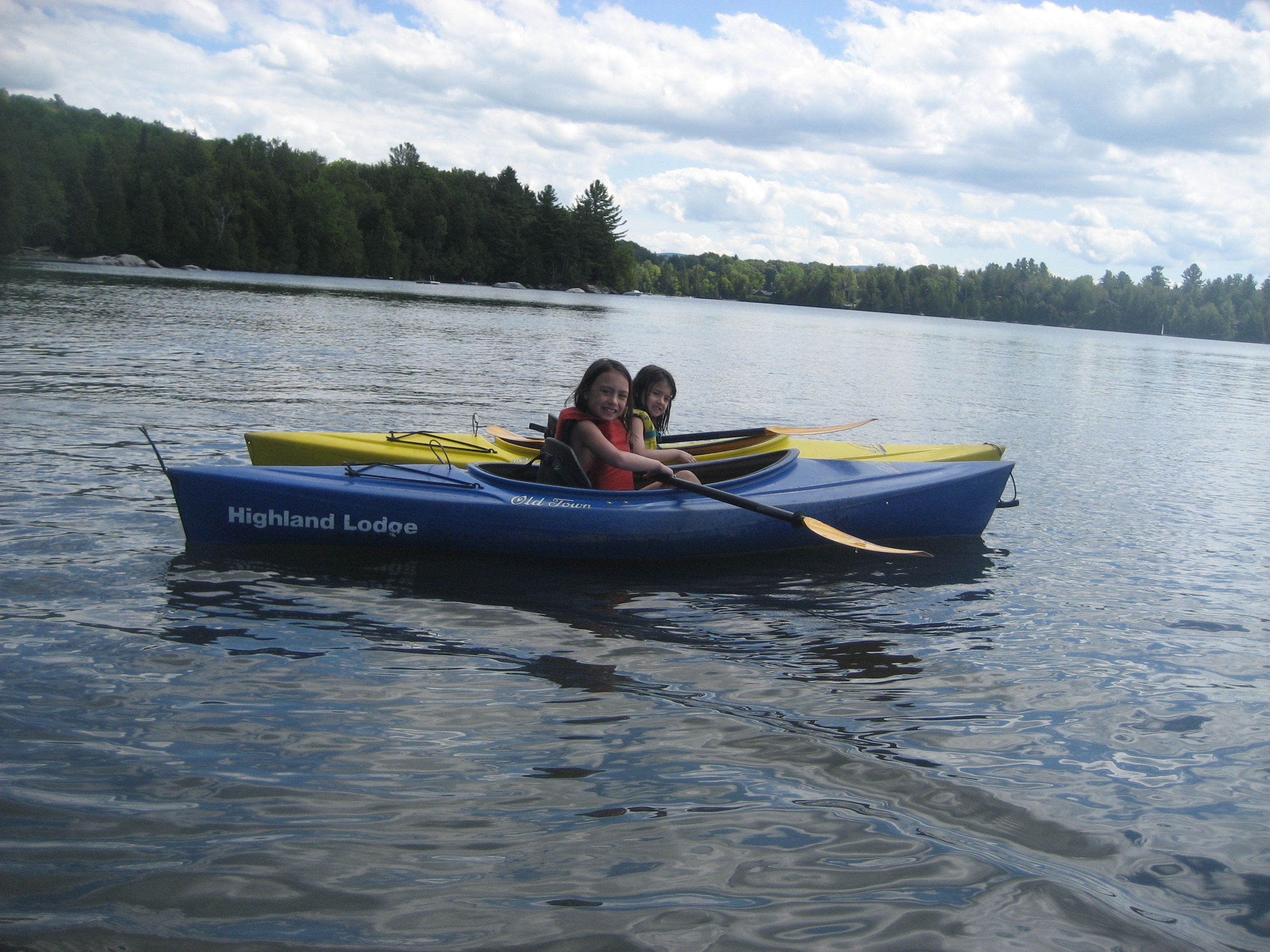
This summer we did what we’ve done every other summer since moving to Vermont, and we headed for water. We logged numerous hours at Lake Dunmore, a mere 20 minutes from our front door. We took our annual mid-summer trip to Ogunquit, Maine, where we met extended family for a week of seaside vacation. And just this past weekend – the final weekend before the Addison County school year would effectively end summer – our family returned to the Highland Lodge, on the shores of Caspian Lake in Greensboro, Vermont.

Because we make these same aqua-centric outings every summer, they serve as yardsticks for our family’s growth and development. We remember the first trip we took to Ogunquit, when I was pregnant with our first child. We recall our first summer in Vermont, when Lake Dunmore was a weekly escape. And we look back with fondness on our first visit to Caspian Lake three years ago: our first vacation after the birth of our fourth daughter.

This year, all of these trips offered clear proof that my children are growing up.

Click here to continue reading this week’s “Faith in Vermont” column in The Addison Independent. 


A Midsummer Sampler (With Kids)

IMG_5567

“I am so bored. I’m bored to death!” moans my 7-year-old daughter.

We are three weeks into summer vacation. For one of those weeks, she attended a day camp at Lake Dunmore. For two and a half of those weeks, her grandparents visited from California; this visit included a trip to the Six Flags Great Escape water and amusement parks, a day at Shelburne Farms, the Ilsley Library summer reading truck touch, and a strawberry picking outing. For two weeks, she took daily swimming lessons at the Middlebury Town Pool.

She has three younger sisters, a house full of books and toys, and 1¼ acres at her disposal.

She is bored to death.

Click here to continue reading this week’s “Faith in Vermont” column in The Addison Independent. 

The Moms Are All Right

IMG_5521


This column will be published immediately following the last day of Addison County’s 2014-15 school year.

But I’m not going to write about the complex bundle of emotions that summer vacation inspires in parents: the relief of no longer having to get up before dawn to pack lunches and sign reading logs, versus the dread of 71 long days filled with sibling squabbles, sunscreen and bug spray, and the logistical gymnastics of camps and classes and vacations.

I’m not going to write about that, because now I know that the moms are all right. I’m sure that the dads are all right, too, but I haven’t had coffee with them.

Click here to continue reading this week’s “Faith in Vermont” column in The Addison Independent. 

Take It Easy

IMG_5486

My daughter stepped off of the school bus the other day, handed me her heavy backpack, and – as is her custom – made her way slowly up towards our house by walking on top of the rock wall alongside the driveway. As she neared her destination she stopped, dropped into a squat, and called the rest of us – her sisters and me – over. She’d discovered two inchworms hanging from their invisible filaments over the edge of a large rock. For the next ten minutes, two of my daughters remained there, transfixed, watching the two inchworms “race” up and down their threads.

Yes, I am still taking a summer vacation from The Pickle Patch, but as promised, here is the link to this week’s “Faith in Vermont” column in The Addison Independent. 

American Girl Dolls and the Decline of Civilization

IMG_5419

Grandparents get to do whatever they want — that’s my philosophy.

It wasn’t always; like most first-time parents, I tended to be overly controlling when it came to toys, food, and naps. But my children are blessed with four grandparents who love them and respect reasonable boundaries, and I realized that, after the arduous task of raising my husband and me, these grandparents are entitled to spoil their grandchildren. So these days, my default response to grandparent inquiries is: “Sure!”

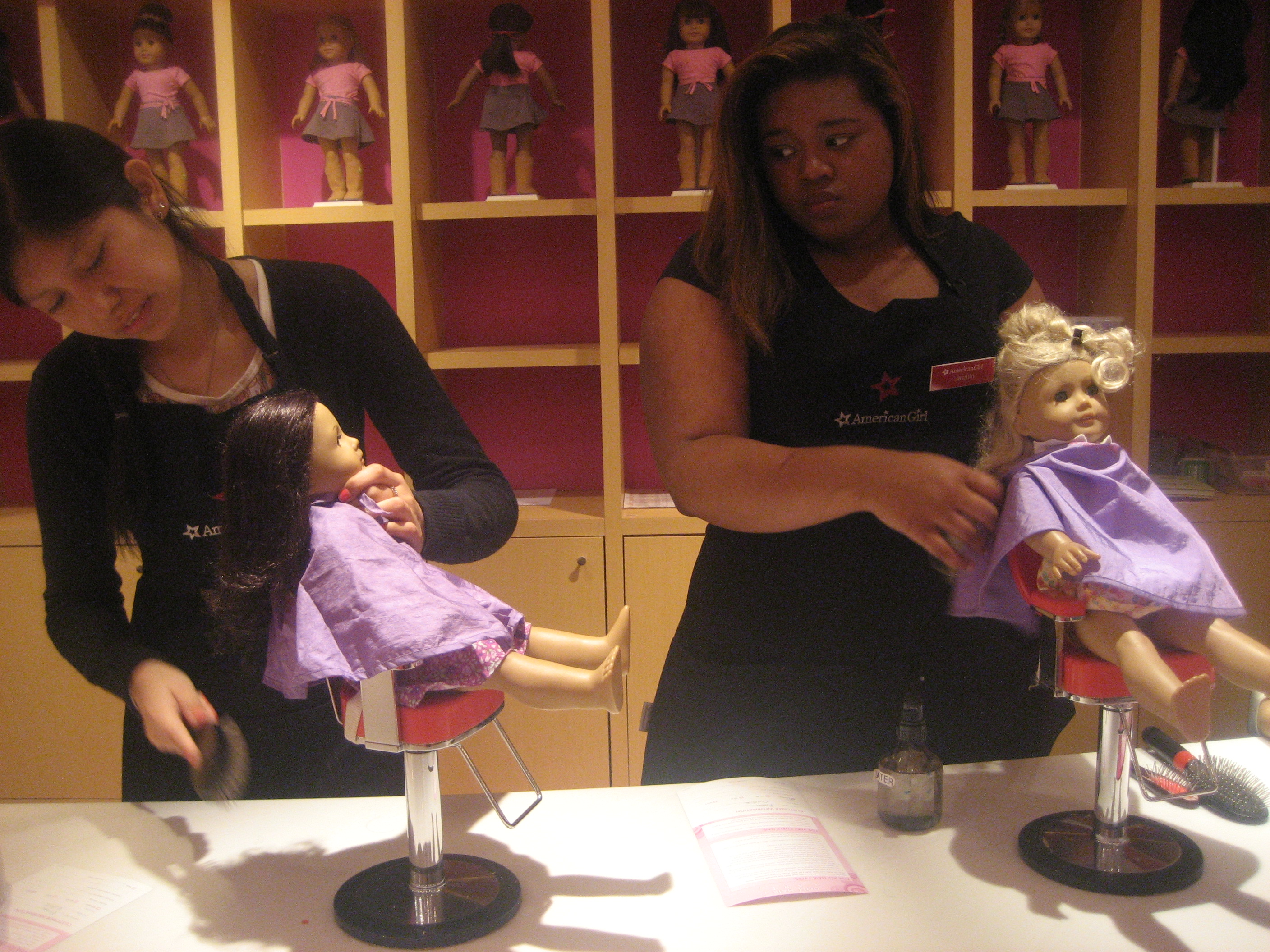
And that’s how we wound up getting my daughters’ dolls’ hair styled at the American Girl store in Tysons Corner, Virginia. (“You’re doing what?” my husband asked, incredulous, before we left. “Grandparents get to do whatever they want,” I shrugged.)

Click here to continue reading this week’s “Faith in Vermont (travel edition)” column in The Addison Independent.

Following Through

IMG_5401

As of today, I have finished the “birth books” of my two oldest daughters.

Their prenatal ultrasound pictures are tucked inside the front covers; photographs from their early years, baptismal certificates, birthday invitations, and Christmas cards are affixed where appropriate. Most of the lines are filled with writing — not all, as I will never be able to answer the question about the fashion trends when they were born– but enough to look like I put some effort into the thing.

The birth book seemed like such a nice thing when I was pregnant with our first baby. It even seemed essential, in the same way it seemed essential that our nursery have a “theme,” with linens matching the lamp matching the wall art. (Ours was “Safari.”) Who wouldn’t want to record their child’s earliest moments for posterity? Hadn’t my own mother kept a detailed birth book for me?

So I bought one: a thin, hard-bound book with Winnie-the-Pooh on the cover. Inside were pages dedicated to the family tree, the pregnancy and birth details, celebrations, and major developmental milestones.

It was only once I began keeping a birth book for my first — and then second — child, that I realized its reassuringly thin spine and apparent simplicity were clever disguises for something more sinister. To begin with, this was not a “birth” book: each book is designed to cover the first five years of your child’s life, up through kindergarten. There were pages to accommodate multiple baby showers (I missed my first baby shower because I was giving birth, and never had a traditional shower again.) There were questions about current events during your baby’s birth year. There were lines for recording information about every single visit to the doctor or dentist. There were guilt-inducing blank boxes in which I was instructed to paste before-and-after photos of my child’s first haircut.

In short, these birth books were designed for first-time parents. And now I had to do four of them.

By the time I got to my third and fourth children, the format of the birth books I ordered had changed slightly: Now, the books expected you to record your baby’s height, weight, and developmental milestones during each month of their first year of life.

These birth books are exercises in following through.

I responded with denial. All four birth books sat on a shelf beside my computer, and I reassured myself that I’d work on them when I had “free time.” This meant that, every couple of months, I’d enter a guilty panic when I realized I’d gotten behind and couldn’t remember when my third child began walking, or how my fourth child slept at five months. The younger half of my children are going to have hard evidence that I loved them less than their older siblings.

But this morning I recalled that both my first and second child have turned five, which means that I no longer had to keep up their birth books! Freedom! I spent a few minutes tying up loose ends, and then stashed the books in each daughter’s memory box in the closet.

Two down, two to go.

***

If pressed, I would say that one reason we’ve yet to wipe out poverty, war, injustice, and climate change is due to lack of follow-through. The problems are daunting, and we are all, to various degrees, lazy, selfish, exhausted, busy, and scared.

I’m no different: In addition to the baby books, the list of things I’ve left hanging includes planting a raised-bed vegetable garden, baking fresh bread weekly, going through the boxes of pictures that we shoved in a closet 5 years ago, and a pile of mending.

I am particularly bad at following through with people. During my sophomore year of college, I was asked to mentor a young woman about five years older than myself. She was the daughter of a family in town, and I gathered that she’d been a bit wild until she’d suffered a traumatic brain injury in a car accident. Now, her parents wanted her to have a friend who’d be a good influence.

I can’t recall how I became that friend; I think it was arranged through the church I attended at the time. I knew that I was in over my head almost immediately, but I persevered through a series of awkward conversations over coffee. Looking back, it seems ludicrous to charge a  19-year-old who’s just left a sheltered home with mentoring a 24-year-old who’s lived hard. I don’t remember the last time we talked. I certainly never followed through after I graduated, and have no idea what became of her.

That young woman was the first in a series of people whom I’ve failed similarly. I’ve neglected to follow through on relationships from Africa to California and in between.

The church we attend now isn’t one of those churches where people dress nicely and have all their stuff together. Every Sunday, our pews hold people who struggle openly with addiction and mental illness. (I like to imagine that Jesus would be more comfortable there than in a suburban mega-church.)

But every Sunday some of those struggling people are missing. Sometimes they’re gone for weeks or months; sometimes they disappear completely. I know this is common, but I always feel badly, like maybe if I’d been more friendly, or done something to help, they’d still be there.

I’m not proud of my lack of follow-through, and I’m trying to do better. I’m trying to reach out to people when I think of them and to do kind things when they occur to me, instead of hiding behind the “I have four young children” excuse.

Because the truth is that something is always better than nothing. And finished is always better than left hanging. Like with those baby books: Sometimes you just have to fill in what you can and call it done, even if you leave a few blank lines. There will always be blank lines. Maybe they weren’t yours to fill in, anyway.


My New Collection

IMG_5387

Almost every Thursday afternoon when school lets out, my daughters and I drive to the Sarah Partridge Library in East Middlebury.  From 4:00-5:00 PM on Thursdays, Mona Rogers, the Sarah Partridge Librarian, has a “Craft Circle” for children. The original vision for this craft hour was that Mrs. Rogers would teach all of us to knit. This idea was abandoned when it became clear that most of my daughters are still too young to knit — and since my daughters make up 98% of the children who attend craft hour, they direct the agenda. In the end, Mrs. Rogers taught me to knit, which I continue to do during craft hour: I knit while standing, with frequent breaks in order to referee sibling squabbles or pull my youngest child off the bookshelves.

Between the knitting and the child-wrangling, it’s rare that I have time to look at books. But the other week, thanks to a big bowl of microwave popcorn that was occupying all of my children, I was able to peruse the used books for sale.

This isn’t a normal activity for me, children aside. I’m not especially anxious to add to our already-overflowing home bookshelves, and when I’m at the library I figure that the point is: free books! But since my children were munching their popcorn next to the shelves of used books, I could browse and still keep an eye on them.

Used book sales are about hope. There’s a reason why most of these books have been exiled from the library shelves or donated by their prior owners. There’s usually a large selection of boilerplate mysteries, spy thrillers, and romance novels. I’ve decided that cookbooks are the bread machines of books: people think they’ll use them, but instead they just take up space in the kitchen. And travel books are quickly out-of-date, plus fairly useless once you’ve actually visited the place.

But every once in a while, there’s a used book gem to be found. That day, I found it.

I can’t remember what prompted me to pick up the slim, green hardcover. It was clearly very old. The book’s title and author were stamped into the front cover — Animals Through the Year by Margaret Waring Buck — along with a beautiful print depicting two young deer, a possum, a chipmunk, and a mouse in the wild. It was clearly a children’s book — and we have so many children’s books at home that I wasn’t looking for one more.

Opening the book, I saw that it was a discard from the Sarah Partridge Library (back when it was the Community House Library). The book was first published in 1941, although this was a 1949 edition, and it had been checked out last on August 30, 1993.

When I fanned through the pages, I knew that I had to buy Animals Through the Year. It’s organized by season, and each page describes a certain animal (20 in all) and how it spends that season. The descriptions are clear and fascinating, written for young children without oversimplifying or pandering.

What really sold me, though, were the illustrations: On every page is a gorgeous block print of the animal described. Some are in color, but most are black-and-white.

Animals Through the Year cost me $1 — more than the usual 10 cents, because it was “antique.” I showed it to my daughters once we returned home, and they all huddled together on the couch, looking at the pictures while my 7-year-old daughter read out loud.  Later that night, she asked if she could take the new book to bed with her. Since then, one daughter or another has picked it up from its home on the table beside our living room “comfy chair” to look at the pictures or learn more about what our animal neighbors are doing this time of year.

Meanwhile, I have become obsessed with Margaret Waring Buck. There’s not much to be found about her, but her papers now reside in Archives & Special Collections at the University of Connecticut’s Thomas J. Dodd Research Center. The brief biography on the Dodd Center website informed me that Margaret Waring Buck was born in New York City in 1905, and died in Mystic, Connecticut in 1997. She was an illustrator, naturalist, and physiognomist. Animals Through the Year was her first book, and she wrote and illustrated ten more between 1947 and 1979. All were nature books for children, with the exception of The Face — What it Means: The Merton Method of Character Analysis,  which was based upon her studies with Dr. Holmes W. Merton on the “science” of Face Reading.

All her books are out of print now, but that hasn’t stopped me. Thanks to the magic of online shopping, I’ve been able to obtain used copies — all library discards — of In Woods and Fields, In Yards and Gardens, and In Ponds and Streams for under $10. Like Animals Through the Year, these books are filled with plainspoken information and gorgeous illustrations (ink drawings instead of block prints). Along the Seashore and How they Grow are on my wish list, because I don’t want to be greedy and buy up  Waring Buck’s entire oeuvre in one swoop; it’s important to have something to look forward to.

The obvious question is: WHY? Why have I suddenly become a fan and collector of the works of a little-known author and illustrator of children’s nature books? I am not the collecting type — haven’t collected a thing since my childhood doll and thimble collections.

I’ve thought about this, and I believe the answer is: It’s April, and there’s still snow on the ground. For over four months, the only nature we’ve seen outside has been limited to the occasional squirrel or crow. I am ready for the plants and animals to return; I am craving wildlife.

And when wildlife returns, I will pull down one of our books by Margaret Waring Buck, find the relevant page, gather my girls around me, and read. Because, 74 years later, the first words of Animals Through the Year are still true: “Many baby animals first see this beautiful world in the spring months of March, April, and May.”


Saying No to Lucky

IMG_5374

It’s important to learn how to say “No.”

I know, I know, you think, rolling your eyes. C’mon, tell me something new.

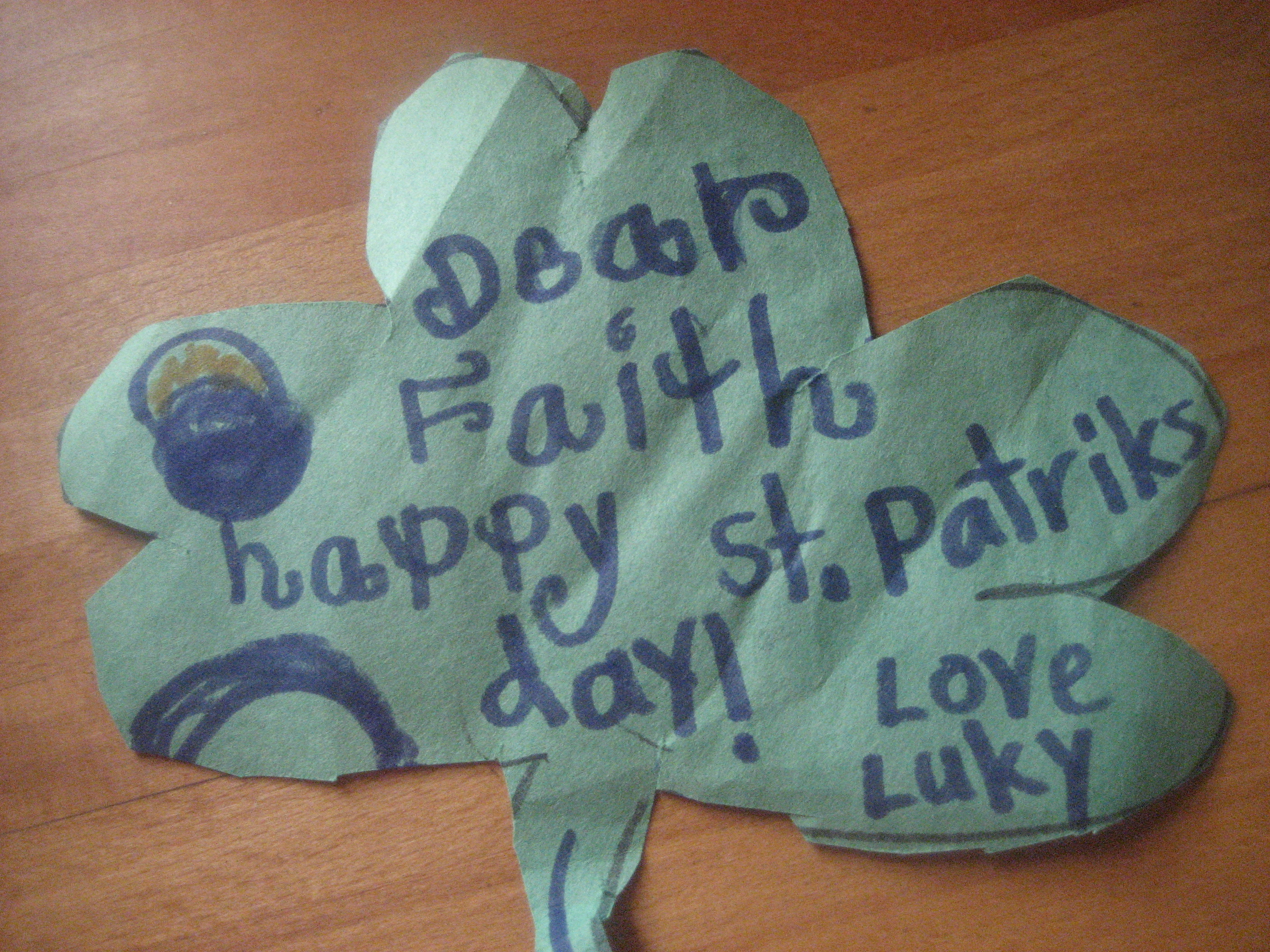
Here’s my best shot at something new: I’d wager that not many people have been taught to say “No” by Lucky the Leprechaun.

Click here to continue reading my latest “Faith in Vermont” column in The Addison Independent.