The Mystery Behind the Winchester Mystery House
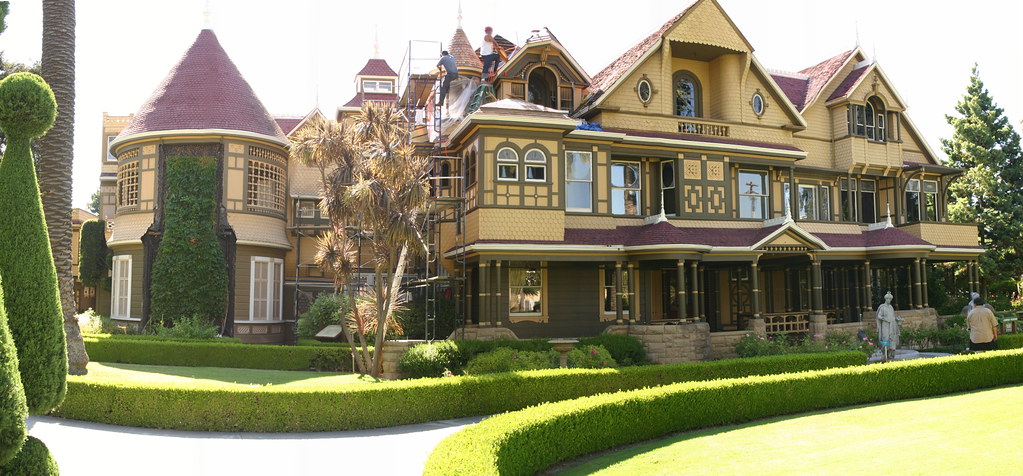
Our family recently enjoyed an epic trip to California – a trip that lasted two weeks and spanned 6,500 miles as we traveled from Vermont to Montreal, Canada, flew to San Francisco, drove to Los Angeles, and returned to Vermont again by way of Montreal. We slept in five different locations and reconnected with numerous dear friends and family members.
The three days that we spent in the San Francisco Bay Area marked our first return to the region since 2016. The Bay Area is where my husband, Erick, grew up and lived until his college graduation; we’d lived there for half of our first decade of marriage and it’s where our first three children were born. We barely scratched the surface of our family history during this visit, but we did take our children to the Winchester Mystery House.
Erick and I had visited the Winchester Mystery House once, before we had children. It was shortly after we’d moved to Berkeley, something to do on a free Saturday when we were still exploring the new landscape we now inhabited. Come to think of it, we probably even slept late and then read the newspaper over brunch; we may even have watched an entire movie the night before!
The details of that first visit were fuzzy in my mind, but I still remembered the bizarre story behind the Winchester Mystery House. Here is the story as I relayed it to my children:
Sarah Winchester, who had married into the family that owned the Winchester Repeating Arms Company, moved to San Jose, California in the 1880s after the deaths of her husband and infant daughter. She was consumed with guilt over the people who’d been killed by Winchester rifles, and was told by a medium that she had to continually build a house for their ghosts; if construction ever stopped, she would have bad luck – or die (or perhaps both.) So, she bought an old farmhouse and began a 38-year construction project that ballooned the house to 500 rooms, complete with bizarre features like doors to nowhere, curving staircases with tiny steps, trapdoors, and walled-off windows. The building was, of course, never finished.
Click here to continue reading this week’s “Faith in Vermont” column in The Addison Independent.






 The Pickle Patch