On Writing, the Darkest Day, and the New Year

IMG_5019

Last week, my oldest daughter found a copy of our Christmas letter – the breezy family update that I’d slapped together to send out with our Christmas cards. She sat down at the kitchen table to read it, without my knowledge. (It’s still new and surprising that there are members of our family who can read besides my husband and me, and I’ve yet to take the necessary precautions.)

I found her there, sitting at the table, laughing and laughing. This girl is not a big laugher; at seven years old she’s become shy and serious, with a tendency to ask questions that hint at the beginnings of existential angst (“Mommy, do you ever feel lonely?”) She’d never before read anything I’ve written. But there she was, laughing out loud over something I’d written about our family.

In that moment, I remembered why I write. I also thought, If I never write another word, it’s okay; this is enough.

Click here to continue reading the final “Faith in Vermont” column of 2014 over at The Addison Independent.

Mary & Me

Our pastor (trustingly and graciously) asked me to write and deliver a brief reflection on a Bible passage during our church’s Lessons & Carols service yesterday. She gave me a choice of two passages: one was the well-known, bare facts version of Jesus’s birth; the second was a little flashier, about the angels appearing to the shepherds. 

I chose the less exciting Bible passage, because I felt like I would benefit from spending time digging into a story I’ve heard so often that I barely hear it anymore. What follows is that passage, and my reflection upon it. 


Luke 2:1-7

In those days Caesar Augustus issued a decree that a census should be taken of the entire Roman world. (This was the first census that took place while Quirinius was governor of Syria.) And everyone went to their own town to register.

So Joseph also went up from the town of Nazareth in Galilee to Judea, to Bethlehem the town of David, because he belonged to the house and line of David. He went there to register with Mary, who was pledged to be married to him and was expecting a child. While they were there, the time came for the baby to be born, and she gave birth to her firstborn, a son. She wrapped him in cloths and placed him in a manger, because there was no guest room available for them.

***

I have a really difficult time relating to Mary.

Joseph confuses me, too, but I feel like Mary should be a kind of soul sister: she was a woman, I’m a woman; she was a mother, I’m a mother.

Still, I just don’t get her. Almost every other Biblical character turns out to have been a lot like us – or, better yet, worse than us. The big names in the Bible were liars, murderers, cheats, prostitutes. But not Mary; read the Christmas story for the hundredth time, and Mary looks exactly like she did back when I was in Sunday School: humble, obedient, and perfect. Too perfect.

This is a young woman who, when an angel visits her early in Luke and tells her that she’s going to be fodder for the Nazareth tabloids by being an unwed mother to God’s son, essentially says, “Huh? Okay!” Then she starts singing poetry.

That would not exactly be my response if I were in her sandals.

Then there’s this census trip to Bethlehem with Joseph. Mary and Joseph probably traveled about 90 miles from Nazareth to Bethlehem. And, although most pictures seat Mary on a donkey, the Bible never mentions any donkey, so she may have been walking. The trip would have taken them about a week, give or take. And Mary was in her last trimester of pregnancy.

During my last trimester of pregnancy, I was either buying baby supplies or on the couch watching Downton Abbey. I was emotional, uncomfortable, and impatient. If I’d had to walk or – only slightly better – ride a donkey 90 miles, somebody would have heard about it, loudly and often.

As for the actual birth of Jesus, it seems that our Western image of Mary and Joseph arriving in Bethlehem, finding no vacancy at the Motel 6, and spending the night in a barn is about as accurate as Mary riding on a donkey.

Many Biblical scholars believe that the word “inn” is a bad translation of the original Greek word “katalymati,” which is more accurately interpreted as “guest chamber” or “upper room.” Mary and Joseph were probably traveling with members of Joseph’s extended family, and because Bethlehem was Joseph’s ancestral home, they may well have been staying with his family. A truer description of what happened on Christmas Eve is probably: Because the home where they were staying was so jam-packed, Mary had no privacy and nowhere to put her baby. So she retreated to what was either – depending on the house’s setup – a cave in the backyard where animals were kept, or a lower room where the animals and servants stayed.

You want to see my husband’s eyes widen with fear? Just try presenting him with this scenario: Hey, Erick, how about if, when Faith was 9 months pregnant, she had to walk for a week to a house full of in-laws? And then, because the in-laws wouldn’t leave her alone and hadn’t gotten the crib on her baby registry, she had to give birth among animals and lay the baby in a feeding trough?

But in the Bible, Mary never makes a peep. Western Christmas culture has interpreted this to mean that she plodded along without complaint or resentment. Also: She was blonde, pink-cheeked, and beaming peacefully the whole time.

I can’t relate to any of that.

Then I re-read this passage in Luke, which most of us have heard so often that it barely registers, and I realized that we have no idea how Mary acted or felt. There’s simply not enough information. We get a brief outline of events – just the facts, ma’am — from the journey to Bethlehem through Jesus’s birth, but nothing about Mary’s reactions. For all we know, she could have nagged at Joseph the entire 90 miles to Bethlehem. She could’ve resented the heck out of her in-laws for not having a spare crib. She could’ve been terrified about delivery, and bitter that it wasn’t the birth she’d expected. (“I gave birth to the Savior, and all I got was this lousy manger.”)

Or maybe not.

But here’s what else I realized: It doesn’t matter.

I don’t have to understand Mary in order to be rocked to the core by the Christmas story, because Mary is not the point.

The one and only point is: That’s GOD lying there in the manger.

And my guess is, God was going to do his work through Mary whether she grumbled or humbly accepted it. When the angel told her God’s plan, he didn’t present it as an option. So maybe the most remarkable thing about Mary isn’t that she was perfect, but that she recognized God’s power better than I do.

This year, God has been teaching me in many ways, most of them uncomfortable, that I am not the point: that the world, the arc of history, and even God’s plans for my own life do not hinge on my personal comfort or convenience.

That kind of thinking’s not popular in our culture today. We think in terms of self- esteem and self-actualization. We say that God has a plan for our lives, and we assume that means a fairytale ending.

The Christmas story shows that God’s plan will be worked out through us regardless of whether we agree, complain, or are comfortable. We are not the point.

But not being the point doesn’t mean that we don’t matter. We know we matter, because that’s God in that manger. For us.

We can plan all we want for a comfortable birth, but God?  God’s plan is to save us.

***

I’m now beginning two full weeks at home with all four children, all day long. So, aside from my regular obligations at The Addison Independent you probably won’t hear from me for a while. I wish you and yours a wonderful Christmas, and a joyful 2015.

Keeping the Cards

IMG_4969

When On the Willows invited contributors to write about a favorite holiday tradition, I signed up immediately.

Then I stared at the wall for several weeks.

Our family is still a little new to this holiday tradition thing.

Neither my husband nor I brought a stockpile of holiday traditions to our marriage. I’m an only child who grew up many hours away from my extended family; my parents produced festive holidays, but it seems to me that at least one sibling is necessary to create a family culture in which holiday traditions are remembered and carried on. And my husband is the son of first-generation Chinese immigrants; they combined Western Christmas traditions with Chinese cooking, which would be wonderful if either of us could cook like my mother-in-law.

It was only four years ago, when our third child was born and we moved to Vermont, that we declared ourselves officially “Home For The Holidays.” Henceforth, we would celebrate Christmas in our home rather than alternating between grandparents; extended family was welcome to come to us.

Four years isn’t a long time to develop traditions, especially with three young children and a fourth baby in the mix; we’re mostly just trying to stay afloat through the holidays.

Click here to continue reading about our holiday tradition (we do have one!) over at On the Willows.

Dispatch from the Beach

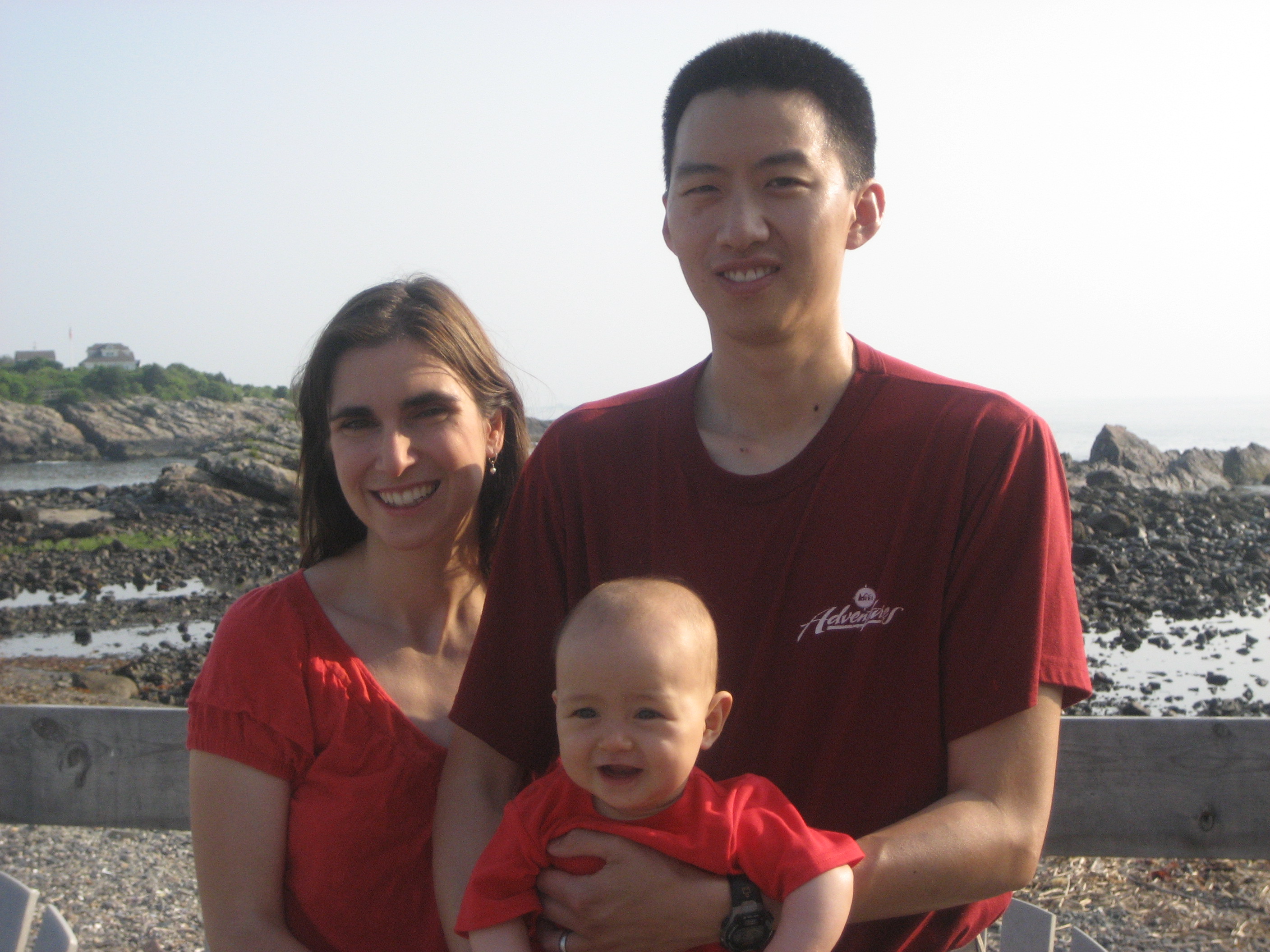
Photo from our second trip to Maine, with only one child. (We have no photos from our current trip!)

Our family spent this week in a rented house on the Maine coast, as we have for four of the past six summers (the two absences were due to the summer births of babies #2 and #4). By “our family,” I mean my husband and me, our four children, and my parents. Also with us — just down the road — are my mother’s sister, her two daughters (my cousins), their husbands, and their four combined children. Assorted family members visit us throughout the week. It’s a reunion of sorts, a vacation (of sorts), and a very fun time. Our daughters look forward to Maine all year. This trip is becoming a tradition, one that’s full of memories. The first time we came here, we were living in California and I was pregnant with our first child. A lot has changed in six years.

Now that we live in Vermont, Maine is a nice place to visit for two reasons. First, it has a seacoast, which landlocked Vermont does not. (This means that my husband spends a lot of time worried about waves and rip tides, which our daughters — experienced lake and pool swimmers — only encounter here.) Also, Maine is convenient; we can get here in about 5 hours, which includes an hour break for lunch. (In other words, we arrive before the battery dies on our portable DVD player.)

But now that we live in Vermont, I’ve also noticed that our Maine vacation seems a little backwards. You see, for most people a beach vacation entails “getting away from it all,” going somewhere with “a slower pace of life.” This was certainly true the two summers when we traveled to Maine from the San Francisco Bay Area. But now…now we live “away from it all.” Finding a location with “a slower pace of life” than our small town in Vermont would entail visiting a smaller town in Vermont.

These days, the Maine beach town that we’ve always visited seems bustling, over-developed, congested. It’s filled with tourists from fancy places like Boston and New Jersey. They drive fancy, fast cars, and they don’t stop when they see you waiting to cross the street.  Enormous new beach “cottages” are being constructed on every square foot of land. The only bookstore in town closed down and became the 57th tacky souvenir shop. And 30 minutes of our 5-hour drive to Maine are spent inching along in traffic on the three-mile stretch between the interstate and our rental house.

If it sounds like I’m cranky and complaining, I’m really not. Maine may no longer be the idyllic retreat that it once seemed, but it’s always fun to be somewhere other than home for a time. The beaches are beautiful. We get to visit with family whom we rarely see the rest of the year. Maine offers us new experiences and sights, like lighthouses and lobster boats and saltwater taffy (which, in one hilarious episode this summer, my oldest daughter tried, disliked, and then was unable to spit out. “It’h sthicky!” she cried, bent over the trashcan and clawing at her mouth.)

This particular summer, I’ve noticed something else backwards about our trip to Maine: For some strange reason, being at the beach brings out the best behavior in my daughters. For instance, our first morning here my two oldest girls woke up at the crack of dawn, as is their custom. But instead of bursting into our bedroom and demanding water or the toilet, I heard them walk quietly downstairs. Then I heard clanking noises, which immediately alarmed me. Surveying the situation from the top of the staircase, I saw that they’d gone downstairs, fetched one of the rental house’s games, set it up in the living room, and were now happily engaged in a round of “Connect 4.”

I tiptoed back to bed.

That might have been just a blip, a temporary foray into maturity. But after breakfast that same morning, my three oldest daughters slipped upstairs. Ten minutes later they emerged. They were dressed. Their hair was done. Their teeth were brushed. And, as they proudly showed us, they’d cleaned their rooms and made their beds. These are the very things that I spend an hour hounding them to do every morning back home.

“Girls,” I exclaimed, “I’m so proud of you! This is wonderful! But just tell me something: Why don’t you act this way when we’re at home?”

“Mommy, we’re on vacation!” one of my daughters replied, as if that explained it all.

And maybe it does.


Celebrating The Good Stuff: Thoughts on Motherhood

IMG_4099

The question started following me around early this spring: What will my daughters think if they read this blog some day?

Oddly enough, this isn’t something I’d spent much time considering. When I began this blog, our girls were so young that the idea of them ever reading independently seemed impossibly distant. In any event, I’m not ashamed of anything I’ve written here. (When I was growing up, my mother advised, “Never say something that you wouldn’t want to see splashed across the front page of The New York Times.” That’s a pretty high standard, but I try to apply it to what I write and publish online.)

Now that my kindergartener sits down and reads entire books to her sisters, it’s clear that it won’t be long before my daughters can read my own writing.

In a way, I see my writing as a gift I can give them; a chance to know me in ways that I can’t verbalize, a chance to see what I thought and felt at various points when they were young. But I also worry that this blog may present them with an overly negative view of my experience of motherhood. Much of what I share here about my life as a mother is the hard stuff, the embarrassing stuff, the “bad mommy” stuff, the snarky stuff.

There are good reasons for that. This would be a profoundly boring blog (to everybody but the grandparents) if each post began, “The girls did the cutest thing today!” It would also make people feel bad; in my opinion, nobody’s helped much by hearing about how wonderful your life is. The real opportunities to connect come around the things that are hard, embarrassing, and even a little ugly. (Although the popularity of Pinterest may prove me wrong on this, but I don’t do Pinterest because I suspect it would make me feel bad).

Another reason for the view of motherhood presented here is that this blog is, in many ways, my therapy: my chance to sit down for an hour of peace after a morning with my girls and hash out my thoughts. I try to tell the truth, and during that hour of peace my thoughts are not usually full of glowing maternal bliss.

And I hope that knowing the truth — that I struggled, felt insecure and guilty, doubted myself, got depressed — will one day help my girls when they feel the same way. Just as it’s hard to relate to a perfect blog, it’s hard to relate to a perfect mother. Should they feel any doubt on that score, it’s all here in black and white.

But, reading this blog, you may have the impression that without naptime, bedtime, and coffee, my life would be intolerable. While that may be true most days, that’s not the whole picture. I left out chocolate.

Okay, seriously: This Mother’s Day, I’ve decided to NOT make it all about me, to NOT focus on accepting the gratitude and pampering of my family, and instead to celebrate by feeling deeply grateful for my children, these four girls who are the reason I’m a mother.

DISCLAIMER: I don’t love Mother’s Day. I’m aware that it can be an uncomfortable and even painful day for women who don’t or can’t have children. I do not intend what I’m about to say to feel alienating to anybody. I do not think that being a mother is the Ultimate Thing. Mothers are not superior to other people; they’re just regular women who’ve reproduced, as women have been doing forever.

But here is what I want my daughters to know, without condition or sarcasm:

I love being a mother.

Motherhood was never one of my life ambitions. It never figured prominently in my future plans. When I first became pregnant, it was mostly because it seemed like the right time to try it; “everyone else” was having kids, why not us?

Someone once told me that the moment her child was born she felt a “massive love explosion.”

I did not feel a massive love explosion. I felt terrified and confused, because I’d just had a 3-pound baby by emergency c-section two weeks early, and I was strung out on magnesium sulfate and needed a blood transfusion and it was slowly dawning on me that I had almost died and that my baby was going to need a lot of special care.

The massive love explosion built up slowly. Now, I feel a massive love explosion for my daughters at some point every day. I also feel terrified and confused. Daily.

But I have loved motherhood, with all its terror and confusion, more than I could ever have imagined. Next to marrying Erick, it’s the best thing I’ve ever done. And being a mother has been, hands-down, my favorite job.

Some of what I love about being a mother are the things you hear often: That it’s made me less selfish, and therefore more exhausted, dirtier, achier, and happier. That it’s taught me more about love than any other relationship, because as a mother you spend a lifetime caring for people who are often completely dependent on you and also completely ungrateful. That I love the noise and chaos; even though it often feels like too much, on the rare occasion when two or more girls are gone for several hours, I miss them.

But beyond those things, I love being my daughters’ mother.

You are each so unique. I know where you came from, but I have no idea where you came from. Parts of you are like us, but you have always been your very own people. Being your mother gives me a front-row seat to your lives, and that’s the most fun of all.

But having a front-row seat to your lives means admitting that I’m not always going to be up on stage with you. Motherhood is a slow process of separation, from the very beginning. Every year we say goodbye for longer times, longer distances. My job is to prepare you to leave.

And that’s another reason why I’m sometimes snarky, sarcastic, quick to dwell on what’s hard or embarrassing. We do that to protect our hearts when we know that the people we love so deeply are also people we’re going to have to let go.

Happy Mother’s Day to Fiona, Campbell, Georgia, and Abigail. I am grateful every day that the four of you were entrusted to me for the time we have.

Country Mice in Boston

IMG_4162

You don’t need me to tell you that it’s been a particularly long, cold, hard winter. Everyone’s saying it, and when they do I nod and roll my eyes in agreement – but the truth is, this winter didn’t bother me very much. I was just grateful for some decent snow to play in (and grateful to not be pregnant this year so that I could play in the snow without worrying about falling). Also, when you have four young children, you’re not going anywhere anyway; being housebound by cold and snow is just like the rest of the year, only with a different view.

All the same, when our oldest daughter’s spring vacation arrived in late April, I was really starting to feel the effects of not going anywhere. So I made plans to go somewhere: Boston.

Click here to continue reading my latest “Faith in Vermont” column for The Addison Independent.

A Few Thoughts on Love

IMG_3672

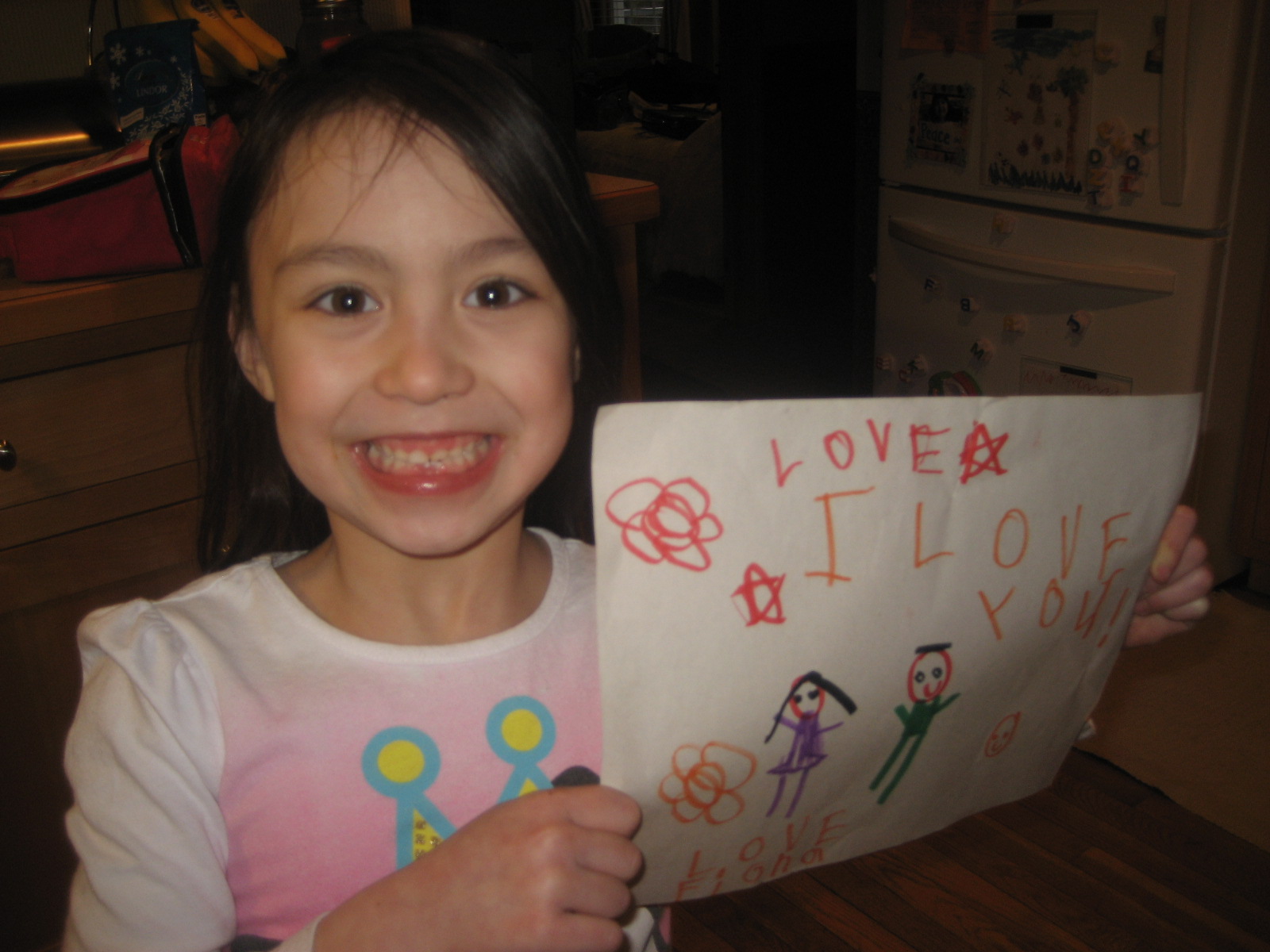
It being Valentine’s Day, I thought I might write a little something about love. So a few nights ago at dinner, I asked my family how they’d define love. I was hoping for some cute little sound bites.

Of course, my children can tell when I’m sniffing around for quotable material, so they clammed up immediately. “Uh, I dunno,” they said. “Love is when you like somebody a lot.”

So, sorry folks; you don’t get to read a lighthearted piece about love. Because my children were right to resist my efforts to boil love down to a cute quote. In the same way, we should probably resist the Valentine’s Day Marketing Department’s efforts to boil love down to cards and candy and flowers. Throughout the course of this past decade, which has encompassed 10/11 of my marriage and all of my childbearing years, I have learned repeatedly that LOVE IS NOT CUTE; LOVE IS TERRIFYING.

Listen: I’m an enormous fan of love. I happen to believe that love is the purpose of our lives, the most important thing we can do with our time on this planet.

But we’ve been sold a lie about love. For my first two decades of life, I longed for love in any form: romantic love, friendship love, spiritual love, the love between parents and children. I longed for love because it would make me feel good. Everything I’d heard and seen indicated that love would validate me, would be an assurance that I was okay, would make me feel happy.

Partly, I blame fairy tales for my misconception of love, especially the Disney-fied versions. One of my daughters recently noted, “None of the princes in fairy tales has a name. Are they all just called Prince Charming?” Good point. We make a big to-do about the portrayal of females in fairy tales, but if I were the mother of boys I’d be pretty steamed at the absence of male role models. Love in fairy tales is only about the female protagonist; her nameless love object only exists to free her in some way.

Likewise, my initial impression of love was primarily about ME: how I felt (mostly, I was supposed to feel good). It took almost another two decades to discover that that was the opposite of love. In fact, love is not really about me at all; it’s primarily about the other person, the loved one. Which means that mostly, I won’t feel “good” when I’m being loving. Mostly, love will feel like work, like a fight, like “a cold and a broken ‘Hallelujah.'” (Leonard Cohen told the truth about love).

Perhaps the purest incarnation of love is dying for somebody else. Stepping in front of an oncoming car so that your child won’t be hit. Sydney Carton going to the guillotine in place of Charles Darnay at the end of A Tale of Two Cities. Jesus on the cross on behalf of all humankind.

I used to imagine these scenarios as a way of testing my love. Would I take a bullet for a friend? Put my children onto the lifeboat and go down with the ship? Push my husband out of the way of the runaway train?

Then I realized that love asks us to die a little bit for our loved ones every day. Sure, occasionally love demands a big dramatic gesture, but mostly it involves doing things that you don’t really want to do.

For instance, I never, ever want to wake up in the morning while it’s still dark in order to change diapers, fix meals, and mediate disputes, but every morning that I force myself up out of bed, I’m dying a little for my children. Erick and I would both probably rather read or watch T.V. once the kids are in bed and the house is quiet at last, but every evening that we force ourselves to sit and discuss our days and ourselves and our relationship, we’re dying a little for our marriage. And I’m usually scared to fix a meal for somebody else (Will they like my cooking?), or pick up the phone to call a friend (Will I be interesting enough?), or host a party (The house is a mess and I’m so tired….), but whenever I force myself to do these things, I’m dying a little for my friends.

Love is a gradual process of killing yourself for others.

(To be clear, I’m not talking about a martyr complex: If you’re sacrificing yourself to manipulate others into gratitude or repayment, it negates love because you’re really just making things all about yourself. I’m also not suggesting that love requires giving up your identity. If you have no sense of self, no boundaries, then it’s impossible to love others without fizzling out. A healthy sense of self is not the same as selfishness).

Oh my gosh, it’s so hard, isn’t it? Especially when your child accuses you of being mean when you’ve just spent all day ministering at her sickbed. Or when you feel like your spouse just doesn’t get you. Or when your friends seem to keep taking and taking.

We’re not big on hard these days; our culture is all about making things easy for ourselves. We can do so many things with the touch of a few buttons: cook a meal, buy stuff, pay our bills. Love is one of the few things that remains hard.

So why bother?

I’d submit that the most worthwhile things in life are hard — the things that we have to work or fight for. But what about when love doesn’t feel worthwhile, when your efforts are repaid with eye rolls or indifference or divorce papers?

That’s where faith comes in. Faith is love’s water; it’s necessary in order for love to survive. We put love out into the world like a seed that we may never see germinate. Or like making a fire in the woodstove; I pile the wood on top of the glowing embers, but then I have to sit and wait a while until the wood heats up enough and suddenly bursts into flame. We love even though we may never see a payoff; we love because we have faith that it’s the right thing to do, that somewhere down the line it’ll make a difference in a life — or in the world.

We’re all gradually dying anyway. We’re slowly killing ourselves simply by living another day. The question is: what are we dying for? Are we spending our lives serving self, work, pleasure… or love? I’ve tried serving all of those things. And love is a slow dying to ourselves, but it’s the only thing I know of that doesn’t kill my soul.

Post-Holiday Lessons from Christmas Cards and Fudge.

IMG_3921
This year’s Christmas card photo

Every year, I feel conflicted about Christmas cards. They’re impersonal; many on our Christmas card list hear from us once a year, and at best we send them a form letter. Christmas cards can seem braggy; we showcase our best photo and write a rosy update — no mention of the potty accidents or the fights or the dusty corners. Christmas cards have absolutely nothing to do with the real Christmas, and they’re a lot of work and expense at a time of year that’s already stressful and expensive.

Click here to continue reading — and for a recipe for my Nana’s famous fudge — over at On the Willows.


A Break From My Break

IMG_3580

In early December, I announced that I would take a “Pickle-cation” from writing for this blog. The break was to extend through the holidays, and I envisioned it as a time to “write…reflect…and to enjoy the holidays with my family” without the pressure of writing weekly posts for The Pickle Patch.

Well, folks, this is me checking in from my self-imposed exile to give you the update: there has been NO writing, and NO reflecting, but an overabundance of “enjoying the holidays with my family.” In other words: Holidays: 1, Faith: 0.

Please don’t misunderstand: I love the holidays, and I love my family. The Gongs had a wonderful Christmas season. There was skiing and sledding and skating and hikes in the woods. There were grandparents. There were holiday parties and sleepovers with friends. There were “Mommy dates” with my oldest, who’s usually at school all day. There was baking and crafting. There were many candles lit and books read. There was the joyful hysteria of Christmas morning. There was the Christmas pageant in which Campbell performed a moving interpretation of an attention-seeking cow with poor impulse control.

It was lovely.

But every holiday or vacation time, there are moms who post something like this on Facebook: “So glad for the school break! It’s wonderful to have all the kids at home.”

And every holiday or vacation time, I’m reminded that I am not yet that mom. Maybe I never will be; maybe that kind of selfless desire for togetherness requires a special kind of temperament — or medication. I prefer to think that it requires time; that, when the girls are older and school holidays don’t just mean that I have double the number of voices calling, “Mommy! Mooooommmmmy!” every two minutes, perhaps I really will welcome extended times of togetherness.

For now, though, holidays mostly feel draining and confusing. I know that holidays can feel that way for everyone; there are errands to run, events to attend, and the expectation that every single second should somehow be “special” and “memorable.” In my case, I also forgot one crucial thing: at this point in my life, “writing and reflecting” and “enjoying the holidays with my family” are not compatible.

You see, during our regularly-scheduled life, I’m able to write and reflect due to the presence of certain structures that are built into the day to keep the kids away from me: school, naptime, and bedtime. I also wake up an hour earlier than any of our kids so that I can get dressed, wash my face, and start the day in peace. But during vacations and holidays, all of that goes out the window.

It starts first thing each day with this dilemma: Do I keep to my regular, pre-dawn wake-up time, or do I sleep in? Every morning, I decide to sleep in. It’s vacation, after all, there’s no need to rush the kids off to their schools, and I need the rest. And every morning, when the girls come racing down the hall (much earlier than is warranted by their way-too-late holiday bedtimes) screaming, “I have to go potty!” or “She hit me!” and I’m stuck wiping bottoms and resolving disputes without having had the chance to get dressed and centered, I think, This is horrible. I NEED to get up earlier tomorrow. The next day, it’s the same scene all over again.

Each day of holiday vacation is a nonstop marathon of togetherness, without the separation imposed by school and universal naptimes. About midway through the vacation, Erick can see that I’m starting to fray, so he’ll say something like, “How about I take the girls to see the train display, so that you can have a break?” And almost without fail, I’ll respond, “You’re going to see the train display? But I want to come, too!” The next day, I’ll feel overwhelmed and put-upon, with thoughts like, “Why is Joan of Arc considered a martyr? I could teach her a thing or two about martyrdom — she didn’t even have kids!!!” But then, when Erick says, “Hey, how about I take the girls out for breakfast tomorrow?” I’ll say, “Can I come, too?”

I think I read somewhere that the definition of insanity is repeatedly doing the same things, but expecting different results. You can draw your own conclusions, but when I examine my own behavior during the holidays, I do not look sane.

I’m coming to see that the problem isn’t with what I’m doing; the problem is my expectations. It’s okay — healthy, even — to sleep later and adopt a more relaxed schedule during the holidays. It’s more than okay to sacrifice alone time — even if that’s time normally spent doing things that feed your soul, like reflecting and writing — in favor of time spent with family. In general, I think it’s important to be selfish about things that feed your soul, but it just may be that Christmas week isn’t one of those times.

This reminds me of this year’s Apple holiday commercial, which went viral because it touched so many people. You know: the one with the awkward teenage kid who won’t put down his iPhone throughout the family holidays, and then on Christmas morning he plays the holiday video he’s been recording all along, and everyone weeps as if to say, “It’s okay that you’ve spent the entire holiday tethered to your smartphone, since you were using it to create this digital memory!”

I HATE that commercial.

I get that it’s supposed to be about understanding, and how the person on the sidelines might not be as tuned out as they seem. But the first time Erick and I saw it, we looked at each other and burst out laughing, because it was such a naked attempt to justify our culture’s electronics addiction.

Here’s the thing: all the time, but especially during vacations and holidays, YOUR FAMILY WANTS YOU. Who cares if you’ve spent a week making a digital video, if it sidelined you from participating fully in your life? Let’s face it: in a decade, that footage will probably be unwatchable, anyway, because Apple will have developed some new video technology. Likewise, my daughters could care less if I’m carving out daily writing time during the holidays, even if I’m writing beautiful and thought-provoking pieces about the holidays; they do care that I’m available to play and bake and read and participate fully in our family’s holiday.

So, I’ve learned something: next year I will again take a Pickle-cation, but I will NOT expect to get any writing done until after the New Year. Which is to say: I now need a break from my break, and so I will be extending my Pickle-cation through January to do the writing and reflecting that didn’t happen in December. See you in February!

What Shall I Give Her?: Thoughts on GoldieBlox, William’s Doll, and the Confusing World of “Girly” Toys (Part 2 of 2)

IMG_3457
Who’re you calling “girly?”

INTRODUCTION: In the first part of this piece, which appeared yesterday, I related how I’d been bombarded by the viral video commercial for GoldieBlox — construction kits that are being marketed specifically to girls in order “to get girls building” — while considering Christmas gifts for my own four daughters. After an initial rush of enthusiasm from consumers, GoldieBlox experienced some backlash for peddling pastel toys while simultaneously claiming that they wanted to “disrupt the pink aisle.” All of which raised interesting questions that get at the heart of our culture’s confusion about what it means to be a female: Are traditionally “girly” toys and games (dolls, tea sets, princess play) inferior to traditionally masculine toys and games? In order to encourage girls to engage in more “masculine” play, do we need to make separate-but-equal toys (i.e. traditional boy toys in pastel hues)? And if we answer “yes” to the two previous questions, aren’t we being demeaning to girls? So where does that leave us?

I’ll attempt to tackle some of these issues based on my own experience.

Click here to read Part 2 of this post over at On the Willows.