Tuesdays With Beth

“We live just around the corner from you; you should stop by with the girls sometime.” 

It can be difficult to remember how our most important relationships begin since we don’t realize that something momentous is starting at the time, but the woman with the halo of white hair, kind eyes, and sweet smile said something like that to me back in 2011, as the congregation of Memorial Baptist Church mingled one Sunday after service. 

I felt vaguely uncomfortable. We’d just moved to Vermont with our three young daughters after a decade spent in major urban areas. Although major urban areas are significantly more diverse than small-town Vermont, it was easier for us to surround ourselves with friends of similar ages and affinities when we lived in cities. To put it bluntly: No elderly woman had ever invited me to pop over with my baby and toddlers. This wasn’t in my playbook.

But this wasn’t just any elderly woman: This was Beth Wilkinson. She lived with Roy, her husband of over 60 years, in an old white house on Main Street in East Middlebury. 

Click here to continue reading this week’s “Faith in Vermont” column in The Addison Independent.

The Year the Music Died…And How It Was Reborn

I used to love music.

I would play music in the house and in the car. I listened to music as I walked or ran the streets of New York City, Berkeley, and our neighborhood in Vermont – first on a portable CD player, then on various incarnations of the iPod. My life had a soundtrack.

I used to go to concerts. 

My relationship with my future husband began when we attended an Indigo Girls concert together. We went on to see Diana Krall perform twice, the Dave Matthews Band, Elvis Costello, the Black Crowes, U2, Bob Dylan, and numerous orchestral concerts and operas. 

I used to follow singers and bands and get excited when their newest albums were released. 

The last album that I was aware of – the album I downloaded and listened through as soon as it dropped — was Babel by the British folk rock band Mumford & Sons. It was released in 2012,  nearly a decade ago.

It will probably not surprise you to learn that 2012-2013 – the year the music died — was the year our family got a puppy and the year I gave birth to our fourth child. These two events catapulted our house into a new level of happy chaos that drowned out the music. 

Click here to continue reading this week’s “Faith in Vermont” column in The Addison Independent.

Parenting Teens and Saving the Planet

One of the best parts of parenting my teenagers is discussing the world’s problems and how to solve them. 

I was about to write: “One of the best parts of parenting teenagers is how passionately they want to save the world,” but I’m not sure that’s quite accurate. Saving the world, in my experience, usually involves getting out of bed before noon on non-school days, and we’re not there yet. It also requires one to move beyond an attitude of “everything-is-terrible-and-thanks-sooooo-much-for-giving-us-this-messed-up-word-Mom-and-Dad.” We’re not there yet, either. 

But my two middle-school-aged children are becoming quite aware of the nature of the issues that they’ll inherit. At the moment they’re studying Earth Science, and they are particularly concerned with carbon emissions, deforestation, and climate change. 

Because they are a) teenagers, and b) Americans, their potential solutions to these problems mostly involve buying things. We should buy an electric car, for instance. My eldest daughter apparently needs to buy more clothes – of the sustainable, recycled material variety. Their biggest push has been for our family to begin using bamboo toilet paper in order to save the boreal forests. They directed us to a company called “Who Gives a Crap,” where we could purchase 48 rolls of bamboo toilet paper for $64 (plus tax). We have seven people living in our house; that amount of toilet paper would last us roughly two weeks. 

Click here to continue reading this week’s “Faith in Vermont” column in The Addison Independent.

Call of the Wild

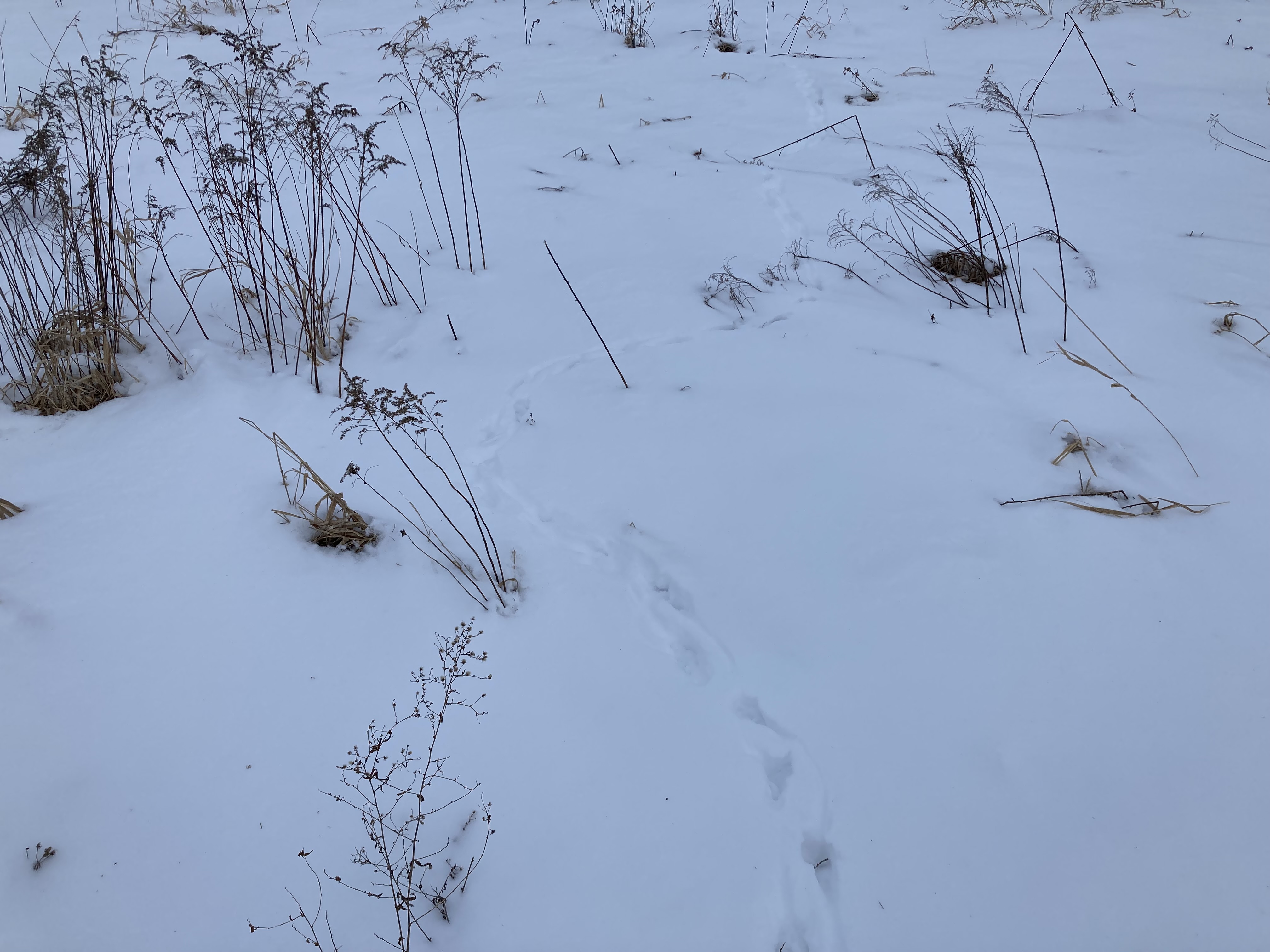
Over the course of the past week, I was awakened several times by howling coyotes. 

It’s not news that we have coyotes in the woods and fields around our house: I hear them yipping and calling to each other throughout the year, most frequently during the summer months when I’m doing chores outside at sunset. But there’s something especially haunting about coyotes howling in the middle of a snowy winter night – something eerie and lonely that goes straight to your soul. 

I’m not a particularly light sleeper, so it’s interesting that these howls have awakened me from deep slumber multiple times. It could be because we haven’t heard coyotes in a while; months will go by without a single howl. Although the range of coyote packs varies, it generally encompasses several miles, so we hear coyotes only when their range brings them nearest to our house.

These particular howls have sounded much closer than ever before, however, which may be another reason why they’re catching my attention. Although my husband has slept through these mid-night cries, he’s remarked on the closeness of coyote noises when he’s been putting our poultry to bed lately. As further proof of proximity, he had a pre-dawn close encounter with two coyotes who crossed our driveway while he was walking the dog. Although it’s common for us to hear coyotes, this is the first time anyone in our family has actually seen one. 

Or perhaps I’m waking up to these howls because, as a mother, I’m conditioned to awake when there are cries in the night. Usually those cries come from my children, but coyote howls are often described as resembling female screams or baby cries. With a house that ranges from a teenage daughter to a two-year-old, it’s hardly surprising that my weary brain gets confused. 

It just so happens that I’ve been thinking about loud noises quite a bit lately, because we’re trying to teach our two-year-old son to stop screaming at the cat. 

Click here to continue reading this week’s “Faith in Vermont” column in The Addison Independent.

January in Four Scenes

During our family’s early years in Vermont, my friend Deborah warned me that January was the coldest month. “There’s usually one week every January when the temperature never gets above freezing,” she said. 

So far, history has proven her correct. But January 2022 is an overachiever: As I look ahead at the 10-day forecast I see only one day with temperatures over 30°. Most nights dip down into negative temperatures; this morning at our house it was -22°.

My daughter – the same one who shouted snowfall spells at the sky in October – now moans, “I’m tired of winter; I want spring!” But, in general, we take the frigid temperatures in stride. We make jokes like, “Oh look, it’s warmed up to a balmy -5°!” We stay inside and are grateful for woodstoves, good books, hot drinks, and Darn Tough socks. And when the temperature is reasonable – anything above 10° — we jump at the opportunity to go skiing. 

Still, things got so bad that our school district cancelled school one day because of the cold. Nothing was falling from the sky, but the wind chill was supposed to make temperatures feel like -35°. It was a surprising move for Vermonters, and there were mixed reactions to the district’s rationale (something about buses not starting and kids getting hypothermia at recess). The independent school that my two oldest daughters attend, which usually follows the district’s closures, announced in multiple emails with capitalized subject lines that school WOULD carry on. One of these communications included the sentence: “We aren’t a bunch of weenies.” 

Click here to continue reading this week’s “Faith in Vermont” in The Addison Independent.

Are We All Home Alone?

This past holiday season, we introduced our youngest children to the film Home Alone. Released in 1990, Home Alone was the highest grossing live action comedy for 21 years and is generally considered a holiday classic. It tells the story of Kevin McCallister (Macaulay Culkin in his breakout role), an 8-year-old boy whose family accidentally leaves him – you guessed it – home alone when they travel to Paris for Christmas. Over the course of three days, Kevin navigates life on his own and outwits two bumbling burglars who have his house in their sights. 

It had been years since I’d watched Home Alone, but it seems to have aged well (aside from Mrs. McCallister’s enormous shoulder pads and the baffling – to my children – pay phone in the Paris airport). My household critics declared it “pretty good.” But I found the film fascinating: Thirty years after its release, Home Alone now feels like a prophetic clarion call about where our society was headed. And instead of listening, we laughed and called it must-watch holiday entertainment.

What surprised me about Home Alone was not that a family could accidentally leave a child behind. In the film, Kevin McCallister is the youngest of five children in a house full of visiting relatives; when a power outage causes everyone to oversleep their alarm clocks and a panicked pre-airport head count goes awry, Kevin is left slumbering in the attic. This was totally believable to me: In our house, it’s called “Tuesday.”

Instead, what shook me most about Home Alone is how, once Kevin is left home – after the initial euphoria wears off and he realizes he’s the target of burglars – he is so very, very alone.

Click here to continue reading this week’s “Faith in Vermont” column in The Addison Independent.

Enter Video Games

I am writing this column on the afternoon of the day after Christmas, while the rest of my family are playing video games out in the yurt.

Every word of the previous sentence was made possible by my husband. For starters, he participated in the creation of “the rest of my family” – our children. And since their arrival, he has devoted a significant portion of his substantial brain power to dreaming up ways to keep them playing. (Our children have him to thank for the treehouse, trampoline, and ice rink. Plans for a zipline are in the works, I hear).

The yurt was my husband’s vision, anticipating the day when our adolescent children would long for a semi-private space to hang out with friends (and when we’d want that space to be as close to home as possible). It was built in December 2019, before we had adolescent children or a pandemic. Now that we have both, the yurt has become a key ingredient to our family’s sanity: a detached space with great ventilation where we’ve hosted numerous small gatherings in ways that felt safe. I like to think of it as my husband’s Field of Dreams(“If you build it, they will come.”).

Of course, an empty yurt isn’t much fun. Once the yurt was erected, my husband shifted his focus to filling it (or, more accurately, convincing generous grandparents to fill it). Christmas of 2019 brought us a foosball table. Last Christmas we were gifted a digital projector and large screen, so that we could watch movies out in the yurt. 

And this Christmas, it was video games in the form of a Nintendo Switch. 

Click here to continue reading this week’s “Faith in Vermont” column in The Addison Independent. https://www.addisonindependent.com/2021/12/28/faith-gong-enter-video-games/

In Which We Make a Gingerbread House

Like most pivotal events, it started with a simple question: “Mommy, are they doing the gingerbread houses again?”

By “they,” my daughter was referring to the Vermont Folklife Center in Middlebury, which has hosted the annual Gingerbread House Competition for the past 23 years. Individuals and families create gingerbread houses reflecting the year’s theme, and community members vote for their favorite entries. Usually, the houses are displayed at the Folklife Center, but for the past two years the competition has been virtual, with photos of entries available for viewing online. 

Viewing the year’s gingerbread houses has become a favorite holiday tradition for our family: Every year my children look forward to seeing the amazing and beautiful things that people create out of edible materials. Every year, they say, “We should enter next year!” And every year, I have successfully deferred our actual involvement in creating a gingerbread house – until now. 

Click here to continue reading this week’s “Faith in Vermont” in The Addison Independent.

The First Snow (A Sort of Thanksgiving)

My daughter started wishing for snow in October.

This was not an irrational desire: The first flakes of snow often begin falling sometime around Halloween. But this year, nature was not going to reward my girl with instant gratification. 

She and her sister made a “snow potion,” which they poured on our lawn while chanting incantations. She wrote poems about snow, prayed for snow at the dinner table. She broke a chunk of ice off a frozen puddle in one of our driveway’s potholes and stored it in our freezer as a sort of talisman. She wrote a list of things for which she was grateful and inserted “snow” between each item. 

Still, nothing happened. The leaves fell from the trees, ushering in our “stick season” of bare grey branches against a slate sky above dead brown fields. The days grew darker. Snowflakes appeared on the forecast, only to turn to rain. My daughter’s emotions ranged from abject despair to frustrated rage. 

We assured her that snow would come, as it does every winter. We reminded her of the video my husband filmed on the Snowbowl chairlift last March, in which she says, “I’m ready for it to stop snowing now!”

“I’m sorry! I didn’t mean it!” she howled heavenwards.

Click here to continue reading this week’s “Faith in Vermont” column in The Addison Independent.

Reflections on a Starling Murmuration

My daughters and I watched in fascination as the black cloud pulsed and swirled over our yard. Its movement was organic and unpredictable as it rose, fell, expanded, contracted, pulled to the left and then to the right. Finally, in response to a signal not accessible to human understanding, it dropped down onto our lawn. 

The cloud moved as a single entity, but it was composed of hundreds of birds: European starlings. 

It was the third such starling cloud we’d seen that day in our travels around town, and one of dozens we’d witness throughout the autumn of 2021. The phenomenon was gorgeous, mysterious, and left me with nothing but questions.

What was going on? How and why were so many individual birds moving as one? I didn’t recall seeing these starling swarms in past autumns: Was this something new, or something I’d failed to notice until now? 

Click here to continue reading the latest “Faith in Vermont” column in The Addison Independent.